



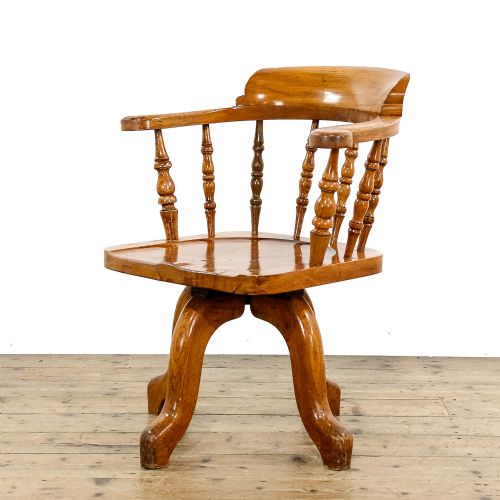


Revolving Library Armchair
A revolving library armchair brings mechanical ingenuity and comfortable seating together at the desk, offering a sturdy frame that turns with ease.
Revolving Library Armchair
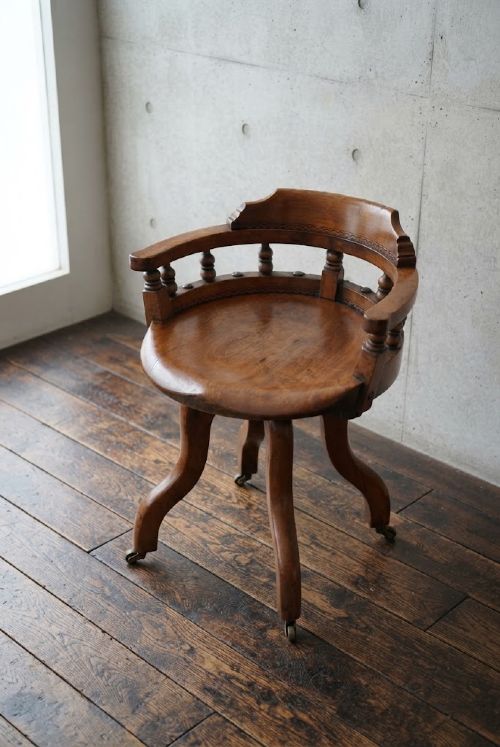
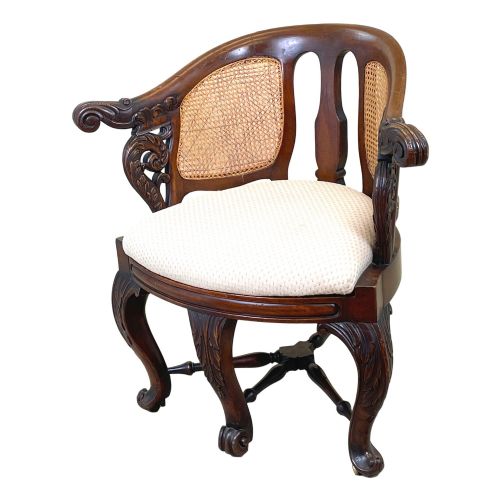
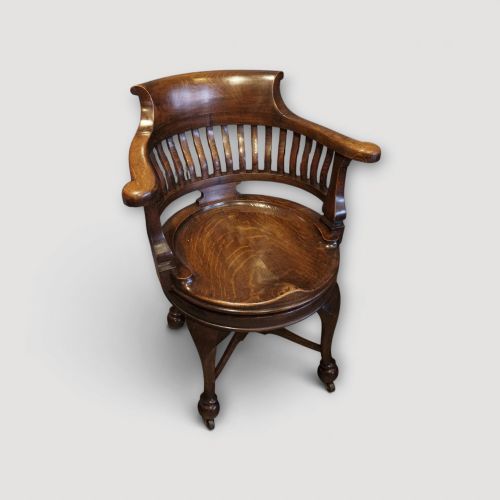
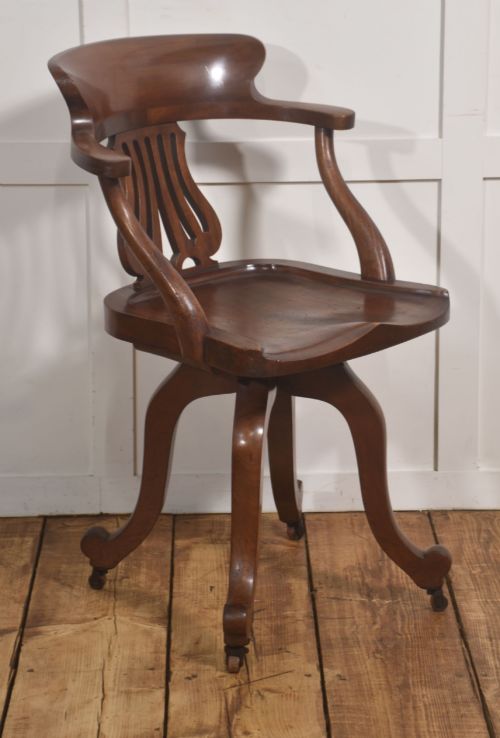
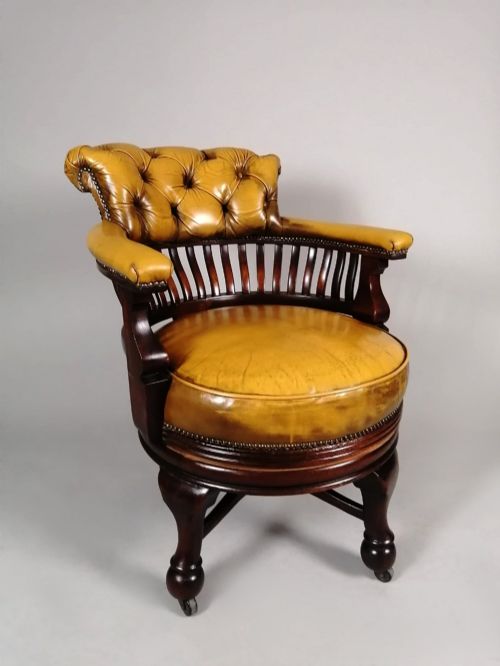
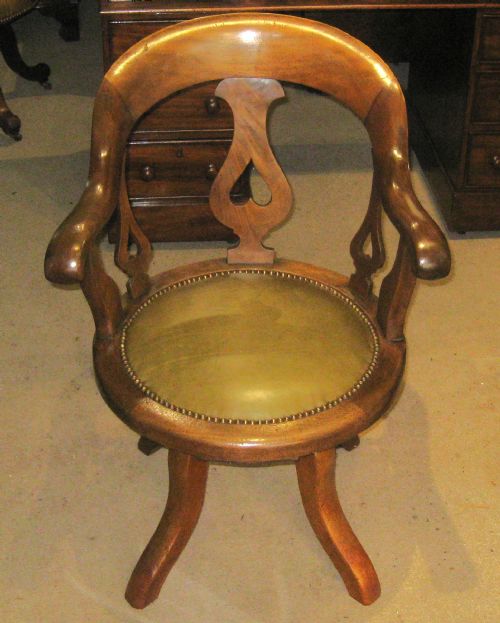
A revolving library armchair is a sturdy seat built for long hours at a desk, combining the supportive arms of an armchair with a swivel mechanism. The examples found here span the nineteenth century, the Edwardian era, and the interwar period.
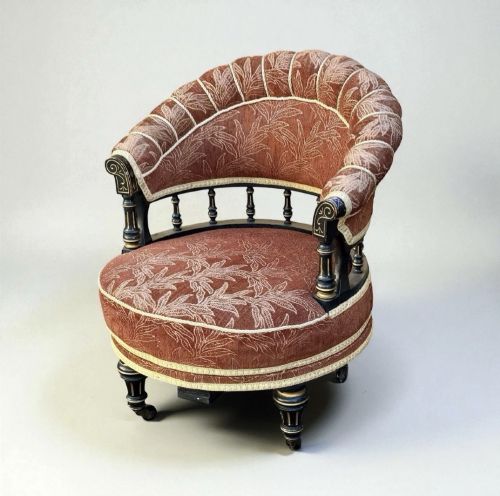
Most pieces on this page are constructed from mahogany or oak, often fitted with leather or velvet upholstery. These forms serve as desk chairs, office chairs, and captain's chairs designed for studies and libraries.
Makers produced these chairs in styles ranging from plain Victorian models to Edwardian Arts and Crafts designs. Buyers encounter both simple wooden swivel seats and padded armchairs fitted with adjustable height mechanisms.
How they were made
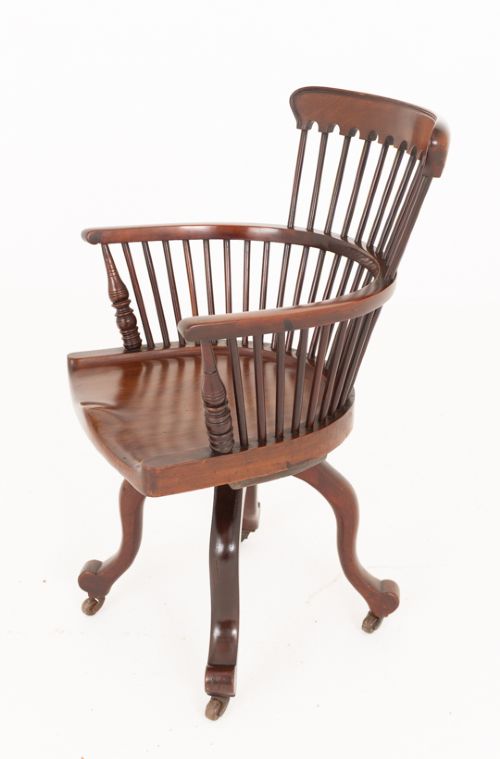
Cabinetmakers utilised solid timbers such as mahogany, walnut, oak, ash, and beech to construct the frames of a revolving library armchair. Turned wooden spindles and carved arm supports give these chairs their structural integrity.
The swivel action relies on robust iron and brass hardware concealed beneath the seat. Upholstered versions feature leather or velvet coverings secured over padding to ensure daily comfort.
Revolving Library Armchair Retail Price Guide 2026
Typical asking prices for revolving library armchair among the pieces listed under this phrase on Sellingantiques today, from the lower quarter to the upper quarter. They describe what is for sale here now, not the wider market.
Some nineteenth-century desk chairs feature hidden iron spindles that squeak gently as you ponder your correspondence.
What varies in quality
The calibre of a revolving library armchair depends on the selection of timber and the complexity of the turnery. Selected mahogany and figured walnut display superior grain and colour compared to standard utility timbers.
Engineering of the swivel mechanism dictates performance, where smooth rotation and sturdy height adjustment elevate the piece. The neatness of the joinery and the retention of original brass and iron components distinguish finer examples.
George Bartholomew and Co
The Revolving Library Armchair Glossary
- Swivel mechanism
- The concealed iron and brass apparatus beneath the seat that allows the chair to turn through a full circle. This hardware often incorporates a threaded spindle for height adjustment.
- Captain's chair
- A sturdy wooden armchair with a low, curved back rail supported by spindles. These chairs provide compact and robust seating for office or library use.
- Arts and Crafts
- A design movement favouring simple construction, visible joinery, and honest materials. Pieces from this style often display restrained ornamentation and solid oak or walnut construction.
- Ebonised
- Wood treated with a dark finish to resemble ebony. This technique creates a formal, uniform appearance on nineteenth-century seating.
Revolving Library Armchair: Frequently Asked Questions
What is a revolving library armchair?
A revolving library armchair is a sturdy seating form designed for a desk, combining supportive armrests with a swivelling mechanism. These chairs were built to assist readers and writers in moving smoothly between different workspace areas.
They appear primarily in mahogany, oak, and walnut, often featuring upholstered leather pads on the seat or backrest.
How do I adjust the height?
Many Edwardian and Victorian swivel chairs utilise a threaded iron spindle beneath the seat. Turning the chair body rotates the screw mechanism to raise or lower the sitting position.
Buyers should test the mechanism gently to ensure the screw thread moves freely within its collar without binding.
Are these chairs comfortable for daily work?
These pieces were originally built for prolonged use in offices, studies, and libraries. Padded models upholstered in leather or velvet offer ample support for modern desk work.
Solid wooden captain's chairs provide a firm alternative with ergonomic curved back rails designed for upright posture.
How do I date a swivel desk chair?
Dating relies on observing the timber species, joinery methods, and the style of the turning on the legs and spindles. Victorian examples often display rich mahogany and deep buttoned leather, while Edwardian pieces frequently showcase lighter oak or walnut.
Patina on the iron and brass swivel components also offers clues to the age of the mechanism.