

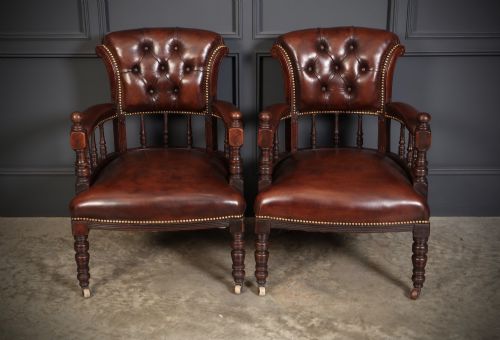
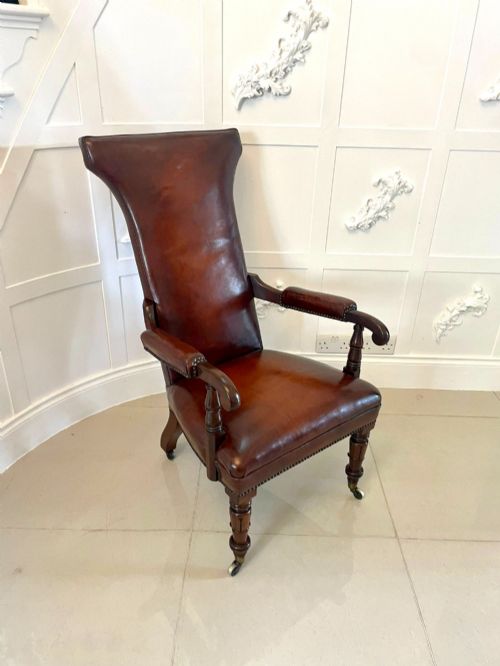
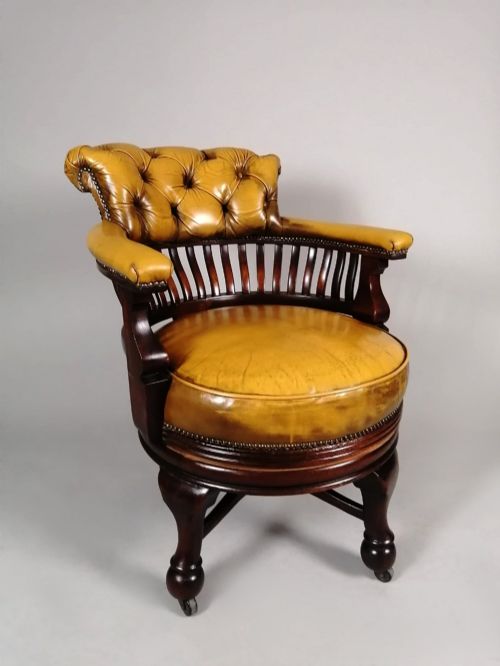
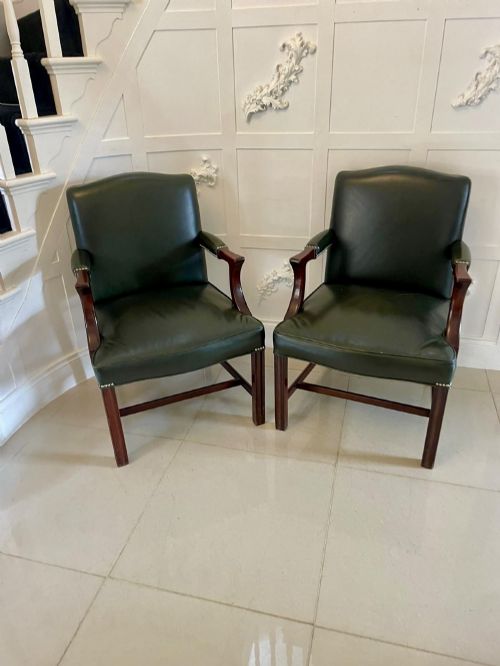
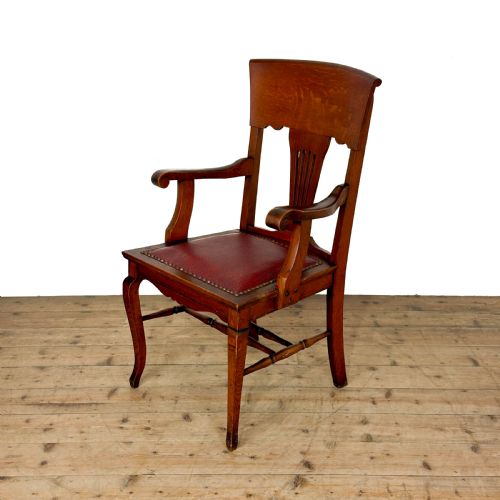


Brass Studded Office Chair
A brass studded office chair brings period character and substantial seating to a workspace, built from timber and hide for daily desk duty.
Brass Studded Office Chair
A brass studded office chair is a heavy task seating option designed for desks, libraries, and studies, usually formed as a desk chair, armchair, or desk armchair. These pieces combine timber frames with upholstered hide, frequently appearing in revolving, captain's, or horseshoe designs intended for long hours at work.
The versions most commonly met on this page date from the nineteenth and early twentieth centuries, spanning Victorian, Edwardian, and Regency eras. Makers constructed these seats using solid hardwoods like mahogany, oak, and walnut, often mounting them on cast iron or swivel mechanisms.
Examples range from buttoned leather captain's chairs to open horseshoe frames and large Gainsborough armchairs. Each variant serves a practical working function while displaying the distinct joinery and upholstery methods of its period.
How they were made
Makers built the structural frames of these seats from dense hardwoods including mahogany, oak, and walnut, often employing turned wooden supports and curved horseshoe rails. Joinery relied on traditional mortise and tenon construction to withstand the torque of daily revolving and shifting.
Upholstery involved stretching leather across stuffed seats and backs, secured meticulously around the edges with individual brass studs or decorative nails. Heavy cast iron subframes and swivel actions were integrated into nineteenth-century revolving models to provide mechanical durability.
Brass Studded Office Chair Retail Price Guide 2026
Typical asking prices for brass studded office chair among the pieces listed under this phrase on Sellingantiques today, from the lower quarter to the upper quarter. They describe what is for sale here now, not the wider market.
Listings span the nineteenth and early twentieth centuries, featuring Victorian, Edwardian, and Regency styles built from mahogany, oak, walnut, and leather.
What varies in quality
The distinction between ordinary and superior examples lies in the weight of the timber framing and the depth of the wood grain. Heavier hardwoods and more complex joinery, such as steam-bent horseshoe rails or integrated revolving mechanisms, indicate a higher grade of manufacture.
Upholstery execution also separates production standards, visible in the even spacing of brass studs, the thickness and natural grain of the leather, and the resilience of the internal stuffing. Original cast iron hardware and intact swivel actions add mechanical integrity to period seating.
The Brass Studded Office Chair Glossary
- Captain's chair
- A sturdy wooden armchair with a low, rounded back rail supported by turned spindles, often fitted with a leather seat for desk work.
- Horseshoe chair
- A seating form featuring a continuous curved arm and back rail shaped like a horseshoe, which provides enclosed ergonomic support.
- Gainsborough armchair
- A wide, upholstered seat with open padded arms and short legs, traditionally used for writing desks and reading in libraries.
- Brass stud
- A small decorative metal tack with a rounded head used to secure leather upholstery edges to the wooden frame of a chair.
Brass Studded Office Chair: Frequently Asked Questions
Are these chairs comfortable for daily work?
These seats were originally built for long hours at desks in offices, libraries, and ships, offering supportive wooden backs and padded leather cushions. Many period models include revolving bases or ergonomic horseshoe shapes designed for movement.
Buyers should note that nineteenth-century padding can feel firmer than modern foam seating. However, their robust proportions make them practical for contemporary home offices.
How do I identify a Victorian desk chair?
Victorian examples typically feature dark hardwoods such as mahogany or walnut, combined with button-tufted leather upholstery and exposed brass studs. They often incorporate heavy cast iron revolving mechanisms or stationary horseshoe frames.
Comparing the turned wooden spindles and joinery details helps distinguish nineteenth-century production from later Edwardian or twentieth-century revivals.
What is a horseshoe desk chair?
A horseshoe desk chair takes its name from the continuous, curved wooden top rail that sweeps around from arm to arm in the shape of a horseshoe. This design offers enclosed side support for the user while sitting at a partner desk or library table.
They appear in both revolving and fixed formats, constructed primarily from solid mahogany or oak during the nineteenth century.
How do I care for antique leather upholstery?
Period leather benefits from gentle cleaning with a damp cloth and regular application of leather conditioner to prevent the hide from drying out. Avoid placing these seats in direct sunlight or near heat sources, which can cause the leather and timber to crack.
Keeping the brass studs polished with a soft cloth helps maintain the metal finish without disturbing the surrounding hide.