




Retro Wooden Clock
These retro wooden clock pieces bring period warmth and practical timekeeping into a room, spanning styles from Art Deco to mid-20th century.
Retro Wooden Clock
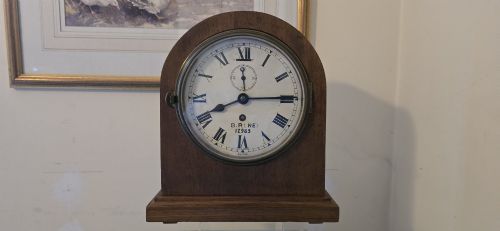
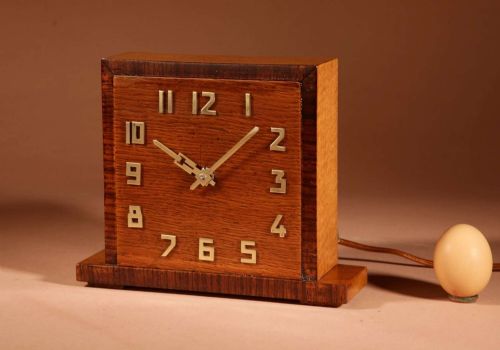
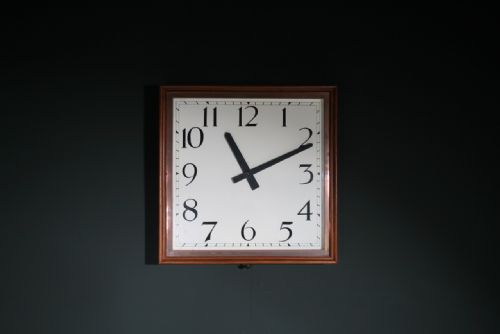
A retro wooden clock brings together the architectural lines of the early twentieth century and the natural warmth of timber. When searching for a retro wooden clock, buyers encounter wall clocks and mantel clocks shaped by Art Deco, industrial, and military designs.
The examples available here stretch across several decades, showing the shift from heavy geometric forms to cleaner mid-century silhouettes. Oak, walnut, and rosewood dominate the selection, often paired with contrasting metals like brass, copper, and chrome.
Mantel clocks sit comfortably on shelves or desks, while larger octagonal and striking wall clocks anchor a room. English, French, Japanese, and Dutch origins appear across the pieces, offering diverse regional interpretations of the form.
Materials and construction
Cabinetmakers used solid hardwoods such as oak, elm, and walnut, frequently applying walnut veneer or rosewood to create rich surface patterns. Copper, brass, and chrome elements provide contrast on dials, bezels, and numerals.
Movements range from early electrical systems to mechanical carillon chimes and striking mechanisms. Glass protects the clock faces, while metal components ensure the structural integrity of cases designed for both desk and wall placement.
The selection includes pieces from the 1920s, 1930s, 1940s, and 1950s, utilising oak, walnut, rosewood, brass, and chrome.
Distinguishing quality
The distinction between standard production and finer execution lies in the selection of timber veneers and the precision of the case joinery. Geometric Art Deco inlays and two-tone wood combinations demand high skill from the cabinetmaker.
Signed movements and specialised striking mechanisms elevate a piece beyond basic timekeeping. The preservation of original glass, bezels, and dials dictates how closely a clock retains its intended character.
Odo·Vedette·Zenith·Elliott of London
The Retro Wooden Clock Glossary
- Mantel clock
- A clock designed to sit on a fireplace mantelpiece, shelf, or desk. These pieces rely on flat bases for stability.
- Wall clock
- A timepiece designed to be hung directly onto a vertical surface. Many feature octagonal or geometric frames.
- Carillon
- A set of bells tuned to play a melody on the hour or quarter-hour. This mechanism appears in select striking wall clocks.
- Walnut veneer
- A thin layer of valuable walnut wood bonded to a core timber surface. This technique creates decorative grain patterns across the clock case.
Retro Wooden Clock: Frequently Asked Questions
Where should I place a mantel clock?
Mantel clocks suit flat surfaces such as sideboards, desks, and bookshelves where their proportions can be appreciated up close.
Ensure the surface is stable and level to keep the mechanical movement running accurately.
How do I hang a heavy wall clock?
Wall clocks require a fixing secured directly into wall studs or heavy-duty wall anchors appropriate for the weight of the timber case.
Check that the hanging bracket on the back of the clock is secure before releasing the weight.
What is an Art Deco clock?
Art Deco clocks feature geometric shapes, stylized numerals, and contrasting wood tones that reflect the design movement of the 1920s and 1930s.
These pieces often combine walnut or oak with chrome and brass details.
How do I care for wooden clock cases?
Dust the timber surfaces regularly with a soft, dry cloth to prevent buildup on the polished grain.
Avoid placing wooden clocks in direct sunlight or near heat sources that could dry out the veneer.