
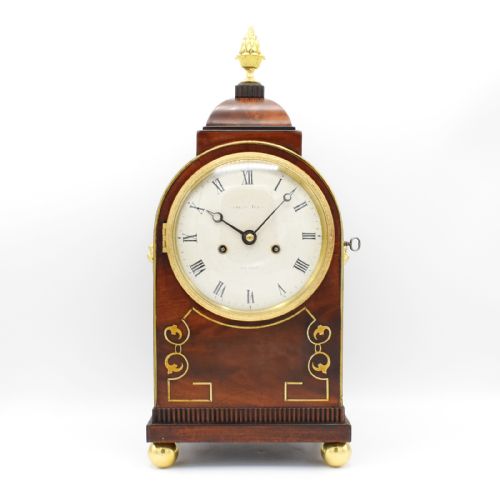
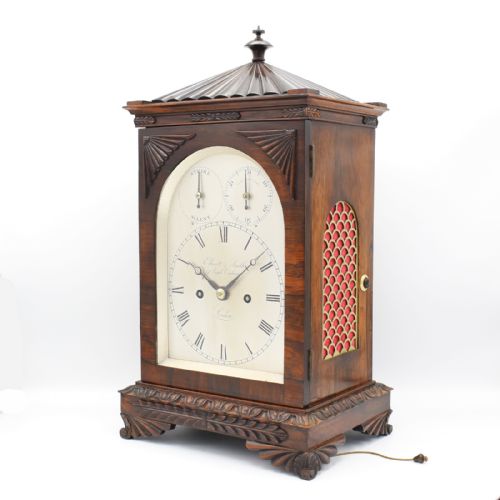
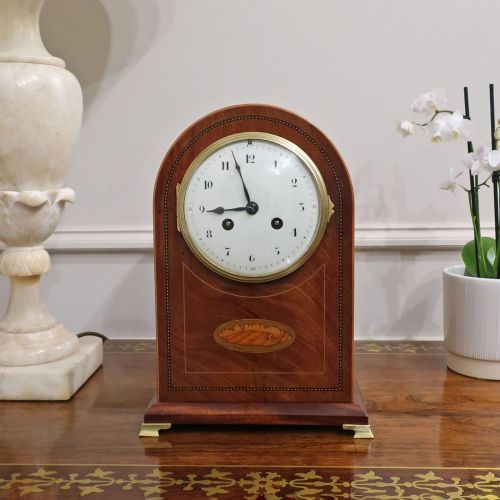
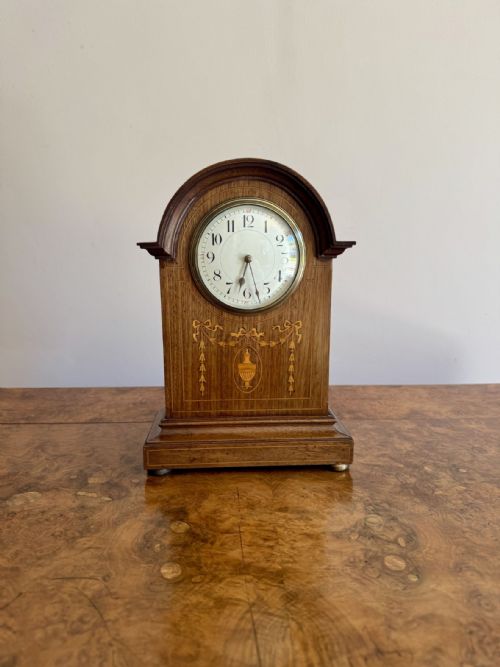



Arch Top Table Clock
An arch top table clock brings the precision of centuries past to a mantel or desk, combining architectural timber cases with intricate dial work.
Arch Top Table Clock
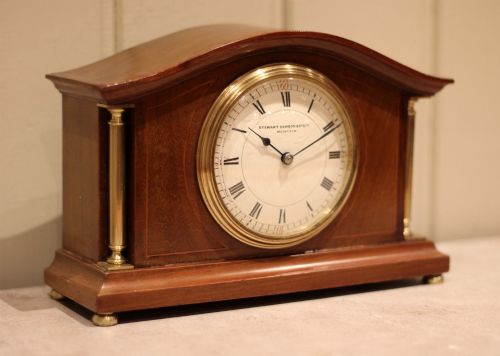
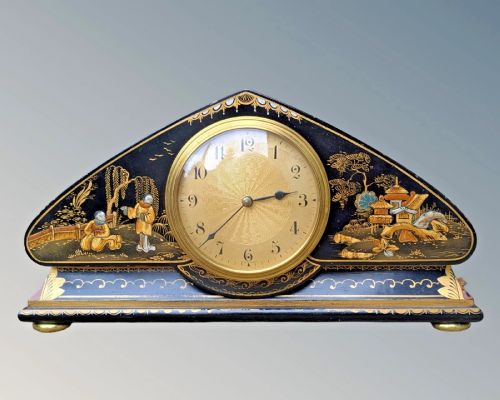
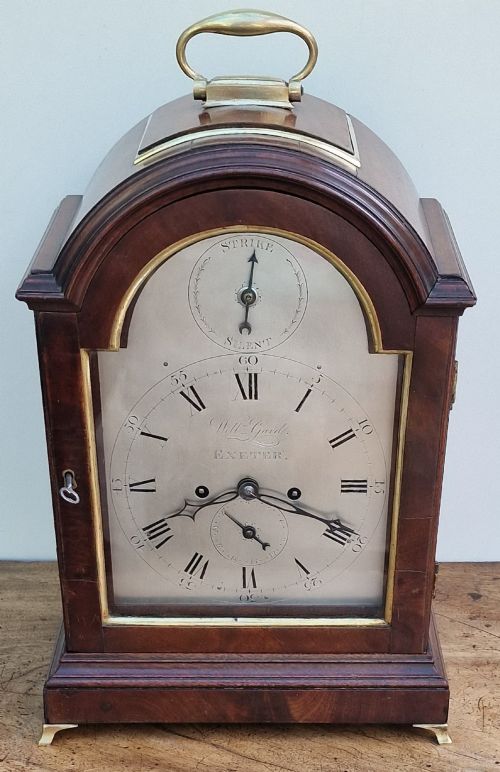
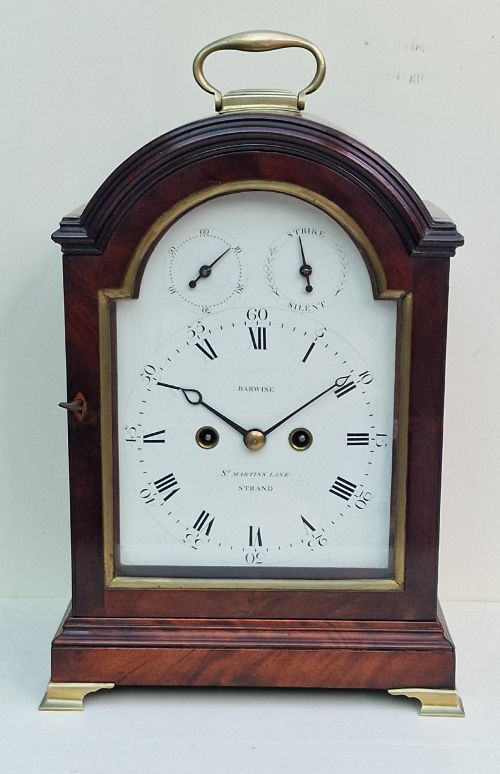
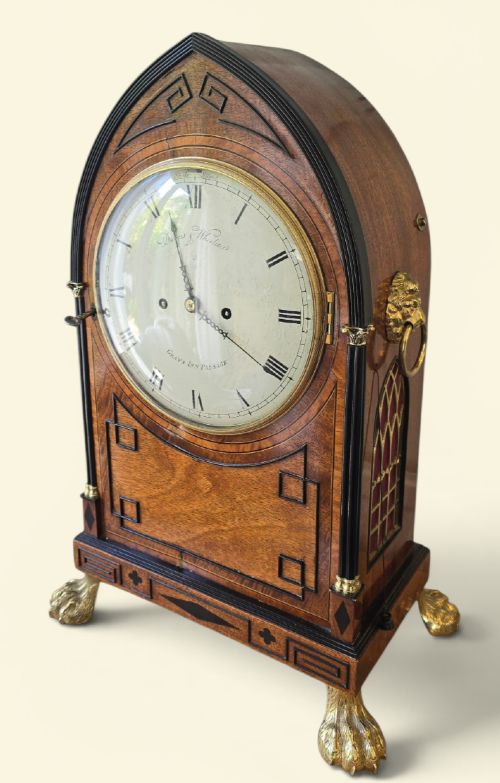
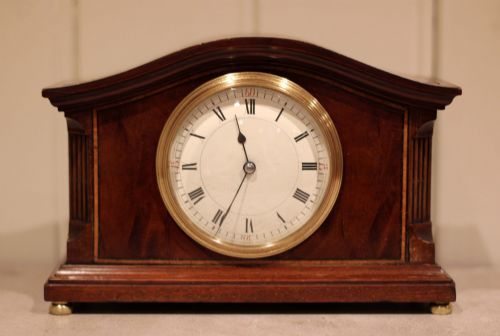
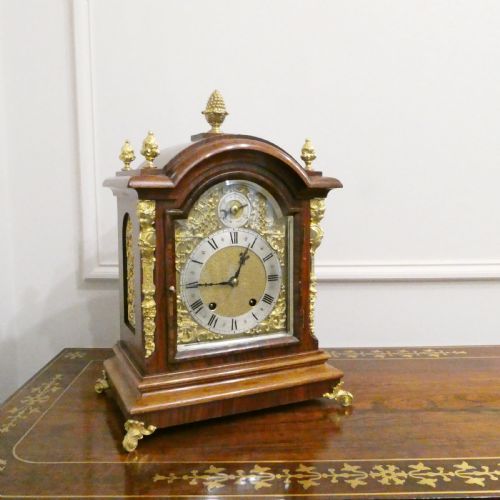
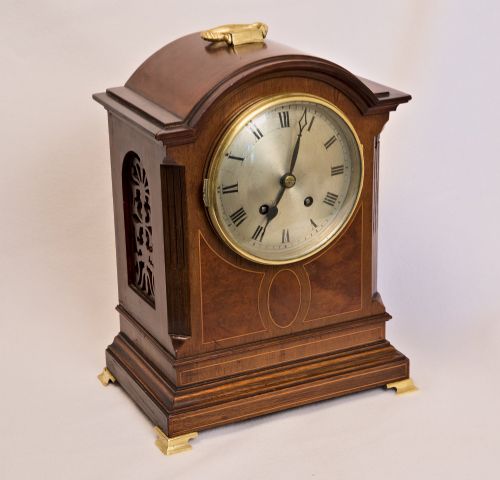
An arch top table clock sits firmly within the tradition of bracket clocks, mantel clocks, and library timepieces. When exploring an arch top table clock, the buyer encounters timber cases spanning from the Georgian and Regency eras through to the Edwardian period and the early twentieth century.
The selection ranges from provincial English makers in Exeter, Salisbury, and Southampton to prominent London watchmakers, alongside continental workshops in France and Germany. Common forms include lancet tops, bell tops, and pad tops enclosing brass or silvered dials.
Mahogany predominates, frequently complemented by satinwood inlay, ebony veneer, or burr walnut, while oak and brass also appear across the periods.
How They Were Made
Cabinetmakers constructed the architectural timber housings using solid and veneered mahogany, oak, walnut, and ebony, often incorporating fine satinwood stringing and brass mounts or handle fittings. Glass protected the delicate enamel or engraved silvered dials set within the curved wooden bezels and arched upper frames.
Clockmakers fitted mechanical movements driven by single or twin fusee chains, spring barrels, or verge escapements, enabling striking mechanisms such as ting-tang chiming. These intricate gear trains required precise hand-fitting by skilled horologists working in London, provincial towns, and continental factories.
Some French carriage clocks arrived destined for the Turkish market, blending European horology with distinct regional dial styling.
What Varies in Quality
The distinction between standard domestic timepieces and finer examples lies in the crispness of the cabinetwork and the reputation of the maker inscribed on the dial. Provincial items contrast with signed pieces by London masters or notable German and French workshops.
Complexity of movement also sets specimens apart, ranging from simple time-only fusee setups to elaborate twin fusee striking and chiming systems housed in heavily inlaid or brass-mounted timber cases.
William Gard Exeter·Barwise London·Charles Pratt London·Ellicott And Smith·Desbois And Wheeler·Schneckenburger·S Simpson Southampton·Cording Of London·Phillips Brothers·Wilkinson Leicester·Hyde Of Salisbury·Louis Recordon·Perigal Of London·W And H·Lenzkirch·Winterhalder And Hofmeier·John McGregor Wick·Perigal And Duterrau
The Arch Top Table Clock Glossary
- Fusee
- A conical pulley used in mechanical clocks to maintain an even pull on the movement as the mainspring unwinds. This device equalises the diminishing torque of the spring over the duration of the run.
- Verge escapement
- An early type of escapement mechanism that controls the release of the gear train using a crown wheel and pallets. It produces a distinctive ticking rhythm in older clocks.
- Lancet top
- A clock case shape featuring a pointed, curved arch resembling a lancet window. This architectural silhouette is typical of Regency and Edwardian bracket clocks.
- Ting-tang
- A two-hammer striking system that sounds two different pitches on the quarters or hours. It provides an audible chime without a full melody.
- Bracket clock
- A portable timepiece originally designed to sit on a wall bracket or a table surface. Many versions feature carrying handles on top of the wooden case.
Arch Top Table Clock: Frequently Asked Questions
What is a fusee movement?
A fusee movement uses a conical drum to equalise the power delivered by the mainspring as it unwinds. This ensures consistent driving force throughout the running period of the clock.
Such mechanisms indicate careful mechanical design and are commonly found in better quality English table clocks from the Georgian and Regency periods.
How do I wind an antique table clock?
Winding requires using the appropriate key on the winding squares located on the dial face. Care must be taken not to over-wind the spring.
Most traditional eight-day clocks need attention once a week, while simpler timepieces may require more frequent winding depending on the fusee or spring barrel setup.
Where were these clocks placed historically?
These clocks sat on table surfaces, mantelpieces, or dedicated wall brackets in principal rooms of period homes. Their portable nature allowed owners to move them between studies, drawing rooms, and bedrooms.
Today, they function as decorative desktop or mantel timepieces that anchor a room's interior scheme.
How can I distinguish a Regency clock from an Edwardian one?
Regency examples typically feature rich mahogany timbers, brass inlay, and silvered brass dials built by established London makers. Edwardian reproductions and contemporary pieces often utilise lighter inlay motifs like poppies or satinwood banding.
Examining the internal movement style and timber ageing helps clarify the specific period of manufacture.