
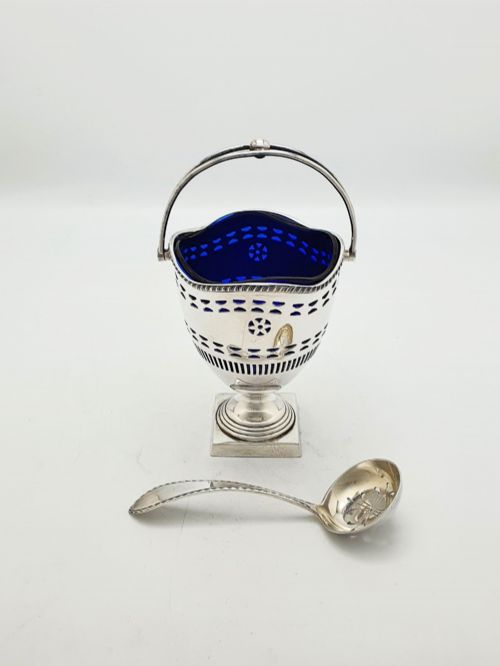

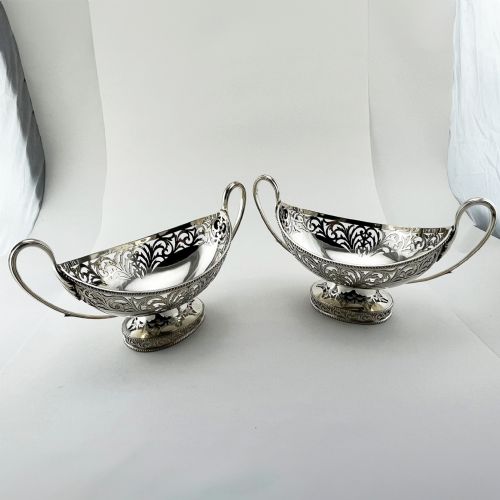


Reticulated Silver Basket
A reticulated silver basket brings pierced metalwork and bright coloured glass together on the table, offering a glimpse of Victorian and Edwardian dining habits.
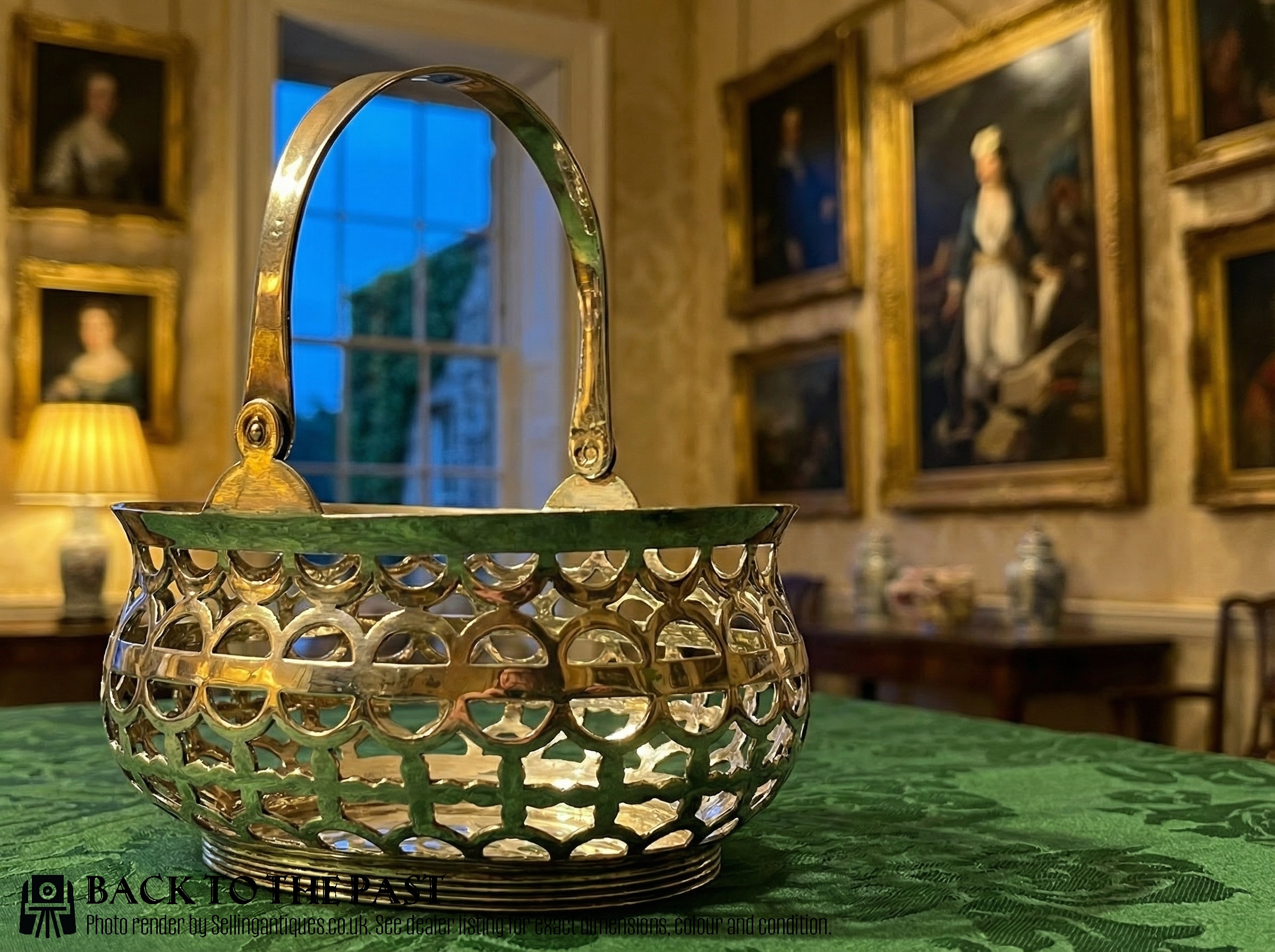
Reticulated Silver Basket
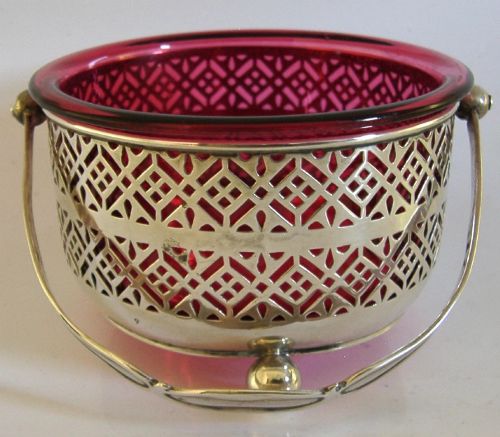
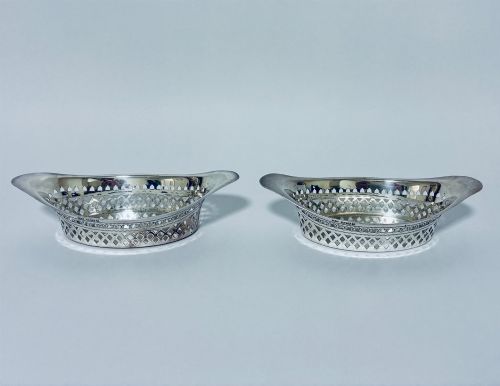
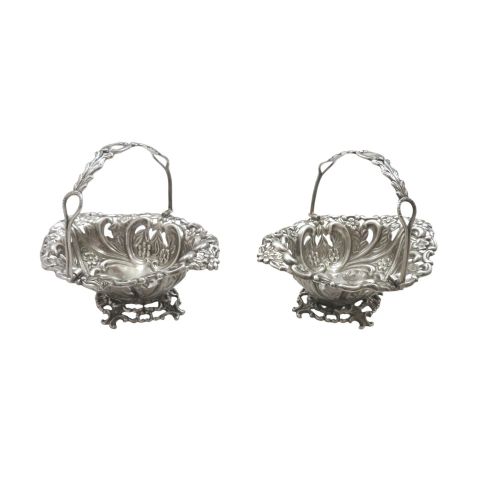
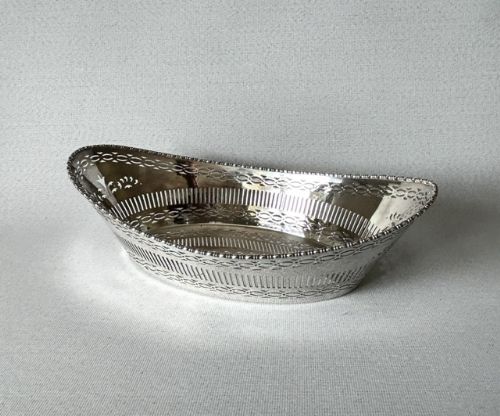
A reticulated silver basket uses openwork patterns, piercing or lattice designs to create a light, decorative frame for serving fruit, cakes or bonbons. When you search for a reticulated silver basket, you find items ranging from small Victorian bonbon dishes to large Edwardian cake baskets and fruit bowls.
Many examples include coloured glass liners in cranberry, cobalt or ruby tones, which sit inside the pierced metal frame to hold smaller items like sugar or sweets. The form appears in sterling silver and silver plate, often fitted with swing handles and small feet.
The selection spans the nineteenth century through the Edwardian period and into the interwar years, reflecting changing tastes in domestic silver and plate. Smaller sugar baskets and sweetmeat dishes appear alongside larger bread and fruit baskets.
Materials and construction
Craftsmen produced these pieces using sterling silver or silver plate, sometimes applying hand chasing to enrich the pierced surfaces. Piercing and lattice work required careful cutting of the metal to form geometric or floral patterns without losing structural strength.
Blown glass liners in contrasting shades like cranberry and cobalt were shaped to fit snugly within the pierced metal baskets. Swing handles, reeded mounts and cast feet were added to complete the vessels.
Reticulated Silver Basket Retail Price Guide 2026
Typical asking prices for reticulated silver basket among the pieces listed under this phrase on Sellingantiques today, from the lower quarter to the upper quarter. They describe what is for sale here now, not the wider market.
Glass liners seen in the collection include cranberry, cobalt and green opaline varieties paired with pierced metal frames.
Judging quality and workmanship
Quality rests in the crispness of the piercing and the weight of the metal used for the frame and handle. Finer pieces show precise hand-chased details and robust construction rather than thin, pliable plating.
The presence of an undamaged coloured glass liner, whether cranberry, cobalt or green opaline, adds to the completeness of the piece. Maker marks and clear silver hallmarks also indicate better workshop origin.
Mappin & Webb·Thomas Bradbury·Fenton·Walker and Hall·William Comyns
The Reticulated Silver Basket Glossary
- Reticulated
- Pierced or openwork metal decoration resembling a net or lattice. This technique allows light to pass through the sides of the vessel.
- Bonbon dish
- A small open vessel designed for holding sweets or small confectionery. These often appear in matched pairs.
- EPNS
- Electroplated nickel silver, a common base metal method used for nineteenth and twentieth century tableware. It provided the look of solid silver at a lower cost.
- Swing handle
- A movable handle attached to pivots on the rim of a basket or bowl. It drops to the side when the vessel rests on a table.
- Cranberry glass
- A rich red transparent glass coloured with gold chloride, frequently used for liners in openwork baskets. It creates a strong visual contrast with polished silver or plate.
Reticulated Silver Basket: Frequently Asked Questions
What were reticulated silver baskets used for?
These baskets served various functions at the dining table, holding fruit, bread, cakes or small sweets during formal meals and tea service.
Versions with glass liners were particularly suited for holding loose sugar or wet preserves, protecting the metal underneath from acidic contents.
How do I clean a silver plated basket?
Cleaning requires a soft cloth and a gentle silver polish formulated for plated items to avoid wearing through the thin silver layer. Glass liners can be removed and washed separately in warm soapy water.
Harsh abrasive dips should be avoided, especially on antique silver plate, to preserve the original finish.
Are glass liners original to the baskets?
Many baskets retain their original blown glass liners, which were shaped specifically to fit the dimensions of the pierced metal frame. Coloured glass in cranberry, cobalt or green opaline was a popular pairing for Edwardian and Victorian pieces.
Because glass breaks easily over time, replacement liners are sometimes fitted to older baskets.
How do I tell Victorian pieces from Edwardian ones?
Victorian pieces often display heavier cast mounts and ornate hand chasing, reflecting mid to late nineteenth-century tastes. Hallmarks with date letters provide precise years of production for sterling items.
Edwardian designs frequently lean towards lighter Art Nouveau curves or refined classical revival styles following the turn of the twentieth century.