


Restoration Period Chest
A restoration period chest brings heavy timber, geometric mouldings and rich oyster veneers straight into a room from the late seventeenth century.
Restoration Period Chest
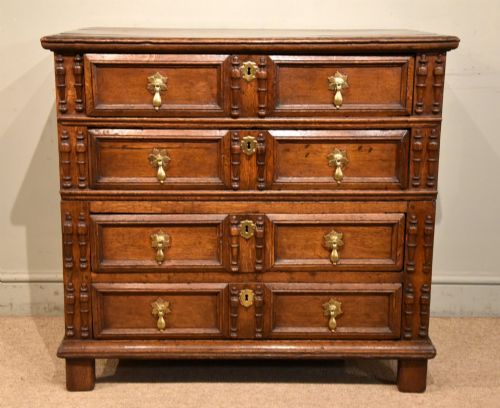
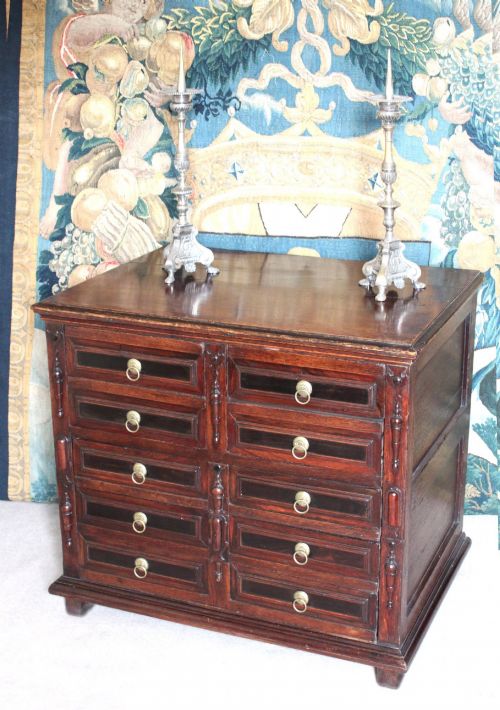
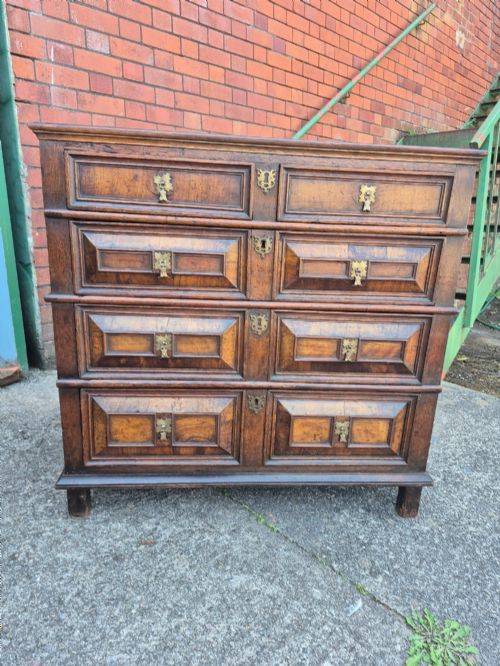
A restoration period chest is a solid storage piece built during the seventeenth century under Charles II or the subsequent William and Mary period, spanning oak, walnut and exotic timbers. These are substantial pieces of antique furniture designed with deep drawers, often elevated on stands or configured as cabinets.
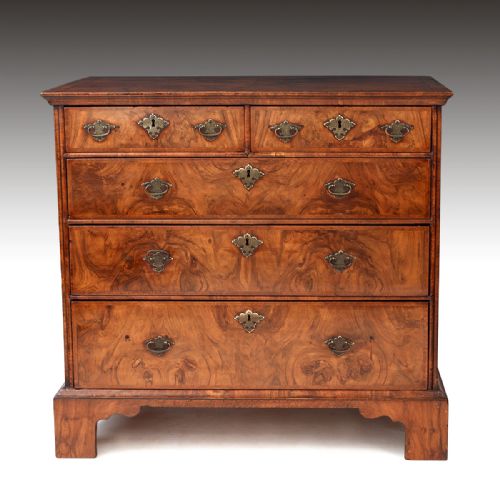
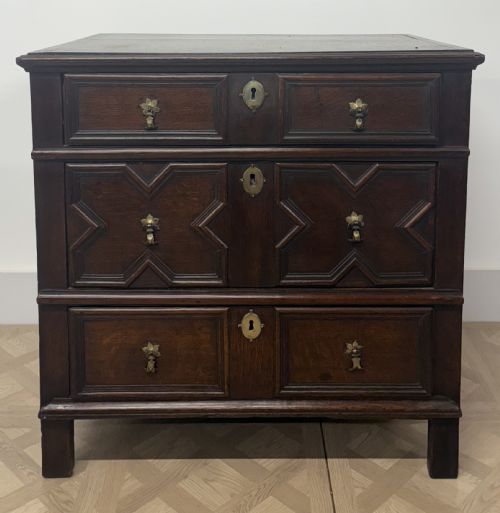
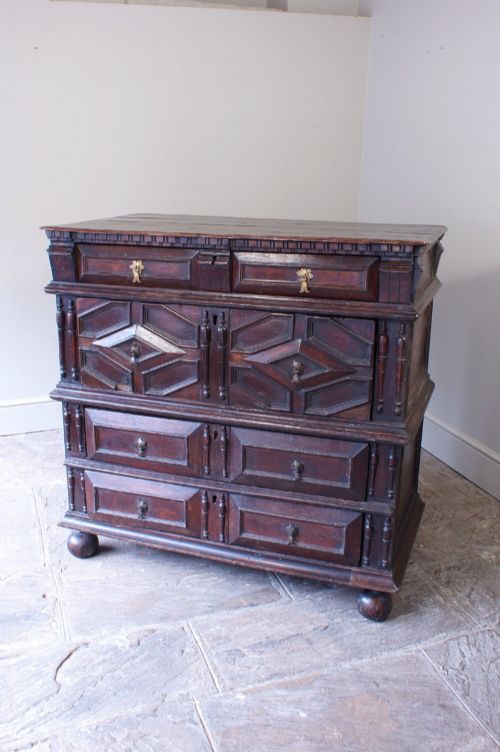
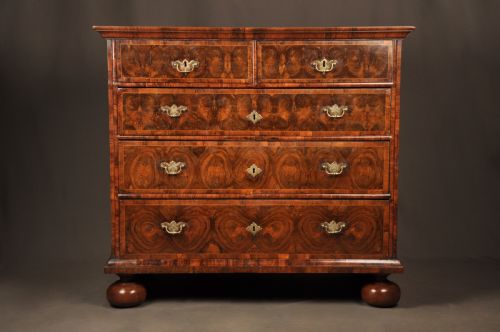
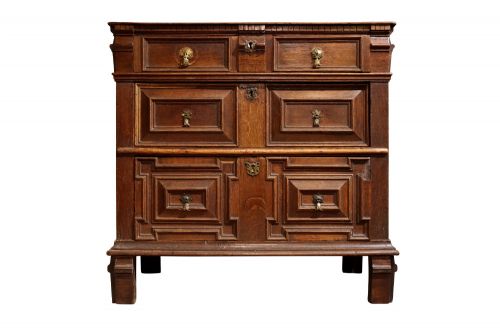
You will most commonly meet oak chests of drawers featuring moulded drawer fronts and geometric panels across this selection. Walnut and burr walnut variations appear frequently alongside elaborate oyster-veneered surfaces.
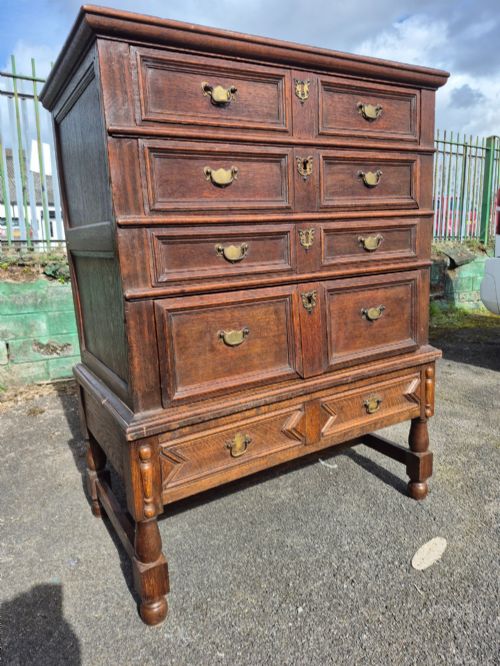
The grouping includes both simple chests and elevated forms such as cabinets on stands and chests on stands. These taller configurations combine a primary storage chest with a dedicated supporting base.
Materials and Construction
Cabinet makers built these pieces using native oak for structural integrity alongside decorative face timbers like walnut, burr walnut and kingwood. Surfaces were frequently embellished with complex geometric patterns formed from cross-grained veneers.
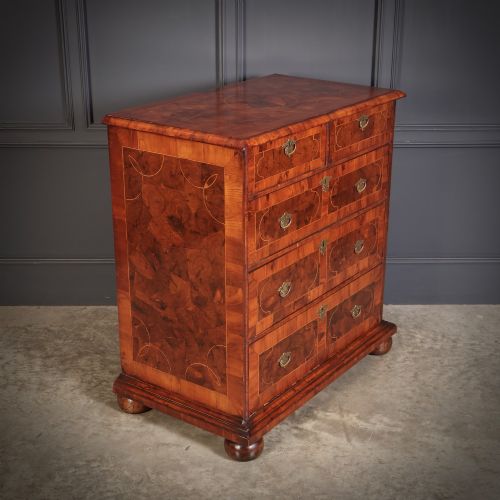
Oyster veneering involved slicing small branch wood crosswise to produce circular or oval patterns across the drawer fronts and panels. Boxwood and olive wood also appear as contrasting inlay elements within the decorative schemes.
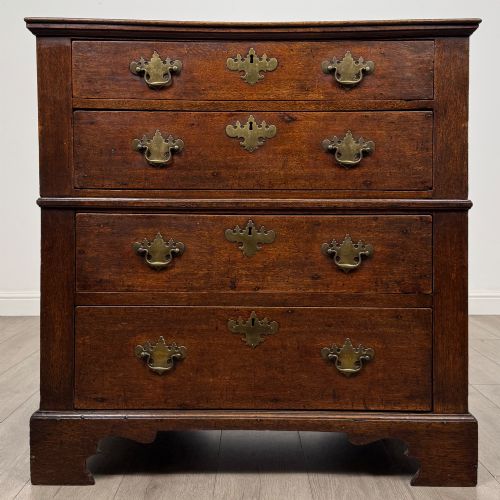
Hardware played a functional and visual role, utilising brass drop handles and escutcheons alongside iron fixings. Mouldings were applied directly to drawer fronts and frames to create depth and shadow.
Listings combine seventeenth-century oak, walnut, and olive wood with specialised hardware including brass and iron.
Assessing Quality and Execution
Quality rests in the precision of the timber selection and the complexity of the veneer work. Finer examples display tightly matched oyster veneers across every visible surface with minimal disruption to the grain pattern.
The integrity of the construction determines the standing of a piece, particularly in how drawers fit their apertures and how stands support upper cabinets. Superior items retain their original brass hardware, timber patination and structural joints.
The Restoration Period Chest Glossary
- Oyster veneer
- A method of slicing branch wood across the grain to create circular or oval wooden discs resembling oyster shells. These pieces were laid in intricate patterns across cabinet doors and drawer fronts.
- Geometric moulding
- Raised wooden mouldings arranged in repeating geometric shapes on drawer fronts or panels. This technique defined much of the decorative output during the late seventeenth century.
- Cabinet on stand
- A storage cabinet elevated on a dedicated supporting frame or stand. This form lifted the primary storage zone off the floor and altered the overall proportions of the furniture.
- Marquetry
- Inlay work using various coloured woods to create pictorial or decorative designs on furniture surfaces. It appears on select walnut pieces from the William and Mary period.
- Boxwood
- A dense, pale wood used for stringing and delicate inlay work. Makers utilised it to create sharp visual contrasts against darker walnut and oak.
Restoration Period Chest: Frequently Asked Questions
What is a restoration period chest?
A restoration period chest is a seventeenth-century wooden storage piece made during the reigns of Charles II and William and Mary.
These items use oak, walnut and oyster veneers configured as drawers or elevated cabinets.
How do I identify a Charles II chest?
Charles II chests typically feature solid oak construction with heavy moulded drawer fronts and geometric panels.
They often display darker patination and simpler structural lines compared to later veneered designs.
What is an oyster veneer chest?
An oyster veneer chest has surfaces covered in circular wood slices cut across small branches.
This technique creates distinctive repeating patterns across the drawers and top panels.
How were these chests used?
These chests provided secure storage for textiles, valuables and household documents in wealthy seventeenth-century homes.
Taller variations like cabinets on stand also served to display prized possessions.
How do I live with antique walnut furniture?
Live with walnut furniture by keeping it away from direct sunlight and sudden temperature changes.
Maintain stable indoor humidity to protect the historic veneers and timber joints.