
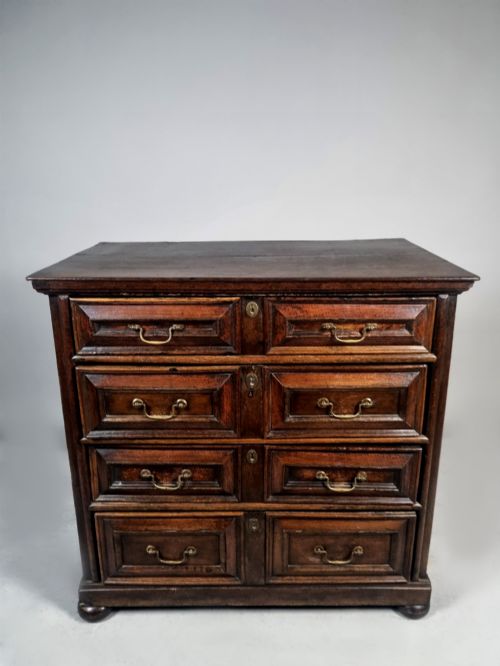
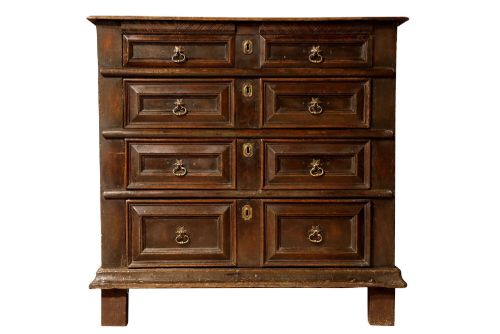
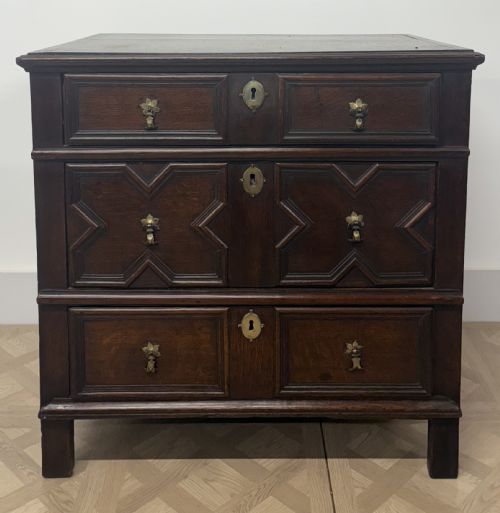
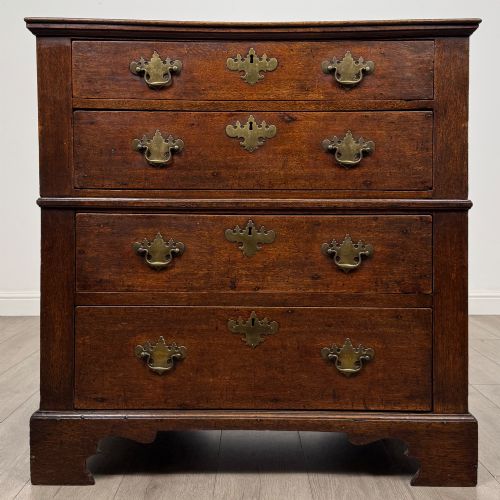


Restoration Oak Chest
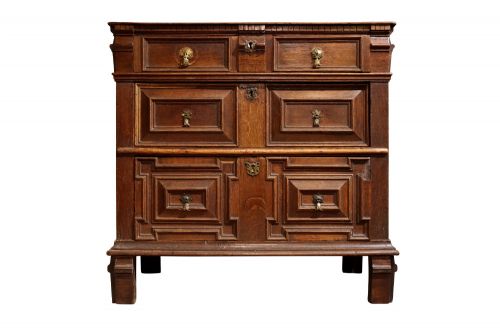
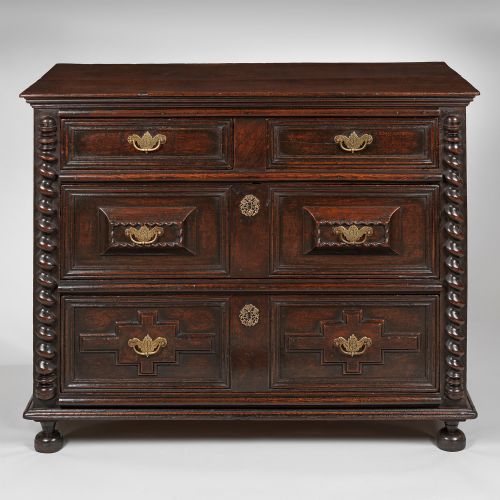
A restoration oak chest brings heavy timber, geometric mouldings, and deep patination straight from the late seventeenth century into a modern room.
Restoration Oak Chest
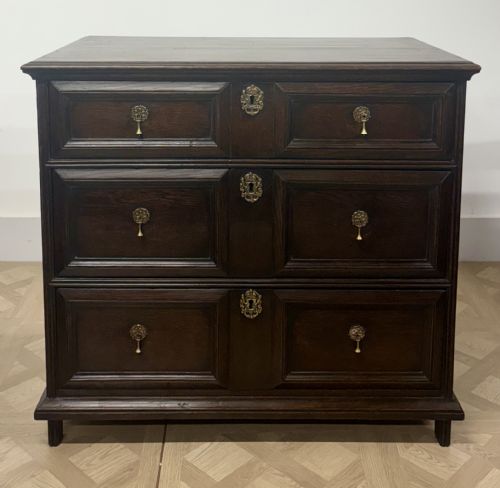
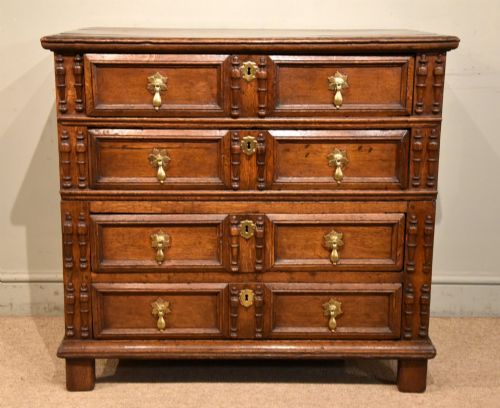
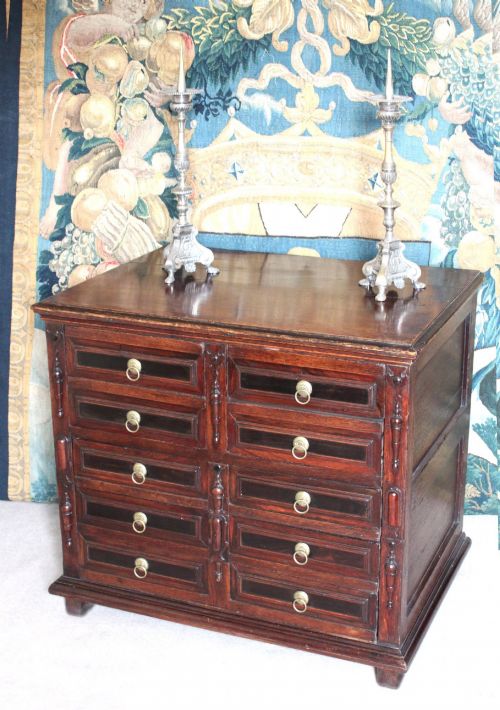
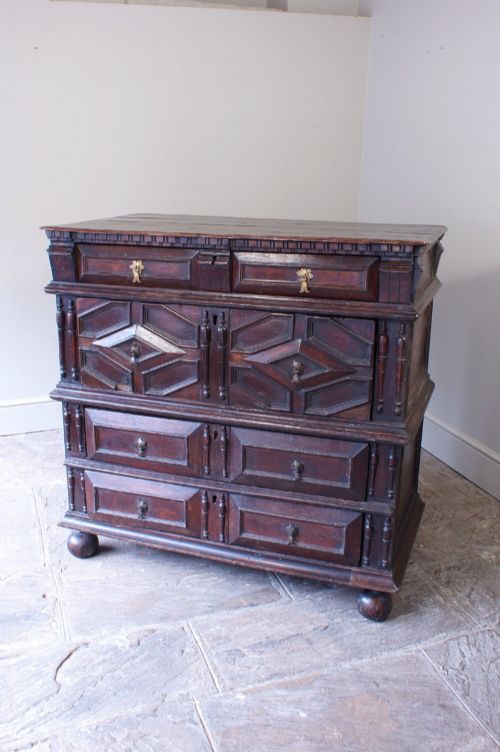
A restoration oak chest is primarily built as a robust chest of drawers, often constructed in two distinct sections designed to ease movement. These pieces date predominantly from the seventeenth century, spanning the Charles II, William and Mary, and Jacobean styles.
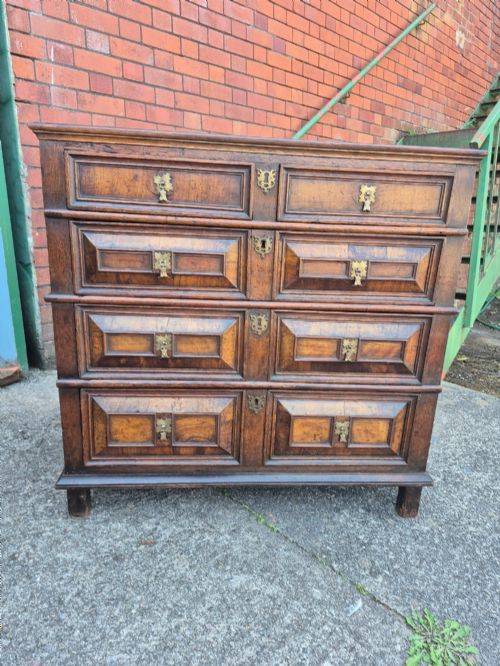
Buyers will frequently encounter timber framed pieces featuring applied geometric mouldings on the drawer fronts, alongside variants incorporating walnut, fruitwood, and olive woods.
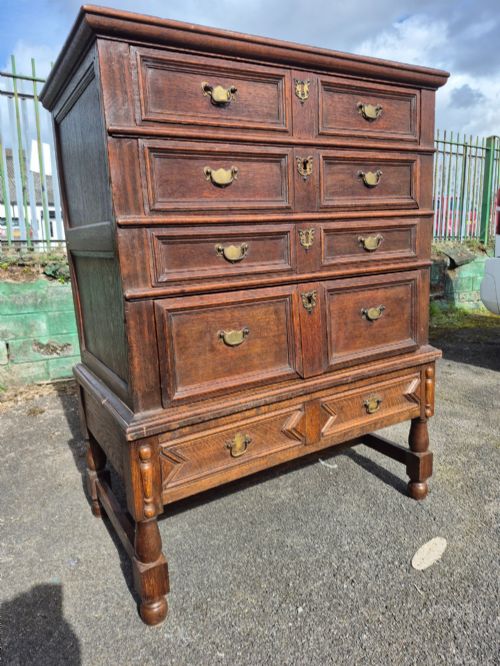
The form encompasses both standard chest of drawers configurations and variants raised on stands or cupboards, reflecting the domestic storage needs of the period.
Materials and construction methods
Makers relied heavily on solid oak for the primary carcase and drawer linings, often combining it with walnut and fruitwood for decorative effect. Iron handles, hinges, and brass escutcheons secure the heavy doors and drawers.
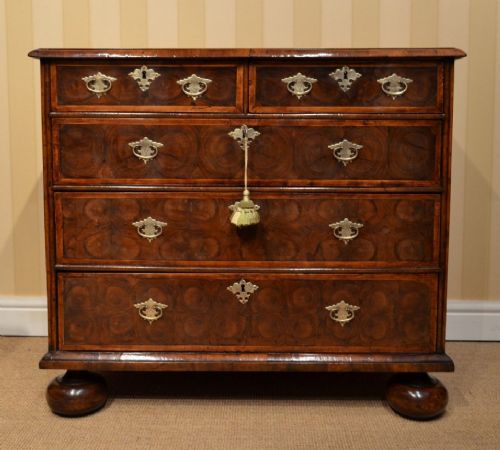
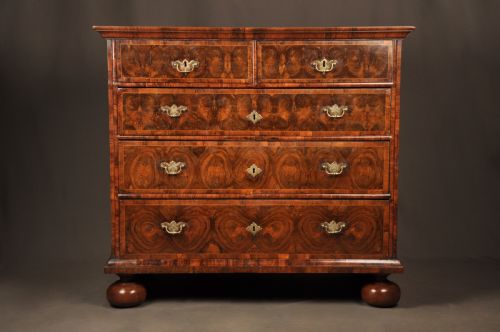
Surface ornamentation involved intricate oyster veneering, where small circular cross-sections of olive or walnut branches were laid in geometric patterns across the drawer fronts. Applied mouldings built up complex geometric panels that created strong shadow lines across the timber.
Current listings demonstrate the extensive use of oak alongside walnut, fruitwood, and olive oyster veneer across seventeenth-century forms.
Assessing quality and craftsmanship
The sophistication of the geometric mouldings and the precision of the oyster veneer work distinguish finer examples from simpler provincial pieces. Crisp, deep relief in the applied mouldings indicates skilled joinery.
The choice of secondary woods and the integrity of the original brass and iron hardware influence the standing of a piece. Two-part construction with well-fitted joints demonstrates superior workshop practice from the period.
The Restoration Oak Chest Glossary
- Oyster veneer
- Small roundels of wood sliced transversely from branches, arranged in repeating geometric patterns across drawer fronts. This technique requires considerable skill to match the grain across wide surfaces.
- Geometric mouldings
- Raised wooden strips applied to drawer fronts in intersecting geometric patterns, characteristic of the Charles II period. They create a strong sculptural relief on the face of the furniture.
- Two-part chest
- A chest of drawers constructed as two separate modules stacked one upon the other, designed to facilitate transport in seventeenth-century homes. The top section typically rests on a moulded base moulding.
- Chest on stand
- A storage chest elevated upon a distinct supporting stand or frame with legs, raising the primary storage compartment off the floor. This form gained popularity toward the end of the seventeenth century.
Restoration Oak Chest: Frequently Asked Questions
How are these chests dated?
Datings rely on stylistic markers such as applied geometric mouldings, oyster veneering, and regional joinery traditions typical of the seventeenth century. Hardware fixings and timber choices provide further chronological clues.
Most examples align with the Charles II and William and Mary periods, showing specific construction methods that evolved across those decades.
What is a two-part chest?
A two-part chest is built as two separate stacked box sections rather than a single tall carcase. This made heavy seventeenth-century furniture easier to move through narrow staircases and doorways.
The horizontal split usually occurs midway down the chest, often concealed by a matching wooden moulding.
Where were these pieces used?
These chests served as primary storage furniture in seventeenth-century bedchambers and parlours, holding linens, garments, and valuables. Their robust construction suited the heavy domestic demands of the period.
Today, they function well in living rooms or hallways as statement storage pieces that anchor a room.
How do I care for oyster veneer?
Oyster veneer requires stable indoor humidity and protection from direct sunlight to prevent the small wooden roundels from shrinking or lifting. Regular dusting with a dry, soft cloth maintains the timber surface without moisture damage.
Applying a traditional beeswax polish occasionally helps nourish the walnut or olive wood used in the veneer patterns.