




Restoration Era Furniture
Restoration era furniture brings seventeenth-century craftsmanship into your home through sturdy chests, tables, and cupboards built to last.
Restoration Era Furniture
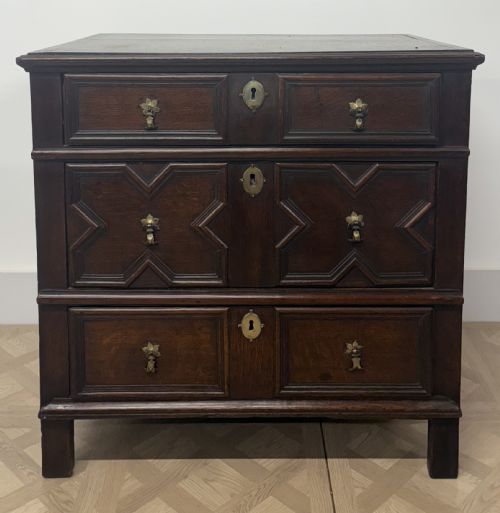
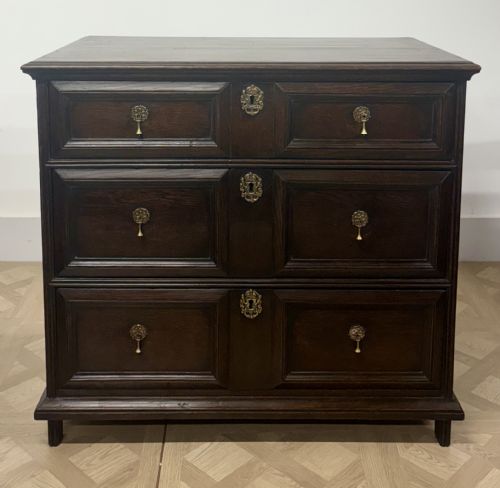
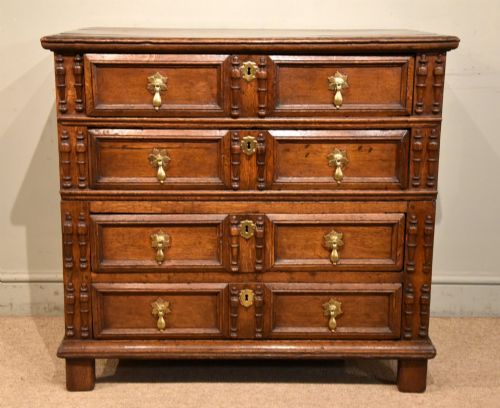
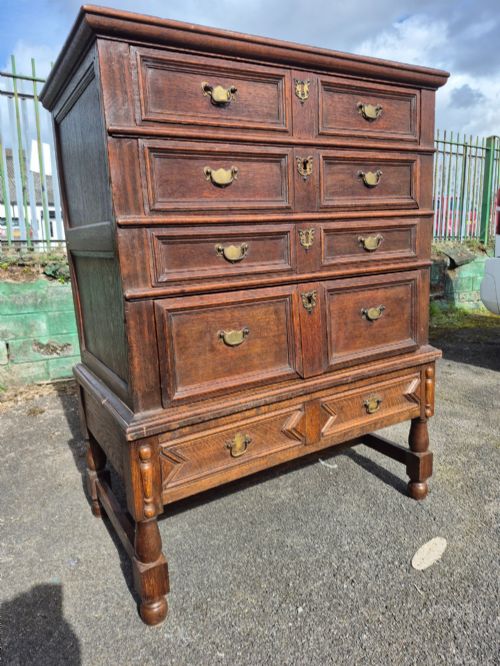
Restoration era furniture comprises seventeenth-century pieces originating from the Carolean, Charles II, and William and Mary periods, reflecting a time of renewed artistic production. When exploring restoration era furniture, buyers frequently encounter robust oak and walnut chests of drawers built in two parts with geometric mouldings.
The selection also includes practical dining tables, court cupboards, and credenzas originating from seventeenth-century workshops and later eighteenth-century Dutch traditions. These utilitarian forms demonstrate the domestic needs of seventeenth-century households through enduring timber construction and functional storage layouts.
Materials and Construction Techniques
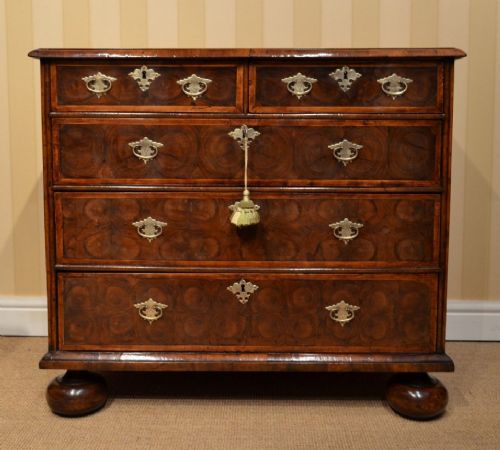
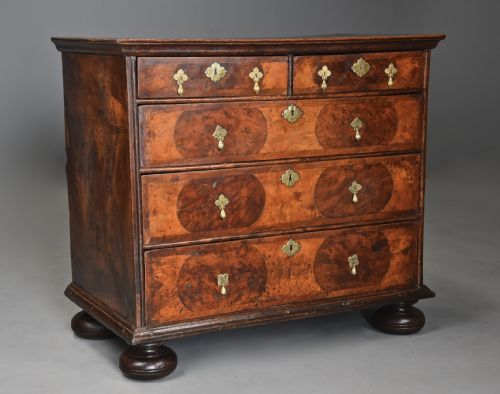
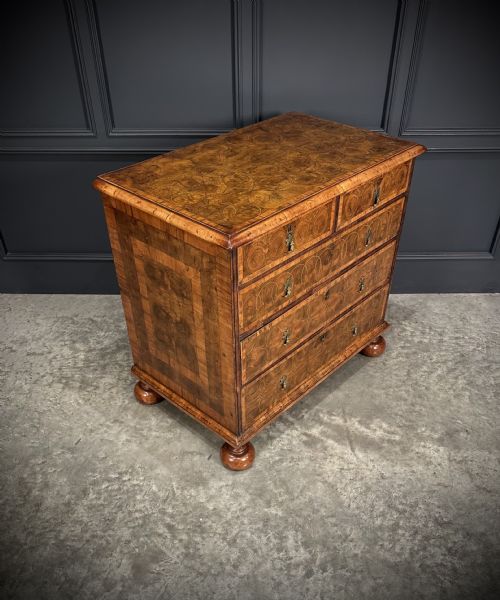
Cabinetmakers utilised native timbers such as oak, fruitwood, and walnut, frequently combining them within a single piece to balance structural strength with decorative potential. Workshops applied thin cross-grain sections of wood known as oyster veneer onto primary surfaces to create repeating circular patterns across drawer fronts.
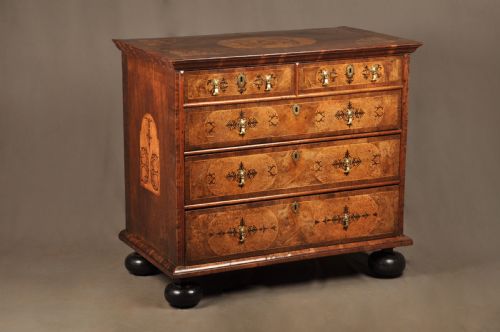
Makers embellished surfaces through intricate marquetry inlay featuring arabesque designs, alongside ebonised wood details that provided stark visual contrast. Structural joinery relied on traditional methods, while geometric mouldings added depth and architectural dimension to case pieces.
Listings feature seventeenth-century periods including Charles II, William and Mary, and Jacobean styles.
Distinctions in Quality
The refinement of the surface decoration separates standard examples from superior pieces, particularly in the precision of arabesque marquetry and the consistency of oyster veneering. Superior items retain their original timber surfaces and distinct patination acquired through centuries of handling and environmental exposure.
The Restoration Era Furniture Glossary
- Oyster veneer
- A method of slicing branches horizontally to produce small, oval-shaped pieces of wood with concentric growth rings. These segments were arranged closely together to cover drawer fronts and table tops.
- Marquetry inlay
- The art of forming decorative patterns by fitting contrasting veneers into prepared recesses on a wooden surface. Craftsmen utilised various stained woods to depict elaborate floral and scroll motifs.
- Geometric moulding
- Raised wooden strips applied to case furniture in rectilinear or octagonal patterns to create architectural depth. This technique defined much of the cabinetmaking during the Charles II period.
- Court cupboard
- A heavy wooden storage unit featuring enclosed compartments, used historically for displaying plate and storing household provisions. These pieces typically exhibit sturdy oak construction from the seventeenth century.
- Ebonised wood
- Timber treated with chemical solutions or dark finishes to imitate expensive ebony. This dark material provided sharp tonal contrast against lighter walnut and oak surfaces.
Restoration Era Furniture: Frequently Asked Questions
What defines restoration era furniture?
Restoration era furniture encompasses seventeenth-century pieces created during the reigns of Charles II and William and Mary, alongside related Carolean styles.
These items are characterised by solid timber construction, particularly oak and walnut, featuring geometric mouldings and decorative veneers.
Where were these pieces made?
These furnishings originated in seventeenth-century workshops across Britain, with occasional continental influences visible in Dutch-inspired inlaid pieces.
Local timber supplies dictated whether makers selected oak, fruitwood, or walnut for the primary carcass.
How do I care for antique walnut furniture?
Maintain walnut furniture by keeping it away from direct heat sources and fluctuating humidity levels that can crack delicate veneers.
Apply traditional wax sparingly and polish gently with a soft cloth to preserve the natural patina built up over centuries.