






Renaissance Revival Cupboard
A renaissance revival cupboard brings substantial nineteenth century presence to a room, offering heavy carved timber and historic architectural lines.
Renaissance Revival Cupboard
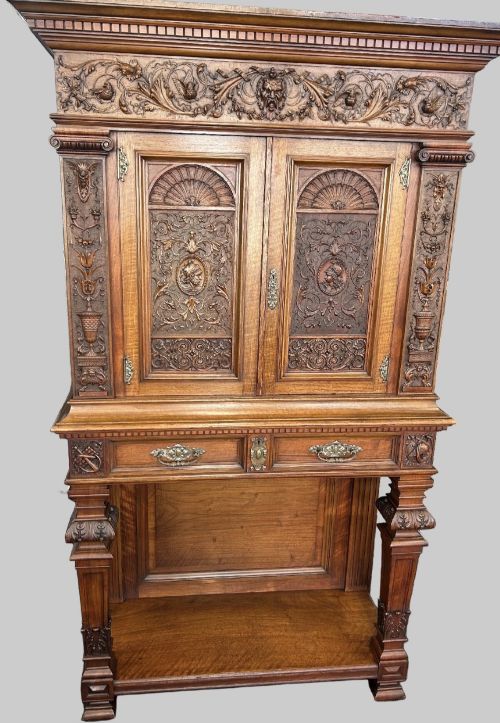
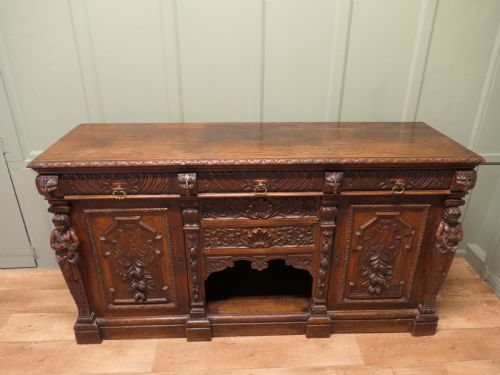
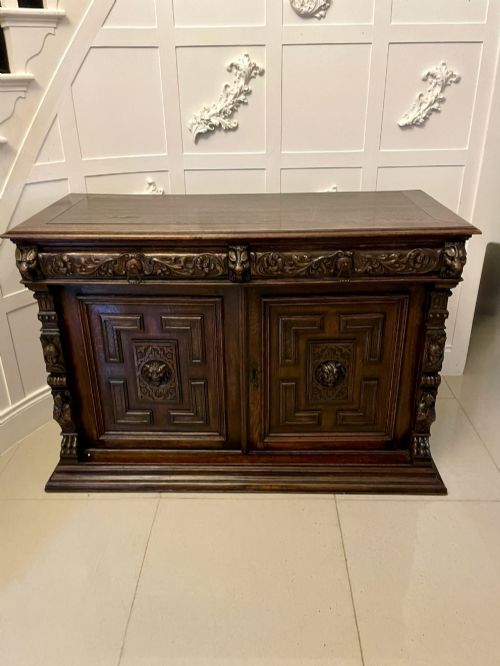
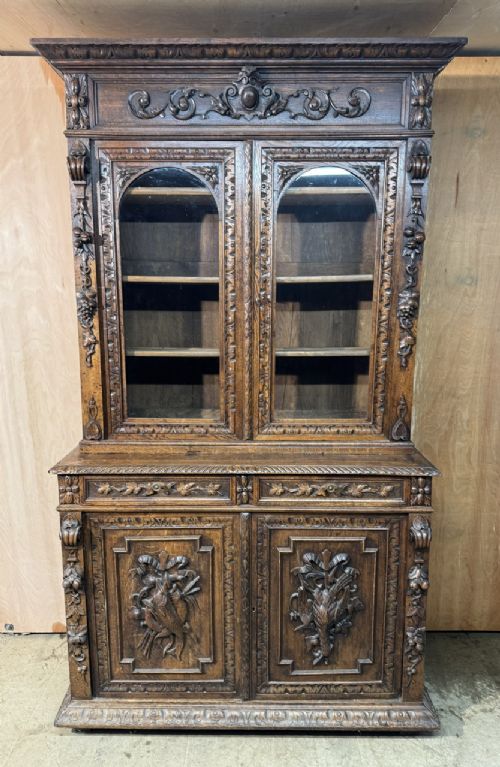
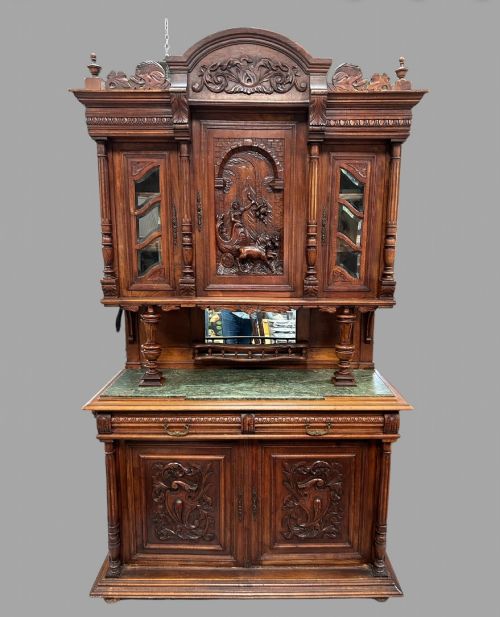
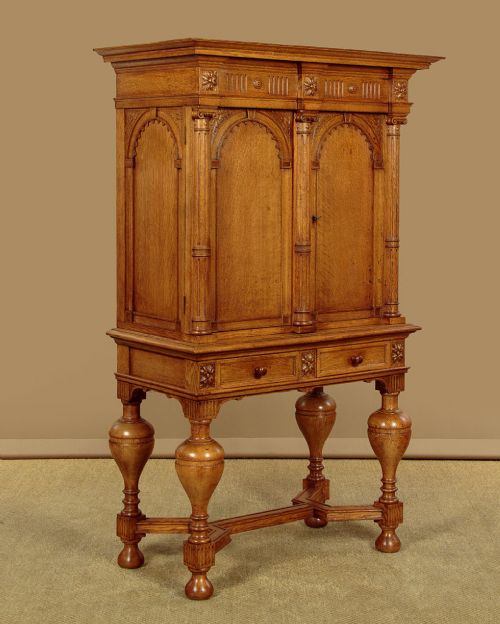
A renaissance revival cupboard draws on sixteenth century motifs scaled up for nineteenth century interiors, appearing in forms such as sideboards, buffets, hall cupboards, and cabinets on stand. These architectural pieces often incorporate regional variations including French, Italian, and Flemish designs alongside Victorian interpretations.
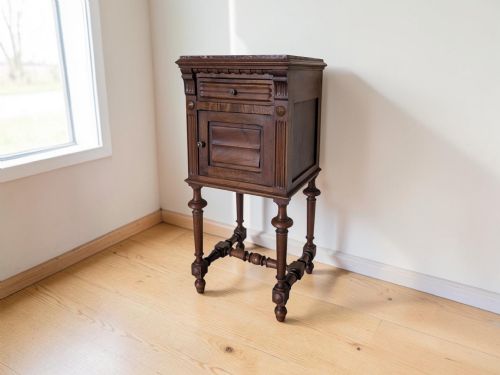
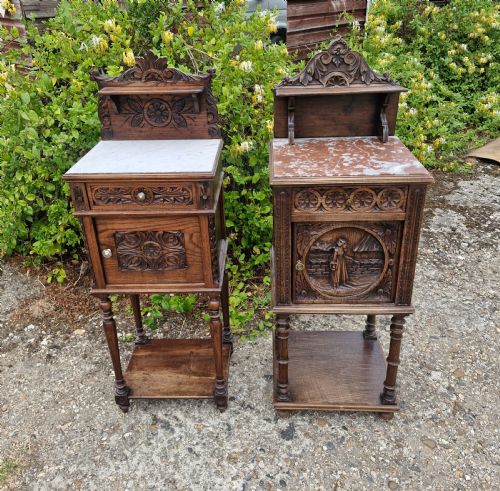
Oak and walnut dominate the selection, frequently augmented by brass hardware, glass panels, marble tops, and occasional mother of pearl inlay. The construction ranges from compact bedside cabinets and pier cabinets to massive multi-tiered sideboards with mirror backs or bookcase tops.
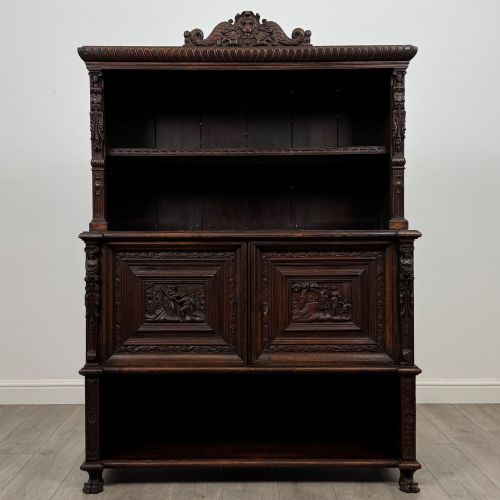
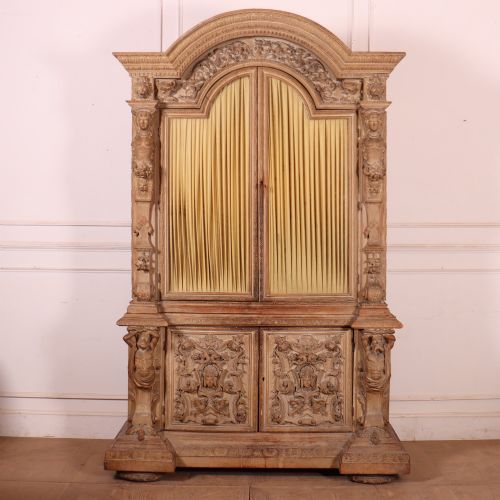
Dating primarily from the nineteenth century, particularly around the 1850s to 1900, these items serve as storage furniture with deep historical styling. The heavier examples utilise carved panels, lion masks, and green man motifs to project an air of antiquity.
What varies in quality
Proportion and architectural balance dictate the success of the design, as smaller cabinets must maintain the gravitas of larger buffets without appearing compressed. The structural integrity of heavy doors and the quality of original brass hinges or locks further distinguish superior examples.
Materials span traditional oak and walnut alongside occasional rosewood, pine, amboyna, and ebony, complemented by marble and mother of pearl.
Gordovil Spain·Sigmund Jaray Wien
The Renaissance Revival Cupboard Glossary
- Renaissance Revival
- A nineteenth century design movement that reinterpreted sixteenth century architectural and decorative motifs from Italy, France, and Flanders. This style favours heavy symmetry, classical columns, and prominent cornices.
- Green Man
- A sculptural motif depicting a human face entwined with or emerging from foliage and vines. It appears frequently as a carved detail on nineteenth century oak furniture.
- Buffet de Corps
- A large, two-part formal dining room cupboard or sideboard of French origin, typically featuring enclosed storage in both upper and lower sections.
- Cabinet on Stand
- A case piece raised on an integrated leg frame or base structure, elevating the main storage compartment to create a lighter visual profile.
- Vitrine
- A glass-fronted display cabinet designed for showing porcelain, glassware, or curiosities, utilising glazed doors and sides.
Renaissance Revival Cupboard: Frequently Asked Questions
Where should I place a large cupboard?
These substantial pieces require adequate wall space and sturdy floor support, making them well suited to dining rooms, grand hallways, or spacious living areas where their architectural weight feels balanced.
Keep them away from direct heat sources and strong sunlight to protect the aged timber and any inlaid details from drying out or fading over time.
How do I care for carved oak?
Dust the deep recesses of the carving regularly using a soft brush or a dry cloth to prevent the accumulation of grit in the wooden grain.
Apply a traditional beeswax polish sparingly every few months to maintain the lustre of the timber without creating a heavy buildup on the surface.
How do I distinguish regional styles?
French and Flemish examples often lean towards dramatic figures, lion masks, and prominent hunting motifs, while Italian versions tend to display classical architectural proportions and restrained scrolling.
English and general Victorian interpretations merge these continental influences with domestic tastes, resulting in varied combinations of dark oak, mirrored backs, and heavy cornices.
What is a buffet de corps?
A buffet de corps is a traditional two-part storage piece featuring a smaller upper cupboard set back upon a larger lower cabinet base. These French forms provide extensive capacity for dining ware and linens.
The separation into two sections also assists with transport, as these imposing items were built to dismantle for moving between rooms.