


Regency Wine Coasters
Regency wine coasters protect the dining table in style, bringing the formal elegance of the early nineteenth century straight to the modern interior.
Regency Wine Coasters
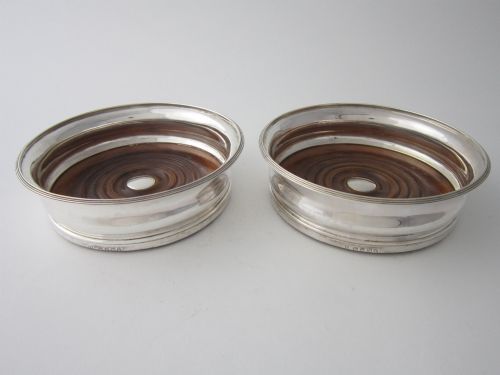
Regency wine coasters are circular stands designed to hold bottles and decanters safely on the dining table, preventing spills and condensation from marking the polished wood. Most examples encountered here date from the nineteenth century, encompassing Georgian, Regency, and William IV periods.
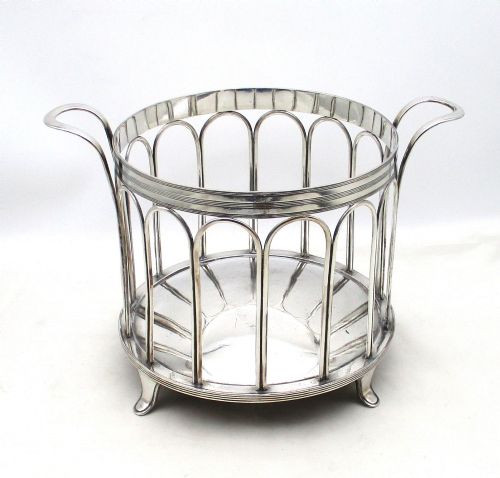
The form appears in various materials including silver, sterling silver, old Sheffield plate, mahogany, rosewood, copper, and papier-mâché. Buyers frequently encounter pairs or sets of these bottle stands, often featuring turned wooden bases or pierced metal galleries.
These accessories served a practical function during extended dining rituals when bottles were passed along the table after the servants withdrew. The evidence shows specialised pieces such as decanter trolleys and ships coasters alongside standard wine coasters.
How they were made
Metal coasters rely on old Sheffield plating or sterling silver construction, often combining silver sheet fused to a copper core. Silversmiths shaped the rims through piercing, embossing, or casting, sometimes incorporating applied armorial details.
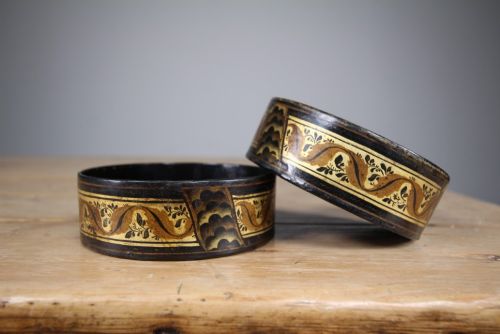
Wooden examples utilise dense timbers like mahogany and rosewood, turned on a lathe and carved with gadrooned or reeded borders. Papier-mâché pieces involve layered paper pulp pressed in moulds, finished with dark lacquer and hand-applied gilded decoration.
The documented periods span the Georgian, Regency, William IV, and Victorian eras.
What varies in quality
Quality depends upon the crispness of the manufacture and the retention of original details. Metal coasters show distinction in the depth of their chasing and the condition of the silver plating over the copper base.
Wooden and papier-mâché versions demonstrate superior craftsmanship through the stability of the timber, the precision of the turned mouldings, and the preservation of the delicate gilded surfaces on the lacquer.
Matthew Boulton·James Mein of Kelso·John and Thomas Settle
The Regency Wine Coasters Glossary
- Old Sheffield plate
- A composite material made by fusing a thin sheet of silver to a thicker copper base, common in the late eighteenth and early nineteenth centuries.
- Papier-mâché
- A durable substance formed from compressed paper pulp or sheets, treated with lacquer and often painted or gilded.
- Decanter trolley
- A wheeled carriage designed to roll wine bottles smoothly across the dining table without lifting.
- Armorial
- A design displaying a family coat of arms, frequently engraved or applied to silver and metalware.
- Gadrooned
- A decorative carved or embossed border consisting of convex curves or fluting.
Regency Wine Coasters: Frequently Asked Questions
How were regency wine coasters used?
These pieces sat upon the dining table to hold wine bottles and decanters securely during meals. Diners slid them along the polished surface to pass drinks down the table.
The raised sides kept the bottles stable while protecting the timber from drips and rings. Sets allowed multiple vintages to circulate simultaneously among the guests.
What materials are most common?
The selection includes silver, sterling silver, and old Sheffield plate alongside turned mahogany and rosewood. Papier-mâché versions with dark lacquer and gilding also appear frequently.
Metal examples often feature wooden bases inserted underneath to deaden the sound when placing the bottle down. Each material reflected the wealth and taste of the original dining room.
How do I identify a period piece?
Dating relies on stylistic markers such as Regency reeding, George IV proportions, and Georgian armorial engravings. Construction methods like old Sheffield plating provide reliable chronological clues.
Maker marks and engraved initials on the metal rims also help anchor pieces to the early nineteenth century. Timber choice and turning style align closely with furniture production of the same decades.
Can I use them on my table?
These items remain fully functional for holding modern wine bottles and decanters during dinner parties. Their sturdy construction suits daily use just as well as display.
Care involves simple wiping and avoiding excessive moisture on the wooden or papier-mâché surfaces. They bring authentic period character directly into modern hospitality settings.