




Regency Two Drawer Table
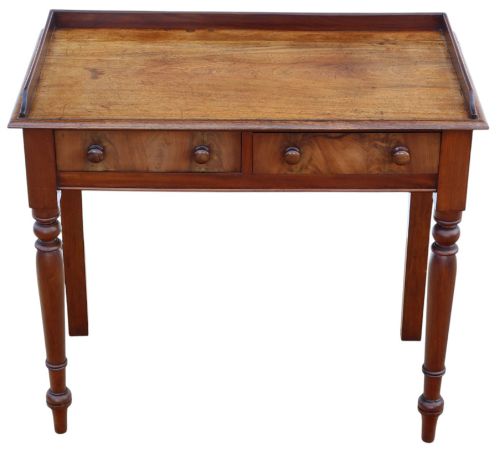
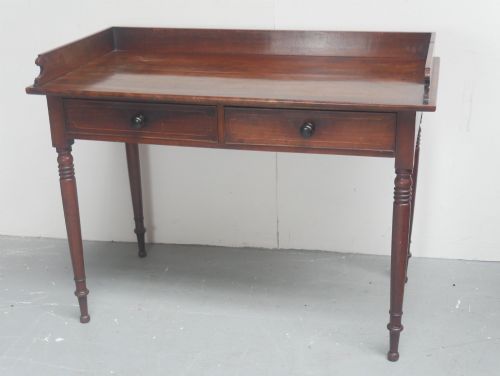
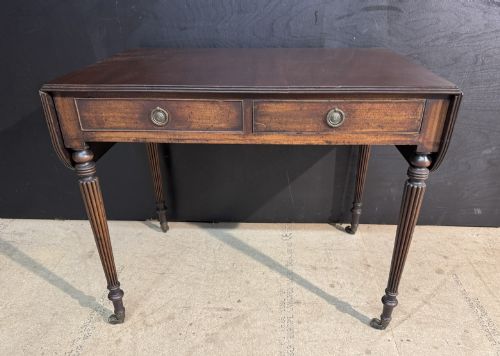
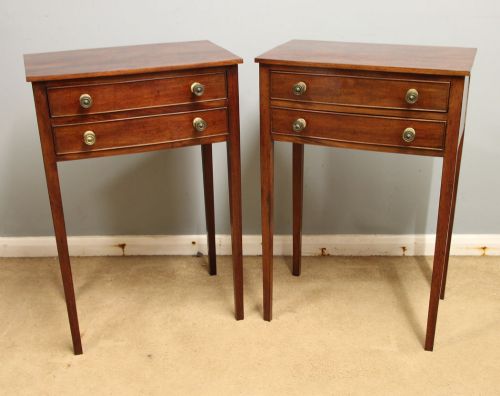
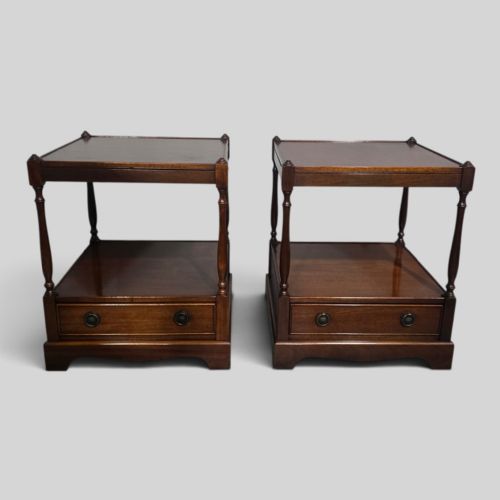
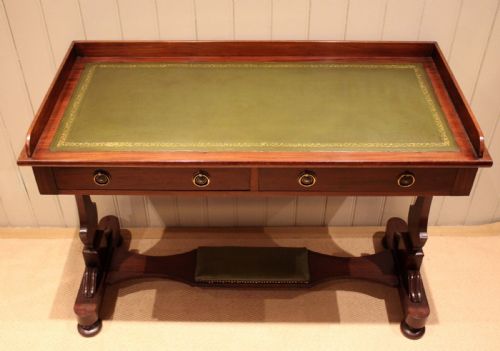
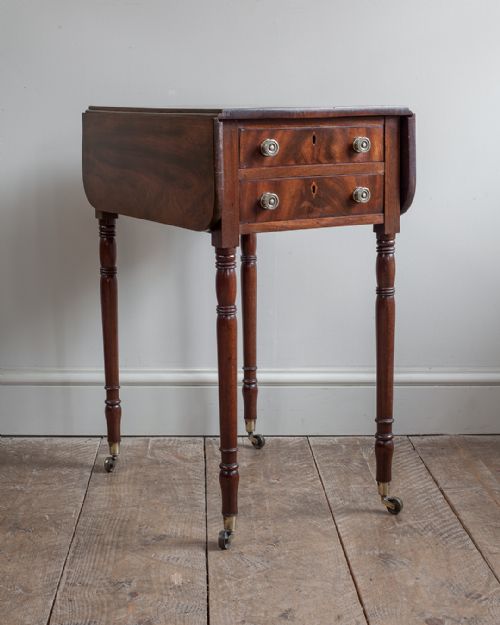
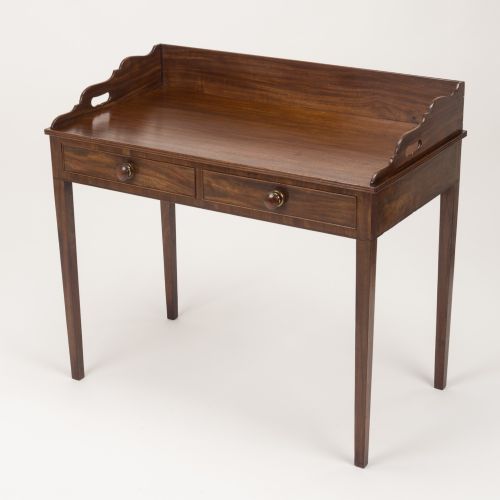
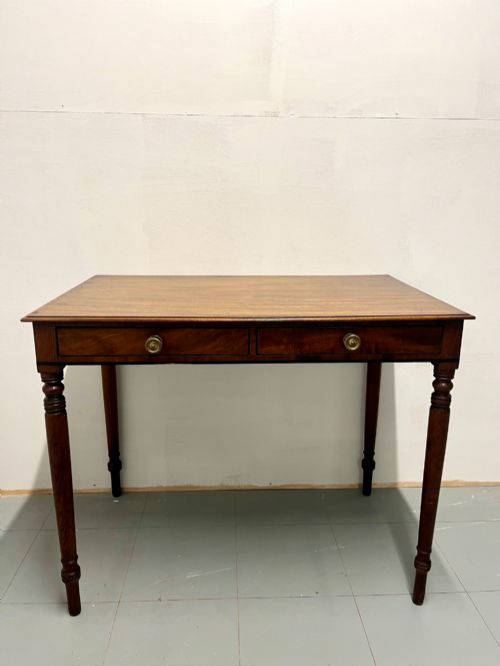
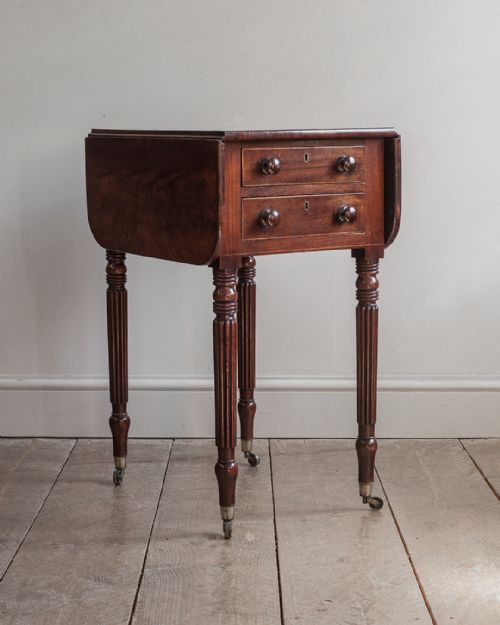
These pieces are regency two drawer table examples, offering practical twin-drawer storage alongside the balanced proportions valued in period rooms.
Regency Two Drawer Table
A regency two drawer table brings together compact storage and period elegance, appearing most frequently in forms such as writing desks, side tables, and sofa tables. These pieces serve daily utility while retaining the distinct character of the nineteenth century.
The selection ranges from authentic Regency and Georgian periods through to later revivals from the Edwardian era and the twentieth century. Makers of the time constructed them for specific domestic tasks, from library work to bedside convenience.
Side and writing variations dominate the selection, often featuring twin drawers beneath a rectangular or bow-fronted top. Buyers encounter mahogany and rosewood most frequently among the timber choices.
How they were made
Craftsmen utilised solid timber and veneers, selecting figured mahogany and rich rosewood for visible surfaces. Workshops incorporated secondary timbers for drawer linings and internal framing.
Decorative elements relied on precision joinery, brass inlay, boxwood strings, and hand-painted geometric details rather than heavy carving. Brass handles and castors finished the functional design of these tables.
Drop-leaf mechanisms and end supports allowed certain forms, such as sofa tables and work tables, to adapt to changing room layouts.
Some work tables included concealed silk bags beneath the drawers for storing sewing wool.
What varies in quality
The choice of timber grain separates standard examples from exceptional pieces. Figured mahogany and well-matched rosewood veneers indicate higher workshop standards during production.
Refinement in secondary details, such as precise brass inlay, fine boxwood stringing, and well-executed hand-painted top designs, distinguishes superior construction. The integrity of original brass hardware and smooth drawer action further define the upper tier of the range.
Gillows
The Regency Two Drawer Table Glossary
- Sofa table
- A rectangular table designed to stand in front of a sofa, typically featuring drop leaves on either side and two frieze drawers.
- Pembroke table
- A small table with hinged drop leaves on two opposite sides, often equipped with a single drawer or two dummy drawers.
- Boxwood inlay
- Narrow strips of pale boxwood set into contrasting dark timbers like mahogany or rosewood to create linear geometric borders.
- Bow front
- A convex, curved front section on a cabinet or table that softens the rectilinear geometry of the piece.
- Library table
- A substantial freestanding table intended for books and writing, finished on all sides so it can occupy the centre of a room.
Regency Two Drawer Table: Frequently Asked Questions
Where should I place a two drawer table?
These tables adapt easily to various rooms, serving effectively behind a sofa, against a hallway wall, or as a compact writing desk in a study. Freestanding versions look best positioned where all sides remain visible.
Their twin drawers provide practical storage for small household items while maintaining a slim profile that avoids crowding smaller spaces.
How do I care for mahogany and rosewood?
Keep these timbers away from direct sunlight and heat sources to prevent the wood from drying out and the veneer from lifting. Dust regularly with a soft, dry cloth.
Apply a quality beeswax polish occasionally to nourish the surface and maintain the natural lustre of the grain.
What is the difference between a writing table and a side table?
Writing tables are generally constructed with comfortable knee clearance beneath the drawers and often feature leather or cloth inserts on the top surface. They were built specifically for seated work.
Side tables prioritize surface display and general storage, standing at heights intended for lamps, books, or decorative objects rather than active writing.
How do I identify a Regency piece from later revivals?
Authentic Regency examples exhibit construction methods, timber maturity, and hardware styles consistent with the early nineteenth century. Secondary woods inside the drawers typically include oak or pine.
Later Victorian, Edwardian, or twentieth-century revivals often display standardised machine-cut components and timber characteristics specific to their actual production dates.