




Regency Trumeau Mirror
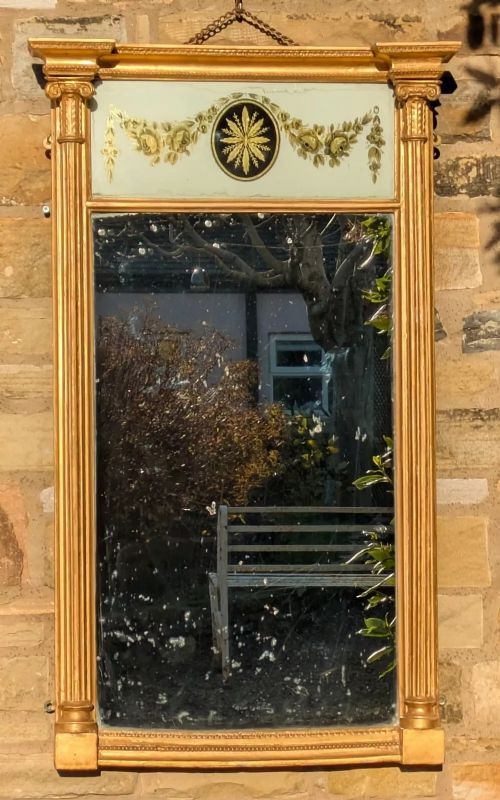
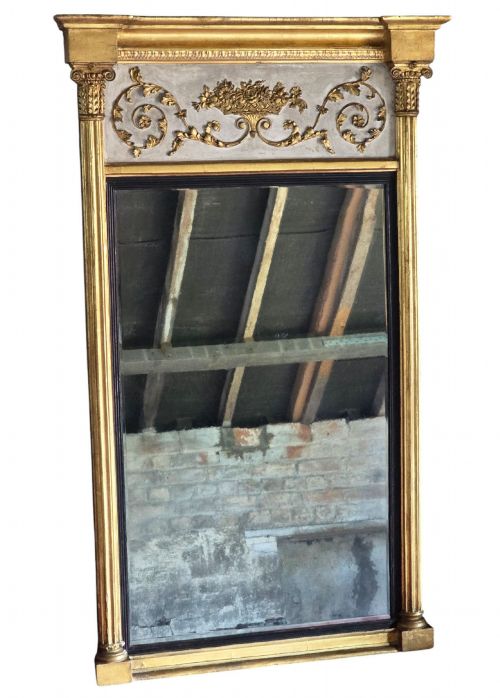
A regency trumeau mirror brings architectural presence to a room, combining classic vertical glass with decorative painted or reverse-glass upper panels.
Regency Trumeau Mirror
When searching for a regency trumeau mirror, collectors encounter wall-hung pier glasses and tall vertical frames spanning the 19th Century, Regency, and Georgian eras. These pieces bridge the gap between architectural fittings and decorative furnishings, often designed to hang between windows or above mantelpieces.
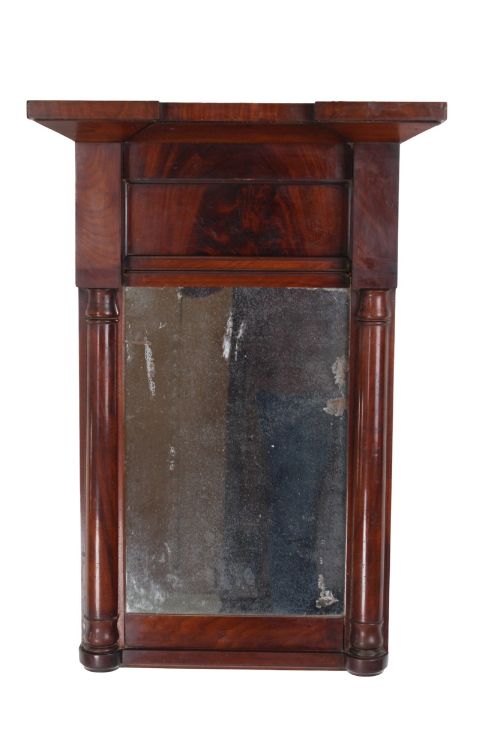
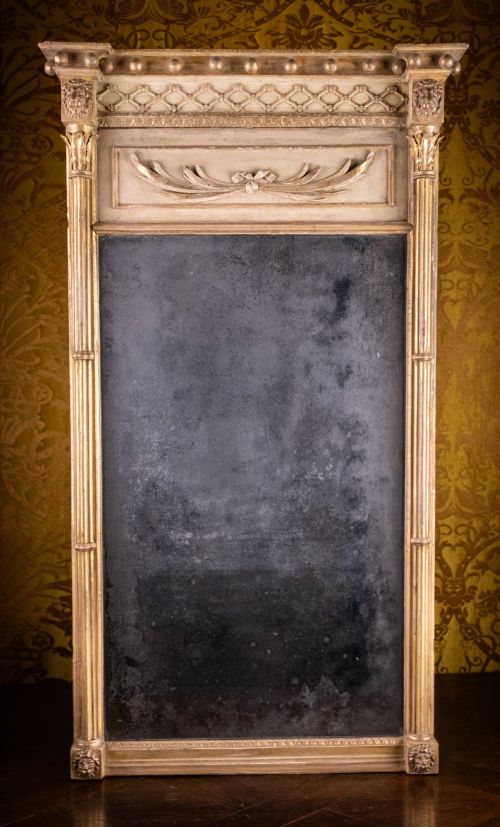
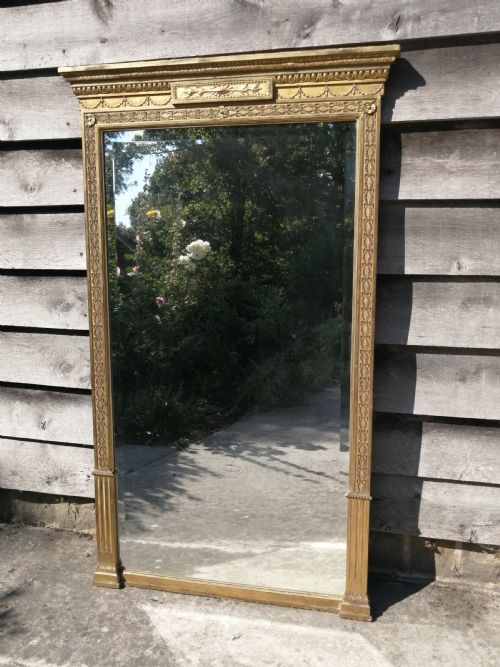
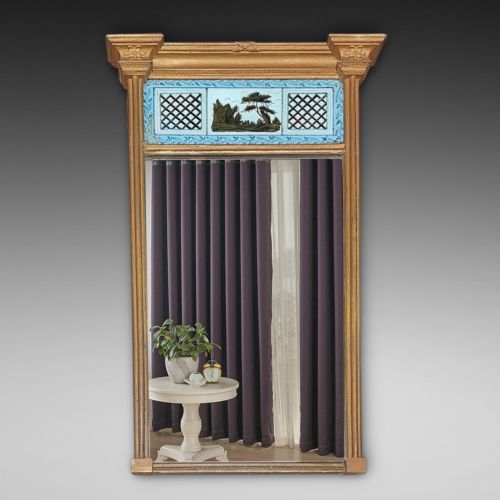
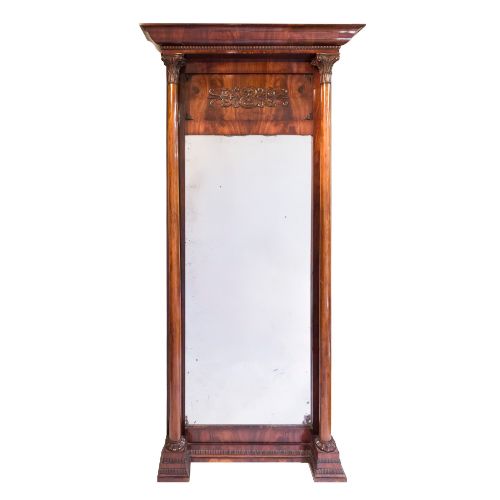
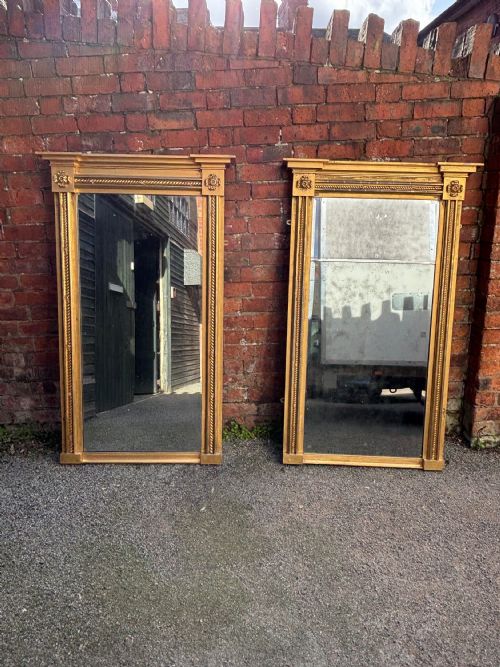
The version most commonly met on this page is the giltwood pier mirror featuring an upper verre eglomise panel or painted scene, alongside solid or flame mahogany veneer frames. They originate from British and continental workshops, incorporating styles such as Neoclassical, French Empire, and Egyptian Revival.
Proportions tend to be tall and narrow, accommodating historical room layouts where vertical wall space dictated mirror dimensions. Makers incorporated half-columns, lion masks, and console tables into the broader form to anchor the vertical sweep of the glass.
How they were made
Carved wood frames provide the foundational structure, utilising giltwood and gesso finishes alongside flame mahogany veneer and maple timber. Craftsmen gilded wood surfaces using gold leaf applied over prepared gesso grounds.
Upper sections frequently incorporate verre eglomise panels or reverse glass paintings depicting naval engagements or classical motifs. Original mercury plates and silvered mirror glass provide the reflective surfaces within these architectural frames.
Regency Trumeau Mirror Retail Price Guide 2026
Typical asking prices for regency trumeau mirror among the pieces listed under this phrase on Sellingantiques today, from the lower quarter to the upper quarter. They describe what is for sale here now, not the wider market.
One unexpected mirror pairs an American and British naval battle scene above the glass, proving history truly is best viewed while checking your tie.
What varies in quality
The refinement of the carved ornamentation, from crisp acanthus leaves to cast ormolu mounts and detailed lion masks, separates standard joinery from superior workshop output. The depth and integrity of the original gilding on gesso ground dictate the visual weight of the frame.
The survival of original mercury plates and authentic verre eglomise panels defines the historical value of the piece. Proportion and timber selection, particularly figured flame mahogany or maple, further distinguish master cabinet work from simpler utility mirrors.
The Regency Trumeau Mirror Glossary
- Verre eglomise
- Reverse-glass painting and gilding technique used to create decorative upper panels in mirrors. This method produces deep metallic brilliance viewed from the front of the glass.
- Pier mirror
- A tall vertical glass designed to hang on the wall space between windows. These mirrors reflect natural light deeper into 19th Century rooms.
- Gesso
- Plaster-based preparation mixture applied to wood frames before gilding. It holds crisp relief detail for carved wooden ornamentation.
- Ormolu
- Gilded bronze mounts applied to furniture and mirror frames. This technique adds metallic contrast to mahogany and gilt surfaces.
- Mercury plate
- Early mirror glass manufactured using a tin and mercury amalgam backing. This process creates a characteristic mottled, deep reflective surface.
Regency Trumeau Mirror: Frequently Asked Questions
Where should I hang a pier mirror?
These mirrors suit narrow wall spaces between tall windows or above existing console tables. Their vertical proportions draw the eye upward and brighten darker corners.
Ensure adequate wall fixings support the considerable weight of timber, gesso, and glass. Position them at a height that reflects room lighting effectively.
How do I identify original mirror glass?
Original mercury plates exhibit fine foxing, slight distortion, and a darker, softer reflection than modern float glass. The backing often shows uneven silvering characteristics.
Replacement glass appears uniformly bright and lacks the historical depth seen in 19th Century plates.
What is a verre eglomise panel?
A verre eglomise panel is a piece of glass decorated on the reverse side using gold leaf, silver leaf, and paint. These panels sit above the main mirror glass to complete the trumeau composition.
Subjects range from classical architectural scenes to historical naval engagements.
How do I care for giltwood frames?
Giltwood surfaces require gentle dusting with a soft, dry brush to protect fragile gold leaf and gesso layers. Avoid moisture and chemical cleaning agents entirely.
Keep mirrors away from direct sunlight and fluctuating radiator heat to prevent timber shrinkage and flaking gesso.