



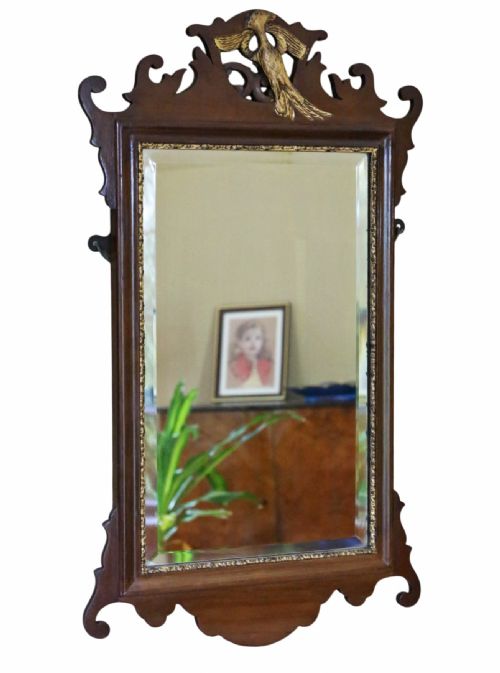
Edwardian Mahogany Wall Mirror
An edwardian mahogany wall mirror brings warmth and reflective depth to a room through dark timber and fine grain.
Edwardian Mahogany Wall Mirror
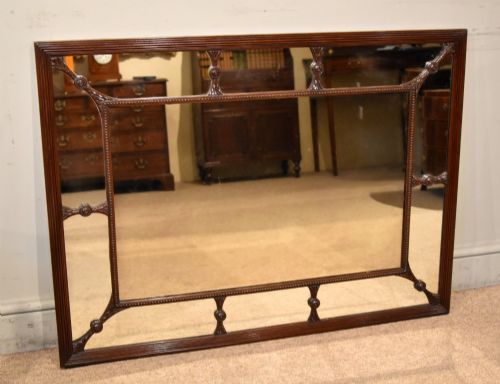
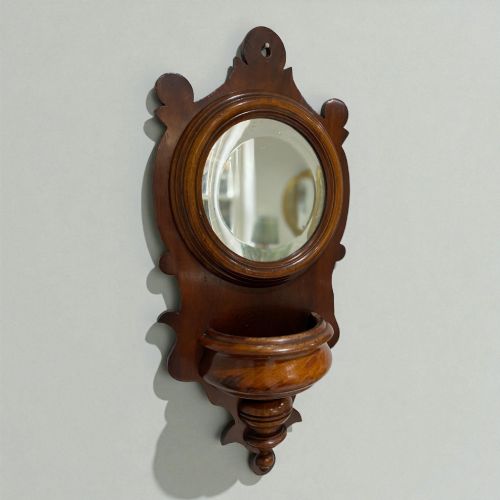
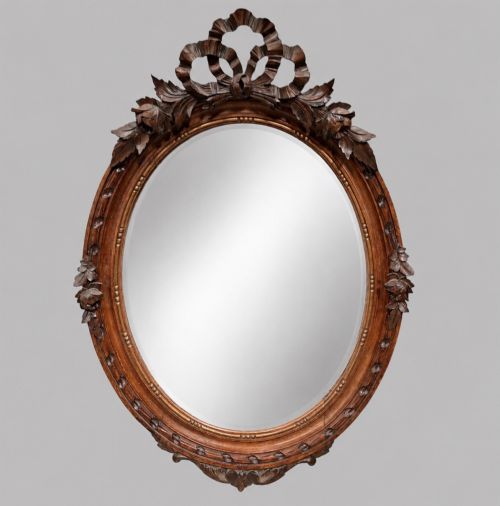
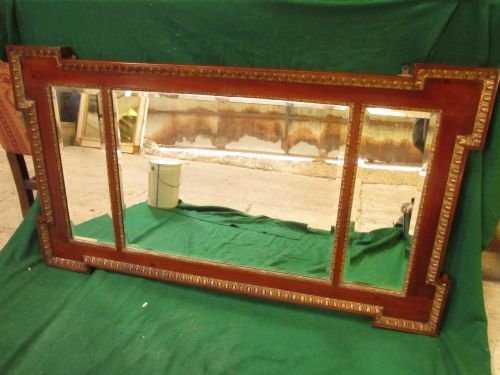
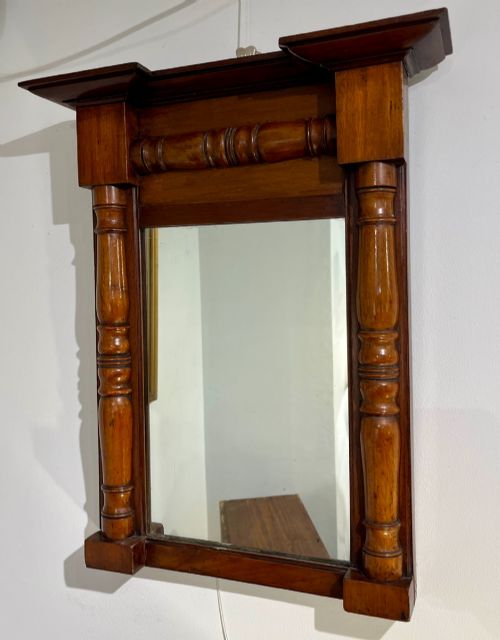
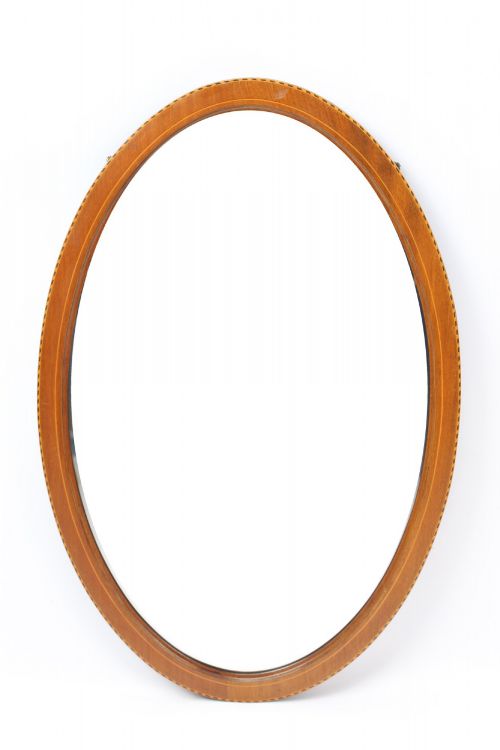
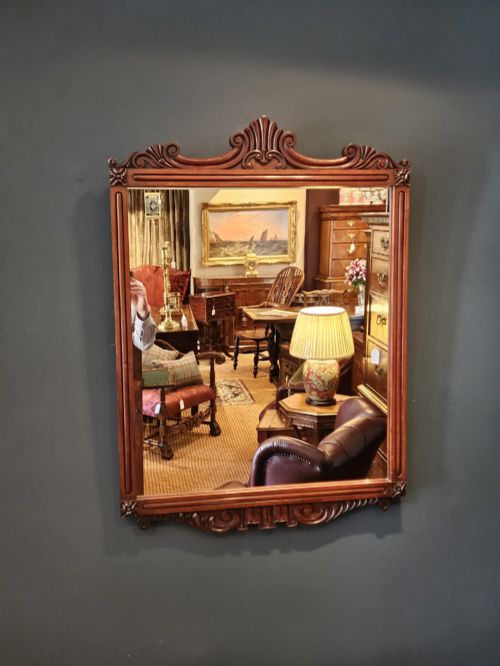
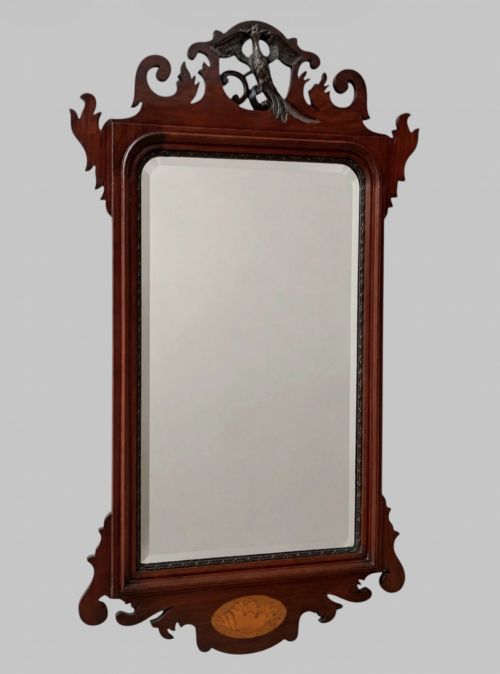
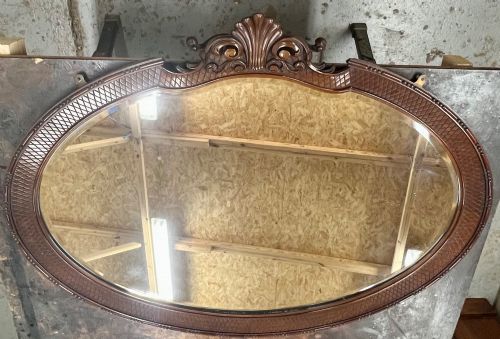
An edwardian mahogany wall mirror is a domestic hanging looking glass framed in rich timber, commonly found in oval, rectangular, or fretted shapes. These pieces frequently incorporate satinwood inlay, gilt accents, and occasionally small shelves or hooks for hallway use.
The surviving inventory spans from compact bedroom dressing glasses to large country house and overmantel pieces. Oval formats with delicate stringing predominate among the Edwardian examples recorded here.
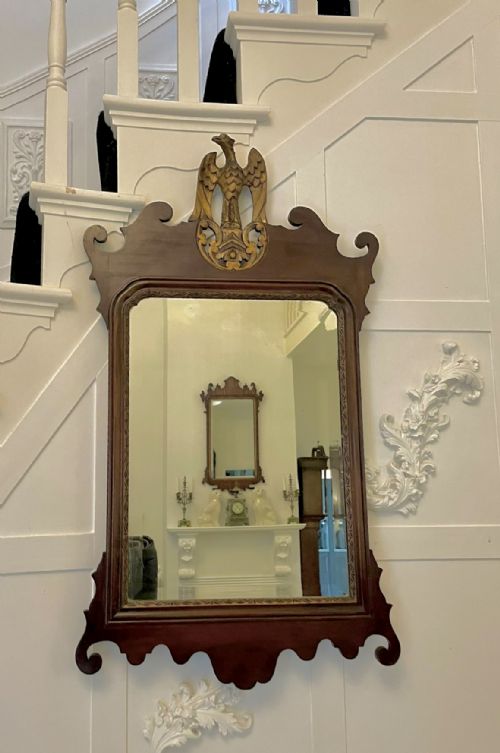
Makers drew heavily on earlier design vocabularies, producing revival styles that echo Georgian fretwork and Regency pier mirrors. This creates a diverse selection ranging from plain domestic frames to elaborate fret-cut compositions.
Materials and Construction
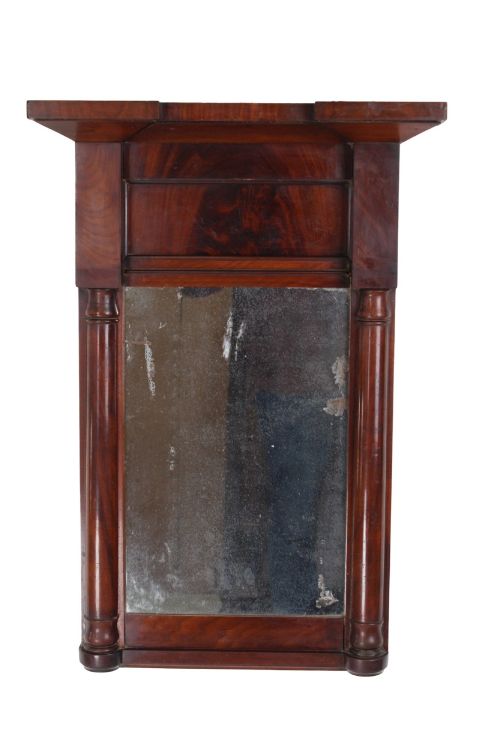
Frames rely primarily on solid mahogany or mahogany veneers applied to secondary timbers, often accented with lighter satinwood inlay to create geometric or floral borders. Many incorporate bevel-edged mirror glass set securely into rebated wooden frames.
Fretwork pieces utilise jigsaw techniques to achieve pierced scroll outlines, occasionally combined with parcel gilt detailing on inner or outer mouldings. Brass hardware, including suspension rings, candle sconces, or coat hooks, appears frequently on hall and pier variants.
Edwardian Mahogany Wall Mirror Retail Price Guide 2026
Typical asking prices for edwardian mahogany wall mirror among the pieces listed under this phrase on Sellingantiques today, from the lower quarter to the upper quarter. They describe what is for sale here now, not the wider market.
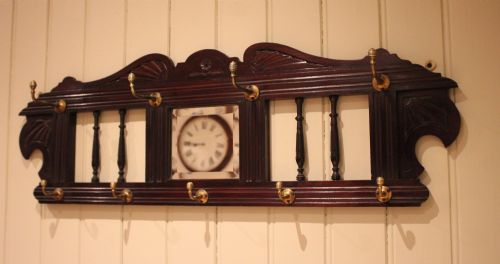
Several mirrors include original brass hooks for hats and keys, serving as miniature hallways in miniature timber.
Assessing Quality
Quality rests upon the crispness of the fret-cutting, the depth and clarity of the mahogany grain, and the precision of the contrasting inlay work. Superior examples display careful timber selection where grain patterns mirror or balance across the frame.
The integrity of the mirror plate and the weight of the timber framing distinguish finer productions from simpler utilitarian items. Original brass mounts and undisturbed backboards further elevate a piece within the range.
The Edwardian Mahogany Wall Mirror Glossary
- Fretwork
- Thin wood cut with intricate scroll patterns using a fretsaw. This technique defines the pierced outlines of many decorative wall mirrors.
- Pier Mirror
- A tall glass designed specifically to hang on the narrow wall space between windows. These often feature candle sconces or console shelves beneath.
- Satinwood Inlay
- Contrasting light timber inlaid into darker mahogany surfaces to form decorative lines or motifs. It creates delicate borders on Edwardian frames.
- Bevel-Edged Glass
- Mirror plate featuring a slanted, polished edge around the perimeter. This catches the light and adds perceived depth to the reflection.
- Overmantel Mirror
- A wide looking glass proportioned to hang directly above a fireplace mantelpiece. They frequently incorporate extended shelves or compartment sections.
Edwardian Mahogany Wall Mirror: Frequently Asked Questions
Where should I hang these mirrors?
These mirrors suit hallways, drawing rooms, and bedrooms where reflected light opens up compact spaces. Pieces equipped with shelves or hooks function well near entryways for everyday utility.
Ensure secure wall fixings support the weight of the timber frame and glass plate. Positioning the glass opposite a window maximises natural illumination throughout the room.
How do I date an Edwardian mirror?
Look for characteristic Edwardian design markers such as lighter satinwood stringing, oval formats, and revival fret-cut frames. Comparing construction methods with late Victorian examples helps narrow down the period.
Examine the mirror plate and backing boards for signs of original manufacture. Later replacements often lack the subtle distortions and thickness of period glass.
Were these mirrors used in hallways?
Many surviving examples include integrated key cabinets, brush racks, or coat hooks intended specifically for entrance areas. They served as a final checking point before leaving the house.
Combination pieces often feature small corner ledges or umbrella stands nearby in domestic interiors. Their practical design reflects the functional requirements of Edwardian hallway spaces.
What is the difference between Georgian and Edwardian styles?
Original eighteenth-century pieces display heavier structural proportions and carved mahogany details. Edwardian interpretations of Georgian forms tend to be lighter in weight with more stylised inlay.
Revival pieces combine historical silhouettes with turn-of-the-century manufacturing techniques. Examining the secondary timbers and backing fixings usually clarifies the true age of the frame.