

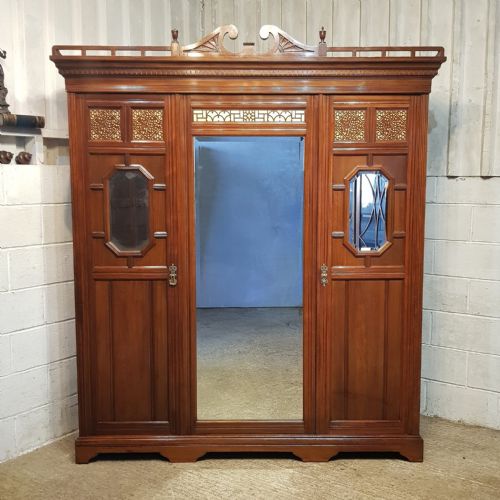


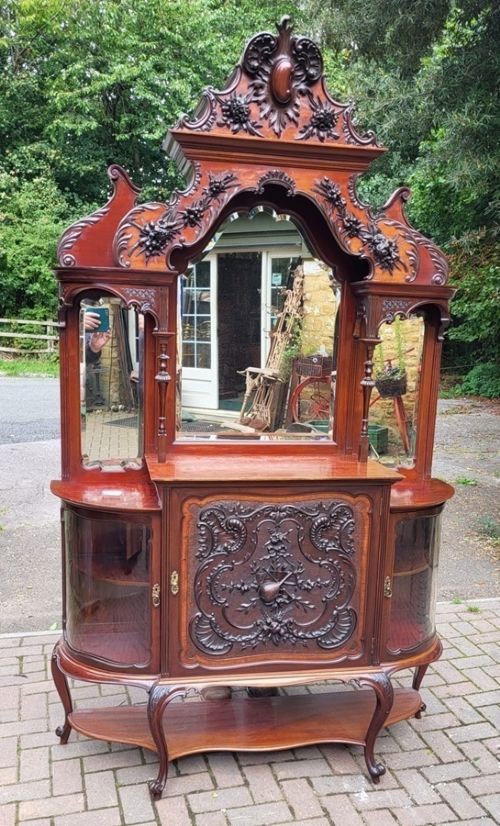


Red Mahogany Mirror
A red mahogany mirror brings deep, warm timber tones and crisp reflection to a room, drawing the eye with polished grain.
What They Are
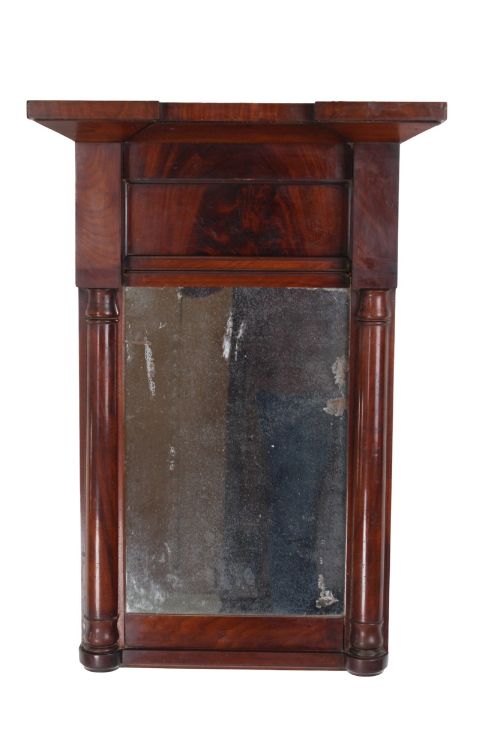
A red mahogany mirror is a framed looking glass produced across several historic periods, including the Georgian, Regency, and nineteenth century. These pieces range from small pier mirrors and wall mirrors to dressing table glasses and convex forms set in brass.
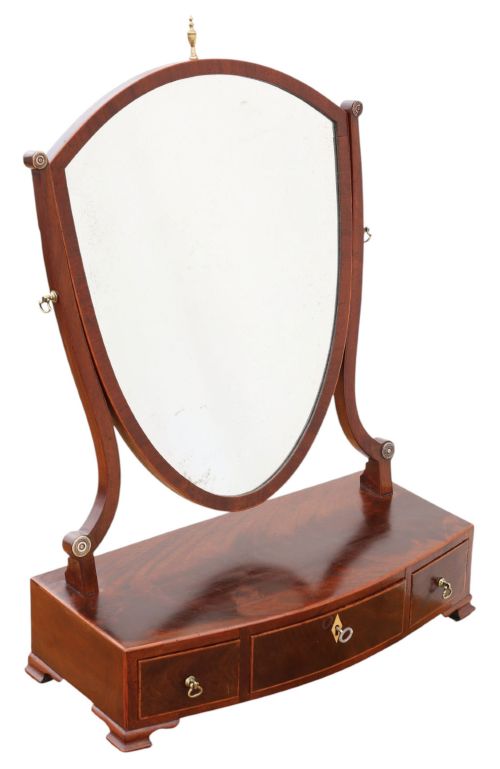
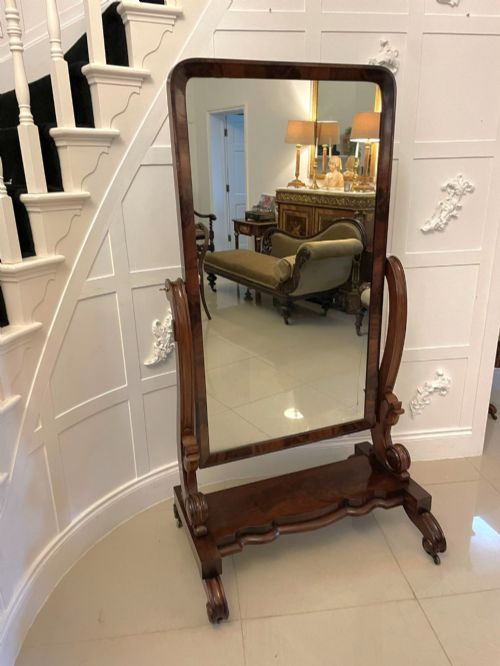
Most examples found here present the rich, dark reddish-brown hue characteristic of polished mahogany, often enhanced by flame veneer or inlay. The forms vary from simple wall hangings to substantial architectural toilet glasses with scroll supports.
Buyers seeking this phrase encounter British and Continental pieces, with Regency and Georgian styling appearing alongside later nineteenth-century interpretations. The timber provides a stable, handsome frame that ages with a deep patina.
How They Were Made
Cabinetmakers built these frames using solid mahogany and pine carcasses, frequently applying flame mahogany veneer to create striking grain patterns on the surface. Joinery relied on traditional methods suited to supporting heavy glass plates.
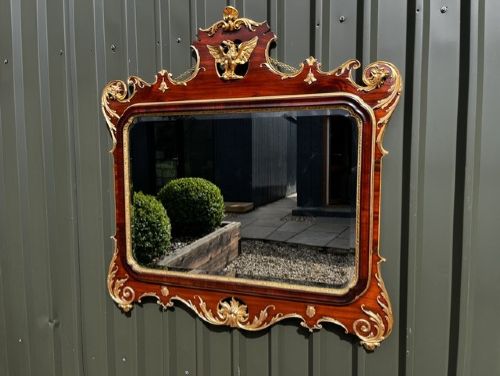
Giltwood, brass, and boxwood details often highlight the construction, appearing as bezels, candle sconces, or delicate stringing inlay. The glass itself is set securely within the timber rebate, sometimes backed with original panels.
Retail Price Guide 2026
Typical UK retail prices for red mahogany mirror, calculated from the Sellingantiques database of over a million retail prices indexed since 2003. This retail price guide relies exclusively on Sellingantiques data; no external sources or auction records are used, so the figures do not describe the wider market.
Convex mirrors often carry a small convex eagle at the crest, standing guard over your reflection since the Regency era.
What Varies in Quality
The distinction between standard examples and superior pieces rests on the choice of timber and the dexterity of the veneer work. Figured and flame mahogany displays a livelier, more decorative grain pattern than plain stock.
Proportion and decorative restraint define the finer items, where brass mounts, carved scrolls, or subtle inlay integrate harmoniously with the frame rather than crowding it. Original surfaces and untouched timber patination elevate the standing of any piece.
The Red Mahogany Mirror Glossary
- Mahogany
- A durable, heavy tropical hardwood prized for its deep reddish-brown colour and ability to take a high polish. It serves as the primary structural and visual medium for these frames.
- Flame Mahogany Veneer
- A thin slice of timber cut from the fork of the tree where branches join, creating a distinctive flamed or feathered grain pattern. This technique adds ornamental depth to the mirror surround.
- Pier Mirror
- A tall, narrow looking glass designed to hang on the wall space between windows. These pieces often feature conserved gilt or brass detailing.
- Convex Mirror
- A circular looking glass with a bulging surface that provides a wide-angle reflection of the interior. Brass trims frequently frame these optical pieces.
- Dressing Table Mirror
- A smaller looking glass mounted on upright supports above a small base or box with drawers. They belong on top of larger furniture rather than hanging directly on a wall.
Frequently Asked Questions
How do I clean a mahogany mirror frame?
Dust the timber gently with a dry, soft cloth to remove surface grit without disturbing the aged patina. Avoid modern silicone sprays or heavy polishes that build up sticky residues over the grain.
For the glass plate, apply a mild glass cleaner to a cloth rather than spraying directly onto the surface, preventing any liquid from seeping behind the antique silvering.
How can I tell a Georgian mirror from a later one?
Georgian pieces typically display restrained proportions, hand-cut joinery, and timber with a deep, natural wax finish developed over centuries. The secondary woods hidden behind the frame often include pine or oak appropriate to the eighteenth century.
Later nineteenth-century and twentieth-century examples may use machine-sawn backing boards, brighter modern brass fittings, or different veneer thicknesses that mark them out as subsequent revivals.
Where should I place a red mahogany mirror?
Hang these pieces on a chimney breast, above a sideboard, or in a hallway where the rich red timber tones complement surrounding furniture. Positioning them opposite a window helps bounce natural light deeper into the room.
Keep them away from direct, harsh sunlight and damp exterior walls to protect the timber grain and the silvered glass backing from deterioration.