

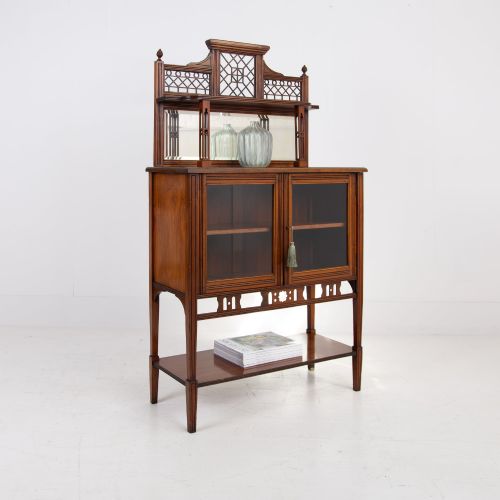




Edwardian Fretwork Mirror
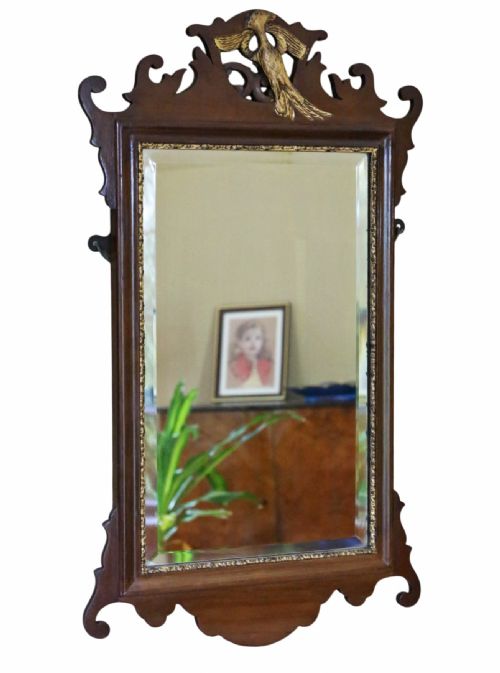
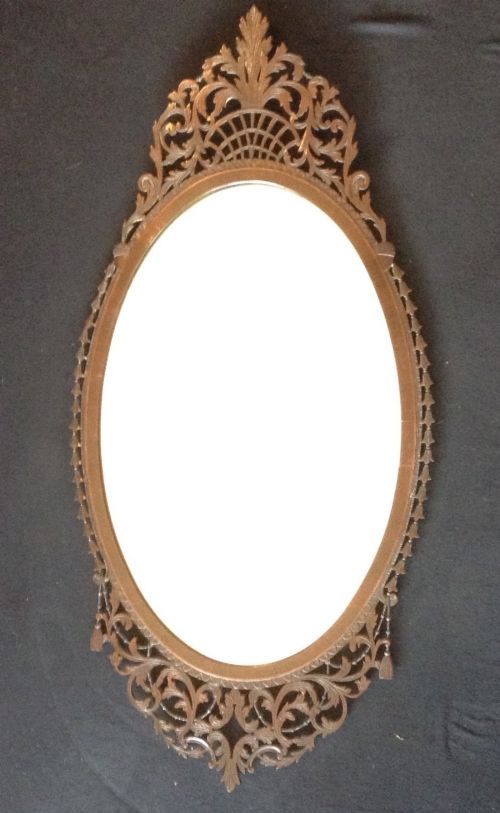
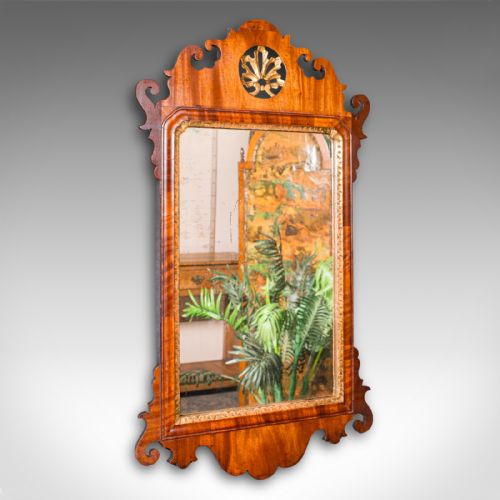
An edwardian fretwork mirror brings lightness to a room through pierced wooden frames and crisp bevelled glass.
Edwardian Fretwork Mirror
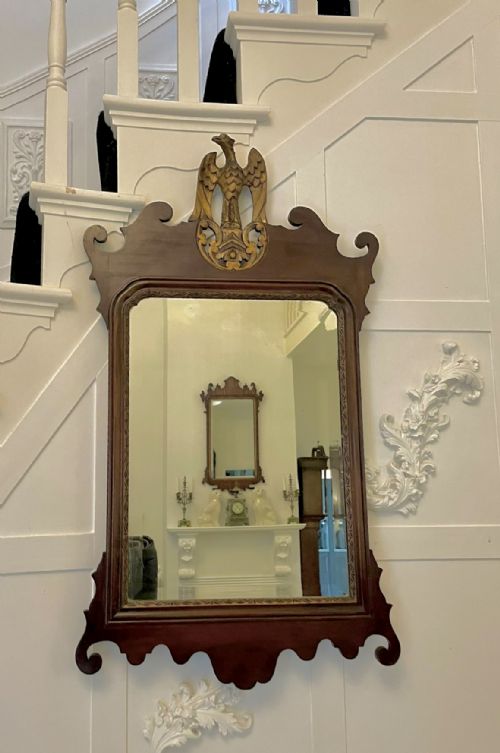
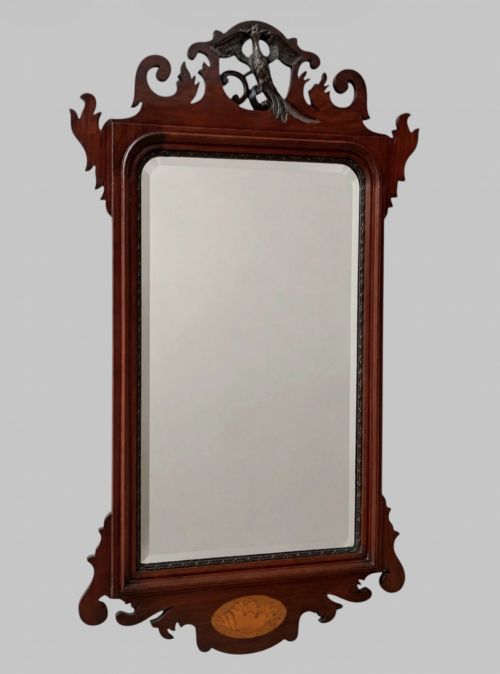
An edwardian fretwork mirror relies on intricate scrollwork and fretted silhouettes inspired by earlier eighteenth-century designs. Most examples encountered here date from the Edwardian period or the surrounding decades, often rendered in mahogany with delicate inlay.
The form typically hangs upon a wall, bringing reflective light into reception halls, morning rooms, and bedrooms. Makers drew heavily on Chippendale and Georgian Revival vocabularies to create these decorative wall hangings.
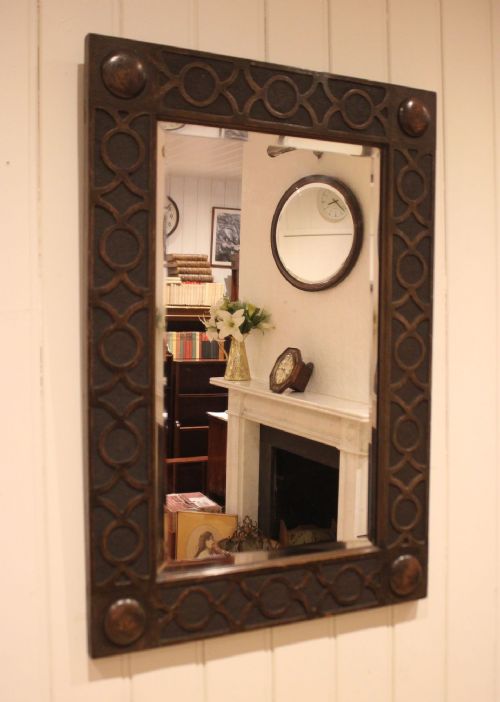
While the core of the selection comprises wall-mounted looking glasses, related forms occasionally appear alongside them. The defining characteristic remains the pierced wooden border framing the glass.
Materials and Construction
Cabinetmakers utilised dense timbers such as mahogany, walnut, and rosewood to withstand the delicate sawing required for fretwork patterns. These woods often received polish to highlight their natural grain, sometimes paired with parcel-gilt highlights or boxwood stringing.
The mirror plates themselves comprise bevel-edged glass held within rebated frames behind the pierced fret border. Intricate scrolling outlines were achieved by hand-piercing the timber before applying final decorative details.
Edwardian Fretwork Mirror Retail Price Guide 2026
Typical asking prices for edwardian fretwork mirror among the pieces listed under this phrase on Sellingantiques today, from the lower quarter to the upper quarter. They describe what is for sale here now, not the wider market.
The archival record shows a recurring fondness for Chinese Chippendale and Georgian Revival styles among Edwardian makers.
Judging Quality and Execution
Quality reveals itself in the crispness of the pierced fretwork and the depth of the timber carving. Superior examples exhibit clean, sharp scrolls without splintered edges, showing careful attention from the maker.
The choice of secondary woods and the precision of inlaid details further separate standard production from finer pieces. Original mirror plates and well-preserved gilding contribute significantly to the overall integrity of the object.
The Edwardian Fretwork Mirror Glossary
- Fretwork
- Openwork ornamentation produced by cutting patterns through thin boards of wood. This technique defines the silhouette of the frame.
- Parcel-gilt
- Partially gilded woodwork where gold leaf accents specific carved details against a dark wood background. It highlights the intricate scrolls.
- Bevel-edged
- Glass whose outer perimeter is ground and polished at an obtuse angle. This catches the light inside the frame.
- Inlay
- Contrasting woods or materials set into the surface of a primary timber to form decorative patterns. Boxwood and marquetry often appear in this manner.
Edwardian Fretwork Mirror: Frequently Asked Questions
How do I hang an edwardian fretwork mirror safely?
These wall mirrors require secure fixings into solid masonry or substantial wall studs due to the weight of the timber and glass. Utilising appropriate picture wire or sturdy brass brackets ensures the frame hangs flush without straining the fretwork.
Position the piece at eye level where it can reflect natural light from a window or fireplace. Avoid damp walls that might affect the timber frame or the silver backing of the mirror plate.
Are these mirrors genuinely from the Edwardian era?
The selection includes pieces created during the Edwardian period alongside items reflecting later Victorian and Georgian Revival tastes. Construction methods, timber patination, and the composition of the glass help determine the exact age of each mirror.
Craftsmen working in the early twentieth century often revived eighteenth-century styles, resulting in substantial overlap in decorative motifs. Examining the backboards and fixings often clarifies the period of manufacture.
How should I clean the mahogany frame?
Dust the pierced fretwork gently with a soft brush to prevent dirt accumulating within the intricate scrollwork. Avoid using liquid polishes that can sink into unpolished recesses of the carved wood.
Apply a micro-crystalline wax sparingly if the timber appears dry, buffing it gently with a soft cloth. Keep moisture away from the edges where the wood meets the mirror plate.
What rooms suit an edwardian fretwork mirror best?
Reception rooms, hallways, and bedrooms benefit from the reflective quality and decorative presence of these mirrors. Their light proportions allow them to sit comfortably above mantelpieces or console tables.
The classic mahogany tones integrate easily with both traditional period interiors and more contemporary spaces seeking a touch of historical craftsmanship.