
Regency Tiered Shelving
Regency tiered shelving offers tiered elegance for your books and displays, bringing architectural form and rich timber to the room.
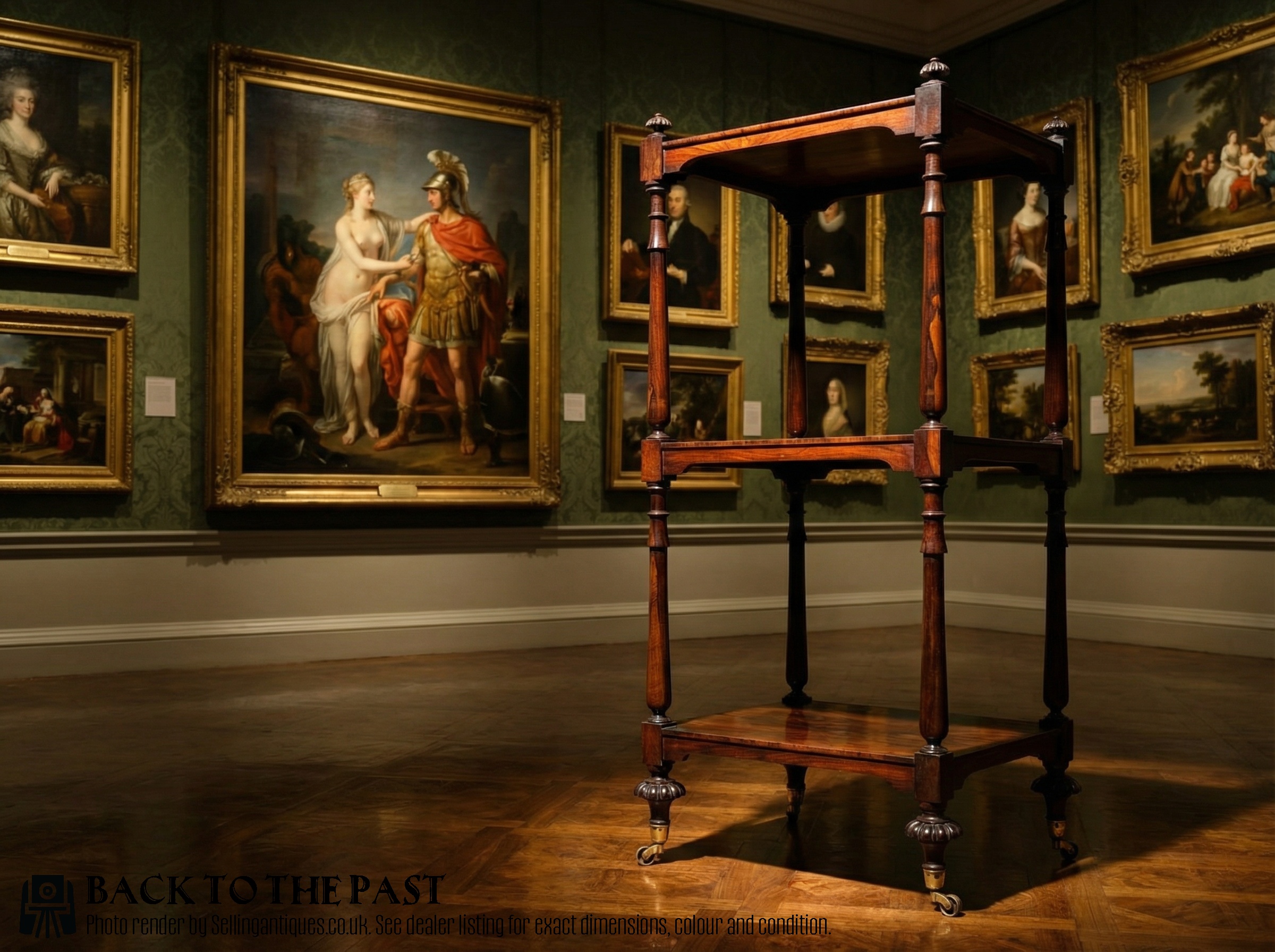
Regency Tiered Shelving
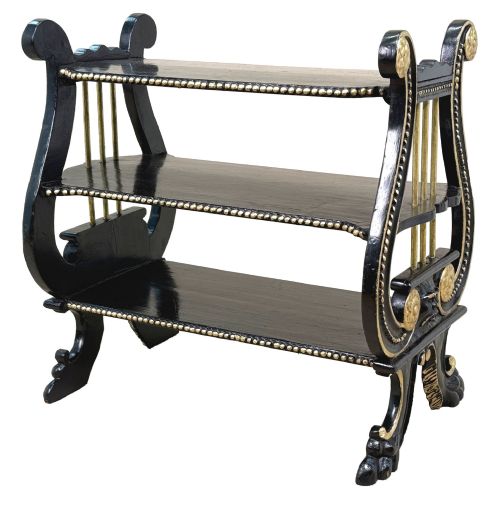
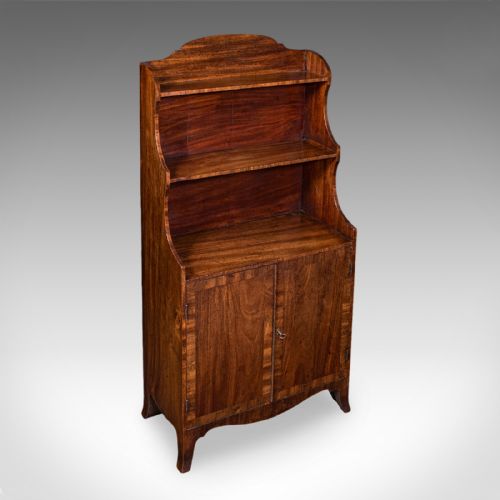
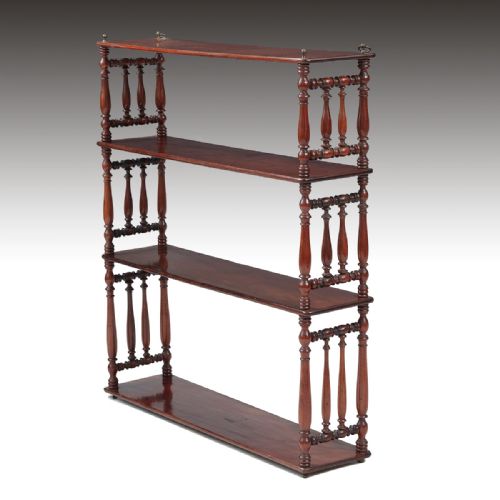
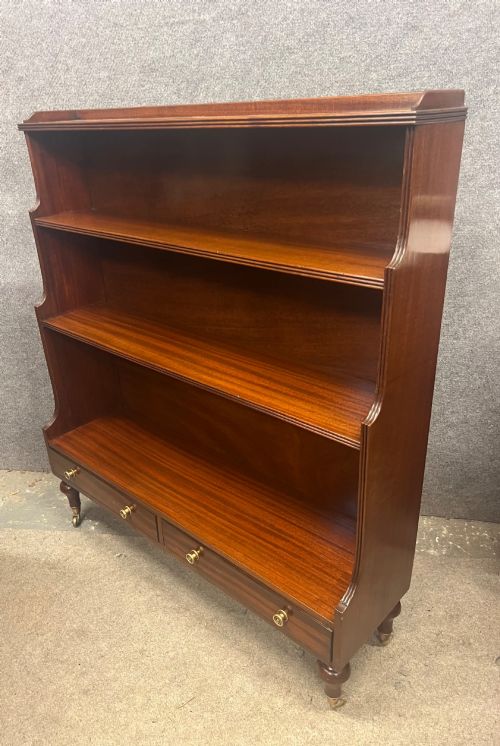
Regency tiered shelving encompasses multi-level bookcases, whatnots, etageres, and wall-hanging shelves that organise volumes and display objects across graduated horizontal surfaces.
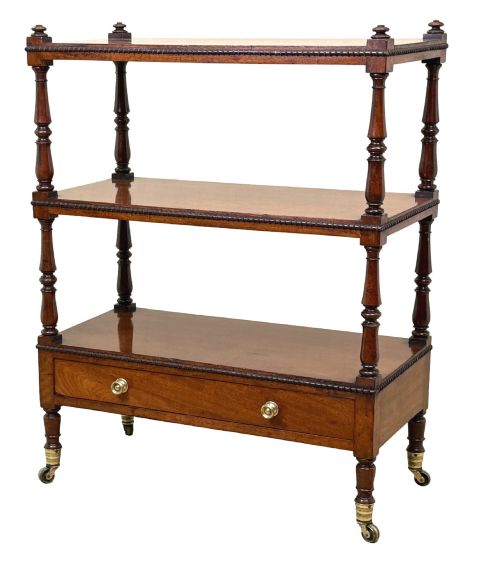
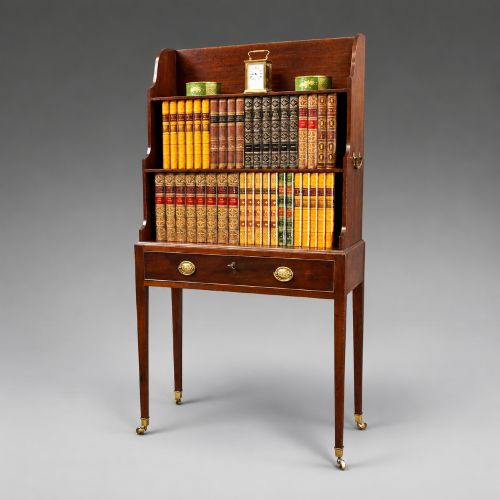
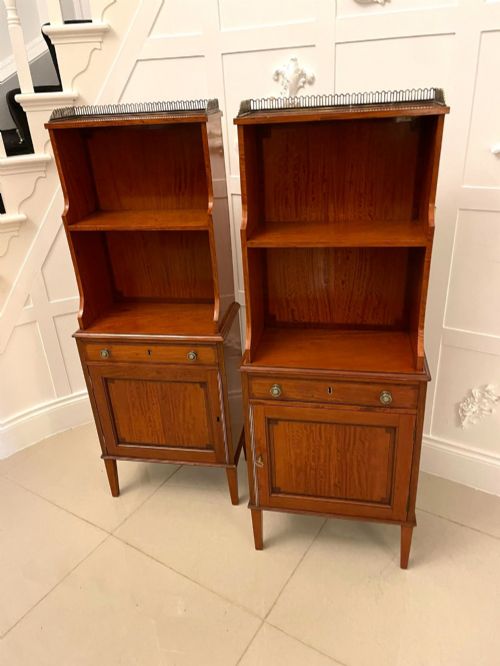
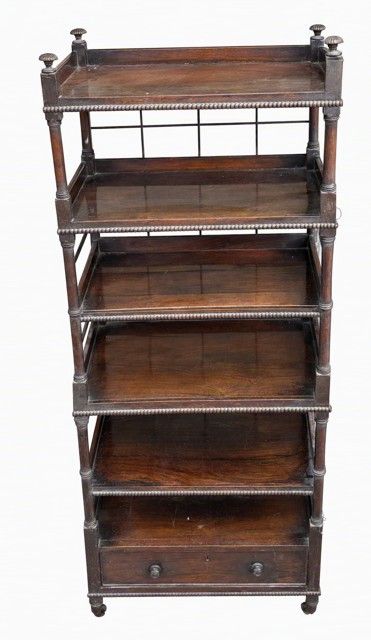
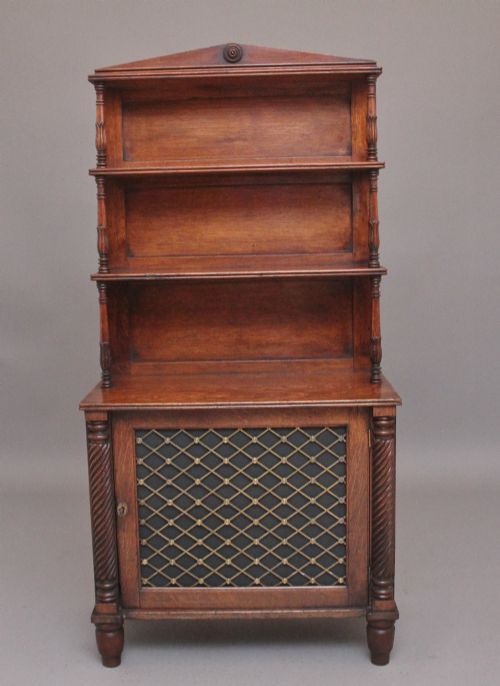
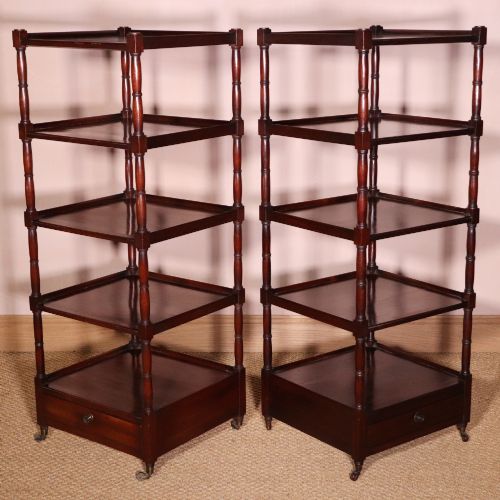
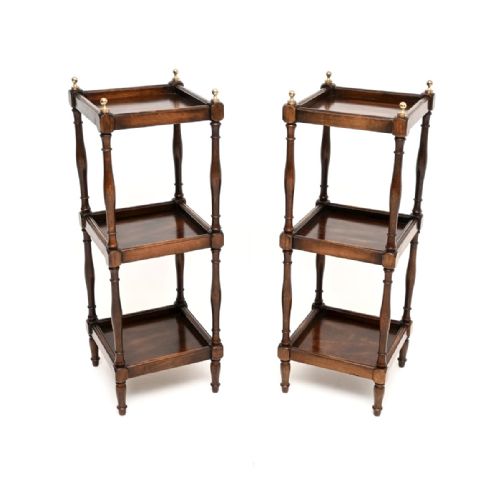
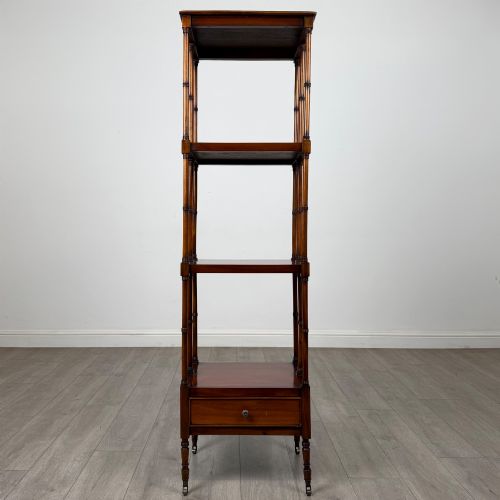
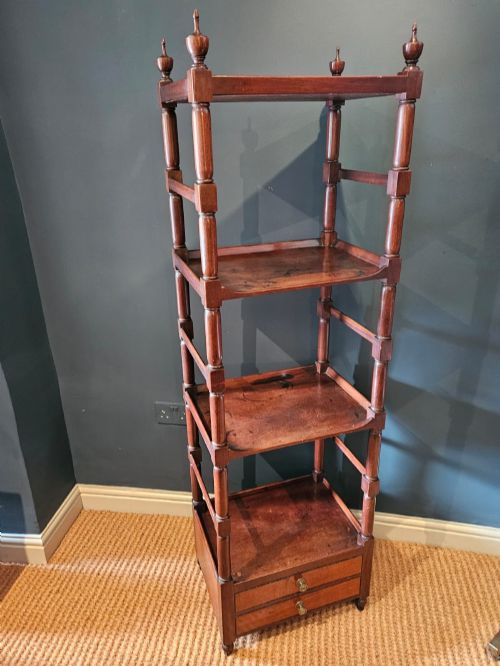
The pieces you meet most often on this page take the form of freestanding mahogany or rosewood whatnots and waterfall bookcases originating from the nineteenth century alongside later revival periods.
Makers designed these tiered pieces to utilise vertical space efficiently in domestic libraries, drawing rooms, and studies, offering open access to books and ornaments.
Materials and construction
Cabinetmakers constructed these tiered pieces predominantly in solid and veneered timbers such as mahogany and rosewood, occasionally incorporating flame mahogany, oak, satinwood, and ebonised wood.
Fine brass details, including castors, spindles, and gallery rails, frequently accent the upright supports and corners of freestanding whatnots and étagères.
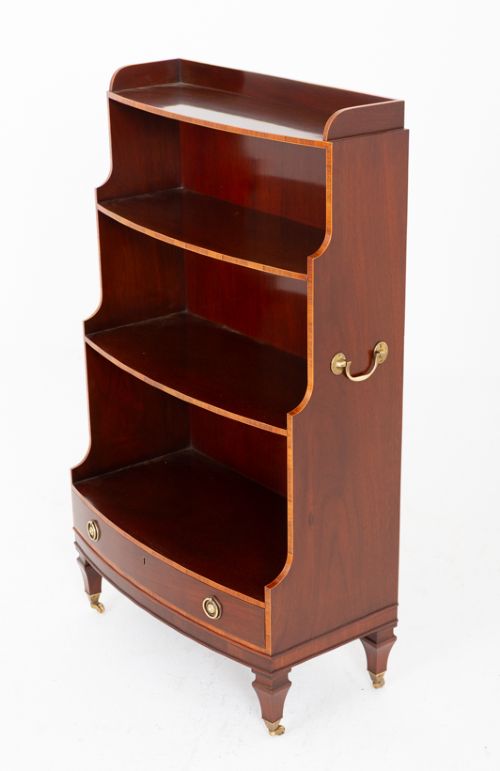
Joinery techniques ranged from fixed tiered shelving secured to upright columns to graduated waterfall profiles where each shelf steps back progressively from the one below.
Portable mahogany bookshelves allowed nineteenth-century travellers to take their portable libraries with them on coaches.
Qualities of construction and timber
The distinction between standard utility pieces and finer examples rests upon the selection of timber, such as richly figured rosewood or flame mahogany rather than plain wood.
Refined craftsmanship appears in the precision of the shelf joints, the delicacy of turned columns, and the integration of brass mounts or crossbanding.
Proportion and stability dictate the merit of a piece, with superior items maintaining balanced weight distribution across multiple open tiers without sagging.
The Regency Tiered Shelving Glossary
- Étagère
- A French term for a piece of furniture consisting of a set of open shelves for displaying small objects. These often include delicate turned supports and brass or mirror accents.
- Waterfall bookcase
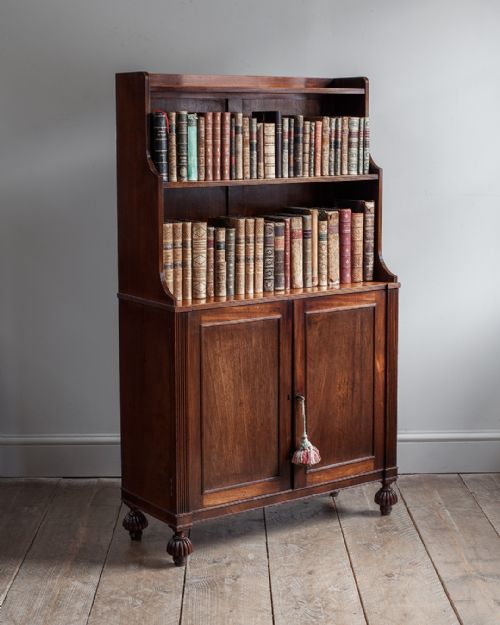
- A set of open shelves where the sides step back progressively from bottom to top, creating a profile resembling descending water. This form gained popularity during the Regency period.
- Crossbanding
- A decorative border of veneer laid around the edges of a shelf or top so that the grain runs at right angles to the main surface. It frames the timber with subtle contrast.
- Dwarf bookcase
- A low open bookcase designed to sit beneath dado height, keeping books within easy reach. These pieces frequently appear in mahogany and rosewood.
Regency Tiered Shelving: Frequently Asked Questions
What is a Regency whatnot?
A Regency whatnot is a tiered freestanding display stand with multiple open shelves supported by turned columns. People used them in nineteenth-century rooms to hold books, ceramics, and ornaments.
Today they serve a similar purpose in domestic interiors, offering vertical display space that takes up minimal floor area.
How do I use hanging shelves?
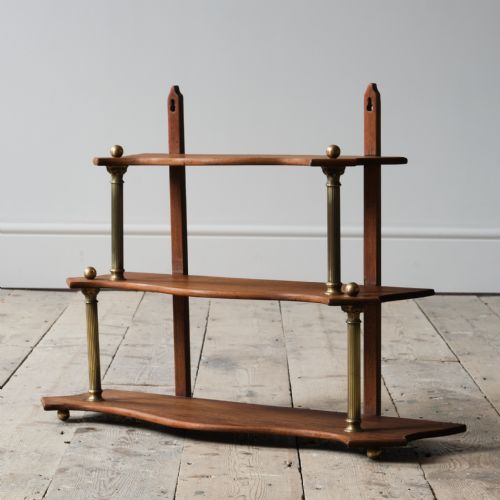
Hanging shelves mount directly to a wall, providing elevated storage for books and small decorative objects. They suit compact spaces where floor standing furniture would crowd the room.
Ensure secure fixings into wall studs or masonry to support the weight of timber and books safely.
How do I date a piece?
Dating relies on examining timber species, construction methods, and stylistic cues such as turned supports and brass castors. Nineteenth-century examples often display hand-cut joinery and dense, aged hardwoods.
Revival pieces from later decades imitate these earlier Regency forms but generally show different wood preparation and secondary timbers.