

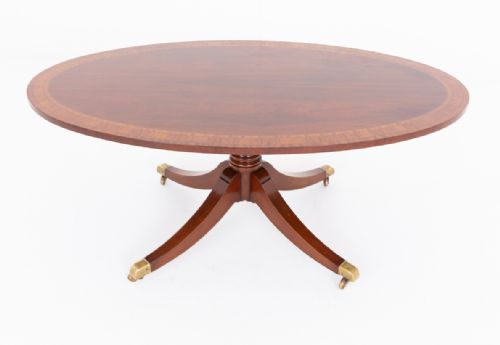
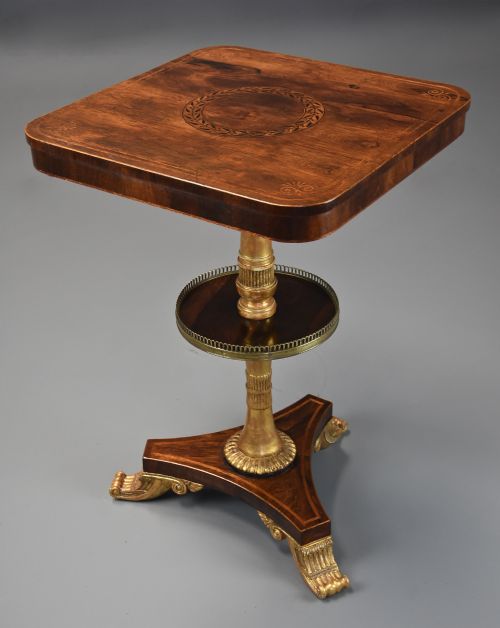


Regency Style Tea Table
These regency style tea table options bring formal dining refinement into domestic rooms, offering folding tops and rich timbers for daily use.
Regency Style Tea Table
A regency style tea table primarily serves as a flexible surface with folding leaves, designed originally for the consumption of tea and social gatherings. The examples found here span genuine nineteenth-century pieces alongside later revivals from the early to mid-twentieth century.
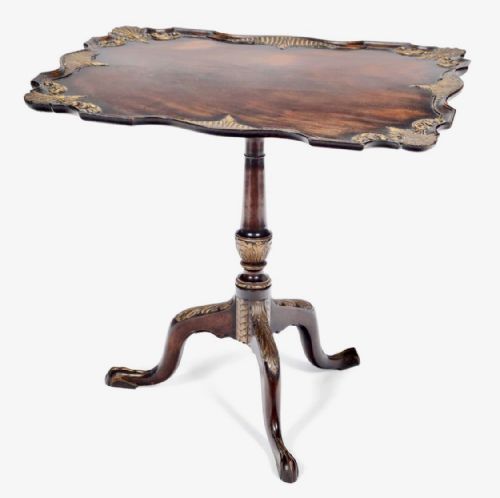
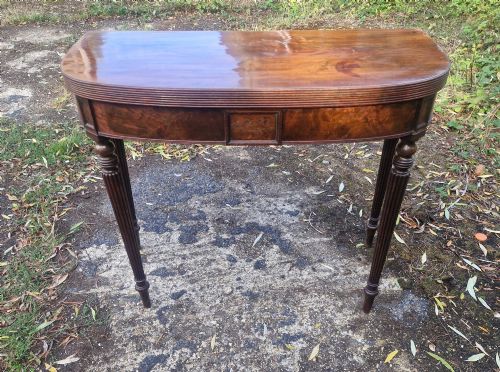
Makers construct these items using varied forms such as foldover card tables, tilt-top tripod tables, and side tables executed in the regency, William IV, and Georgian traditions. Mahogany and rosewood dominate the selection, often accompanied by brass inlay and parcel gilt details.
Materials and construction
Cabinetmakers select dense tropical hardwoods like mahogany and rosewood for their stability and capacity to accept fine polish and turning. Brass inlay and parcel gilt provide sharp linear contrast against the dark timber surfaces of the better examples.
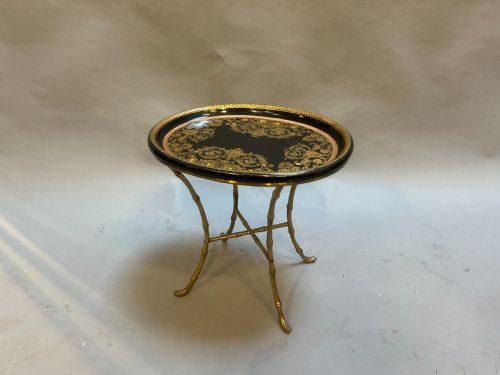
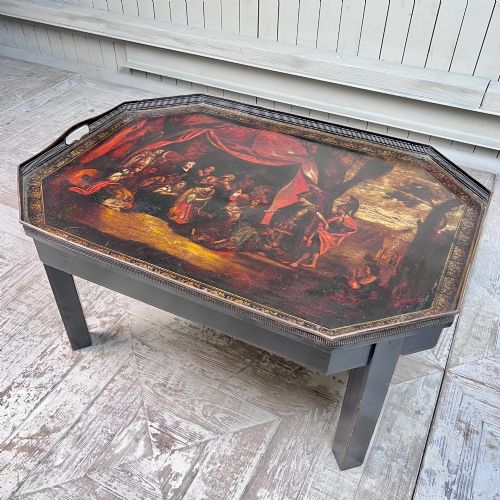
Secondary structural elements incorporate clever folding mechanisms, tilt-top pivots, and robust pedestal columns supported by tripod legs. Workshops utilise papier-mache, japanning, and painted finishes on specific tray and occasional variants to achieve alternative decorative textures.
Form variations range from tilt-top tripod tea tables to foldover card tables and nested occasional sets.
Indicators of distinction
The choice of timber grain dictates the visual weight of the piece, with figured mahogany and rich rosewood marking the superior end of the range. Crispness in the carving, precise brass stringing, and the integrity of the folding joints separate workshop execution.
Proportion and balance define the aesthetic success of the piece, particularly where pedestal bases meet reeded or sabre legs. Original patination and minimal timber replacement preserve the historical integrity valued by collectors.
George Bullock·Gillows
The Regency Style Tea Table Glossary
- Tilt-top table
- A table with a pivoting top that secures vertically when not in use. This mechanism allowed tables to stand flat against walls to save floor space in period rooms.
- Foldover table
- A dual-purpose design featuring a hinged top that opens to double the surface area. It typically functions as a console or tea table before deployment for cards or dining.
- Brass inlay
- The technique of embedding thin strips or motifs of brass into routed channels within the timber surface. This method creates geometric or classical decorative patterns characteristic of the period.
- Tripod base
- A central pillar supported by three radiating feet. This configuration provides stable floor contact on uneven historic flooring.
- Japanning
- A European imitation of East Asian lacquerwork involving layered varnishes and metallic dust. It creates a dark, glossy decorative surface popular on specific occasional tables.
Regency Style Tea Table: Frequently Asked Questions
How do I use a tea table today?
These tables function well as console surfaces against living room walls or as compact dining areas when unfolded.
The hinged leaves open easily to accommodate serving drinks or displaying decorative objects.
Are these tables sturdy enough for daily use?
Solid hardwood construction ensures these pieces withstand normal daily activities like writing or placing books.
Care should be taken with the folding mechanisms and pivot joints to avoid strain.
How do I distinguish original regency from revival pieces?
Original pieces display period construction marks, hand-cut dovetails, and genuine timber shrinkage consistent with nineteenth-century manufacture.
Revival pieces from later decades often utilise standardised machine fixings and cleaner, uniform finishes.
How should I care for rosewood and mahogany surfaces?
Regular dusting with a dry, soft cloth maintains the natural lustre of the polished wood without building up residue.
Avoid placing these tables in direct sunlight or near heat sources to prevent timber splitting.