


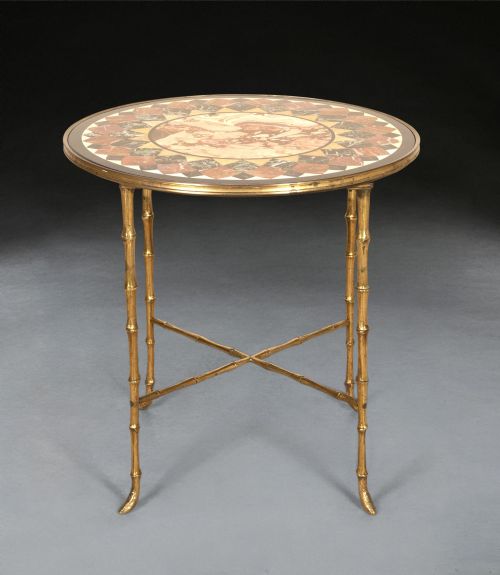


Faux Bamboo Accent Table
A faux bamboo accent table brings inventive Victorian and Regency turning and lacquering directly into a modern room.
Faux Bamboo Accent Table
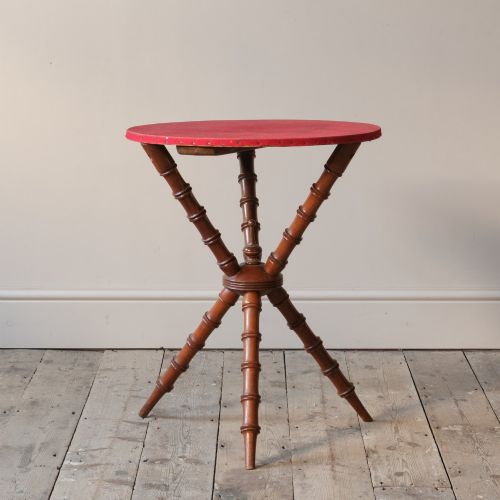
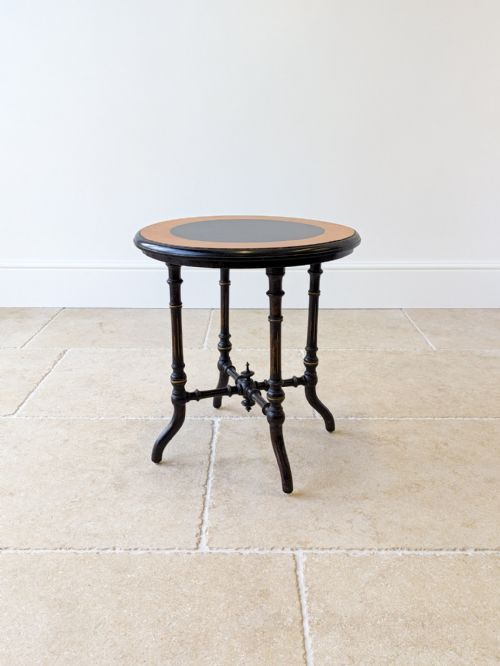
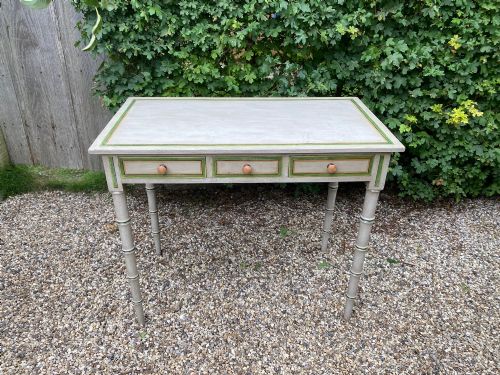
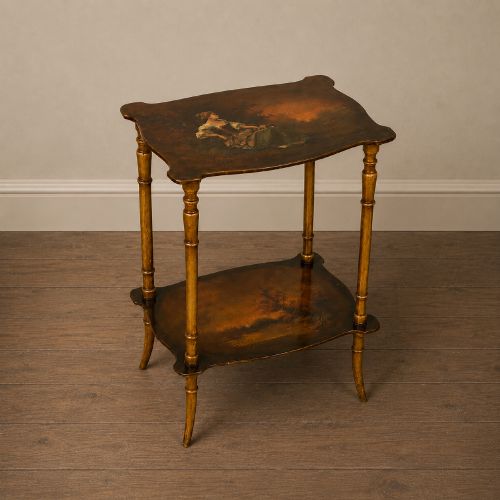
A faux bamboo accent table combines decorative turning with practical utility, appearing frequently across the nineteenth and early twentieth centuries in forms such as occasional tables, side tables, writing tables, and étagères. These versatile items range from French folding designs to Scottish gypsy tables and Chinese Qing Dynasty carved hardwood tray tables on folding bases.
The aesthetic draws heavily on Regency, Victorian, and Chinoiserie traditions, often incorporating two tiers or drop leaves to maximise function in compact spaces. Buyers encounter pieces spanning periods from the Regency era through Edwardian decades, reflecting sustained popularity for simulated bamboo turning.
Makers and workshops across Britain, France, and China produced these tables to satisfy shifting tastes for exoticism and simulated natural forms in domestic interiors. The resulting variety encompasses simple painted wooden frames as well as elaborate papier-mâché surfaces with original decoration.
How they were made
Constructed primarily from timber, mahogany, and painted wood, these tables often feature hand-turned elements designed to mimic the segmented nodes of natural bamboo. Artisans applied lacquer, gold leaf, and japaned finishes to achieve glossy, protective surfaces inspired by imported Asian goods.
Specialist techniques include papier-mâché construction for lightweight trays and tops, alongside brass hardware and inlaid specimen marble. Folding bases and drop leaves required precise joinery to ensure stability while maintaining portability.
Faux Bamboo Accent Table Retail Price Guide 2026
Typical asking prices for faux bamboo accent table among the pieces listed under this phrase on Sellingantiques today, from the lower quarter to the upper quarter. They describe what is for sale here now, not the wider market.
Periods represented span from the Regency era through Victorian, Edwardian, and early twentieth-century decades.
What varies in quality
The refinement of the simulated bamboo turning determines much of the visual success, with superior examples exhibiting crisp, well-defined nodes rather than soft or uniform profiling. Hand-painted decoration and lacquering show distinct tiers of craftsmanship, where layered motifs and preserved gilding elevate the piece.
Structural integrity rests on the quality of the timber and the execution of joints, particularly in folding frames and multi-tiered étagères where movement occurs regularly. Original surfaces, whether painted, japanned, or panelled, retain greater character than later repainting.
John Taylor Edinburgh
The Faux Bamboo Accent Table Glossary
- Faux bamboo
- Simulated plant stems carved or turned into wood to mimic natural bamboo. This decorative technique became particularly popular during the nineteenth century.
- Étagère
- A small open shelving unit or side table with multiple tiers. These pieces were designed to display ornaments or hold books.
- Japanning
- A European imitation of East Asian lacquerwork using heat-dried varnishes. The technique produces a hard, glossy dark finish often adorned with gilt motifs.
- Papier-mâché
- A composite material made from paper pulp or layers of paper bound with adhesive. It was moulded and lacquered to create lightweight trays and table tops.
- Gypsy table
- A small, three-legged occasional table, often featuring draped fabric or turned wooden supports. They emerged as a popular furnishing in Victorian interiors.
Faux Bamboo Accent Table: Frequently Asked Questions
Where did people put faux bamboo tables?
These tables served as versatile furniture pieces in nineteenth-century drawing rooms, boudoirs, and halls where owners required moveable surfaces for tea, writing, or display.
Their compact proportions made them easy to relocate as social habits shifted within the home.
How do I identify a Victorian faux bamboo table?
Look for characteristic turned wooden framing that imitates bamboo joints, combined with typical nineteenth-century finishes such as japanning, lacquer, or painted decoration.
Construction details and secondary woods often align with manufacturing practices from the Victorian or Regency periods.
Are these tables sturdy enough for daily use?
Many examples are remarkably resilient, though folding bases and multi-tiered étagères require careful handling to protect joints and decorative surfaces.
Placing them away from direct heat sources helps preserve the stability of the timber and lacquer.
What is the difference between a side table and an occasional table?
A side table typically stood against a wall or beside a larger piece of furniture, sometimes equipped with drawers for writing materials.
An occasional table was designed to be moved around the room as needed for specific tasks or displays.