







Papier Mache Occasional Table
A papier mache occasional table brings a glossy, hand-painted surface to a room, offering a functional low table with a distinctive nineteenth-century finish.
Papier Mache Occasional Table
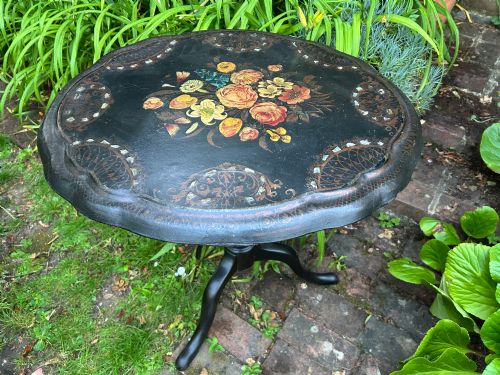
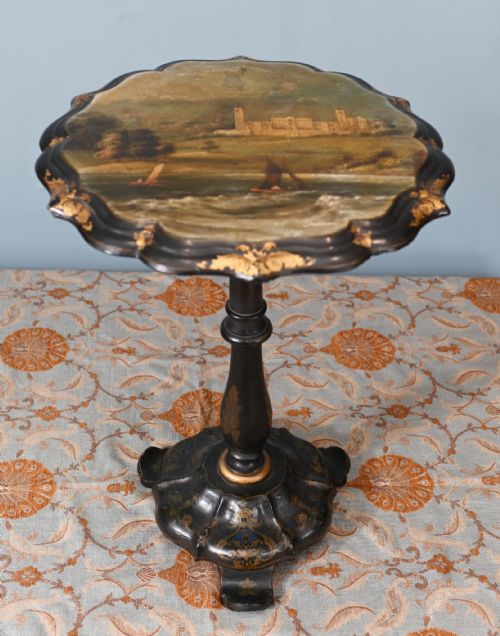
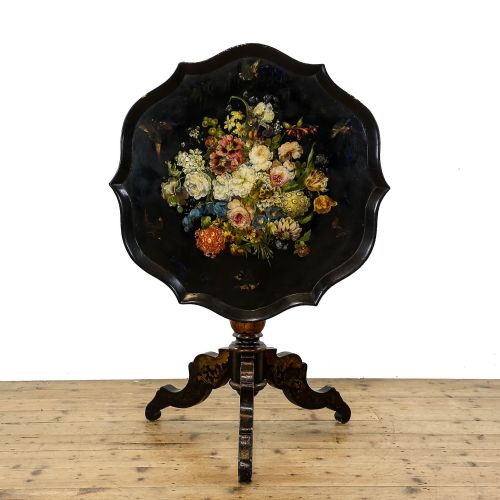
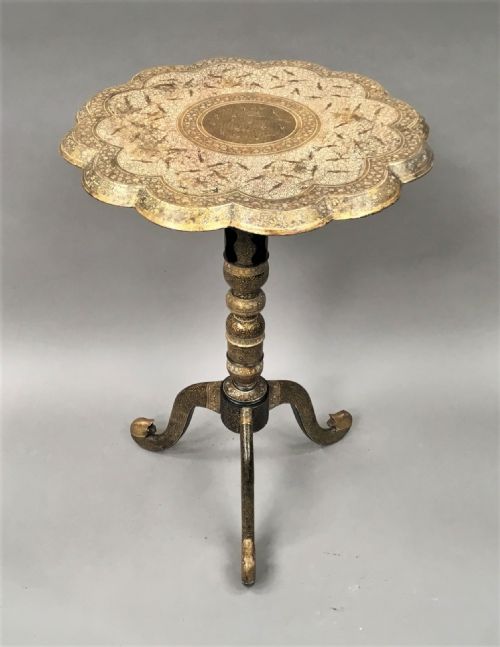
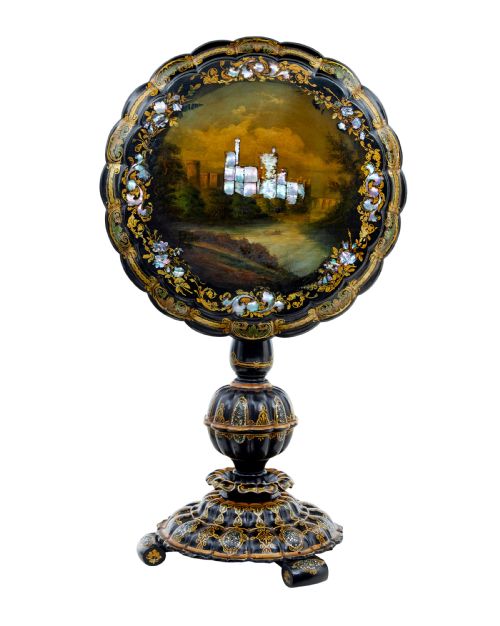
A papier mache occasional table appears in various nineteenth-century guises, including tilt-top tables, wine tables, side tables, and trays mounted on stands. These pieces range from standard Victorian examples to regency style interpretations and pieces showing Anglo-Indian or Chinoiserie influence.
The most common formats on this page are tilt-top tables and tray tables resting on stands, dating across the nineteenth century with specific markers like eighteen-eighty or eighteen-fifty. Their origins span standard English workshops to Kashmir, reflecting diverse decorative traditions within the same material framework.
Materials and construction
These tables rely on papier-mache and lacquer as primary structural and surface materials, often combined with wood for stands or supports. Artisans applied layers of paper pulp or sheets treated with size and glue, pressing them into moulds before curing.
Surfaces received intricate layers of paint, gilt, and inlaid mother of pearl, sometimes supported by brass elements or resting on rosewood tripods. The resulting material composite allowed for smooth, highly polished table tops that could display detailed hand-painted scenes or inlaid mother-of-pearl decoration.
Papier Mache Occasional Table Retail Price Guide 2026
Typical asking prices for papier mache occasional table among the pieces listed under this phrase on Sellingantiques today, from the lower quarter to the upper quarter. They describe what is for sale here now, not the wider market.
A nineteenth-century tray once served tea before finding a second life mounted permanently on a stand.
Assessing quality
Quality in these pieces rests upon the precision of the hand-painted detail and the integration of inlaid mother of pearl. Finer examples display meticulous brushwork and stable lacquer layers that have survived without extensive lifting or crazing.
The sophistication of the stand or base also dictates the standard of the piece, distinguishing simpler later adaptations from unified period items. Structural integrity in tilt-top mechanisms and the retention of original gilding provide further distinction across the range.
Gillows
The Papier Mache Occasional Table Glossary
- Papier-mache
- A composite material made from paper pulp or reinforced paper sheets mixed with glue, pressed and dried to form a hard surface suitable for lacquer and paint. It provided a lightweight alternative to solid timber for decorative furniture.
- Tilt-top table
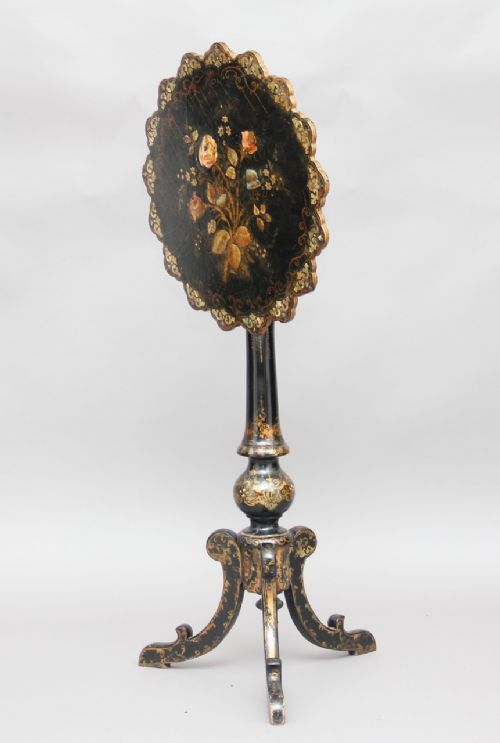
- A table featuring a hinged top that rotates into a vertical position when not in use, saving space in nineteenth-century interiors. This mechanism often sits on a central pillar with tripod legs.
- Mother-of-pearl inlay
- Iridescent inner shell material embedded directly into the lacquer surface of the table top to catch the light. It frequently forms floral or geometric patterns alongside painted details.
- Chinoiserie
- A European decorative style reflecting Chinese artistic motifs, featuring landscapes, figures, and pavilions rendered in paint and gilt. This style was popular on nineteenth-century lacquer and papier-mache surfaces.
- Jappaned
- European imitation of East Asian lacquerwork, created by applying successive coats of varnish and paint with heat curing. It produced a glossy, hard-wearing dark finish characteristic of the period.
Papier Mache Occasional Table: Frequently Asked Questions
What is a papier mache occasional table?
A papier mache occasional table is a nineteenth-century small table featuring a moulded paper-pulp top finished with lacquer, paint, or mother-of-pearl inlay. These pieces function as decorative side tables, wine tables, or tray tables.
They were designed for light domestic use in nineteenth-century drawing rooms, often featuring tilt-top mechanisms for storage or display against a wall.
How do I care for lacquer surfaces?
Lacquer and papier-mache surfaces require gentle dusting with a dry, soft cloth and protection from direct sunlight and excessive moisture. Avoid placing hot cups or damp items directly on the vintage finish.
Maintaining a stable indoor climate prevents the lacquer and painted decoration from cracking or lifting over time.
How do I identify a tilt-top table?
A tilt-top table includes a release catch or pivot beneath the top that allows the surface to swing from horizontal to vertical. This mechanism allowed nineteenth-century owners to tuck the table away when not in active use.
Examine the pivot block and hinges underneath to ensure the mechanism operates smoothly and aligns with the period of the base.
Are tray tables original to their stands?
Some tray tables feature original stands built specifically for the tray, while others combine a nineteenth-century tray with a later stand. Checking the joinery and wood types of both components helps determine if they started life together.
Both period-matched combinations and later stands appear among these listings, each offering functional utility.