
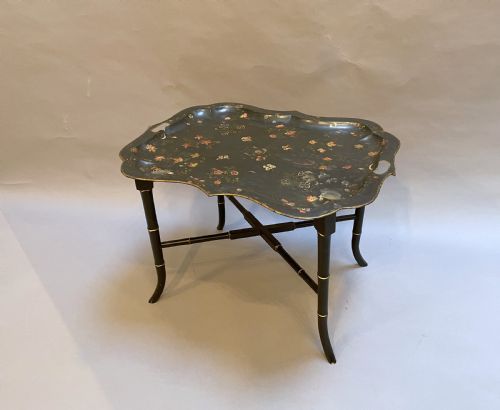


Gilt Faux Bamboo Tables
These gilt faux bamboo tables bring lightness and decorative flair to a room, offering versatile surfaces with a distinctive simulated cane finish.
Gilt Faux Bamboo Tables
When searching for gilt faux bamboo tables, buyers encounter a selection of occasional tables, tray tables, side tables, coffee tables, nests of tables, and card tables. These items date primarily from the nineteenth century, the Edwardian era, and the early twentieth century.
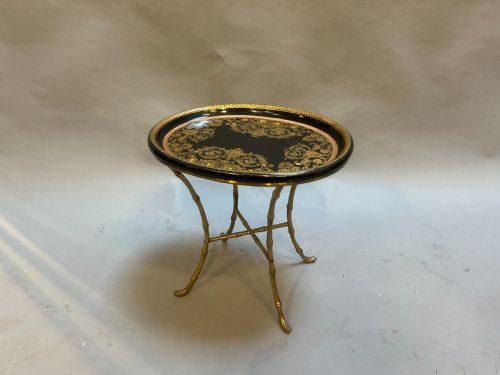
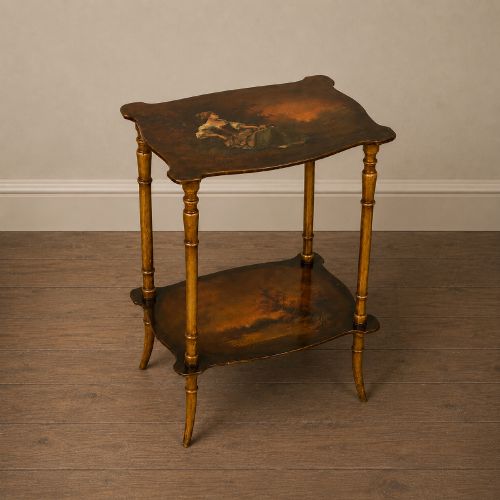
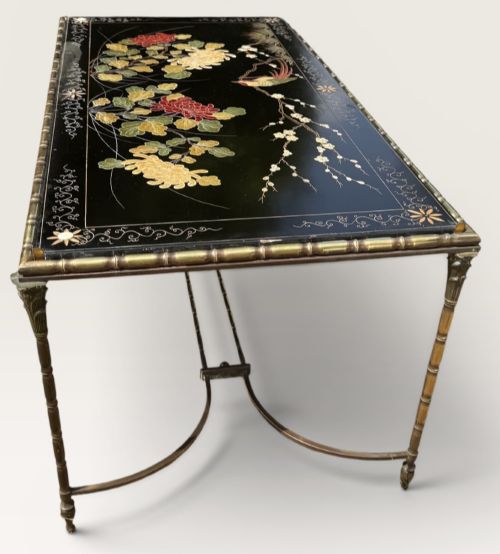
The assortment on this page includes English and continental examples, alongside French chateau and chinoiserie interpretations. Forms range from two-tier étagères and nests of four to folding tray stands and ebonised serving tray tables.
Buyers are most likely to meet papier-mâché tray tables on stands and painted occasional tables among these listings. The selection draws on Victorian, Regency style, and French aesthetics.
How they were made
Construction relies on wood, papier-mâché, and lacquer, shaped into occasional forms and supportive stands. Artisans applied gesso to timber frames to model the characteristic segmented nodes of natural bamboo before gilding.
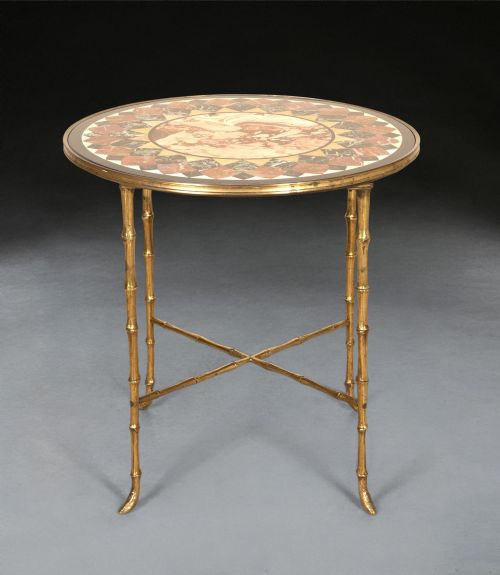
Surfaces often feature paint and gold leaf, with specific pieces incorporating brass fittings or specimen marble inserts. Papier-mâché components receive layered lacquer finishes, frequently decorated with floral motifs and chinoiserie designs.
Listings feature materials including wood, papier-mâché, lacquer, gold leaf, brass, gilt, paint, and gesso.
What varies in quality
The crispness of the modelled bamboo joints and the depth of the gilding set finer examples apart from simpler production. Superior pieces display intricate hand-painted detailing and well-preserved lacquer work.
Structural integrity depends on the original joinery of the stands and the stability of papier-mâché trays. The finesse of the surface ornamentation ultimately determines the distinction between standard and exceptional items.
Maison Bagues
The Gilt Faux Bamboo Tables Glossary
- Faux bamboo
- A decorative treatment where wood is carved or moulded to imitate natural bamboo stalks. This style gained particular popularity during the nineteenth century.
- Papier-mâché
- A composite material made from paper pulp or reinforced sheets, pressed and varnished. It provides a smooth base for lacquer and painted decoration.
- Étagère
- A set of open shelves for displaying small objects. These tiered pieces often serve as side tables.
- Chinoiserie
- European artistic interpretations of Chinese and East Asian motifs. It appears frequently on lacquered trays and tables from the Victorian period onwards.
- Gesso
- A plaster mixture applied to wood surfaces as a preparation for painting and gilding. It allows craftsmen to build up detailed sculptural relief.
Gilt Faux Bamboo Tables: Frequently Asked Questions
What are gilt faux bamboo tables?
These are decorative small tables featuring frames carved or moulded to resemble bamboo and finished with gold leaf or metallic paint.
They encompass various forms such as occasional tables, nests, and folding tray stands produced across the nineteenth and early twentieth centuries.
How were tray tables used?
Tray tables functioned primarily for serving drinks or refreshments in reception rooms, utilising removable tops set upon folding or fixed stands.
Many examples combine utility with display, allowing the tray to be lifted off while the stand remains folded away.
Where do papier-mâché tables originate?
Papier-mâché occasional and tray tables emerged strongly in nineteenth-century England and France, often embellished with japanned finishes and floral patterns.
Craftsmen moulded the composite material into durable trays before mounting them onto custom wooden or bamboo-turned stands.
How do I care for lacquered surfaces?
Lacquered and painted surfaces require protection from direct sunlight, moisture, and excessive heat to prevent cracking or fading.
Dusting gently with a dry, soft cloth preserves the delicate finishes without harming the underlying varnish or gilding.
How do I distinguish Regency style pieces?
Regency style items often display classical restraint, balanced proportions, and specific decorative motifs inspired by classical antiquity.
Later nineteenth-century and Edwardian revivals adopted these earlier silhouettes, frequently combining them with whimsical faux bamboo framing.