


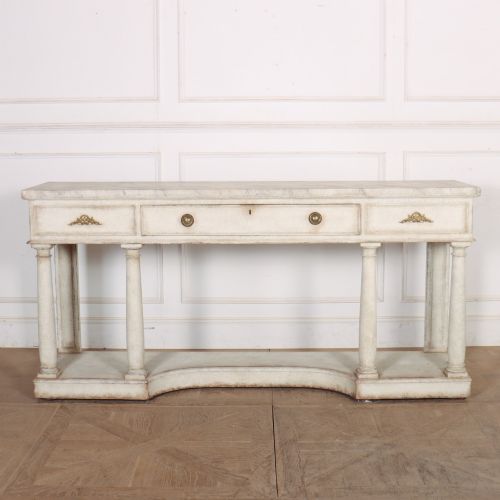

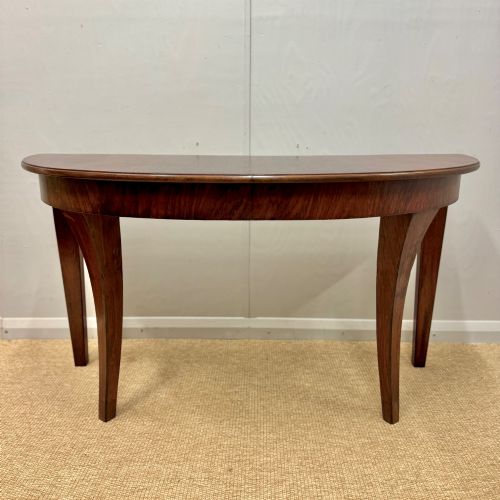


Regency Style Hall Table
A regency style hall table brings classical balance and refined surface space to an entrance, drawing the eye with graceful proportions and rich timber grain.
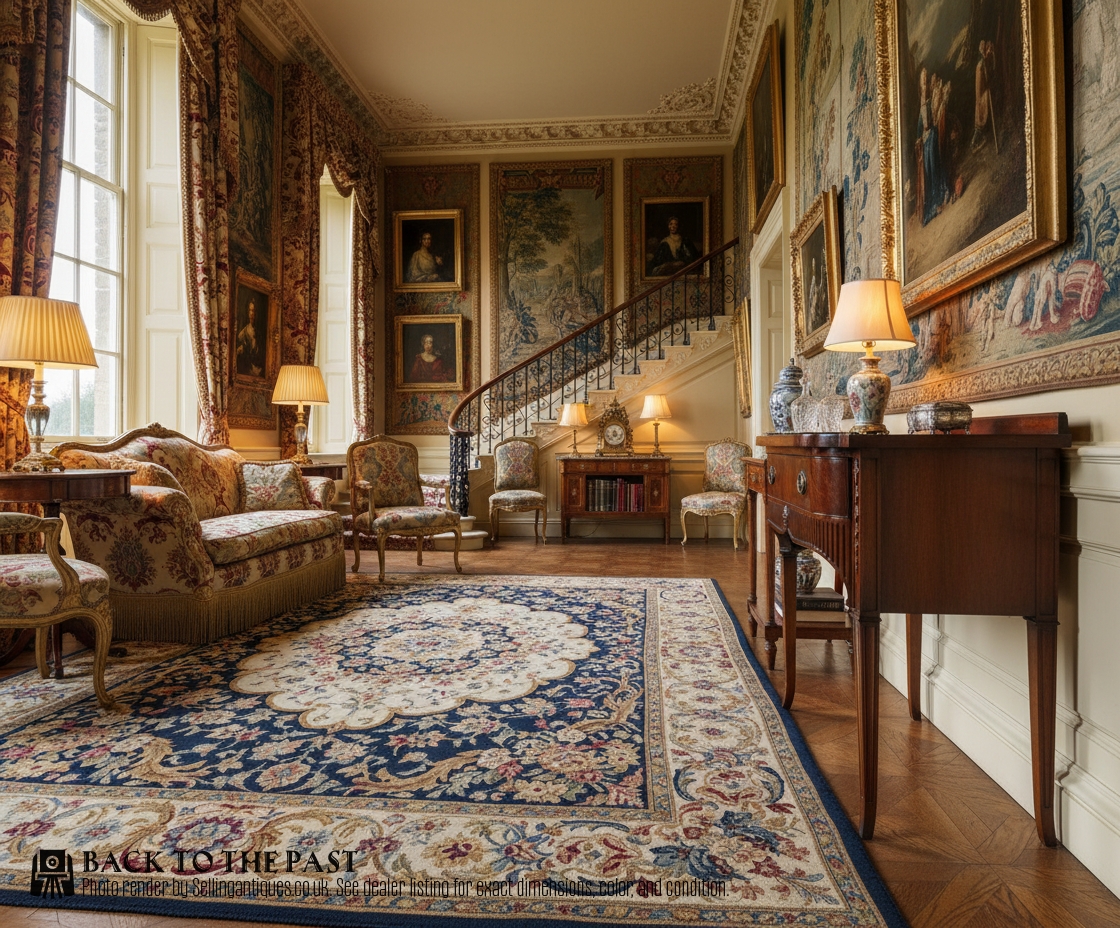
Regency Style Hall Table
When you search for a regency style hall table, you encounter a variety of forms adapted for narrow spaces, including console tables, side tables, and demi-lune shapes. These pieces draw upon design vocabularies spanning the nineteenth century, William IV, and later revival periods from the early twentieth century.
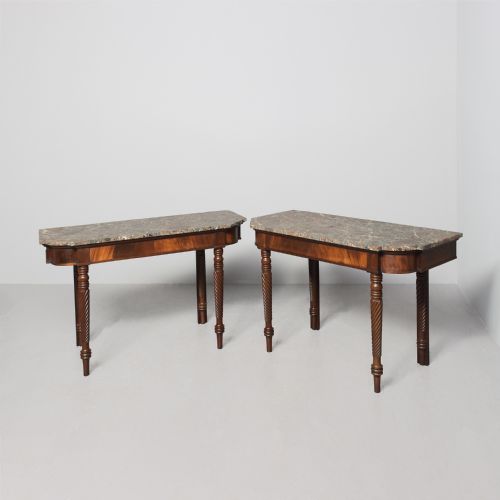
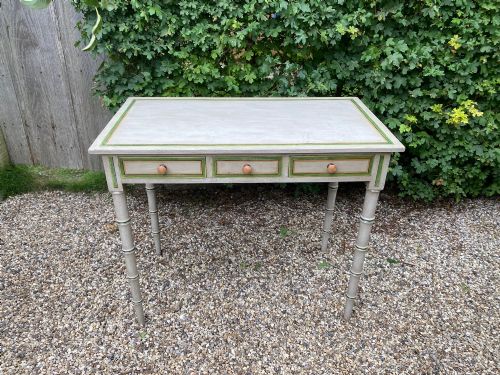
The selection ranges from architectural marble-topped console tables to versatile mahogany and rosewood side tables. Makers frequently employed classic profiles, such as concave legs or painted faux bamboo, to suit grand entrances and compact hallways alike.
Materials and construction
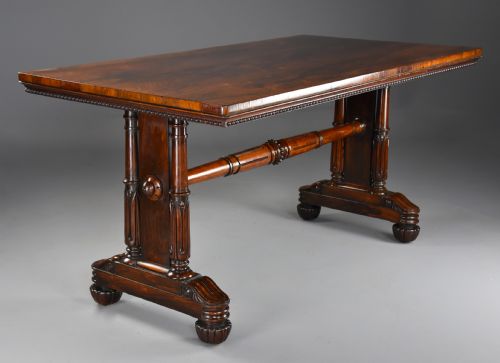
Cabinet makers utilised dense hardwoods like mahogany, rosewood, and yew wood, often embellishing surfaces with satinwood inlay, gesso, or decorative paint. Tops frequently incorporate contrasting materials such as marble or inset leather.
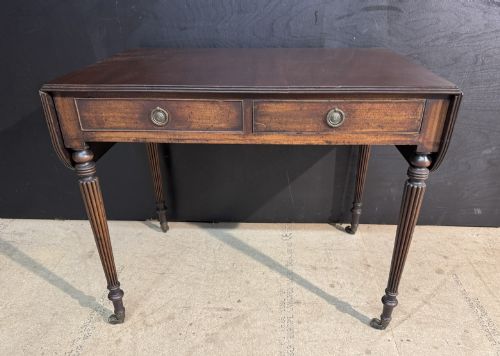
Structural refinement appears in brass mounts, carved details, and specialised forms like foldover or freestanding library tables. Craftsmanship relies on stable joinery to support heavy stone surfaces or slender saber legs.
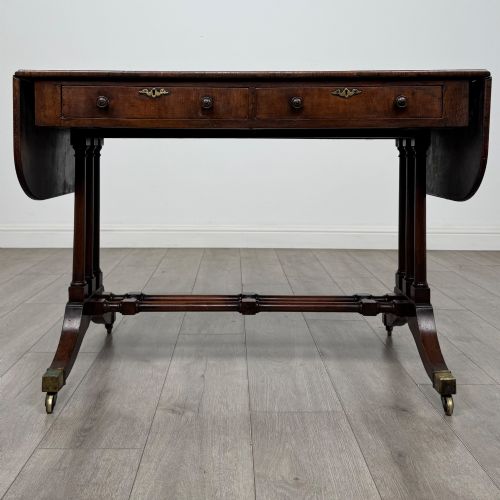
Form variations span console tables, demi-lune shapes, serving tables, and multi-functional sofa tables equipped with drop leaves.
Judging execution and finish
Quality rests in the selection of timber figures and the crispness of carved or painted ornamentation. Finer examples display harmonious proportions and seamless integration of secondary woods.
The distinction between standard production and exceptional work lies in the handling of details, such as precision inlay, heavy brass hardware, and the structural integrity of complex bases like concave or pedestal supports.
Gillows of Lancaster and London·Maple and Co
The Regency Style Hall Table Glossary
- Console table
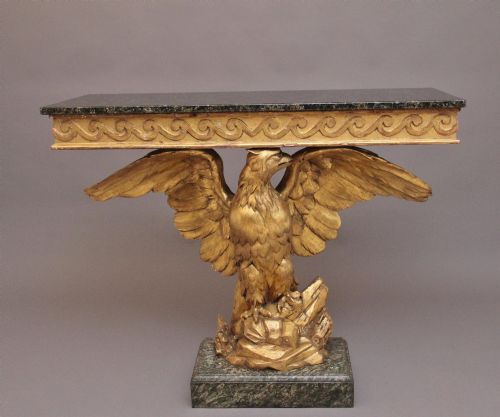
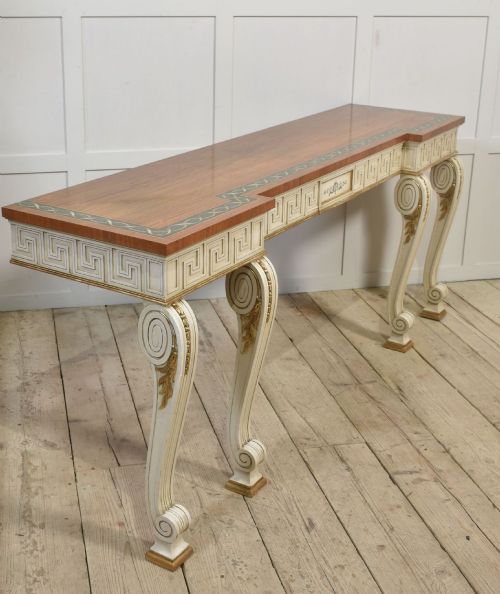
- A table designed to stand against a wall, frequently secured with brackets or supported by front legs. These pieces often feature decorative marble tops.
- Demi-lune
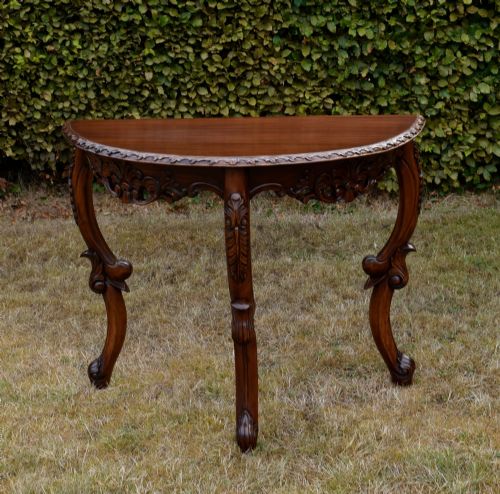
- A half-moon shape characteristic of side and console tables designed to fit snugly against an entryway wall. This format maximises surface area while protruding minimally.
- Sofa table
- A rectangular freestanding table traditionally placed before a sofa, featuring drop leaves at either end. They often incorporate two small drawers.
- Gesso
- A plaster-based material applied to wood surfaces and carved or gilded for decorative effect. It forms the textured relief seen on gilt console tables.
- Faux bamboo
- Wood turned and painted to imitate natural bamboo canes. This decorative technique appears on lighter occasional and writing tables.
Regency Style Hall Table: Frequently Asked Questions
Where should I place a hall table?
These tables fit naturally in entrance halls, corridors, or narrow reception rooms where surface space is needed without blocking passageways.
Pair them with a wall mirror or a small lamp to create a welcoming focal point upon entering the home.
How do I care for a marble top?
Marble surfaces require wiping with a soft, damp cloth and prompt removal of acidic spills to prevent etching. Avoid abrasive cleaners that dull the polished finish.
Using coasters and placemats protects the stone from scratches and heavy impacts during daily use.
What is the difference between a console and side table?
Console tables are traditionally designed to stand flat against a wall, sometimes relying on the structure of the wall for ultimate stability. Side tables are self-standing items that can float within a room or sit perpendicular to a wall.
Console tables frequently feature decorative front legs with plain rear supports, whereas side tables finish all visible sides equally.
How do I identify a revival piece?
Revival pieces from the early twentieth century often combine classical nineteenth-century silhouettes with standardised internal fixings and modern timber seasoning. Examining the secondary woods and construction methods reveals the actual date of manufacture.
Stylistic cues alone can mislead, as makers frequently borrowed heavily from Georgian and Regency pattern books decades later.