



Regency Style Candelabras
Regency style candelabras bring striking neoclassical grandeur and rich gilt metalwork into a room, offering both sculptural presence and classic illumination.
Regency Style Candelabras
When you search for regency style candelabras, you encounter pieces that draw on the classical vocabularies of the nineteenth century alongside later revivals stretching into the twentieth century. These lighting fixtures combine architectural discipline with decorative luxury, often taking the form of multi-armed candleholders designed for tables or mantelpieces.
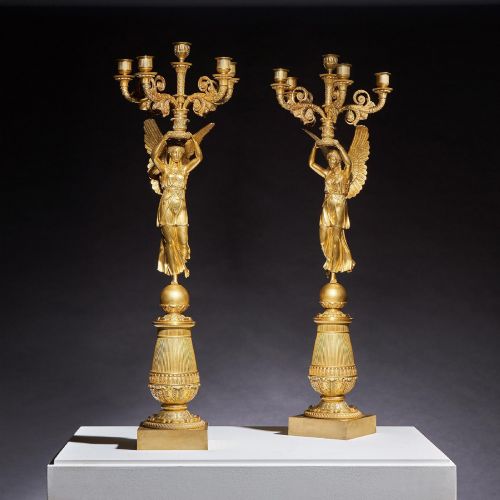
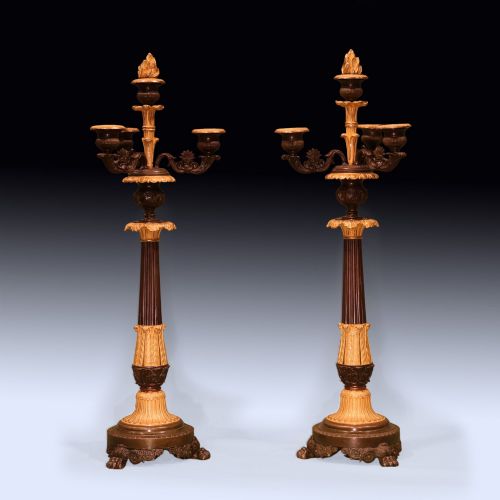
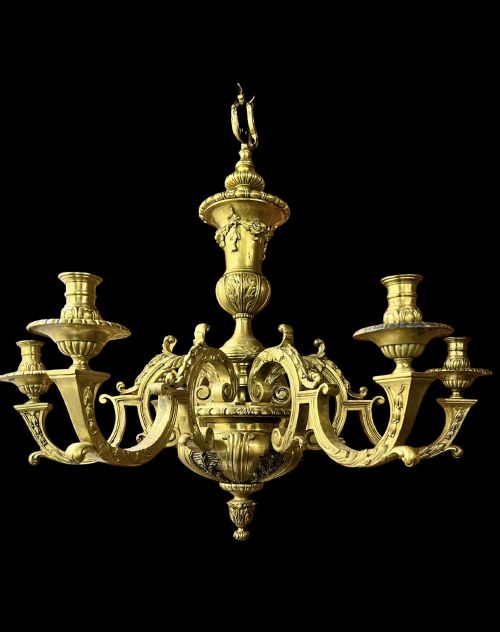
The versions most frequently met on this page date from the nineteenth century and lean heavily on French Empire and English Regency design principles. They balance dark patinated surfaces with bright gilt highlights, presenting forms that range from simple two-light candlesticks to ornate four-arm candelabra arrangements.
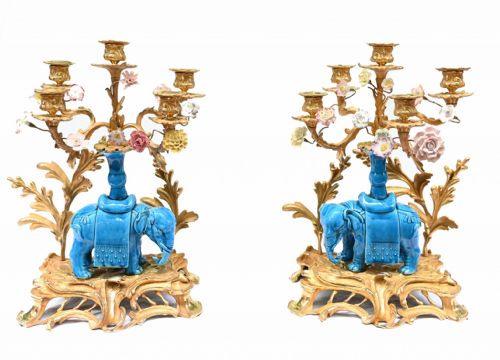
Beyond strict period examples, the selection includes pieces influenced by Swedish Empire tastes and later interpretations, incorporating varied materials like marble, porcelain, and cut crystal. This variety reflects how enduring the neoclassical aesthetic proved among makers long after the original Regency era closed.
Materials and construction
The construction relies fundamentally on the contrast between bronze and ormolu, utilising mercury gilding or fire-gilding techniques on cast brass or bronze to achieve a brilliant golden finish alongside dark patinated bronze elements. Marble bases frequently provide solid structural weight and a cool neoclassical contrast to the warm metallic components.
Assembly typically involves multiple cast components fitted together with threaded rods and nuts, allowing complex figures, fluted columns, and branching arms to be secured firmly. Detail is added through precise chasing and hand-finishing of the cast metal surfaces to sharpen acanthus leaves, beaded borders, and figurative elements.
A grinning spelter Hollywood girl stands ready to hold your candles in 1930s style.
Judging quality in metalwork
Quality rests heavily on the crispness of the metal chasing and the depth of the original gilding, where finer pieces display sharp tool work that defines every leaf and facial feature rather than smooth, soft contours. The weight and quality of the bronze, brass, or marble used for the base also dictate the stability and presence of the object.
Arm construction and structural integrity distinguish superior examples, as well-made candelabras feature tightly fitting, well-aligned branches that sit securely without wobble. The integration of secondary materials, such as cut crystal drops or finely painted porcelain elements, further elevates the sophistication of the piece.
Pierre Philippe Thomire·Thomas Hope
The Regency Style Candelabras Glossary
- Ormolu
- A method of applying finely ground high-carat gold to a bronze object using a mercury amalgam. This technique produces a deep, durable golden lustre characteristic of high-end nineteenth-century decorative arts.
- Patinated Bronze
- Bronze that has been chemically treated to darken its surface, creating a rich brown or black tone. It provides a striking visual contrast against bright ormolu mountings.
- Neoclassical
- An artistic movement drawing inspiration from the classical art and culture of ancient Greece and Rome. It emphasises symmetry, straight lines, and classical motifs such as urns and acanthus leaves.
- Candelabra
- A branched candlestick designed to hold multiple candles simultaneously. In antique lighting, these pieces often feature removable branches that convert them into standard candlesticks.
- Spelter
- An alloy of zinc used as a less expensive substitute for bronze in decorative figures. It appears in later decorative items and requires careful handling due to its relative softness.
Regency Style Candelabras: Frequently Asked Questions
What is a Regency style candelabra?
A Regency style candelabra is a branched lighting fixture that draws on the classical design motifs popular during the early nineteenth century. These pieces typically feature multiple arms for holding candles and combine contrasting metallic finishes.
They serve as decorative centerpieces on dining tables, sideboards, and mantelpieces, bringing a distinct architectural elegance to an interior space.
How do I clean antique ormolu?
Antique ormolu requires gentle maintenance to preserve the delicate gold surface, avoiding abrasive polishes and harsh chemical cleaners entirely. A soft, dry microfiber cloth removes dust effectively without scratching the metal.
If deeper cleaning is necessary, a damp cloth with mild soap can be used sparingly, followed immediately by thorough drying to protect the underlying bronze or brass.
Are these candelabras wired for electricity?
Some pieces on this page are adapted as candelabra lamps, combining traditional candle arms or central stems with electrical fittings. Others remain strictly configured for traditional wax candles as originally designed.
Buyers should examine the specific listing details or consult the dealer to confirm whether a piece retains its original candle fittings or has been converted for modern lighting.
How do I tell Regency from later styles?
Original Regency pieces exhibit the characteristic weight, cast construction techniques, and hand-chased details typical of the early nineteenth century. Materials like mercury-gilded bronze and heavy statuary marble are strong indicators of this period.
Later revivals from the late nineteenth or early twentieth centuries often show different casting methods, lighter alloy components, or stylistic influences from Art Deco or Edwardian tastes.