


Pair Glass Table Lamps
These pair glass table lamps bring a balanced, luminous presence to a room, combining weighted metal bases with blown or cut transparent bodies.
Pair Glass Table Lamps
When searching for pair glass table lamps, buyers encounter symmetrical lighting fixtures designed to sit upon sideboards, desks, and occasional tables. These matching items originate predominantly from the nineteenth century through the Art Deco period of the 1930s, often produced as converted oil lamps or dedicated electrical fittings.
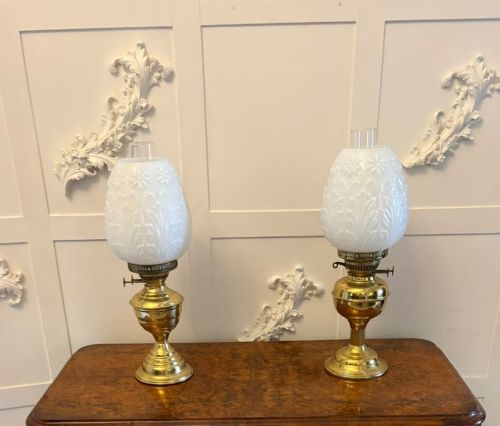
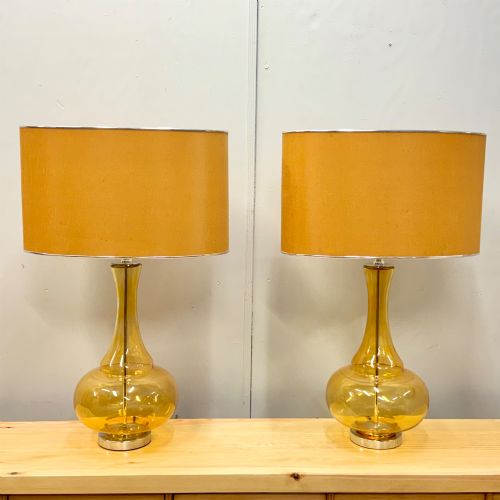
The selections span distinct aesthetic movements, from Victorian Corinthian columns and opaline vessels to geometric Art Deco chrome and amber creations. French, English, and Italian workshops dominate the archive, pairing heavy glass bodies with metal mountings in brass, ormolu, and bronze.
How they were made
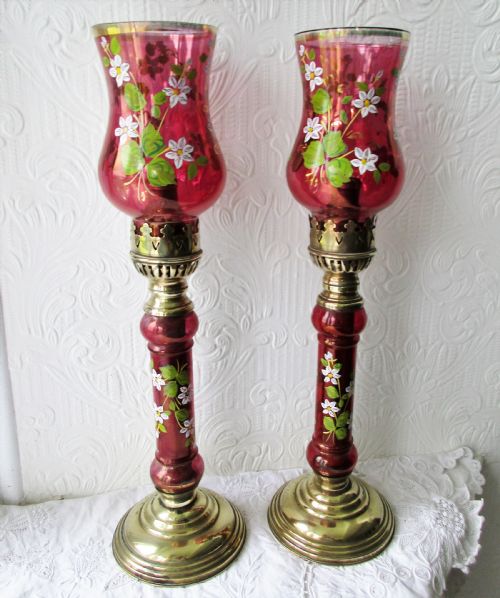
The construction typically unites blown or cut glass reservoirs and columns with cast metal components such as brass, gilt bronze, and ormolu. Glass elements display techniques including deep wheel-cutting, acid-etching, and moulding into opaline, amber, ruby, or crystal forms.
Makers integrated metal collars, weighted bases, and burners or electrical sockets, sometimes adapting earlier oil lamps and candelabra into table lighting. Silk shades or glass chimneys completed the assemblies, supported by threaded rods running through the central glass shafts.
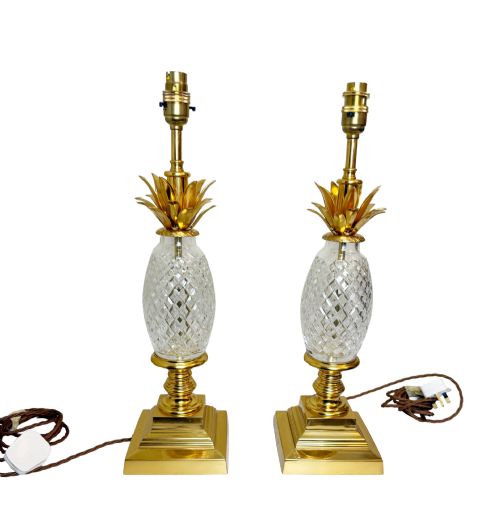
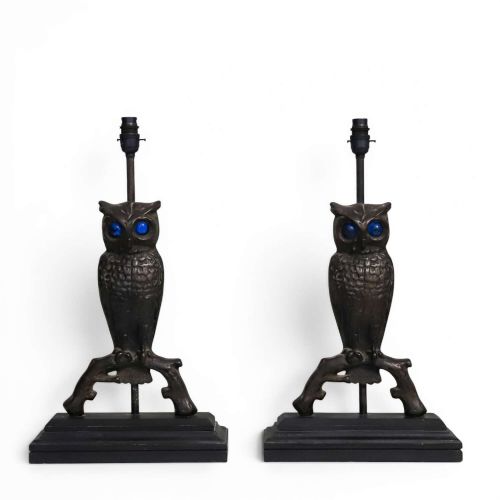
Cast iron owls and glowing pineapples stand ready to illuminate dark corners with uncompromising avian and tropical vigilance.
What varies in quality
Quality rests in the weight and clarity of the glass, alongside the crispness of metal casting and chasing in mounts like ormolu and brass. Thick, heavy-lead crystal and finely hand-cut facets separate superior examples from simpler moulded production.
The harmony of the matching pair dictates value, ensuring that blown glass reservoirs, collar mounts, and patination align precisely across both lamps rather than presenting as assembled marriages.
Wild Wessel·Meissen Porcelain
The Pair Glass Table Lamps Glossary
- Opaline glass
- An opaque, milky-white glass popular in Victorian and early twentieth-century lighting for its soft light diffusion.
- Ormolu
- Gilded bronze mounts used extensively on French lamps to accent the glass columns and bases.
- Cut crystal
- High-purity glass shaped by grinding and polishing geometric patterns that refract light.
- Candle lamp
- A specialised lamp designed to burn paraffin or wax within a glass chimney, often predating widespread electricity.
- Decalcomania
- A decorative technique applying transferred paper designs to the interior or exterior of glass lamp bodies.
Pair Glass Table Lamps: Frequently Asked Questions
How do I wire antique lamps safely?
Rewiring requires replacing older internal cords with modern flex while retaining original brass holders where possible. Qualified electricians handle PAT testing to ensure compliance with current safety standards.
Historic components should be preserved during rewiring to maintain the integrity of the lamp's construction and mounting.
Were these originally oil lamps?
Many Victorian and Edwardian examples began as oil-burning fixtures before conversion to electricity during the twentieth century. Burner assemblies were replaced with lamp holders while retaining the original glass fonts and metal stems.
Traces of period wicks, burners, or reservoirs often indicate whether a pair underwent conversion.
How do I match replacement shades?
Matching replacement shades involves observing the period style, such as pairing Art Deco chrome bases with geometric silks or Victorian columns with ruffled opaline glass. Proportions between the glass body and the shade dictate visual balance.
Original silk shades rarely survive intact, making period-appropriate fabric or glass replacements standard for daily use.
What is a matched pair versus an original pair?
Original pairs were manufactured together in workshops with identical mouldings and metalwork, whereas matched pairs combine two independent single lamps of identical form. Subtle variations in glass thickness or brass patination often distinguish the two categories.
Both types offer visual symmetry, though original pairs command greater interest from collectors.