

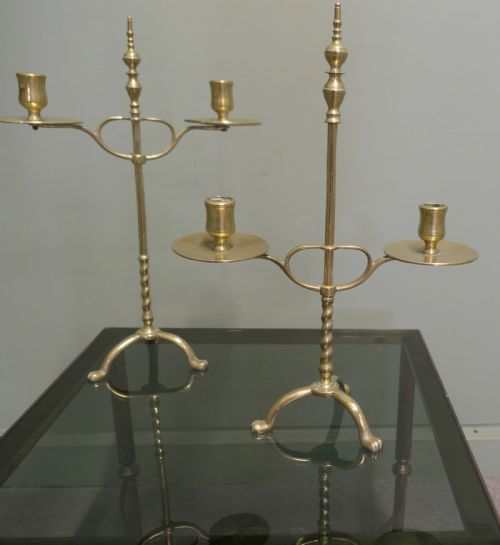
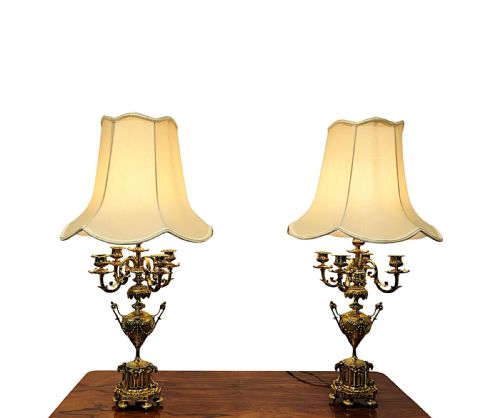


Brass Candelabra Lamps
Brass candelabra lamps combine metal lighting fixtures and branched candleholders, offering historic character and warm illumination for period interiors.
Brass Candelabra Lamps
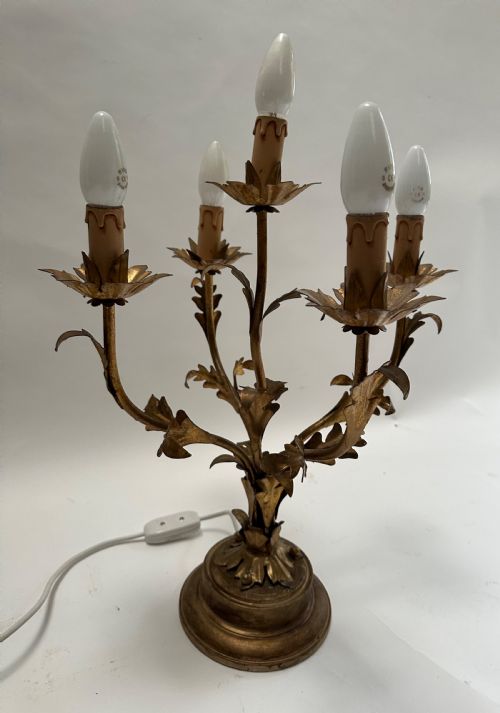
Brass candelabra lamps represent a hybrid category where historic multi-armed candleholders undergo conversion for electrical lighting or emerge from workshops designed to hold bulbs alongside traditional metal arms. Buyers searching for brass candelabra lamps encounter forms that span several decades, most frequently appearing in French styles from the nineteenth and early twentieth centuries.
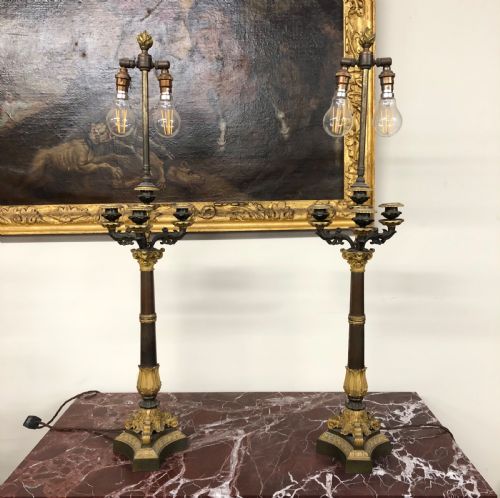
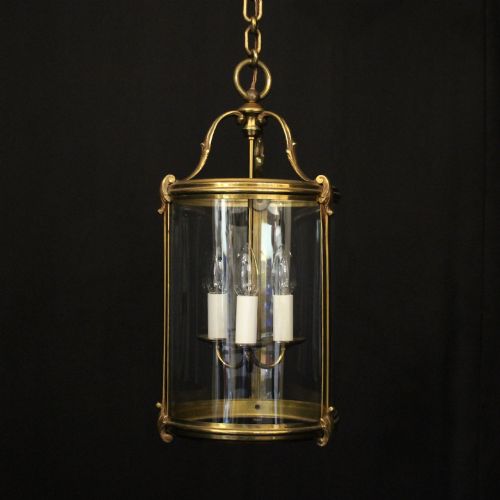
The selection on this page demonstrates various manifestations, including table lamps, standard lamps, and wall lights, alongside converted nineteenth-century candelabra and bouillotte designs. Pieces from the eighteen-seventies up to nineteen-thirty dominate the current inventory, showing French Chateau, Neoclassical, and Rococo Revival influences.
The most common formats on this page are pairs of table lamps featuring twin or triple branches, often enriched with crystal drops or glass elements. These items bridge the gap between functional illumination and decorative sculpture, suiting mantelpieces, sideboards, and desk placements.
Materials and construction
Foundries utilised cast brass, gilt bronze, and ormolu as primary structural metals, employing traditional casting and chasing techniques to achieve intricate surface detail. Many pieces combine these metal foundations with cut glass, crystal pendants, or tole shades to diffuse the light.
Makers integrated electrical wiring into older candelabra frames during conversion processes, adapting hollow stems and candle nozzles to house lamp fittings while retaining the original metal branches. Surface finishes include fire gilding, silvering, and patinated bronze, applied to achieve distinct visual depth across the styles.
Brass Candelabra Lamps Retail Price Guide 2026
Typical asking prices for brass candelabra lamps among the pieces listed under this phrase on Sellingantiques today, from the lower quarter to the upper quarter. They describe what is for sale here now, not the wider market.
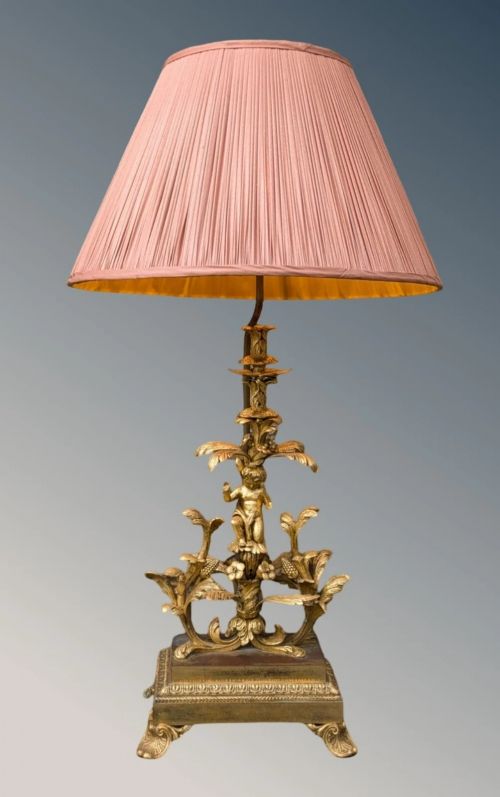
Several pieces incorporate playful putti and cherubs perched among the brass branches, keeping watch over the lightbulbs.
Distinctions in quality
The standard of a piece rests heavily upon the crispness of the metal chasing and the weight of the cast bronze or brass. Finer examples display deeply carved foliage, cherubs, and putti with sharp definition, whereas lesser items show softened details from worn moulds.
Integration of secondary materials also dictates the tier of an object, such as the clarity of cut crystal drops and the stability of multi-branch assemblies. The harmony between the original candelabra framework and the subsequent electrical adaptation marks the distinction between a thoughtful conversion and a crude alteration.
The Brass Candelabra Lamps Glossary
- Candelabra
- A branched candlestick used for holding multiple candles or configured for electric lamps. These fixtures form the structural core of many converted antique table lights.
- Ormolu
- Gilt bronze produced by applying a finely ground high-carat gold-mercury amalgam to a bronze object. This technique imparts a distinctive warm lustre found on finer French pieces.
- Girandole
- A branched wall light or table candelabrum featuring mirrors or crystal pendants to reflect and multiply the illumination. They frequently incorporate glass drops in the inventory shown.
- Bouillotte
- A type of adjustable table lamp featuring a central light source and a metal shade, traditionally used for card games. French examples often combine brass and tole materials.
- Neoclassical
- A style drawing inspiration from classical antiquity, characterised by symmetry, restraint, and classical motifs such as urns and fluted columns. It appears across various nineteenth-century lighting pieces.
Brass Candelabra Lamps: Frequently Asked Questions
What is a candelabra lamp?
A candelabra lamp is a lighting fixture derived from or styled after a branched candleholder, adapted to hold electric bulbs instead of wax candles. These pieces retain the multiple arms and decorative metalwork of traditional candle stands.
They serve as decorative table lamps, standard lamps, or wall lights, bringing historic metalwork and ambient illumination into domestic spaces.
How do I date an antique brass lamp?
Dating these pieces involves examining the casting techniques, the style of the mounts, and the materials used in the construction, such as gilt bronze, crystal, or brass. Nineteenth-century pieces often exhibit heavier cast bronze and hand-chased details.
Twentieth-century items frequently show lighter construction or specific revival styles like Arts and Crafts or French Rococo. Comparing the form with documented periods helps narrow down the decade of manufacture.
Can these lamps be used safely today?
Many antique candelabra lamps have undergone conversion from wax candles to electricity, either historically or during recent restoration. Buyers should check the internal wiring and have components tested by a professional electrician before daily use.
Original metal frames and sturdy branch assemblies generally accommodate modern wiring without compromising the historic exterior structure.