
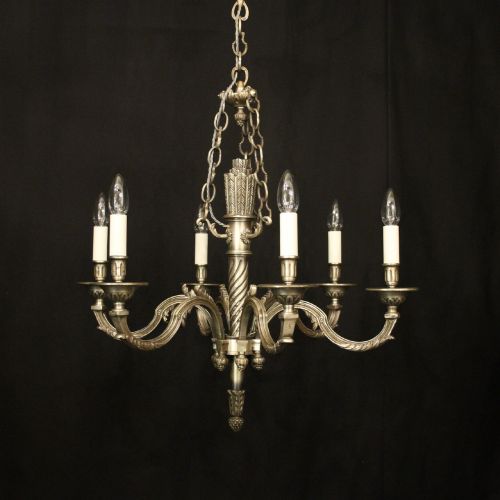
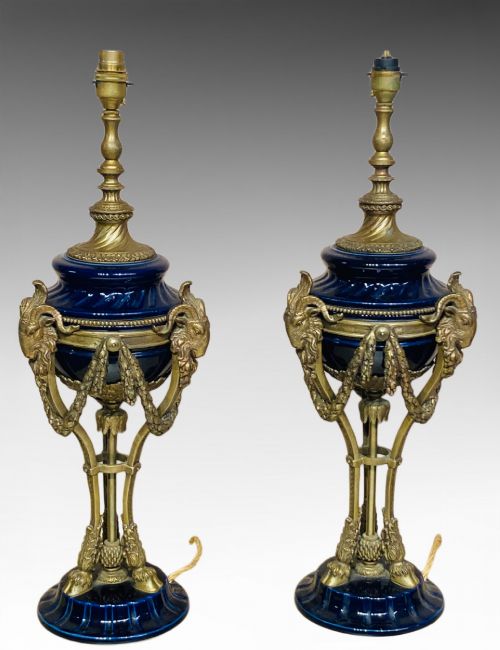
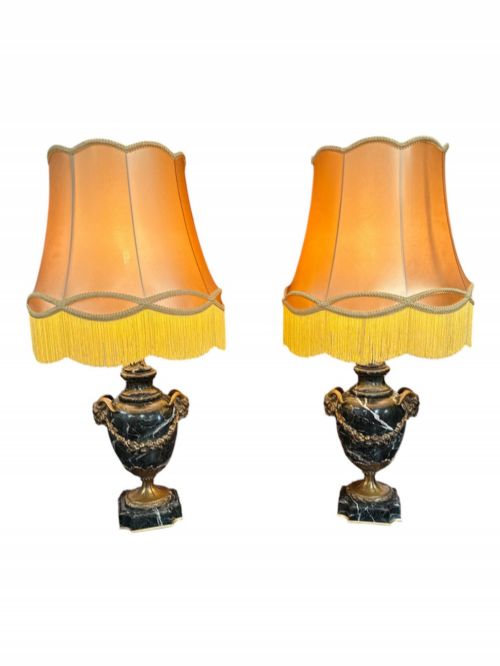
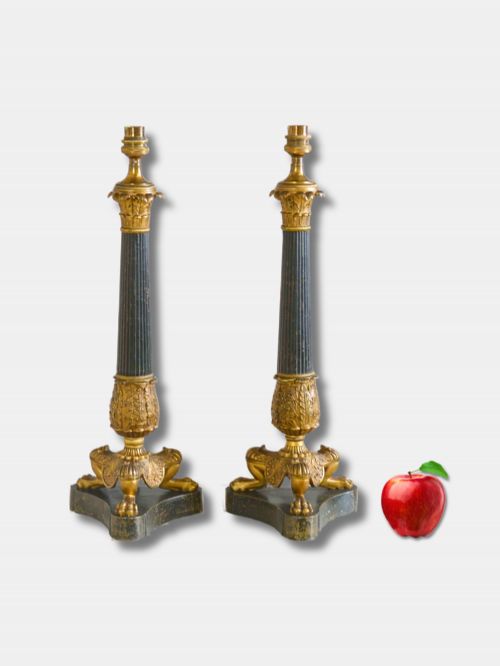
Neoclassical Bronze Lamps
Neoclassical bronze lamps bring ancient architectural dignity and rich patinated metalwork into a room.
Neoclassical Bronze Lamps
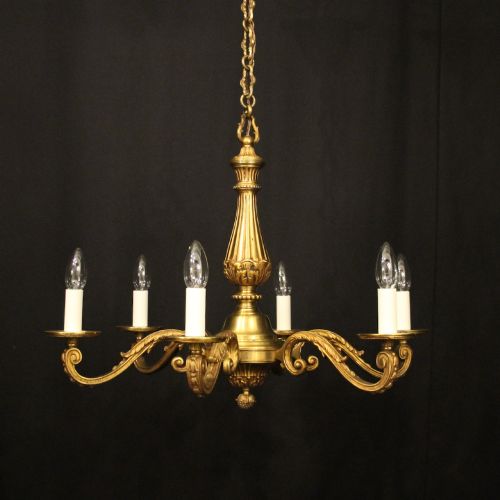
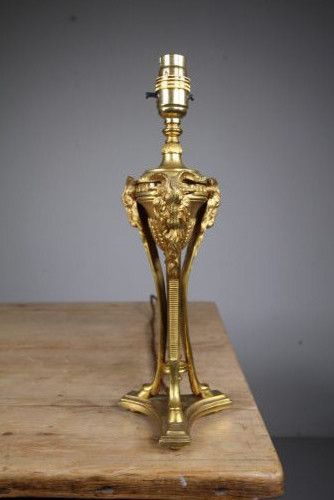
Neoclassical bronze lamps draw directly on the decorative vocabulary of antiquity, incorporating classical orders, urns, and mythological figures into domestic lighting. These pieces emerge predominantly in the nineteenth century, alongside later revivals taking inspiration from French Empire and Louis XVI design.
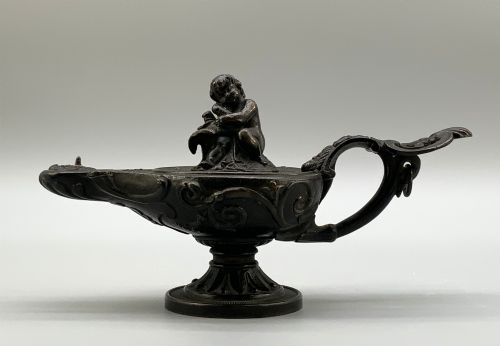
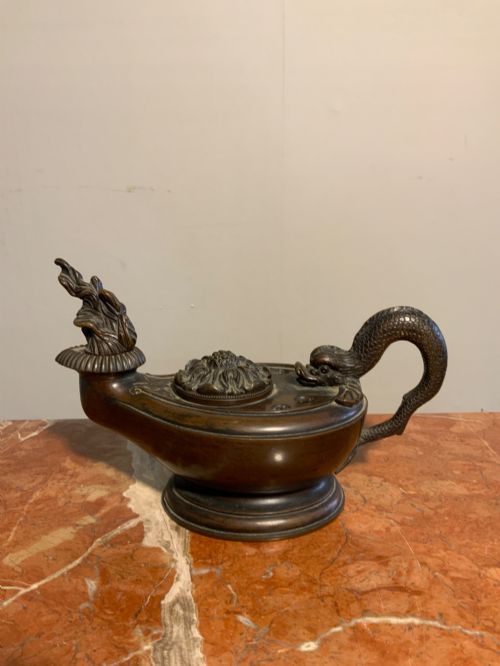
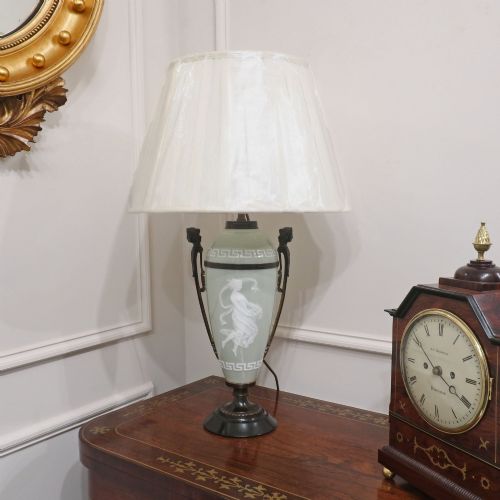
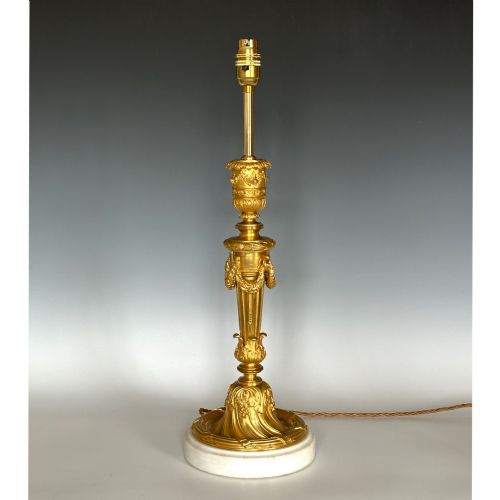
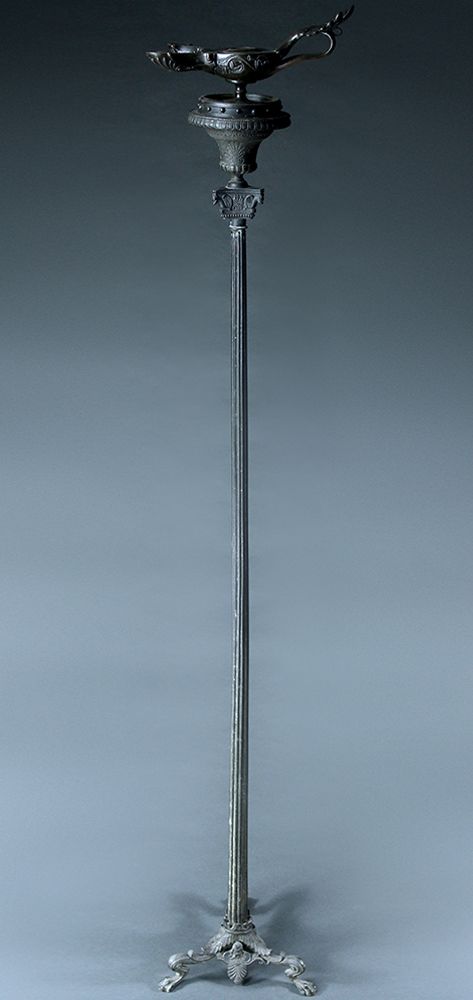
Buyers will encounter table lamps, floor standards, and oil lamps cast in heavy patinated or gilded metals. Many combine metalwork with white or rouge marble bases, referencing Grand Tour souvenirs and archaeological discoveries of the period.
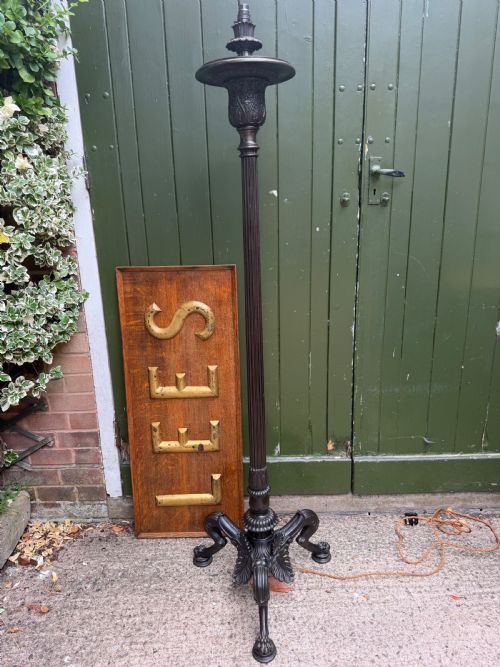
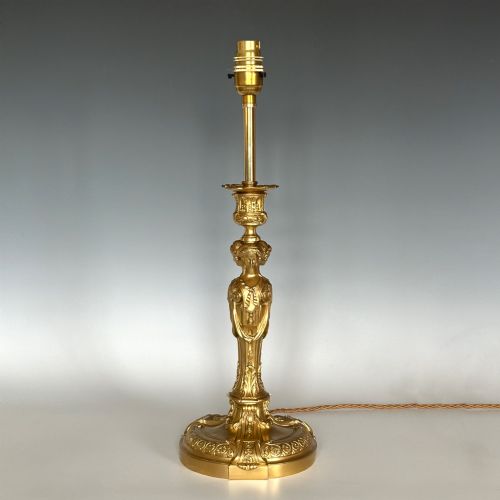
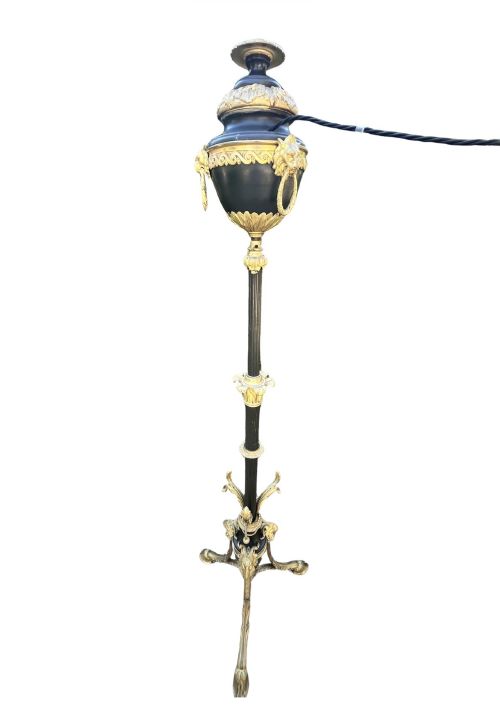
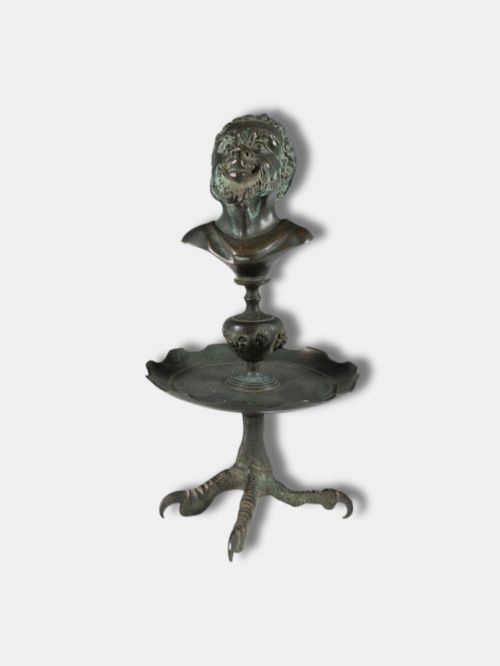
French neoclassical style dominates the selection, often mirroring the symmetry and restraint associated with eighteenth-century workshops. Pieces range from straightforward columnar table lamps to elaborate figural torchères featuring satyrs, eagles, and classical busts.
Materials and construction methods
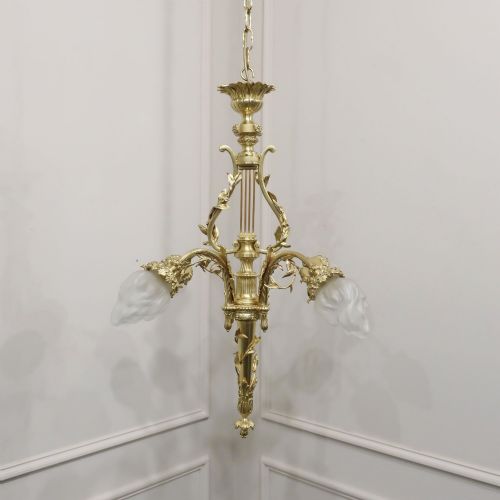
Makers utilised bronze, brass, and cast iron to build robust structural forms, applying chemical patination to achieve dark, antiqued surfaces. Gilt bronze and ormolu add bright metallic contrast through the application of gold leaf or mercury gilding.
Stonework such as marble provides substantial weighted bases for tall table lamps and torcheres. Components are frequently cast in sections and assembled with threaded rods, integrating chased detailing achieved by hand after the initial casting.
Listings feature pieces spanning from the Georgian period through the 1930s, uniting French Empire, Regency, and Louis XVI design styles.
Assessing quality in metalwork
The choice of secondary materials marks a distinct tier in manufacturing standards. Heavy turning of natural marble and genuine fire-gilt ormolu separate high-grade nineteenth-century pieces from lighter twentieth-century interpretations.
Humphrey Hopper·F. De Luca
The Neoclassical Bronze Lamps Glossary
- Ormolu
- Finely chopped or ground gold amalgam applied to a bronze base, creating a durable golden surface. This technique was widely practiced in French workshops during the eighteenth and nineteenth centuries.
- Grand Tour
- A cultural journey undertaken by wealthy young Europeans through France and Italy to collect classical antiquities. Many lamps from this tradition adapt ancient architectural fragments or sculptural bronzes.
- Patinated Bronze
- Metal treated with chemical solutions to produce a darkened, weathered surface finish. It highlights sculptural relief by contrasting darker recesses with polished highlights.
- Torchere
- A tall stand or floor lamp designed to hold a light source aloft. In neoclassical design, these frequently take the form of fluted columns or figural torch-bearers.
- Cassolette
- A decorative vase or urn with a reversible lid that functions as a burner or purely ornamental object. Converted examples form the bodies of many nineteenth-century table lamps.
Neoclassical Bronze Lamps: Frequently Asked Questions
Are these lamps wired for modern use?
Most antique lamps have been rewired at various points in their long histories to comply with contemporary electrical standards. Buyers should expect modern flex and plugs, though older installations may require professional safety checks.
Rewiring rarely affects the structural integrity of the base if executed through existing internal channels without drilling new holes into the antique metalwork.
How do I clean bronze and ormolu?
Dusting with a soft, dry brush prevents the accumulation of grime in the intricate crevices of chased metalwork. Avoid abrasive metal polishes, which can strip away delicate ormolu gilding and historic patination.
Water and harsh chemical cleaners should be kept away from both the metal surfaces and any integrated marble bases to prevent staining and corrosion.
How can I tell a nineteenth-century lamp from a later reproduction?
Examine the construction methods and the weight of the casting materials. Nineteenth-century pieces typically feature hand-chased surface details and heavier, more complex assembly methods using threaded pins rather than modern screws.
Wear patterns on the underside of marble bases and natural oxidation within sheltered recesses of the bronze also provide reliable indicators of age.
Where do these lamps work best in a room?
Their architectural proportions suit studies, libraries, and formal reception rooms where classical design elements predominate. Tall torchères function effectively as statement corner lighting, while smaller column lamps anchor side tables.
The reflective qualities of ormolu and the dark tones of patinated bronze interact well with wood panelling and rich interior fabrics.