




Ormolu Urn Table Lamps
These ormolu urn table lamps combine cast metal mounts with classic vase forms to bring warmth and classical proportion to a room.
Ormolu Urn Table Lamps
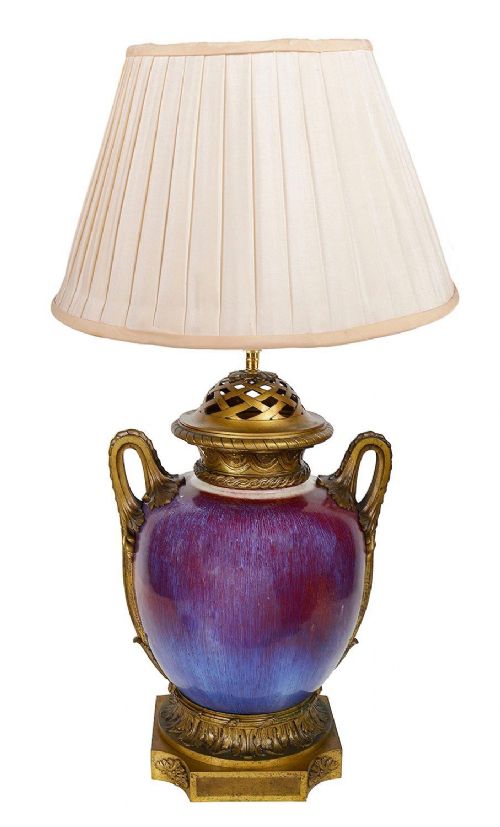
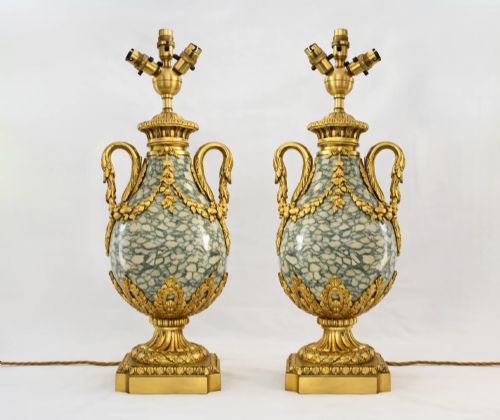
When you search for ormolu urn table lamps, you encounter decorative lighting rooted primarily in nineteenth century French and English design. These pieces adapt traditional vessel forms, such as cassolettes and vases, into functional illumination through the addition of electrical fittings.
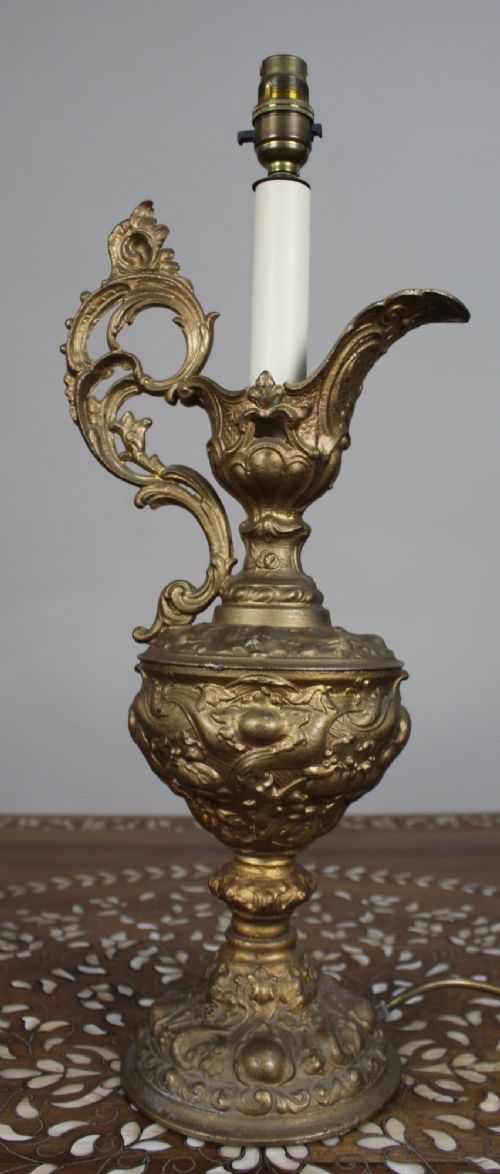
The prevailing style on this page is nineteenth century French Neoclassical or Louis XVI revival, often featuring symmetrical handles, plinths, and classical foliage. Many examples originate as converted oil lamps, ewers, or ornamental vases mounted with gilt bronze.
The materials span classical mediums, pairing glazed porcelain, marble, and glass with metallic mounts. These combinations create pieces that function equally as sculptural objects and as sources of ambient illumination.
Materials and Construction
The construction relies on the union of cast bronze, often mercury gilded to produce ormolu, with solid bodies of marble, onyx, or porcelain. Craftsmen shaped the metal mounts through detailed casting and chasing before applying the gold finish, securing them to stone or ceramic vessels with internal threaded rods.
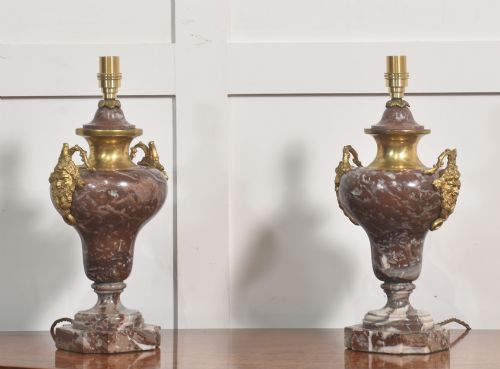
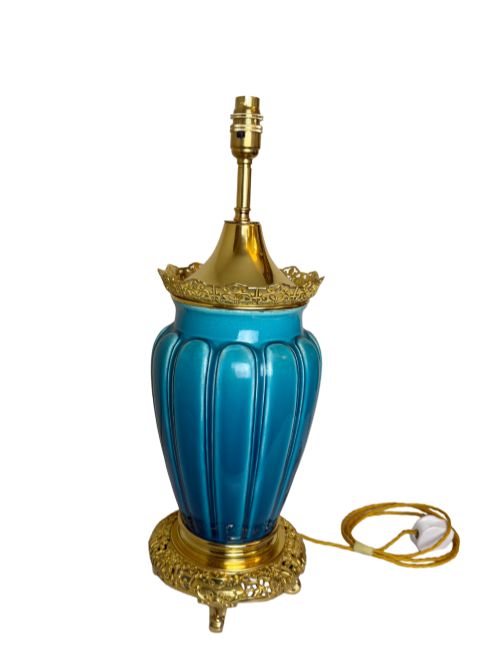
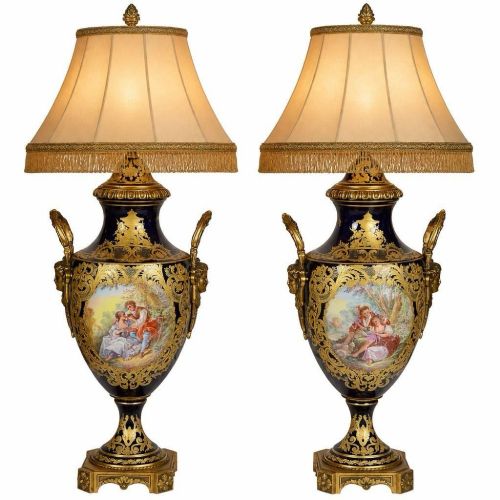
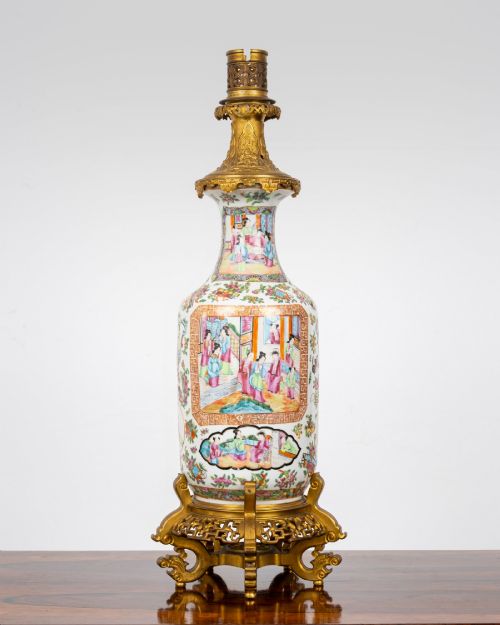
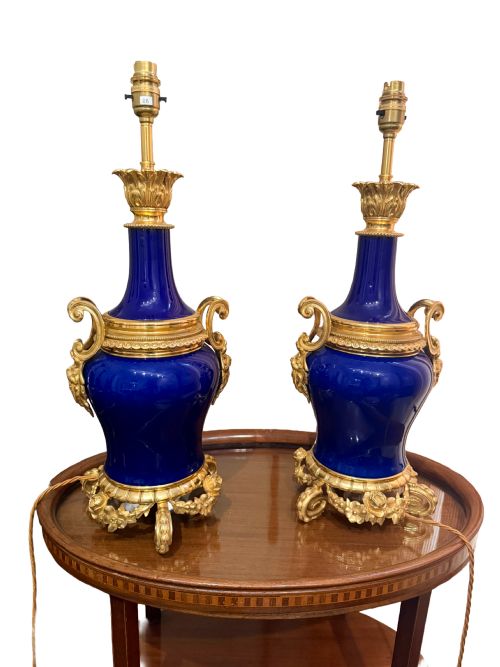
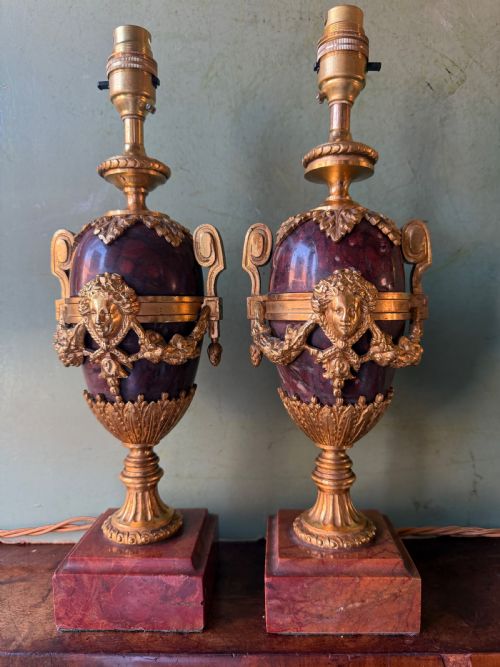
Porcelain bodies frequently display hand-painted cobalt blue, turquoise, or famille rose designs, sometimes mimicking eighteenth century Sevres or Chinese export porcelain. Bases of white, rouge, or siena marble provide stability and weight to the composition.
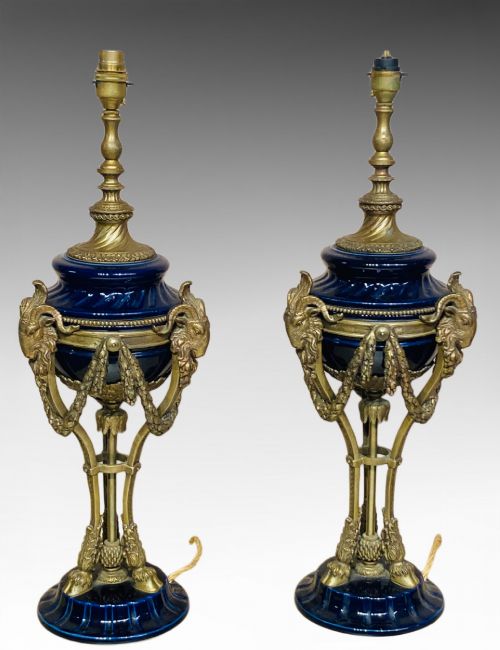
Rams' heads peer steadily from several nineteenth-century urns, keeping silent watch over centuries of domestic illumination.
Judging Quality and Execution
Quality rests primarily in the crispness of the bronze chasing and the depth of the gilding. Superior mounts show sharp relief in acanthus leaves and ram heads, whereas lesser examples appear soft and lack distinct detail after casting.
The integrity of the body materials also dictates the standard of the piece, visible in the grain of the marble and the precision of the porcelain painting. Finely matched pairs demonstrate uniform colouration and symmetry in their mountings.
The Ormolu Urn Table Lamps Glossary
- Ormolu
- Gilt bronze produced by applying a mercury and gold amalgam to cast bronze and heating it until the mercury vaporised. This historic technique creates a warm, durable golden surface.
- Cassolette
- A decorative vessel shaped like an urn, often featuring a reversible lid that functions as a small bowl or burner. In lamp form, these retain the characteristic handles and body shape.
- Sevres style
- Porcelains decorated in imitation of the eighteenth century French royal factory, typically featuring rich blue grounds with hand-painted pastoral scenes or gilt highlights. These wares are widely adapted into nineteenth century lighting.
- Rouge marble
- A deep red, variegated limestone quarried in France and prized for its rich tone and contrasting white calcite veins. It forms the solid plinths of many classical lamps.
Ormolu Urn Table Lamps: Frequently Asked Questions
How do I date these lamps?
Dating relies on examining the casting technique of the bronze mounts, the wear on the gilding, and the material of the wiring components. Nineteenth century examples typically show hand-chased metalwork and older mounting screws.
Stylistic cues also help narrow the period, as Louis XVI revival pieces frequently duplicate eighteenth century forms with Victorian manufacturing methods. Checking the base and interior construction reveals the transition from oil burning to electricity.
Are these lamps converted from older vessels?
Many ormolu urn table lamps began as decorative cassolettes, ewers, or oil lamps before receiving electrical wiring. This conversion process was common practice throughout the nineteenth and early twentieth centuries.
Collectors value these adaptations for their dual heritage as sculptural art objects and functional lighting. The addition of wiring rarely diminishes the historical character if the original mounts remain undisturbed.
How do I care for ormolu mounts?
Ormolu requires gentle cleaning with a soft, dry cloth to remove dust without abrading the thin layer of gold. Avoid chemical polishes and commercial metal cleaners, which strip the historic gilt surface.
Protect the marble and porcelain bodies from moisture and direct sunlight to preserve hand-painted details and stone polish. Regular dusting keeps the metalwork stable and prevents the accumulation of grime in recessed chasing.
What styles do these lamps represent?
The pieces predominantly showcase Neoclassical, Louis XVI, and French Rococo revival aesthetics from the nineteenth century. These styles emphasise symmetry, classical urn shapes, and architectural motifs like fluted columns and rams heads.
Occasional Chinoiserie and Japanese export ceramics appear mounted with European bronze, reflecting nineteenth century taste for eclectic luxury. Each style dictates the intricacy of the cast metal mounts and the choice of stone plinth.