

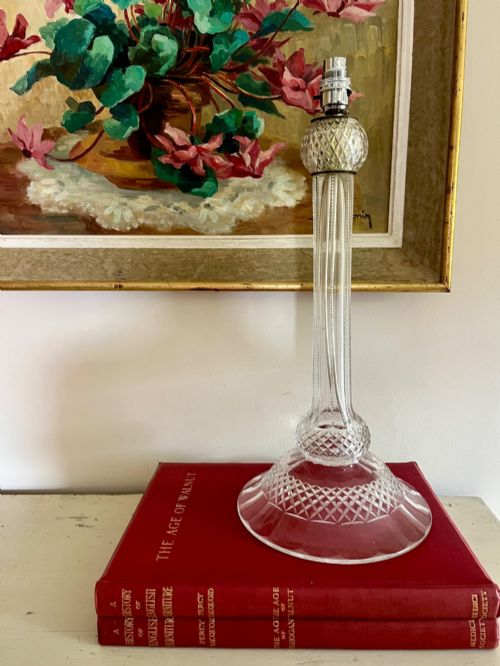


Crystal Table Lamp
These cut glass and lead crystal table lamp designs bring brilliant refraction and structured weight to an interior.
Crystal Table Lamp
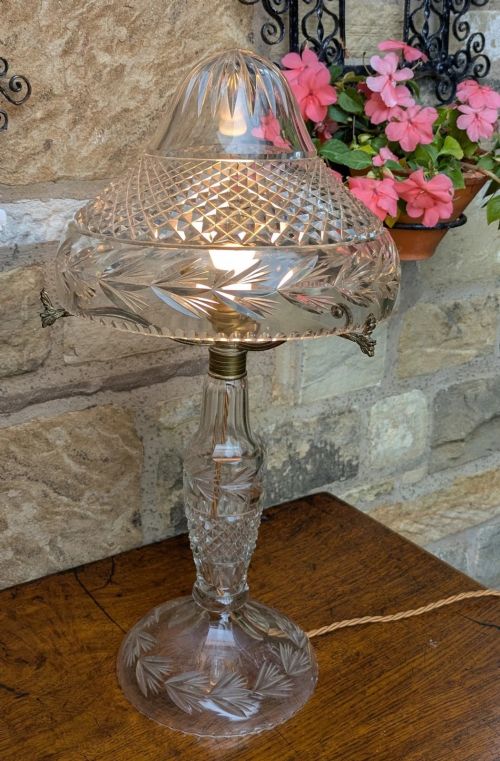
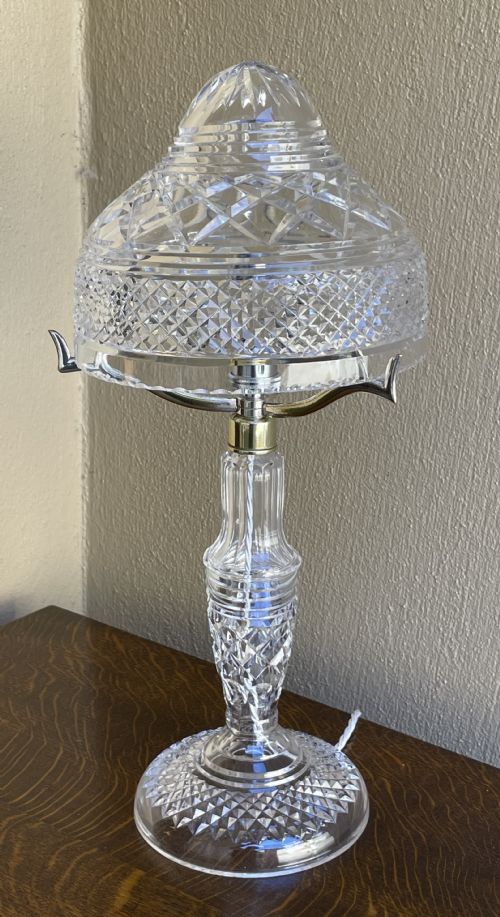
A crystal table lamp functions as both a functional light source and a decorative object, drawing on periods spanning the Victorian era through the Art Deco movement. Buyers will find columnar designs, oil lamps adapted for electricity, and distinct mushroom profiles utilising heavy moulded or cut glass.
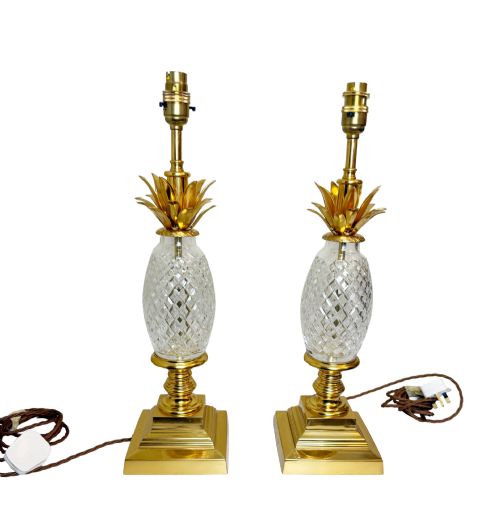
French and English workshops produced many of the surviving examples seen here, often pairing clear or frosted glass with bases of brass, ormolu, and gilt bronze. Items range from single-bulb desk lights to multi-branch candelabra lamps and decorative girandoles.
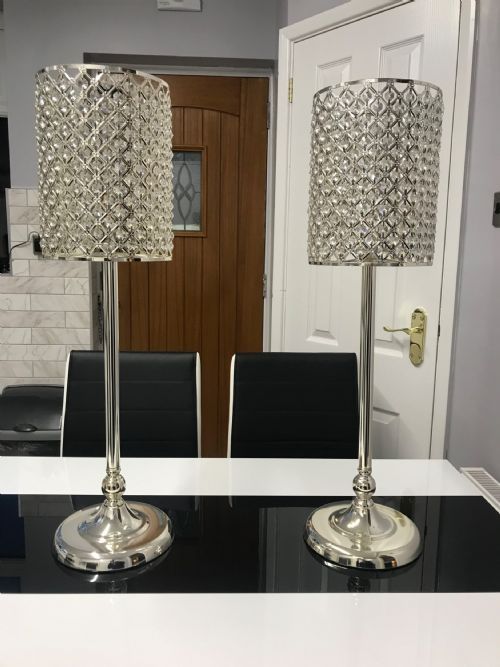
The selection frequently includes matched pairs alongside individual statement pieces, reflecting diverse regional styles such as French Neoclassical, Edwardian, and Bohemian Art Deco glamour.
Materials and construction
Makers shaped heavy lead crystal and cut glass through blowing, moulding, and intricate wheel-cutting to create deep diamond patterns and smooth mushroom domes that maximise light refraction.
Metal mounts in brass, bronze, silver plate, and ormolu provide structural support for the heavy glass reservoirs and columns, secured with threaded rods and central spindles.
Many historical oil lamps and candelabra later underwent conversion for electrical wiring, retaining their original burners, prisms, and crystal drops.
Crystal Table Lamp Retail Price Guide 2026
Typical asking prices for crystal table lamp among the pieces listed under this phrase on Sellingantiques today, from the lower quarter to the upper quarter. They describe what is for sale here now, not the wider market.
A French mermaid base holds up a rock crystal column, proving Victorian lighting designers possessed an wonderfully theatrical imagination.
Assessing quality in antique lighting
Quality rests upon the depth and crispness of the glass cutting, where sharper facets and heavier lead crystal content produce superior brilliance and weight.
The sophistication of the metal mountings, from cast ormolu to chased brass and gilt bronze, distinguishes standard production pieces from high-workshop creations.
Proportion and integrity of the original components, including matching crystal drops and unblemished glass shades, determine the overall execution of the piece.
Stuart Crystal·Baccarat·Osler·Waterford
The Crystal Table Lamp Glossary
- Lead crystal
- Glass containing a high proportion of lead oxide, which increases weight, clarity, and light dispersion. This material allows for deeper and sharper wheel-cut facets.
- Ormolu
- Gilded bronze produced by applying a mercury-gilding technique to a bronze base. It provides a durable, warm metallic finish frequently used for bases and mounts.
- Girandole
- A branched decorative lighting fixture or candelabrum designed to hold candles or electric bulbs. These pieces often feature hanging crystal lustres to amplify illumination.
- Mushroom lamp
- A table lamp style characterised by a wide, rounded glass shade that resembles a mushroom cap. They gained particular popularity during the Art Deco period.
- Lustre
- A cut crystal pendant or drop suspended from a lighting fixture to catch and reflect light. They are commonly associated with Victorian and Edwardian chandeliers and candelabra.
Crystal Table Lamp: Frequently Asked Questions
How do I date a crystal lamp?
Dating relies on examining the manufacturing techniques of both the glass and the metal mounts, alongside the wiring methods where original components survive. Victorian and Edwardian examples often feature heavy column designs or converted oil mechanisms, while 1930s pieces typically display distinct Art Deco mushroom silhouettes.
Context also comes from maker marks, screw types, and the composition of the bronze or brass bases. Comparing the cut patterns to documented archive pieces helps narrow the decade of production.
Were these always electric lamps?
Many early pieces began life as oil lamps, paraffin burners, or candle-holding candelabra before undergoing conversion to electricity during the twentieth century. This transition preserved decorative glass reservoirs and columns while adapting them for modern interior use.
Converted pieces often retain elements like burner galleries or wick adjusters alongside modern internal wiring. Professional rewiring ensures these older lamps meet current safety standards without losing their historic character.
How do I clean an antique crystal lamp?
Cleaning requires disassembling detachable crystal drops and shades to wash them gently in lukewarm water with mild soap. Harsh chemical cleaners can damage aged gilt bronze, silver plating, or vintage metal lacquering.
Metal bases should be dusted with a soft dry cloth rather than polished aggressively to preserve patination. Drying each glass component thoroughly before reassembly prevents water spots and protects old fixings.
What is the difference between cut glass and crystal?
Crystal specifically refers to glass manufactured with added lead oxide, which grants the material a softer working consistency for deep cutting and a higher refractive index. Standard cut glass lacks this lead content, resulting in lighter weight and slightly less light dispersion.
In practical terms, antique lead crystal feels noticeably heavier in the hand and produces a clear ringing tone when lightly struck. Both materials feature heavily across the different periods represented here.