






Glass Candle Lamps
Glass candle lamps are protective lighting fixtures designed to shield an open flame, and you meet them here in Victorian and Edwardian brass and glass pairs.
Glass Candle Lamps
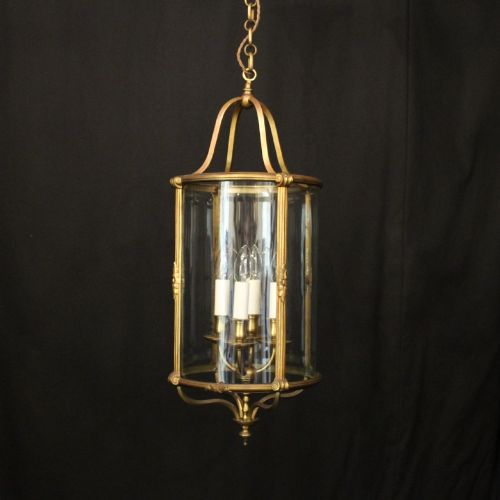
Glass candle lamps combine a glass shade, chimney, or lustre with a metal base to hold wax or oil securely. When you search for glass candle lamps on this page, you encounter pairs originating from the nineteenth and early twentieth centuries.
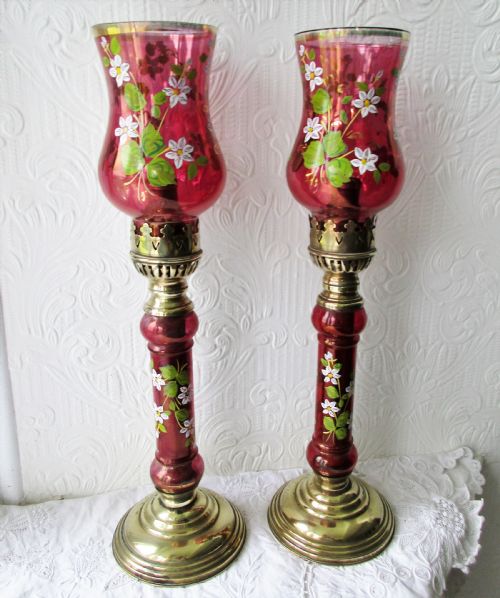
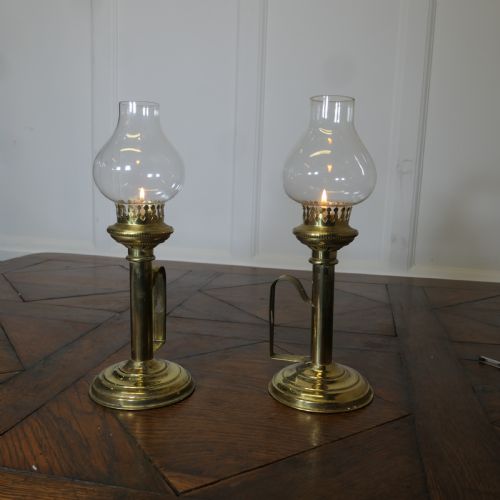
The selection includes specific Victorian patented designs alongside standard brass and glass table forms. English and French makers produced these lighting pieces for domestic rooms using clear, ruby, and cut glass components.
Materials and construction
Metalwork forms the structural foundation, utilising cast brass, silver plate, and gilded bronze alongside iron and marble. Artisans shaped these metals to support glass chimneys, shades, and lustre drops.
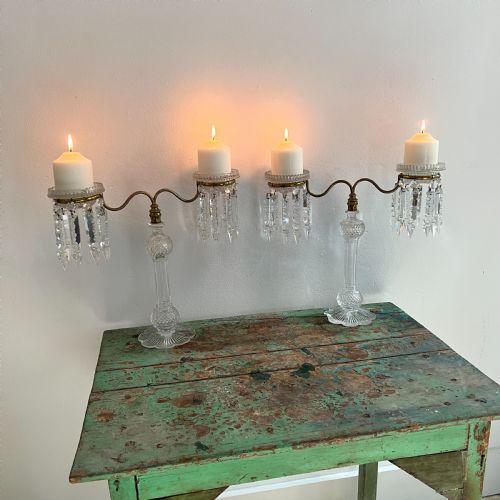
Glass elements range from blown ruby vessels to heavy cut crystal and incised twists. These components were assembled by hand, often incorporating patented fittings or threaded metal mounts.
Some nineteenth-century oil peg lamps feature a charming hunting theme engraved directly onto the ruby glass.
Defining quality
The distinction between tiers rests upon the weight of the metal casting and the clarity of the glass. Superior examples exhibit crisper hand-cutting on crystal shades and heavier gauge brass or bronze frames.
Completeness of original matching components, such as paired storm shades and corresponding lustres, elevates a piece. Finer items retain their original surface patination and unmarked glass elements without modern replacements.
F. & C. Osler·Clarke
The Glass Candle Lamps Glossary
- Cricklite
- A patented trade name associated with Clarke's specific candle lamp and candelabra assemblies. These units utilised specialised glass shades and bases.
- Lustre
- A decorative glass vase or candlestick hung with cut crystal pendants. These prisms refract candlelight across the room.
- Chimney
- A vertical tubular glass shade placed over a flame to steady the draught. They protect the light source and direct smoke upward.
- Photophore
- A glass ornamental stand or shade designed to protect a candle flame from drafts. The evidence includes French gilt-brass and marble examples of this form.
Glass Candle Lamps: Frequently Asked Questions
What are glass candle lamps?
Glass candle lamps are lighting devices that combine a glass shade, chimney, or globe with a metal stand to hold a candle safely.
They appear in nineteenth-century English and French designs, often as matched pairs intended for mantels or tables.
How do you use them?
You place a suitable candle inside the glass enclosure, which shields the flame from drafts and disperses the light evenly.
They function well on side tables, sideboards, or mantelpieces as decorative ambient lighting.
How do I date these lamps?
Dating relies on the manufacturing materials, screw threads, glass cutting techniques, and style markers. Victorian and Edwardian pieces show specific casting methods and stylistic influences like French Rococo or Neoclassical.
Patents marked on the metalwork or glass also provide reliable chronological anchors for identification.
Are chimneys usually original?
Glass chimneys and shades frequently suffered breakage over time, leading to period or modern replacements. Examining the glass colour, wear patterns, and thickness helps determine originality.
Matched pairs with uniform glass density and matching wear on the bases indicate a higher survival rate of original components.