

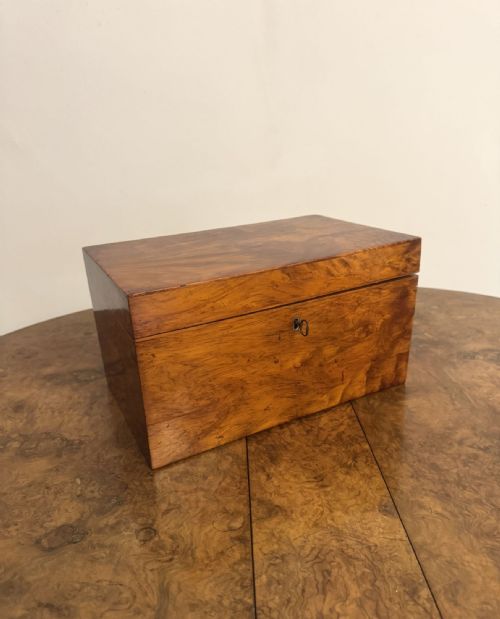


Regency Storage Box
These pieces form a regency storage box selection spanning compact tea caddies and robust trunks.
Regency Storage Box
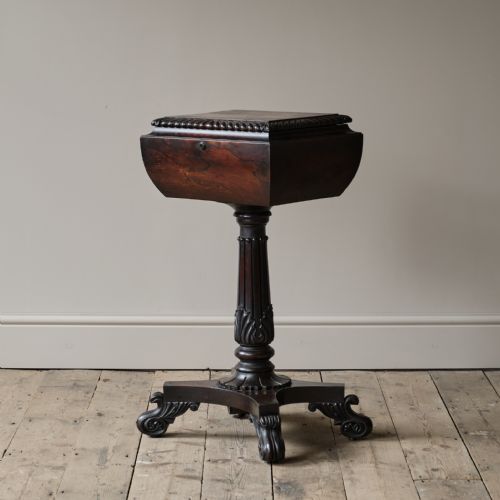
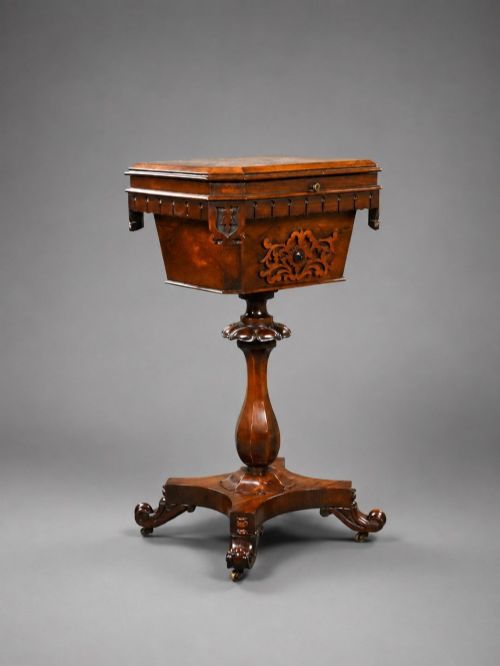
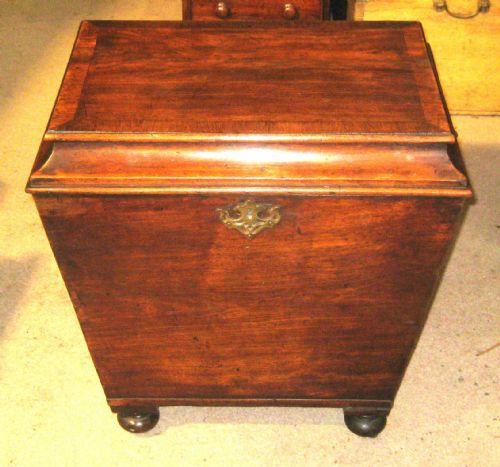
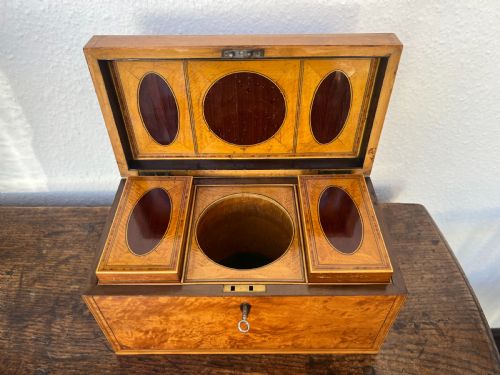
A regency storage box serves various domestic functions, appearing as tea caddies, cellarettes, trunks, and jewellery boxes across this page. The forms range from small table top caddies to large floor standing trunks and ottomans.
Most items date from the Regency and Georgian eras, spanning the late eighteenth century into the nineteenth century. Makers constructed these containers for specific stored items, including tea, wine, documentation, and personal valuables.
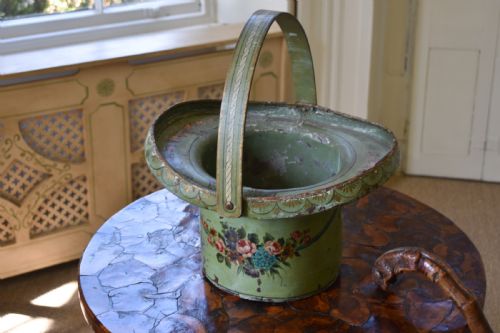
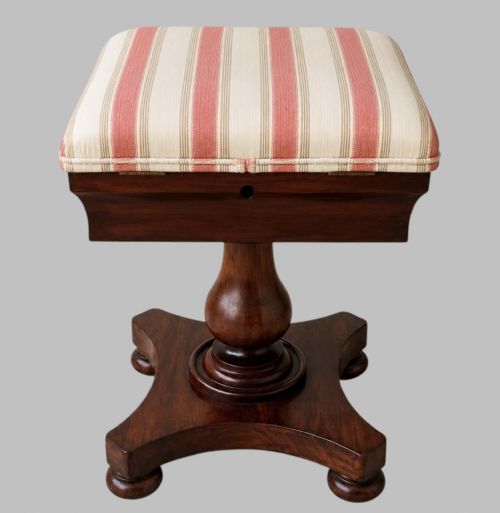
The selection includes specialised pieces such as apothecary travelling cases, sewing box stools, and painted coffer boxes. Walnut, mahogany, and rosewood dominate the structural forms alongside leather and metal bindings.
Materials and Construction
Cabinet makers utilised dense hardwoods such as mahogany, rosewood, and satinwood, frequently applying veneers like burr yew and pollard oak to visible surfaces. Inlays of ebony and marquetry patterns define the decorative detailing on finer examples.
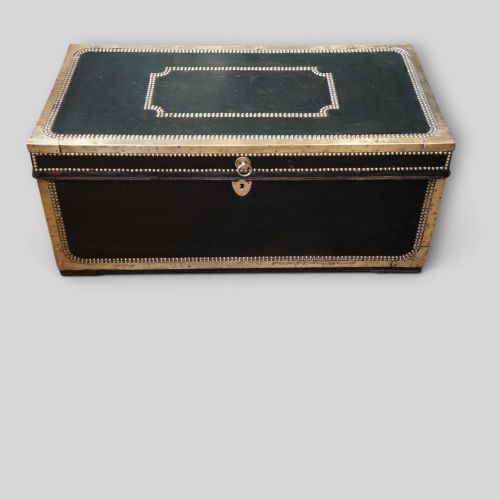
Many containers incorporate brass fittings, lion mask handles, and metal stud work for structural reinforcement and visual contrast. Tunbridge ware surfaces introduce detailed mosaic wood work, while leather covered trunks employ iron nails and wooden framing.
Listings feature woods including mahogany, rosewood, satinwood, sycamore, burr yew, and pollard oak.
Craftsmanship and Material Depth
The standard of a regency storage box rests on the selection of timber veneers and the precision of internal fittings. Superior examples display carefully matched grain patterns, intact original glass mixing bowls, and functioning locks with keys.
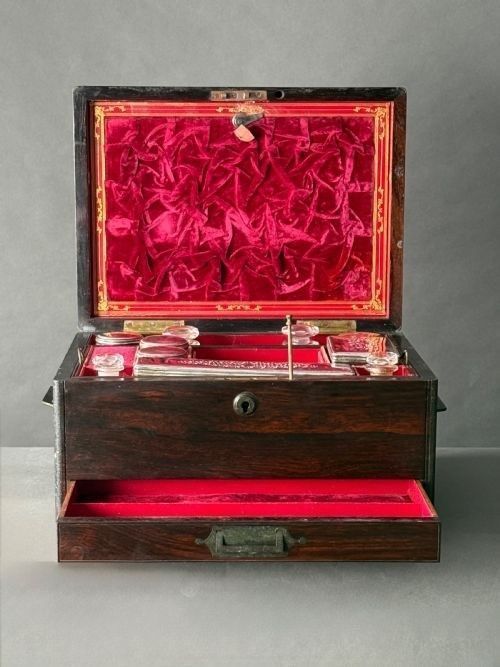
Secondary elements such as interior compartments, silk linings, and secondary drawer constructions indicate the original workshop tier. Fine patination and the survival of delicate parquetry or tortoiseshell panels separate standard utility containers from exceptional collector pieces.
Samuel Pratt·Gillingtons
The Regency Storage Box Glossary
- Tea caddy
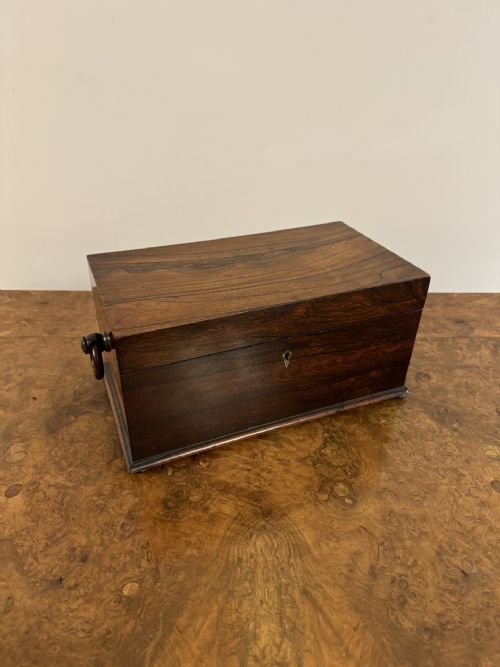
- A specialised box designed to store loose tea leaves, often featuring internal lidded compartments and a glass mixing bowl. These containers protected expensive tea from moisture and light.
- Cellarette
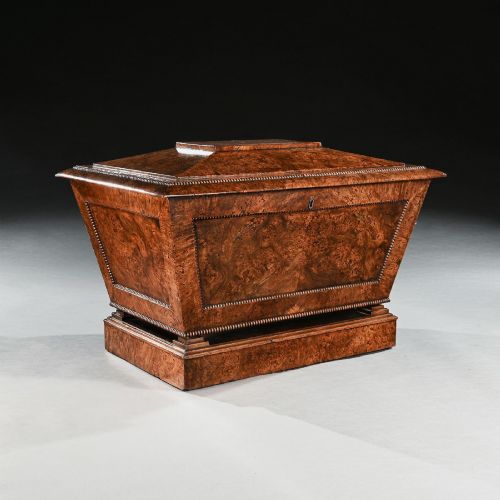
- A large freestanding or floor standing box used for storing and cooling wine bottles. They frequently appear in mahogany or pollard oak with lead lined interiors.
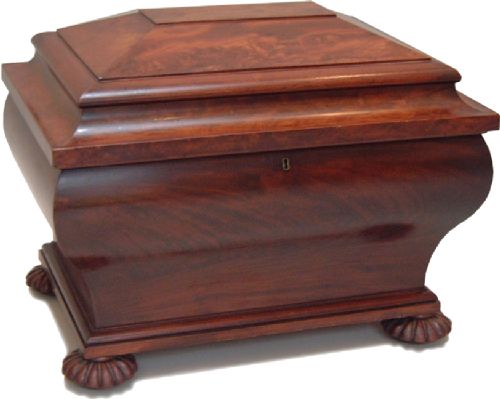
- Sarcophagus form
- A container shape featuring a convex or domed lid sloping down to a rectangular or pedestal base, resembling a stone coffin. This silhouette became popular for premium Regency tea caddies and wine coolers.
- Tunbridge ware
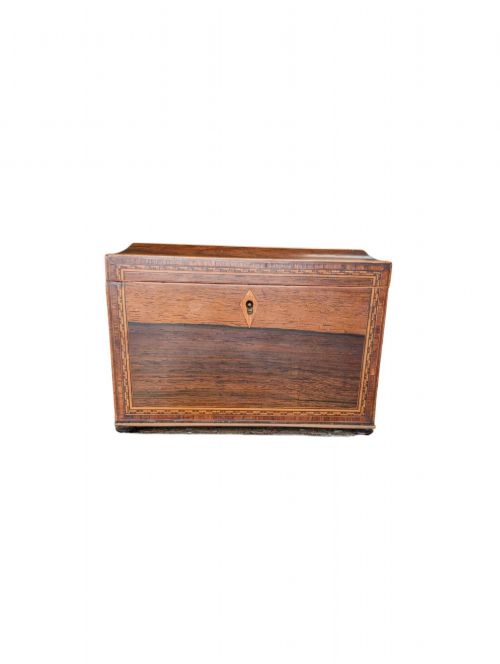
- Small wooden items decorated with mosaic patterns created from thousands of tiny tinted wood blocks. This meticulous technique produced geometric and pictorial designs.
- Teapoy
- A pedestal table fitted with a large storage box on top for holding tea equipment. They stand on central pillars with branching feet.
Regency Storage Box: Frequently Asked Questions
What were tea caddies used for?
Tea caddies stored precious tea leaves securely under lock and key in period households. Servants or homeowners portioned leaves from these containers into teapots for daily service.
Many included glass bowls for blending different tea varieties or washing spoons between infusions.
How do I identify a cellarette?
Cellarettes are substantially larger than standard boxes and were built specifically to hold wine bottles near dining tables. They often feature robust handles and heavy timber construction.
Inside, find fitted compartments designed to keep bottles separated and cool during long meals.
What is a sarcophagus style box?
The sarcophagus style refers to a distinct lidded box shape with sloping or curved sides popular during the Regency period. This architectural form gave containers a monumental appearance on tabletops.
Cabinet makers used this silhouette for high end tea caddies and wine coolers.
How should I clean a rosewood box?
Maintain rosewood surfaces by dusting gently with a dry, soft cloth to prevent abrasive particles from scratching the polish. Avoid harsh chemical cleaners or excessive moisture which can damage delicate veneers.
Apply a traditional microcrystalline wax occasionally to nourish the timber and preserve the historic patina.