



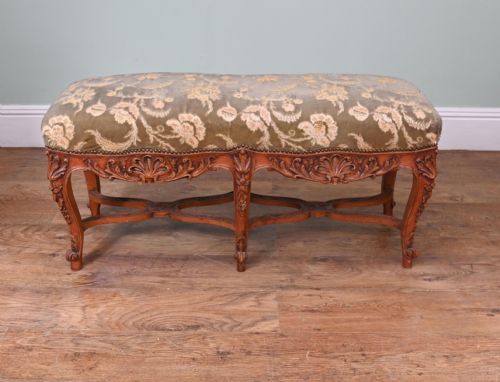


Green Velvet Ottoman
A green velvet ottoman brings rich texture and practical seating to a room, offering a tactile focal point that anchors a traditional or period interior.

Green Velvet Ottoman
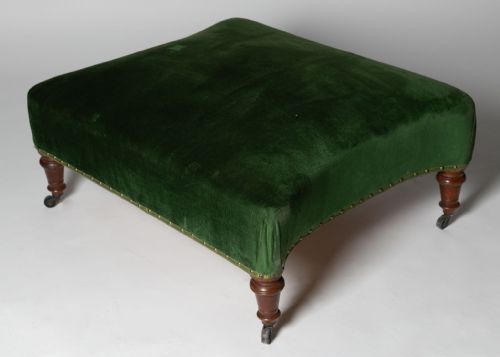
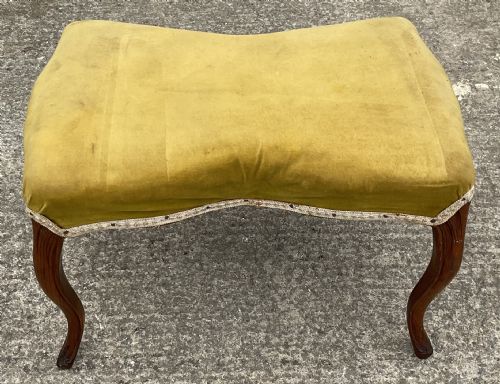
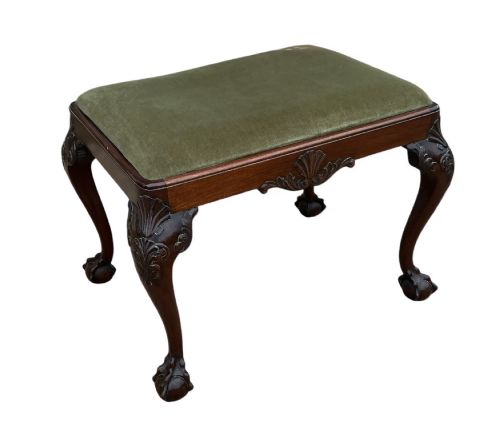
A green velvet ottoman covers a variety of upholstered low seating and foot rests appearing across multiple historical periods. Buyers seeking a green velvet ottoman will encounter items ranging from nineteenth century rosewood centre stools to mahogany footstools and French provincial window seats.
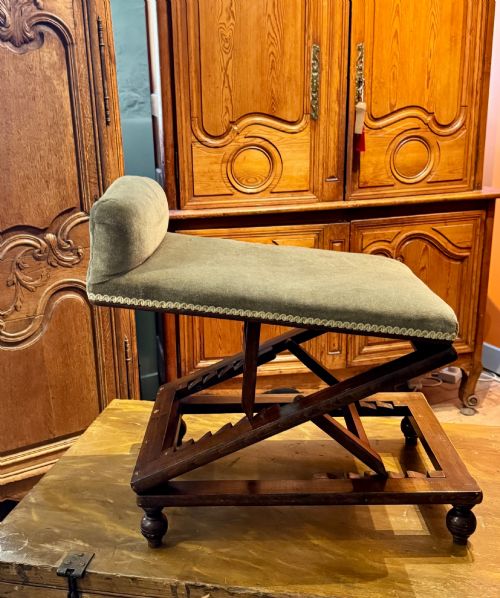
The selection on this page includes Victorian walnut framed stools, Chippendale style mahogany pieces, and adjustable gout stools in beechwood. These diverse forms share a common function as low upholstered seats or supports for resting feet.
Origins span English cabinet makers and French workshops, utilising woods such as mahogany, walnut, rosewood, and stained beech alongside textile upholstery. The unifying element across these disparate forms is the upholstered surface set upon a timber frame.
How they were made
Construction relies on traditional timber framing using woods like mahogany, walnut, rosewood, oak, and beech. Frames are carved or turned into styles reflecting Victorian, Chippendale Revival, and French Rococo Revival aesthetics.
Upholstery involves textiles and velvet stretched over padded foundations, sometimes incorporating adjustable mechanisms for gout stools or metamorphic designs. Timber components feature polished wood finishes alongside painted surfaces on French examples.
Green Velvet Ottoman Retail Price Guide 2026
Typical asking prices for green velvet ottoman among the pieces listed under this phrase on Sellingantiques today, from the lower quarter to the upper quarter. They describe what is for sale here now, not the wider market.
Listings span the nineteenth century up to 1930, featuring materials like velvet, brass, mahogany, walnut, rosewood, and stained beech across various stool forms.
What varies in quality
Quality rests in the precision of the timber framing, from the intricacy of carved oak and rosewood to the structural joinery of mahogany and walnut bases. Finer examples display superior timber selection and deliberate stylistic execution, whether in Chippendale revival lines or French provincial carving.
The integration of the upholstery with the timber frame distinguishes finer pieces, particularly where adjustable mechanisms or metamorphic designs function seamlessly. Original timber patination and the preservation of carved details further separate standard production from superior craftsmanship.
The Green Velvet Ottoman Glossary
- Metamorphic
- Describing a piece of furniture designed to transform into another form or function. Antique gout stools often utilise this capability to adjust angles for the user.
- Centre stool
- A large freestanding stool designed to sit in the middle of a room rather than against a wall. These substantial pieces typically feature rosewood or walnut frames.
- Gout stool
- A specialised footrest featuring an adjustable sloping top designed to comfort ailments. Nineteenth century examples frequently pair beechwood or stained beech frames with textile upholstery.
- Chippendale Revival
- A decorative style inspired by eighteenth century cabinet maker Thomas Chippendale, popular in later periods. Pieces display characteristic mahogany timber usage and traditional carved details.
Green Velvet Ottoman: Frequently Asked Questions
Where should an ottoman go?
These low seats suit placement before a sofa or fireplace where they provide a convenient footrest or extra seating. Centre stools work well positioned in the middle of larger rooms.
Window seats fit naturally beneath sills in sitting rooms or bedrooms, utilising narrow spaces for occasional seating.
How do I date a Victorian stool?
Dating relies on identifying timber choices such as walnut or rosewood alongside the specific upholstery methods and revival styles typical of the nineteenth century. Examining the construction of the wooden frame reveals period joinery techniques.
Comparing turned legs and carved details against documented nineteenth century patterns helps narrow the manufacturing window.
What is a gout stool?
A gout stool is an adjustable Victorian footrest designed with a sloping upholstered panel to elevate and support the foot. The mechanical adjustment allowed users to alter the angle of the rest.
These pieces often utilise beechwood or stained beech frames alongside textile covers.