
Regency Sideboard Cabinet
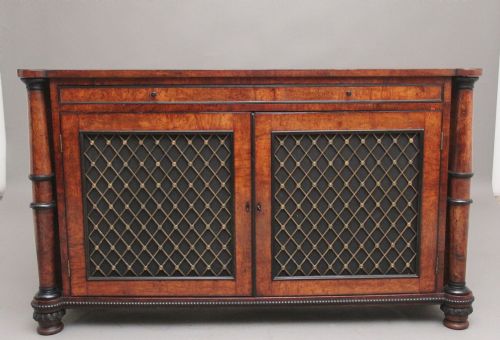
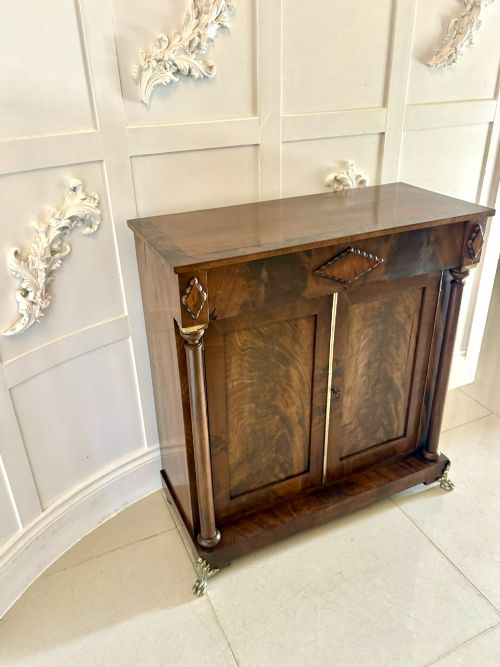
These regency sideboard cabinet pieces combine rich timbers and clean proportions to anchor a dining room or hall.
Regency Sideboard Cabinet
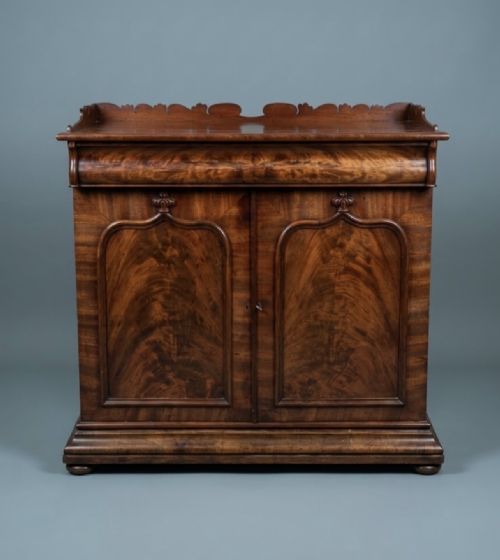
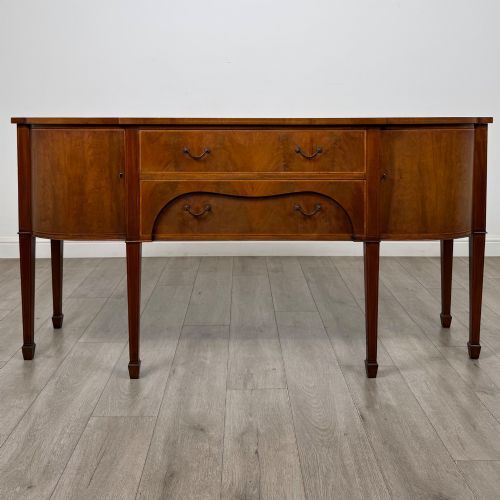
A regency sideboard cabinet serves as a formal storage piece originating primarily from the nineteenth century, encompassing sideboards, chiffoniers, and low cupboards. These items appear in variations spanning Georgian, Regency, William IV, and Victorian periods.
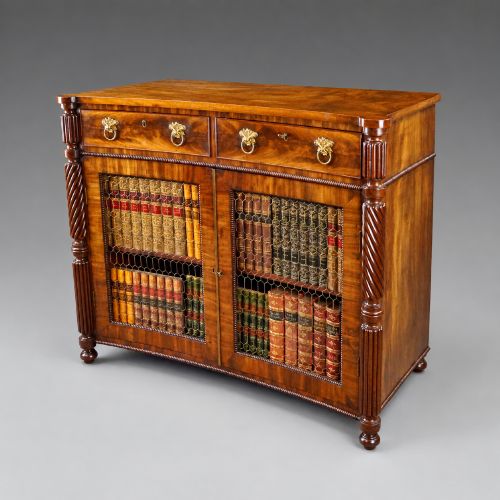
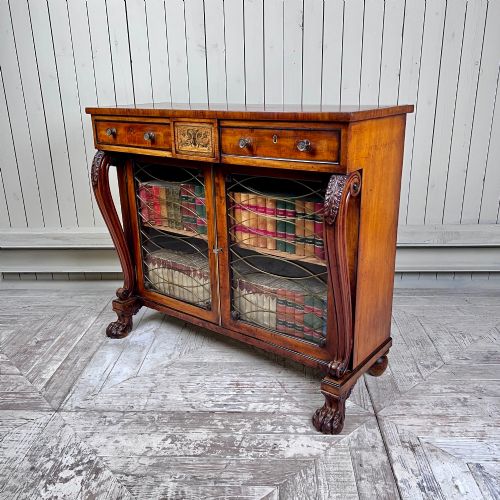
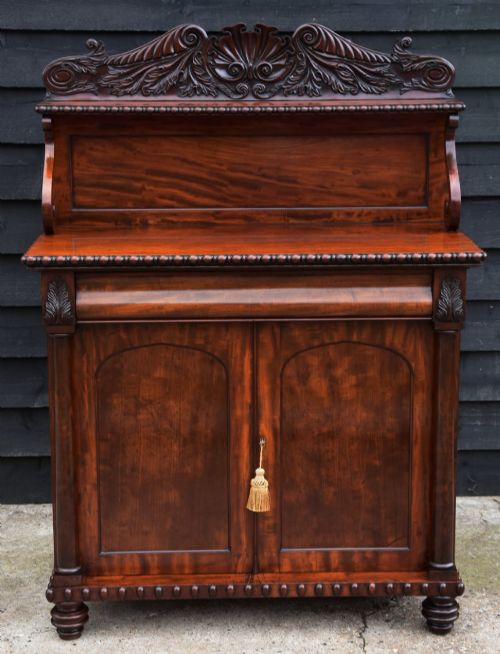
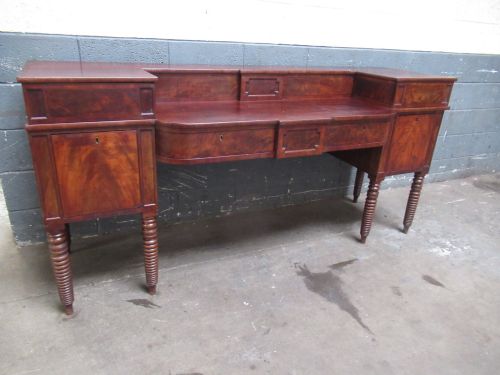
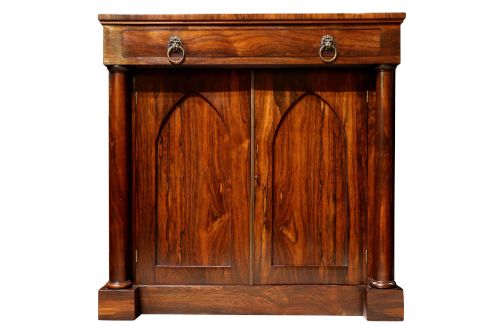
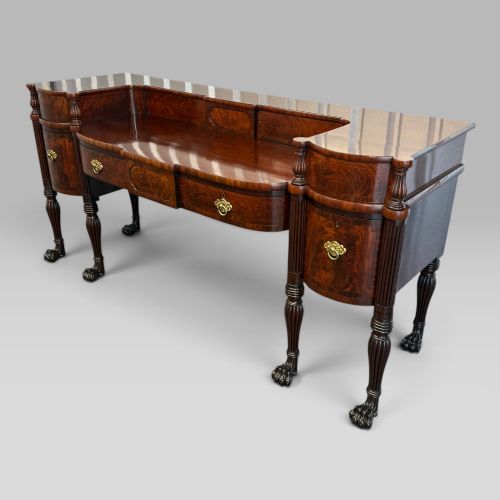
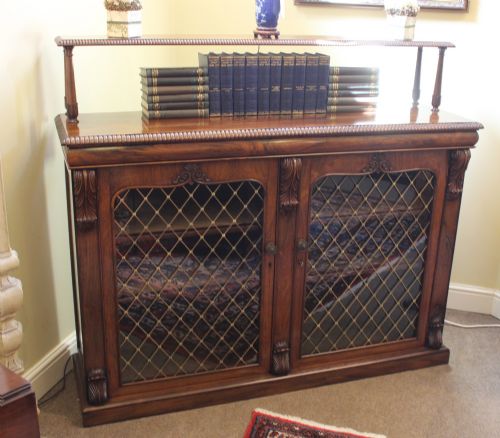
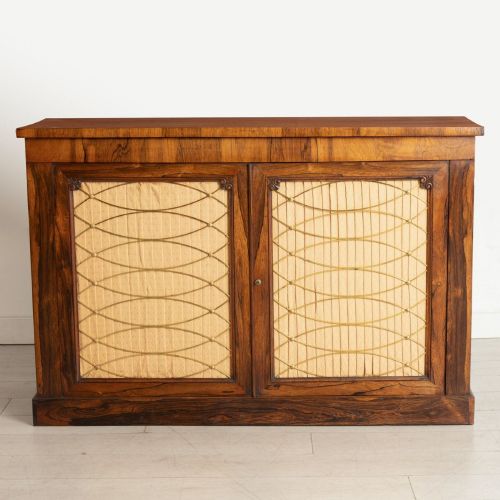
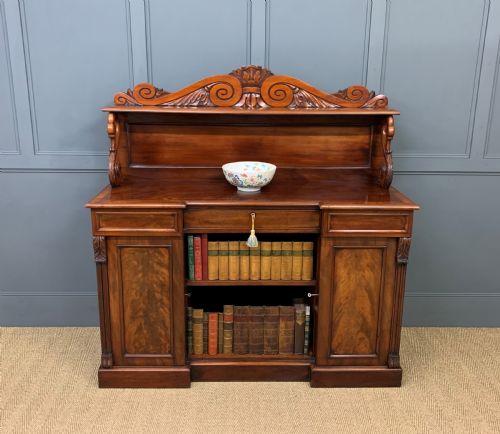
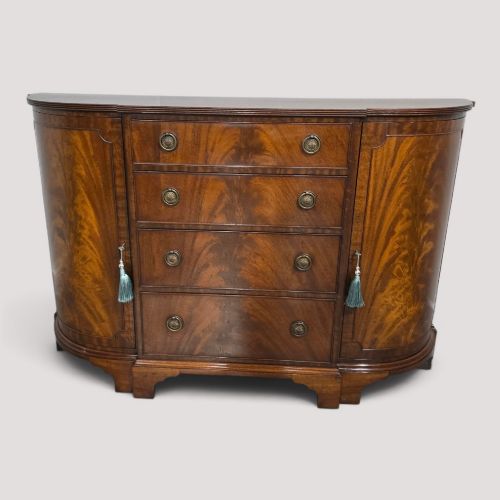
Buyers will most frequently encounter mahogany and rosewood examples shaped with bow fronts, concave sections, or two-door lower compartments. Many incorporate upper chiffonier shelving or bookcase tiers designed for display.
Origins stretch from Scottish workshops to English cabinet makers, yielding forms that balance utility with architectural presence. The selection ranges from compact side cabinets to large formal sideboards.
Materials and Construction Methods
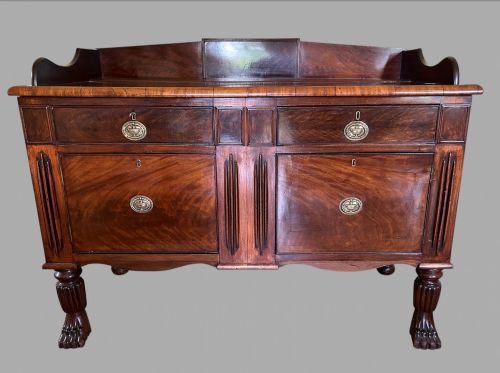
Cabinet makers utilised dense hardwoods including solid mahogany, flame mahogany veneers, and rich rosewood over secondary timbers like pine. Finer pieces add contrasting inlay of ebony or brass stringing to accentuate the linear carcase.
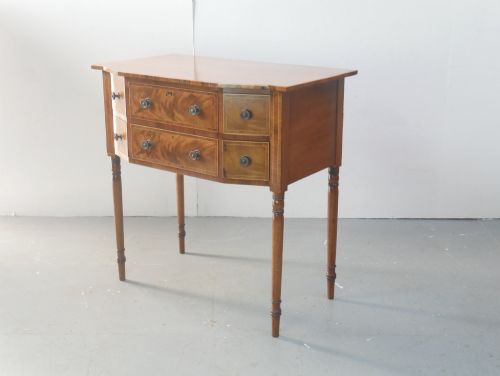
Surface detailing relies on figured wood grains, book-matched veneers, and carved wooden or brass mounts. Turned legs, lion paw feet, and panelled doors reflect the joinery standards of the period.
Several pieces feature hidden secretaire drawers that slide open to reveal secret writing desks for confidential correspondence.
Distinctions in Quality and Execution
Quality rests in the selection of timber veneers and the precision of the cabinet work, particularly around curved doors and drawer linings. Finer examples display continuous grain matching across primary surfaces and well-fitted internal shelving.
Subtle details such as original brass fittings, crisp carving on paw feet, and secondary wood choice separate standard production from master workshops. The integrity of the structural carcase dictates the longevity of the piece.
Gillows
The Regency Sideboard Cabinet Glossary
- Chiffonier
- A low cabinet featuring shelving or a superstructure on top, commonly used for books or china in nineteenth-century rooms.
- Flame Mahogany
- A veneer cut from the fork of the mahogany tree to produce a distinctive, flickering grain pattern.
- Concave
- A curved-in front profile found on specific sideboards and cabinets to alter the room's spatial rhythm.
- Gothic Panelled
- Door construction incorporating pointed arches and geometric tracery inspired by medieval architecture.
- Simulated Rosewood
- Paint or graining applied to cheaper softwoods like pine to mimic the appearance of exotic timber.
Regency Sideboard Cabinet: Frequently Asked Questions
What is the difference between a sideboard and a chiffonier?
Sideboards were traditionally built for dining rooms to serve food and store tableware during formal meals. Chiffoniers generally appeared as smaller pieces featuring an upper shelf tier for displaying books or ornaments.
While both terms overlap in nineteenth-century listings, chiffoniers typically include enclosed lower cupboards paired with an open superstructure.
How do I identify Regency period timber?
Regency pieces rely heavily on rich tropical hardwoods, most notably dark mahogany and heavily figured rosewood. Cabinet makers frequently utilised veneers to display dramatic grain patterns across the front doors and drawer faces.
Secondary timbers inside the drawers often include oak or pine, which help confirm the age and origin of the piece.
Where should I place a side cabinet at home?
These cabinets suit dining rooms, hallways, and living spaces where surface area and enclosed storage are required. Their shallow depth allows them to sit against walls without obstructing walkways.
Pmace them away from direct heat sources to protect historical veneers and polished timber surfaces from drying out.
How do I care for antique mahogany and rosewood?
Maintain the wood by dusting with a dry, soft cloth and occasionally applying natural beeswax to nourish the dry surface. Avoid silicone polishes, which can build up and soften the historic polish over time.
Keep the cabinet in a room with stable humidity to prevent the timber veneers from lifting or cracking.