
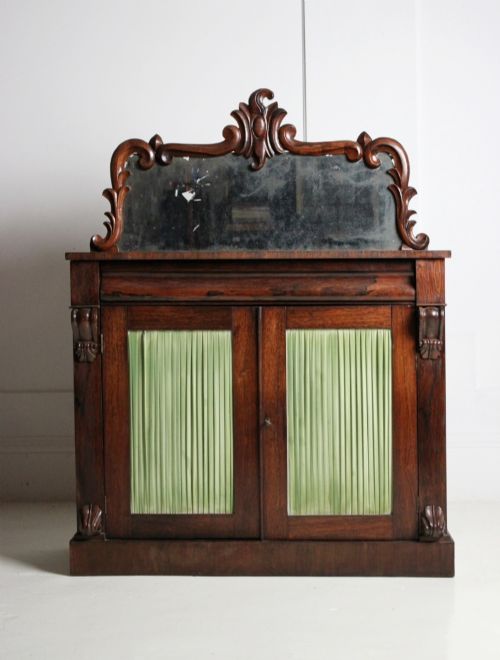

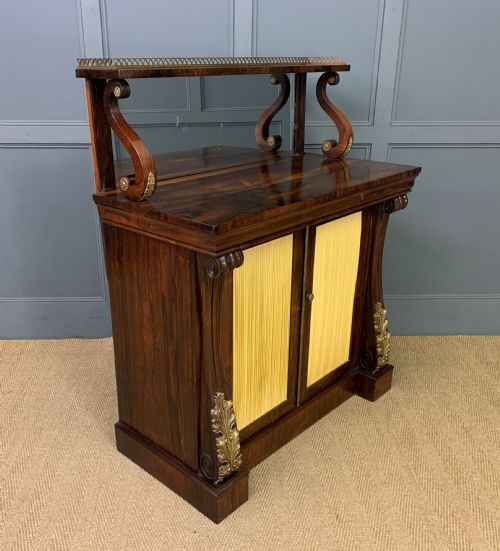
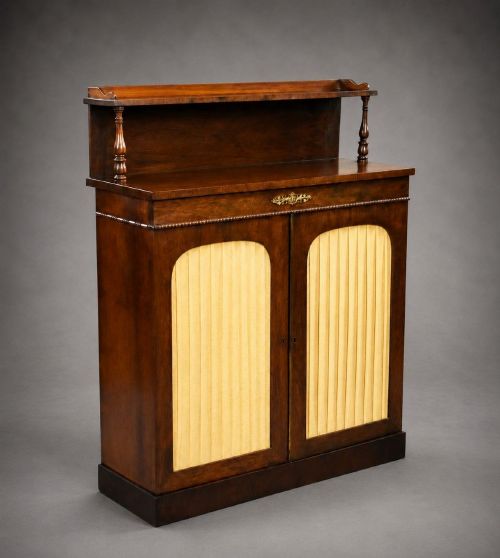


Antique Pleated Fabric Cupboard
These antique pleated fabric cupboard pieces are refined nineteenth-century timber storage units fronted with gathered textiles, offering both elegance and concealed display.
Antique Pleated Fabric Cupboard
An antique pleated fabric cupboard combines timber cabinetry with delicate textile door panels, predominantly appearing as chiffoniers and side cabinets from the Regency and Victorian eras. These items served primarily in formal rooms to store books, linens, or china while softening the hard lines of furniture with gathered silk or cotton behind brass grilles.
The versions most commonly met on this page date from the Regency and William IV periods through to the later Victorian age, constructed chiefly in rich rosewood and mahogany. They range from neat single pedestal cabinets to broad breakfront sideboards featuring brass mounts and marble tops.
How they were made
Cabinet makers utilised dense exotic hardwoods such as rosewood and goncalo alves, occasionally applying simulated or faux graining to standard timbers to mimic expensive imports. These surfaces received meticulous hand-polishing to bring out the deep natural figures of the grain.
Makers integrated brass wiring, mounts, and ormolu details to frame the delicate fabric inserts behind glass or open lattice doors. The textiles themselves were carefully gathered into crisp pleats to diffuse light and hide contents from view.
Pleated fabric doors let the remote control signal through while hiding the clutter.
What varies in quality
The distinction between ordinary and superior examples rests upon the choice of timber and the precision of the cabinetwork. Dense figured rosewood and well-matched mahogany veneers indicate a workshop of higher standing, whereas simulated graining represents a more modest production.
Gillows
The Antique Pleated Fabric Cupboard Glossary
- Chiffonier
- A low sideboard or cabinet featuring shelves and enclosed lower storage, popular during the Regency and Victorian periods. These pieces frequently incorporate fabric panels behind brass wire doors.
- Breakfront
- A cabinet design where the central section projects forward from the flanking wings. This architectural layout adds depth and visual interest to sideboards and large cabinets.
- Ormolu
- Gilt-bronze decorative mounts applied to furniture. This technique provides metallic contrast against dark exotic woods like rosewood and mahogany.
- Goncalo Alves
- A dense, highly figured tropical hardwood utilised by Regency cabinet makers. Its striking contrasting brown streaks distinguish it from standard mahogany.
- Simulated Rosewood
- A painted or stained finish applied to lesser timbers to imitate expensive rosewood grain. This technique allowed workshops to offer fashionable furniture at lower costs.
Antique Pleated Fabric Cupboard: Frequently Asked Questions
What is an antique pleated fabric cupboard?
These items are nineteenth-century timber storage units, primarily chiffoniers and side cabinets, featuring gathered textile panels set into door frames.
They were designed to conceal contents while introducing softer textures and colours into formal drawing rooms and parlours.
How do I date these cabinets?
Dating relies on identifying period characteristics, such as the classical proportions and brass mounts typical of Regency and George IV pieces, versus later Victorian detailing.
Timber choices also provide clues, as dense rosewood and goncalo alves dominate the earlier decades of the nineteenth century.
Where were these pieces used?
Original placement was primarily in dining rooms, libraries, and withdrawing rooms where refined storage was required for books, tableware, or linens.
Today, they function equally well in modern living spaces as media consoles, sideboards, or statement hallway storage.
How do I care for the fabric panels?
The delicate pleated fabric requires gentle maintenance, avoiding direct sunlight to prevent fading and textile degradation over time.
Light dusting with a soft brush helps preserve the gathered silk or cotton without disturbing the original pleating behind brass grilles.
What is the difference between a chiffonier and a side cabinet?
A chiffonier typically includes a raised superstructure with small shelves supported by pillars above a low cabinet base.
Standard side cabinets omit the superstructure, presenting a flat top surface which was frequently finished in marble or fine timber veneer.