
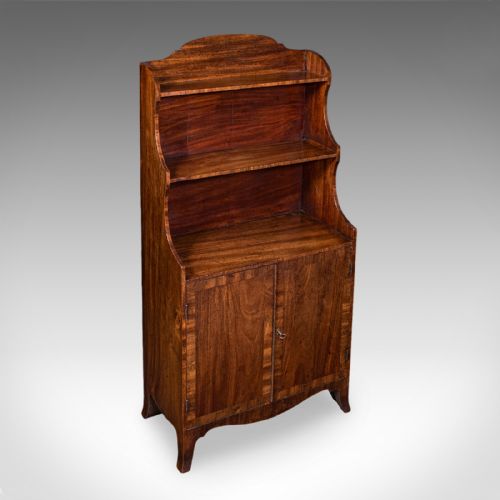
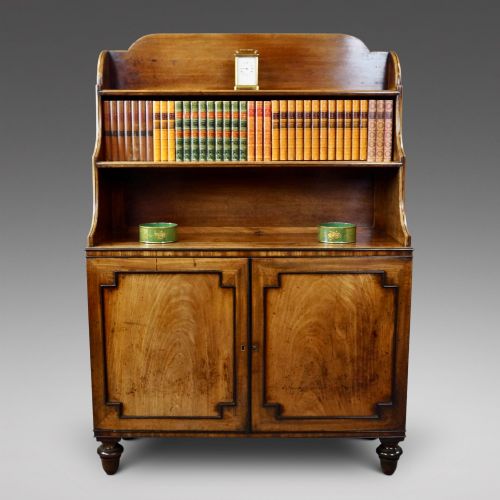
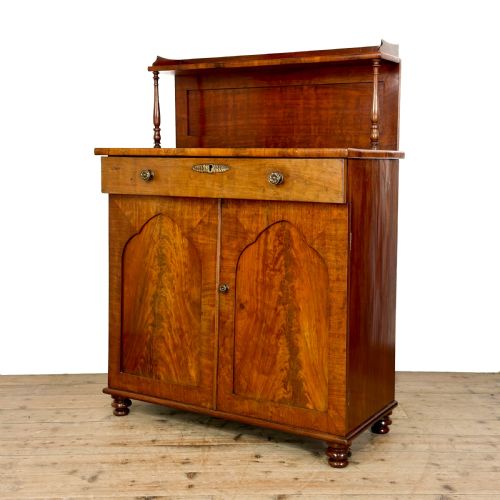


Vintage Chiffonier with Shelf
A vintage chiffonier with shelf brings compact display and enclosed storage together, offering timeless utility across Georgian, Regency, and Victorian periods.
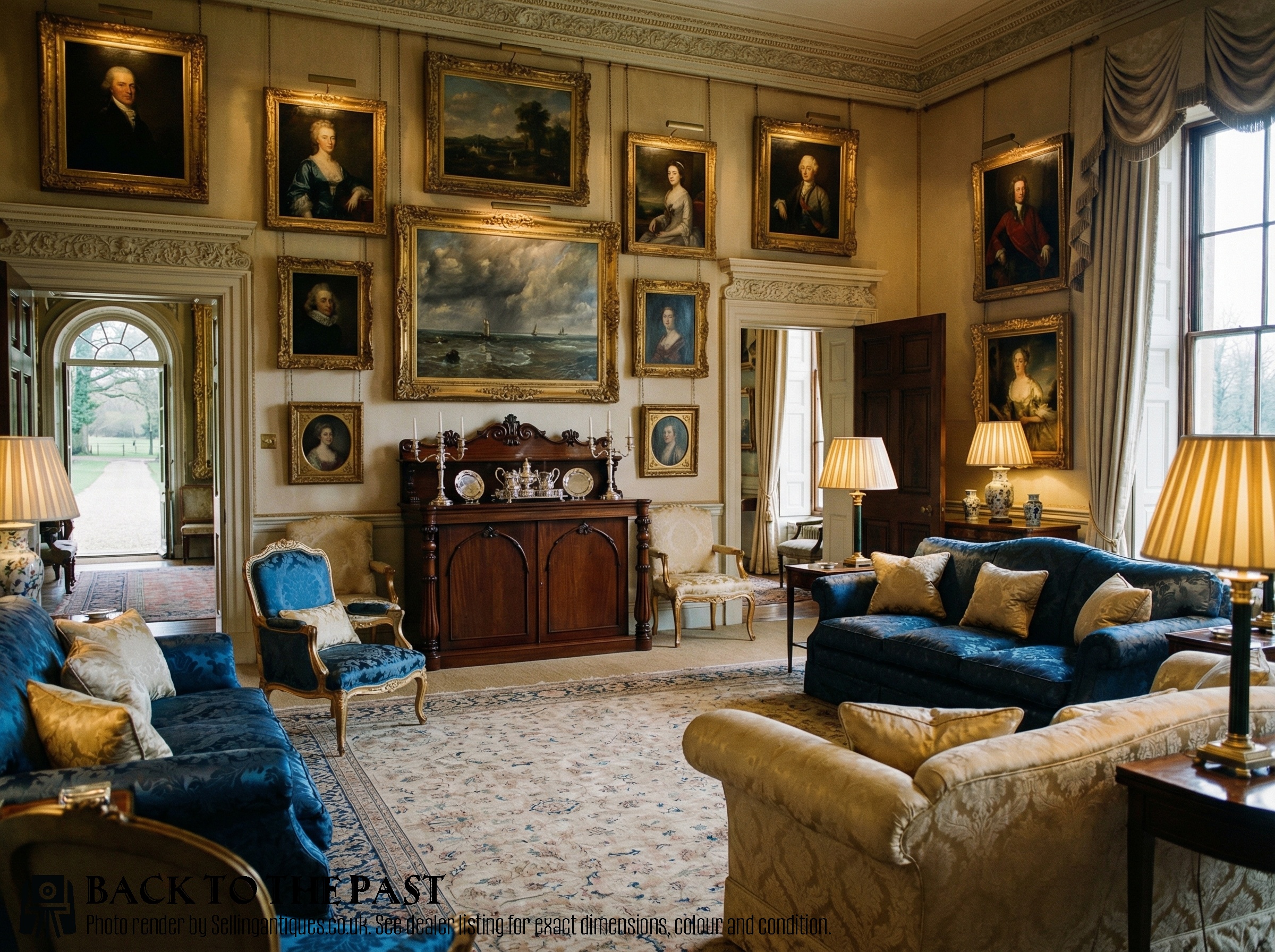
Vintage Chiffonier with Shelf
When you search for a vintage chiffonier with shelf, you encounter low cabinetry combining lower cupboards with upper open shelving. The pieces appearing here span the Georgian, Regency, and Victorian eras, alongside Edwardian examples.
The form frequently overlaps with side cabinets, sideboards, and waterfall bookcases featuring integrated shelves. Mahogany dominates the selection, appearing alongside oak, satinwood, and simulated rosewood.
These items serve practical storage and display roles in domestic interiors. The most common format pairs a sturdy lower base with tiered shelving above for books and ornaments.
Materials and construction methods
Construction relies heavily on solid mahogany and flame mahogany veneer, often enhanced by satinwood details or simulated rosewood finishes. Oak and metal also contribute to the structural integrity of these cabinets.
Joinery techniques reflect traditional cabinetmaking standards from the nineteenth and early twentieth centuries. Brass fittings frequently accent doors and shelves across Regency and Victorian pieces.
Some shelves step back like waterfalls, perfect for holding small treasures.
Distinguishing quality factors
Quality separates ordinary utility pieces from finer examples through the choice of timber and veneer selection, such as vibrant flame mahogany. Finer items incorporate contrasting satinwood inlays and superior brass hardware.
Proportion and decorative restraint dictate the standing of a piece within the broader range. Refined execution in the open shelving and lower cabinetry marks the upper tier of craftsmanship.
The Vintage Chiffonier with Shelf Glossary
- Chiffonier
- A low sideboard or cabinet, typically featuring enclosed cupboards below and shelves above. This form evolved during the nineteenth century for dining and drawing rooms.
- Flame mahogany
- A highly figured wood veneer displaying flickering, flame-like patterns derived from branch junctions. Cabinetmakers prized this material for prominent door panels and drawer fronts.
- Satinwood
- A durable, lustrous timber with a golden yellow sheen, frequently utilised for banding and contrasting inlay work. It adds visual brightness to darker mahogany surfaces.
- Simulated rosewood
- A painted or stained finish applied to a secondary timber to imitate the dense, dark grain of genuine rosewood. This technique provided a decorative effect at a lower cost.
- Waterfall bookcase
- A set of open shelves diminishing in depth from bottom to top, creating a tiered profile resembling cascading water. Victorian and Edwardian makers frequently combined this design with lower cupboards.
Vintage Chiffonier with Shelf: Frequently Asked Questions
What is a chiffonier?
A chiffonier is a low storage cabinet featuring enclosed lower doors and open shelves above.
Originally developed in the nineteenth century, it provides practical storage combined with display space for books and decorative objects.
How do I style a chiffonier?
Place the piece in a living room, dining area, or hallway to utilise both surface space and enclosed storage.
Arrange books and ceramics on the upper shelves while keeping tableware or linens secured behind the lower cupboard doors.
What woods are used?
Mahogany and flame mahogany veneer form the primary materials for these cabinets.
Other examples incorporate oak, satinwood, and simulated rosewood, often accented with brass hardware.
How are periods identified?
Dating relies on stylistic markers such as Regency restraint, Georgian proportions, or Victorian ornamentation.
Construction details and timber choices further distinguish nineteenth-century pieces from later Edwardian reproductions.