


Victorian Chiffonier
When you search for a victorian chiffonier, you are looking at a low-standing cabinet designed for dining rooms and parlours to hold silver and linens.
Victorian Chiffonier
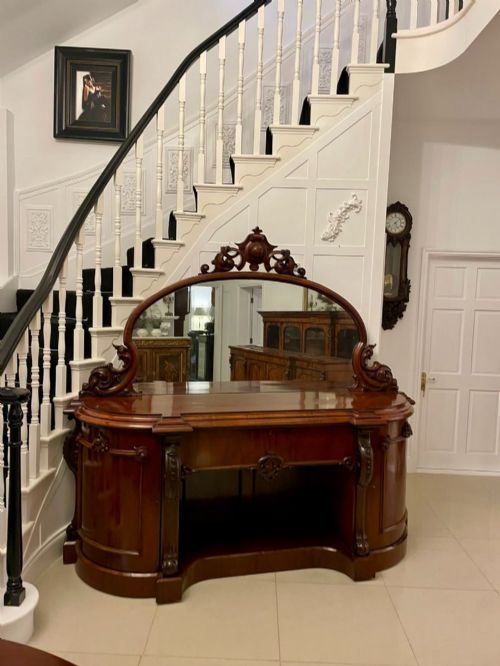
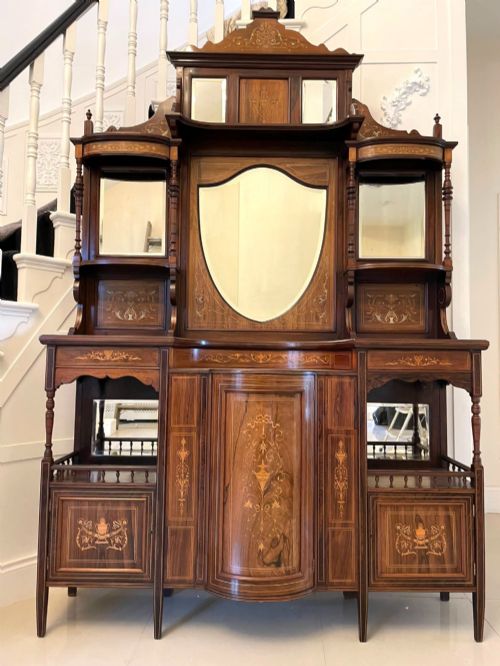
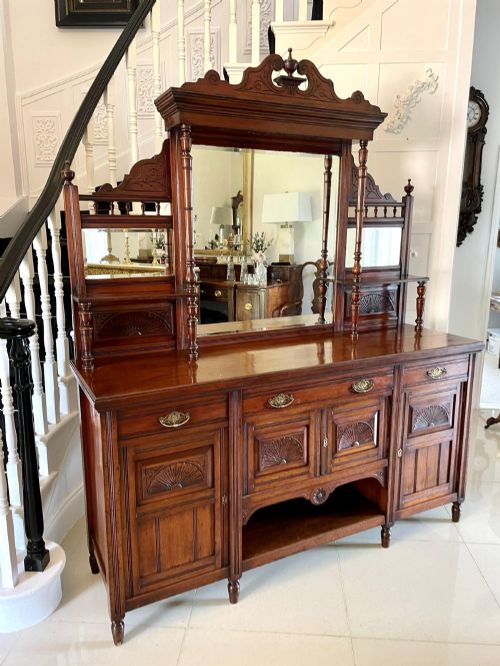
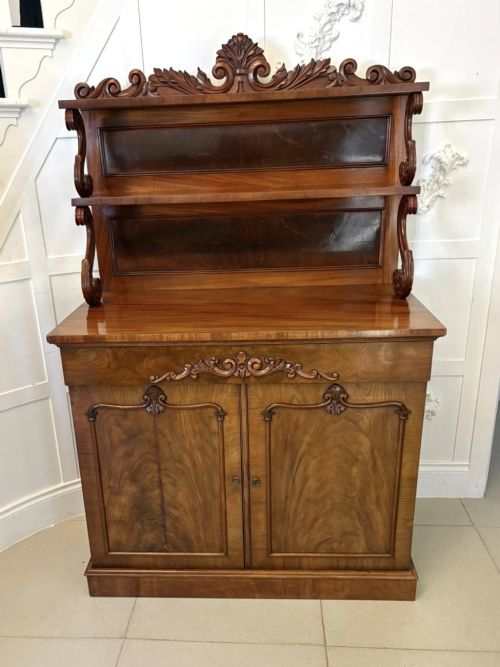
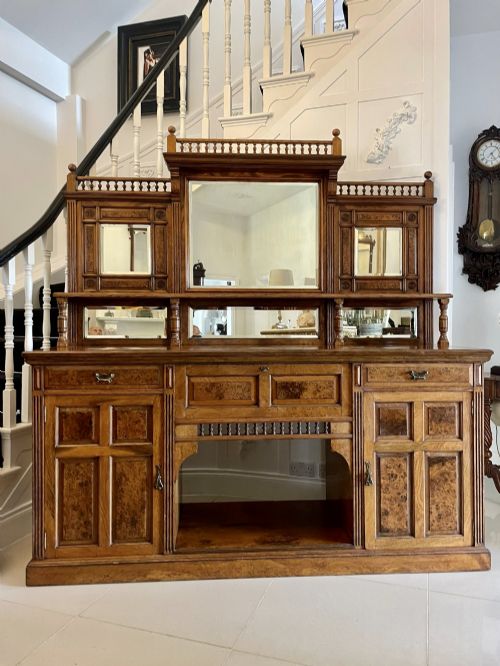
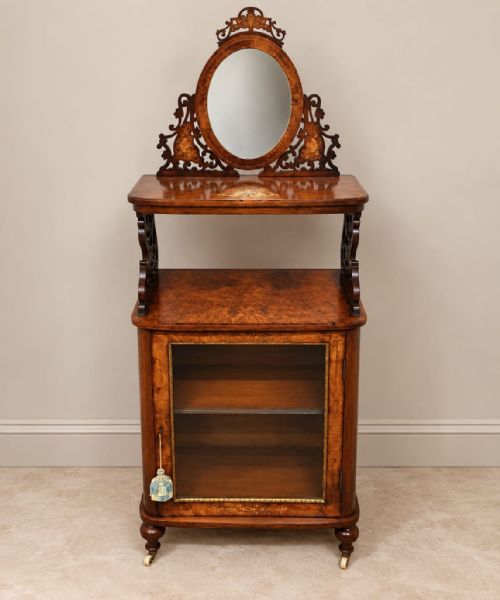
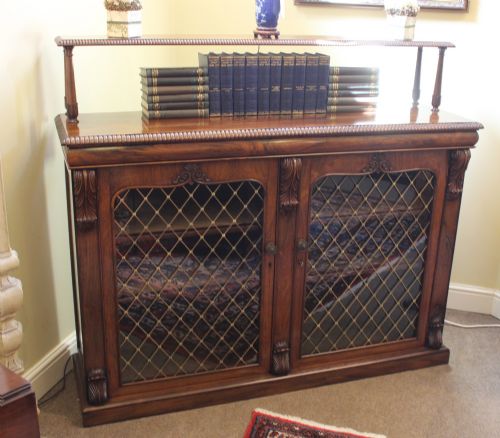
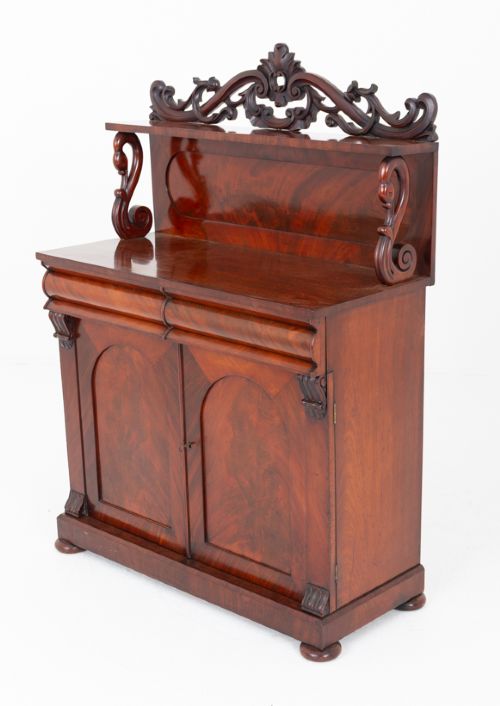
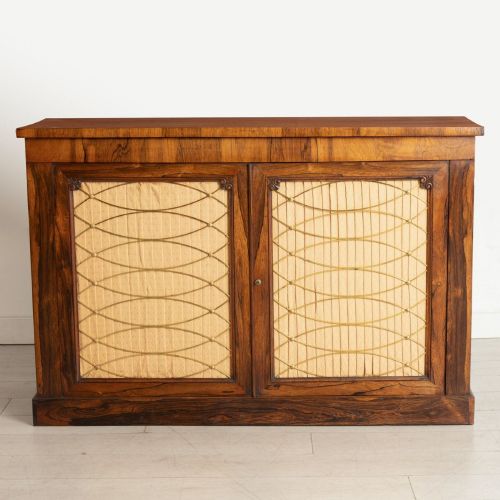
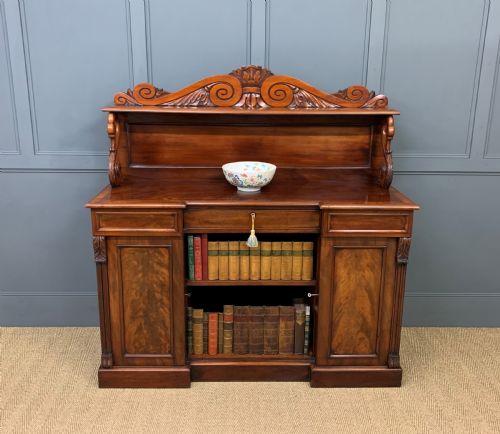
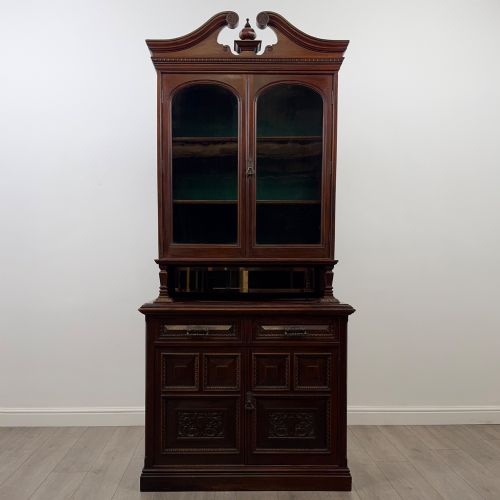
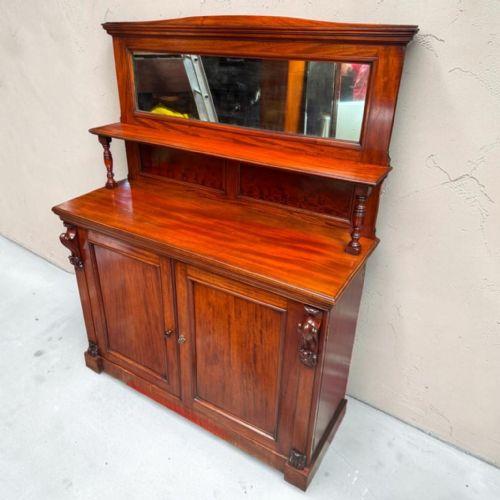
A victorian chiffonier typically combines a low lower cupboard base enclosed by panelled or glazed doors with an upper tier or superstructure. This upper section frequently incorporates a mirror back, a raised shelf supported on scroll brackets, or open book shelving.
The form developed out of earlier sideboard designs to serve smaller domestic spaces, functioning as a sideboard server or compact credenza. Surviving examples span the decades of the nineteenth century, moving from early flame mahogany pieces through mid-period walnut iterations to late carved mahogany and pollard oak variants.
While many listings categorise these pieces alongside sideboards, side cabinets, and bookcases, the classic chiffonier remains distinct through its combination of a waist-height surface, enclosed lower storage, and a decorative upper back.
What varies in quality
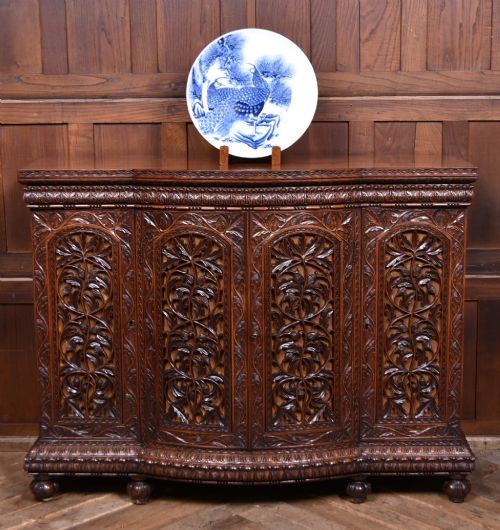
The standard of a victorian chiffonier rests primarily on the selection of timber and the execution of its grain, where finely figured flame mahogany or burr walnut command attention through depth and symmetry. Subtlety and precision in hand-carved mouldings, scroll supports, and panel framing further separate ambitious cabinet work from standard production pieces.
Structural integrity reveals itself in the weight of the timbers, the thickness of the marble slabs where fitted, and the quality of the brass hardware and mirror glass. Pieces bearing the marks of established workshops or retailers exhibit a higher grade of internal secondary wood and more meticulous finishing to hidden surfaces.
Some nineteenth-century owners used the mirrored back of a chiffonier to check their cravat before leaving the parlour.
Gillows·Liberty & Co.
The Victorian Chiffonier Glossary
- Chiffonier
- A compact sideboard or low cabinet featuring a lower enclosed cupboard and an upper tier or mirror back. It became a staple of nineteenth-century dining rooms and drawing rooms.
- Flame mahogany
- A decorative veneer cut from timber where the branches join the main trunk, producing a rippling, flame-like pattern. It was widely utilised across early nineteenth-century furniture.
- Burr walnut
- A highly figured wood grain obtained from the wart-like growths on walnut trees, creating swirling patterns. Cabinet makers prized it for high-status Victorian cabinet doors.
- Mirror back
- An upright wooden frame inset with a mirrored glass plate, attached to the rear of a sideboard or chiffonier. It served to reflect candlelight and brighten nineteenth-century interiors.
- Credenza
- A low-standing cabinet or sideboard, frequently featuring curved glass doors and ormolu mounts. The form overlaps closely with late-period chiffoniers and side cabinets.
Victorian Chiffonier: Frequently Asked Questions
What is a victorian chiffonier used for?
These cabinets served primarily in dining rooms and parlours to store tableware, linens, and bottles while providing a surface to display decorative objects.
The upper shelf or mirror back allowed households to showcase porcelain and glassware, keeping everyday dining accessories close at hand yet neatly concealed behind panelled doors.
How do I tell early Victorian from late Victorian pieces?
Early pieces from the mid-nineteenth century tend to employ dense flame mahogany with restrained scrolling and simpler architectural lines.
Later editions from the 1880s frequently introduce burr walnut, pollard oak, heavier carved ornamentation, and extensive mirror backs reflecting the tastes of the Aesthetic Movement.
Will a chiffonier fit in a modern dining room?
Their modest depth and low height make them practical for contemporary spaces, offering surface area and interior storage without dominating a room.
They function effectively as serving stations, cocktail cabinets, or media credenzas in modern homes while retaining their nineteenth-century character.
Are marble top chiffoniers different from wooden ones?
Marble-topped variants provide a durable, heat-resistant surface originally intended for resting hot serving dishes or wet glassware.
They generally denote a higher-status piece, frequently executed in burr walnut or rosewood with gilt bronze mounts.