

Regency Side Table Drawers
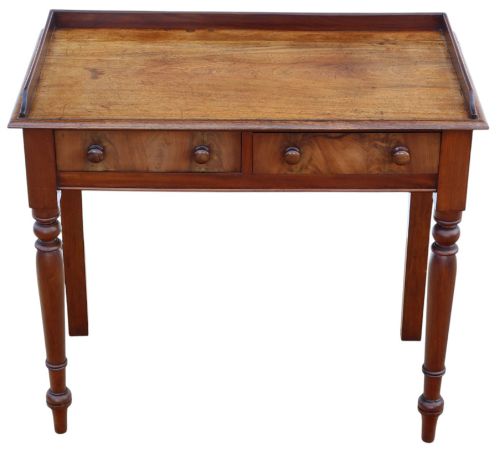
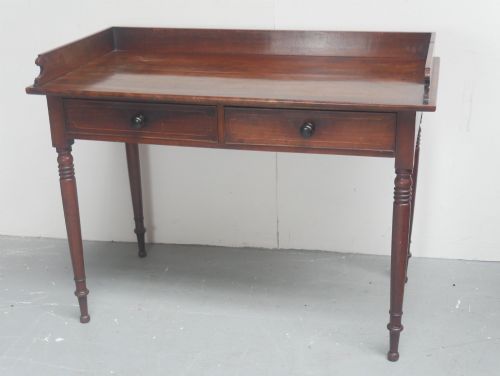
Regency side table drawers bring refined utility to a room, offering practical storage alongside the clean lines of early nineteenth-century design.
Regency Side Table Drawers
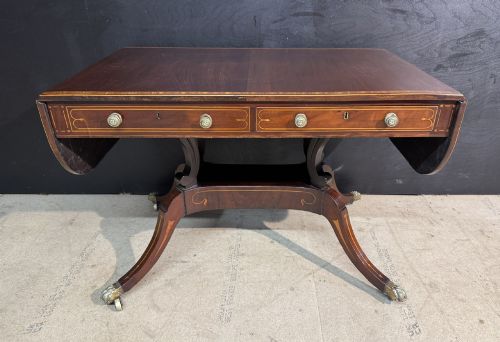
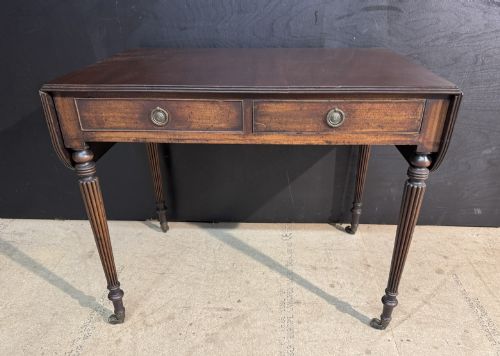
When you search for regency side table drawers, you are looking at utilitarian and decorative pieces primarily from the nineteenth century, including the Regency, Georgian, and William IV periods, alongside later revival pieces. The forms span side tables, writing tables, sofa tables, and bedside tables, reflecting the versatile domestic furniture of the era.
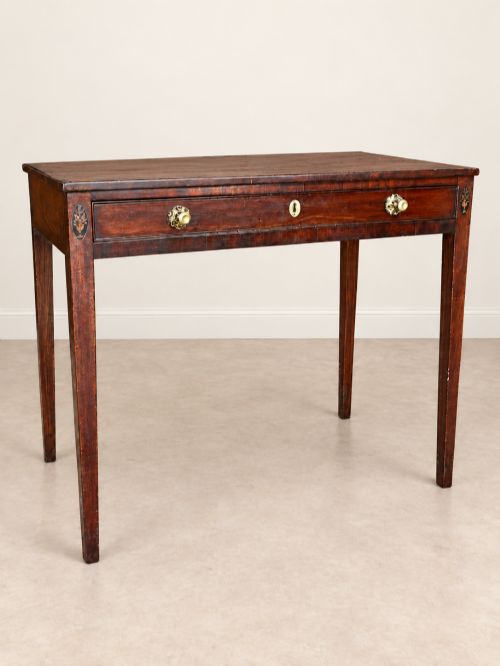
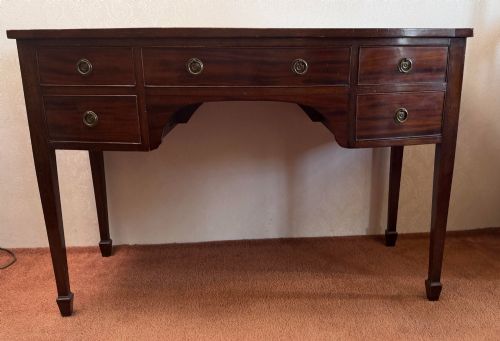
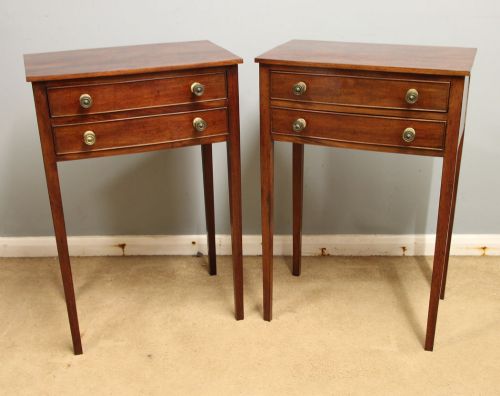
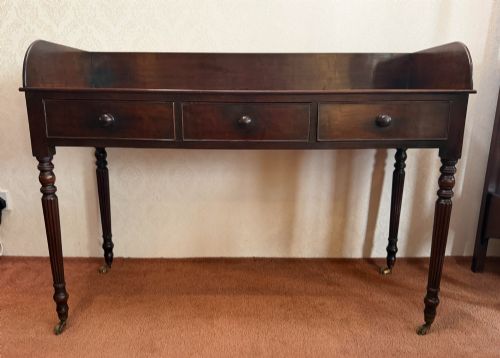
The version you are most likely to meet on this page is a mahogany side table featuring one or more drawers, often associated with Regency, Georgian, or Edwardian reproduction styles. These tables serve as occasional, lamp, or writing surfaces while incorporating functional storage compartments.
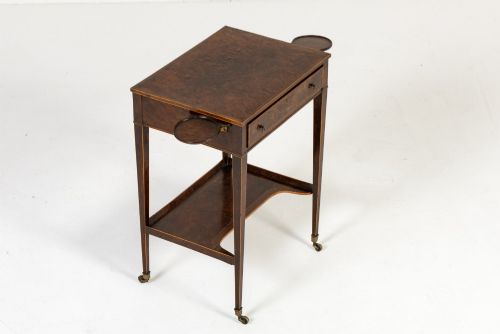
The selection ranges from early nineteenth-century examples to twentieth-century revivals, demonstrating how cabinetmakers adapted classic forms for changing domestic needs. Oak, fruitwood, and burr yew also appear alongside the dominant mahogany.
Materials and Construction
Cabinetmakers relied heavily on mahogany as the primary timber, complemented by secondary woods like oak, fruitwood, and burr yew for specific components and decorative surfaces. Timber selection governed the visual weight and durability of each piece.
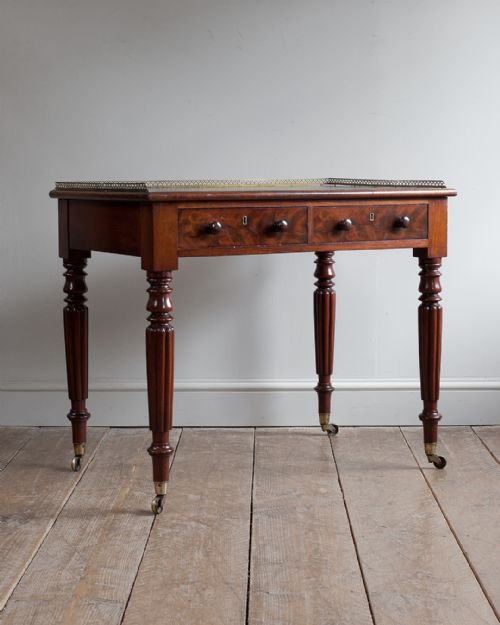
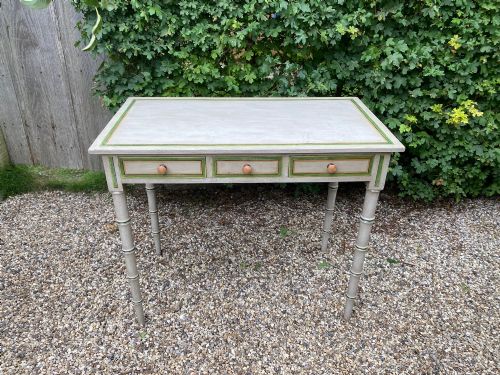
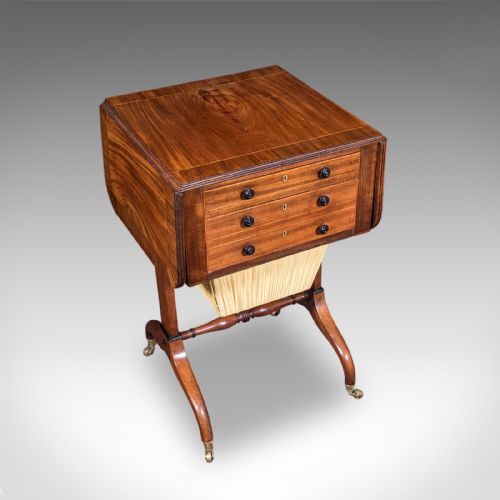
Inlay work, boxwood stringing, and painted finishes such as faux bamboo decorated the surfaces, while leather inserts appeared on writing variations. Brass fittings, including handles and keyplates, provided both structural function and visual contrast.
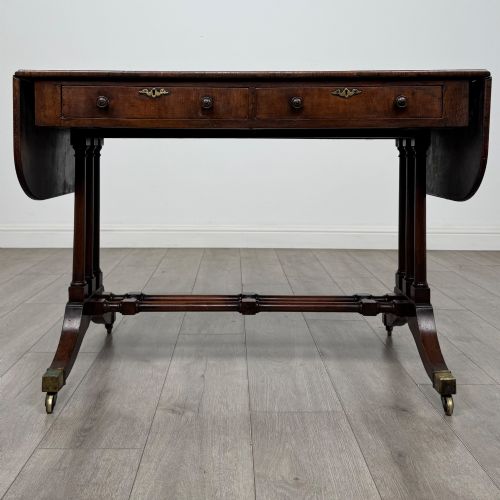
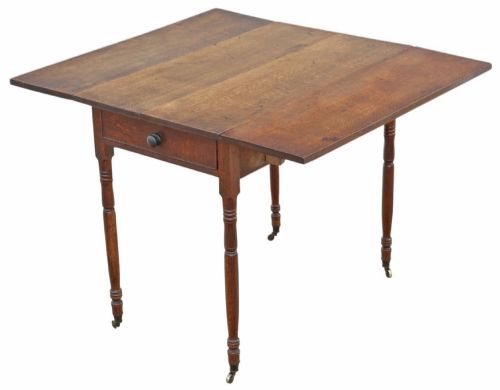
Construction techniques balanced stability with elegance, utilising drop-leaves, lyre ends, and freestanding forms. Drawers were integrated directly into the aprons of side tables, writing desks, and work tables to maintain clean exterior proportions.
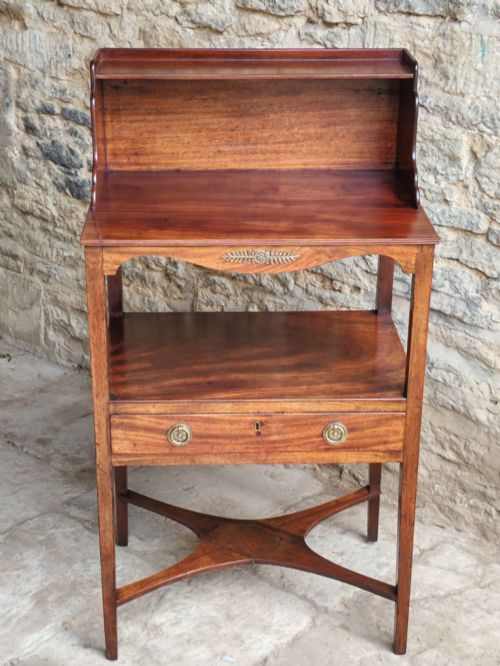
Several tables include specialised storage compartments, proving that nineteenth-century Victorians needed dedicated places to hide their newspapers just as much as we do.
Quality Variations
The distinction between tiers of work rests on the choice of timber figure, such as flame mahogany or burr yew, and the crispness of the joinery. Superior examples display carefully matched grain patterns across drawer fronts and table tops.
Refinement in secondary details, including finely turned legs, precise boxwood inlay, and original brass hardware, elevates a piece above standard utility furniture. The integration of drawers that operate smoothly within slender frames demonstrates high carpentry skill.
Proportion and structural honesty separate thoughtfully designed tables from heavier, uninspired production. Pieces with freestanding finished backs and balanced dimensions show greater design ambition.
Gillows of Lancaster
The Regency Side Table Drawers Glossary
- Pembroke table
- A small occasional table with hinged drop-leaves on either side. These leaves allow the table to expand for utility or fold down to save space.
- Sofa table
- A rectangular occasional table traditionally designed to stand in front of or beside a sofa. They typically feature two drop-leaves and end supports.
- Canterbury
- A low stand featuring partitions for holding newspapers, magazines, or sheet music, frequently combined with a single drawer beneath. They sit on short legs or castors.
- Faux bamboo
- Wood turned and painted to imitate the segmented appearance of natural bamboo. This decorative technique became popular during the Regency period.
- Drop-leaf
- A hinged flap attached to a table top that can be raised and supported by pivoting brackets or legs. It alters the surface area of the furniture.
Regency Side Table Drawers: Frequently Asked Questions
What is a Regency side table with drawers used for?
These tables served multiple domestic purposes, functioning as writing desks, dressing surfaces, or lamp stands in principal rooms. The integrated drawers held writing materials, personal items, or sewing equipment.
Today, they adapt easily to modern interiors as hallway consoles, bedside storage, or compact desks. Their slender proportions allow them to fit into spaces where larger furniture would overwhelm the room.
How do I tell an original Regency table from a revival piece?
Original pieces from the early nineteenth century exhibit construction methods consistent with period hand-tooling, including hand-cut dovetails in the drawer construction and timber shrinkage appropriate to age. Secondary woods like oak or pine are typically used in concealed areas.
Revival pieces, such as those from the Edwardian era or the 1930s, often show machine-cut joints, different hardware fixings, and cleaner, uniform timber surfaces that lack the mellow patina of older examples.
Are all these tables made of solid mahogany?
While solid mahogany forms the primary structure of many examples, cabinetmakers frequently used mahogany veneers over secondary timbers like oak, pine, or deal for broad surfaces such as table tops and drawer fronts.
Other woods also appear across the inventory, including oak, walnut, fruitwood, and burr yew. Inlays commonly incorporate boxwood or lighter contrasting veneers.
How do I care for an antique mahogany side table?
Keep the wood away from direct sunlight and heat sources to prevent the timber from drying out, fading, or splitting. Dust regularly with a dry, soft cloth and avoid silicone-based polishes.
Apply a traditional beeswax polish sparingly when the wood appears dry to nourish the grain and maintain the protective finish. Leather inserts on writing tables require specific gentle cleaning without excessive moisture.