


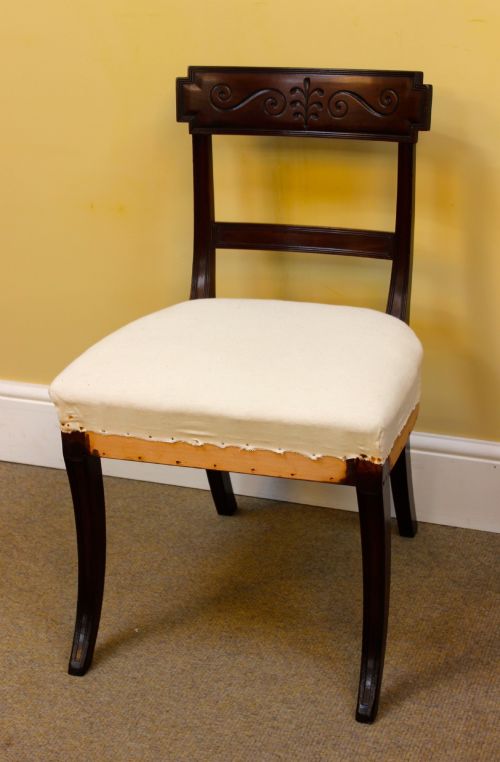
Regency Side Chairs Set
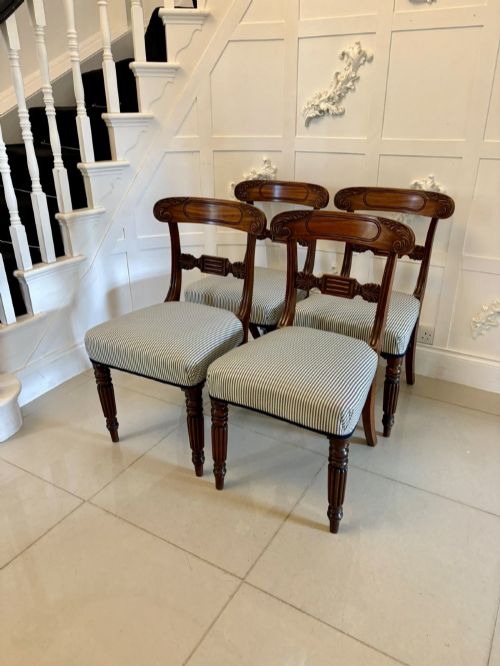
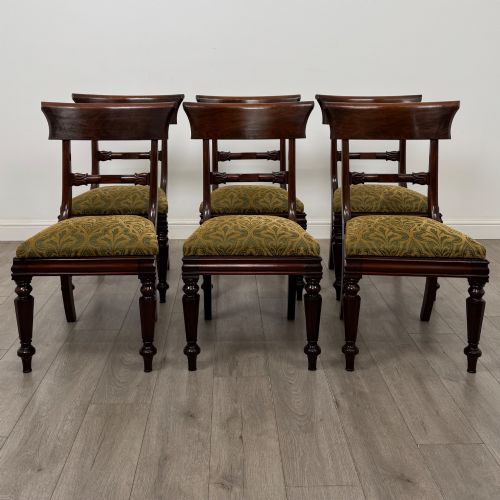
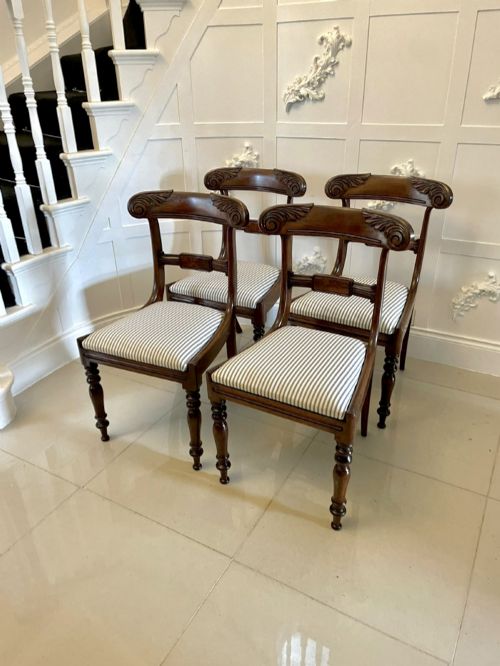
These regency side chairs set pieces bring symmetrical elegance and disciplined classical form to a dining room.
Regency Side Chairs Set
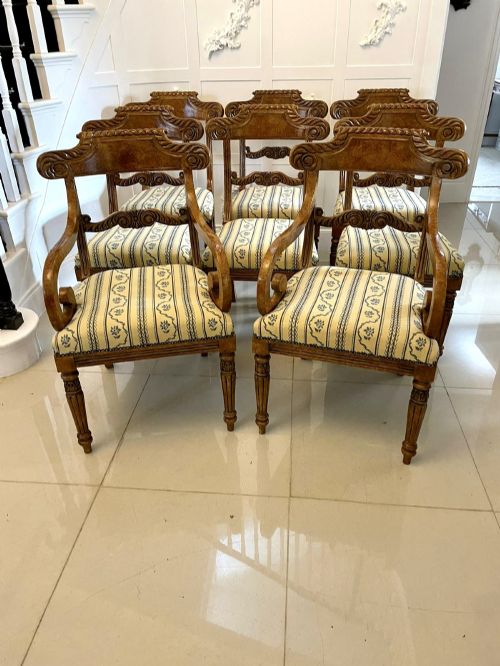
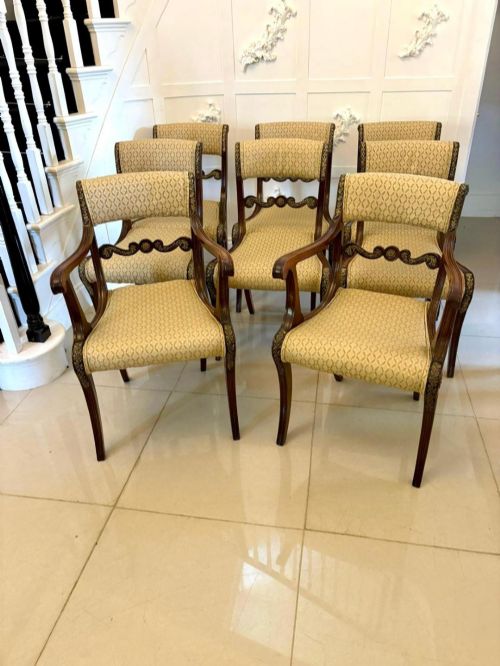
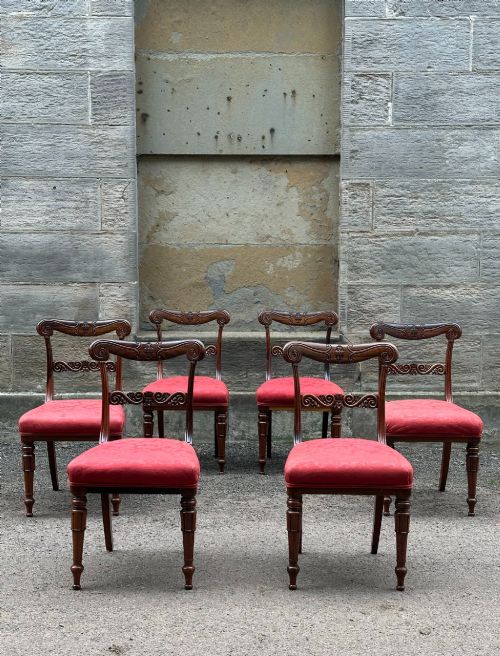
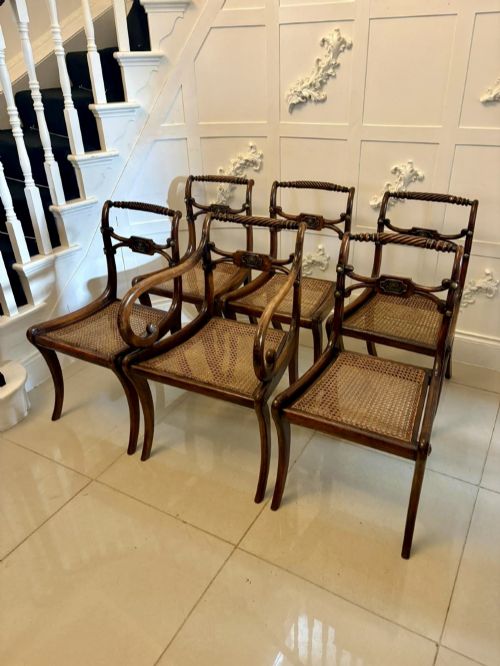
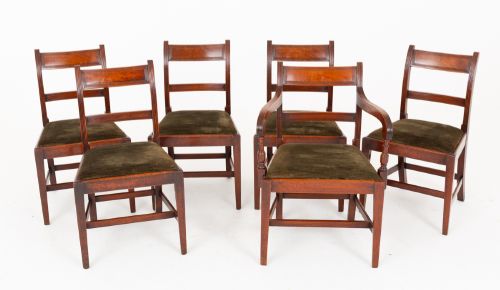
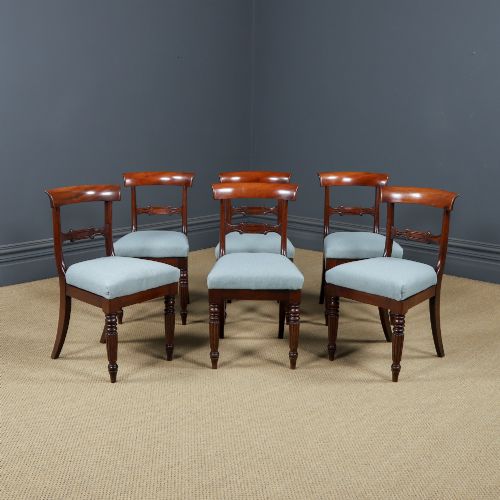
A regency side chairs set brings together matching seats designed for dining or hall use, mostly originating from the nineteenth century. These groupings typically comprise four, six, or eight chairs, occasionally including armchairs alongside the single side chairs.
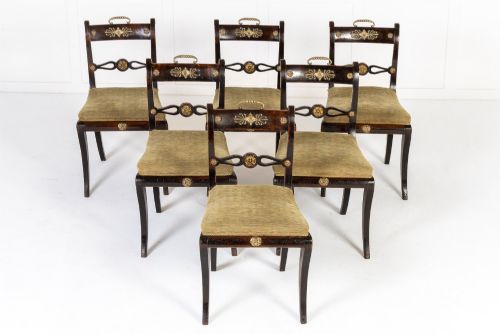
The evidence shows forms ranging from standard dining chairs to hall chairs, featuring styles like Regency, William IV, and Georgian. Mahogany and rosewood dominate the groupings, alongside occasional painted, faux birds eye maple, and beech examples.
Evaluating craftsmanship
Quality rests in the crispness of carved details, the selection of figured wood veneers, and the structural integrity of the frames. Sets showing consistent grain patterns and precise brass inlay separate superior examples from standard production.
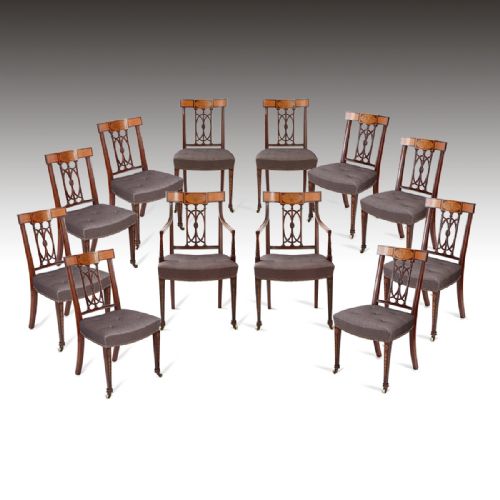
The degree of matching across a large group dictates the standing of a set, as larger collections of twelve or more chairs demand exceptional uniformity in timber and form.
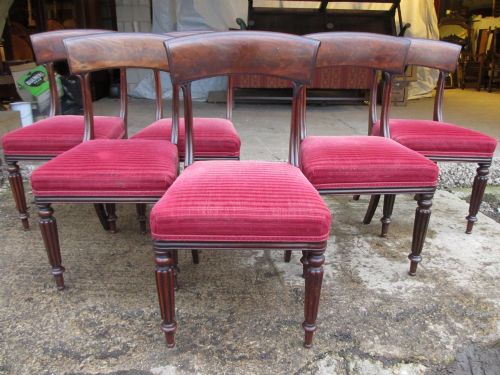
Design styles span Regency, William IV, and Georgian aesthetics with bar back and sabre leg forms.
Gillows
The Regency Side Chairs Set Glossary
- Carver
- An armchair designed to match a set of single dining chairs, usually placed at the head of a table.
- Bar back
- A horizontal curved wooden slat across the upper backrest of a chair, typical of the period.
- Sabre leg
- A concave sweeping leg that tapers towards the foot, characteristic of classical revival furniture.
- Cane
- Woven rattan material used to form resilient and lightweight seat panels.
- Simulated rosewood
- Painted or grained wood finished to imitate the appearance of exotic rosewood.
Regency Side Chairs Set: Frequently Asked Questions
How many chairs come in a typical set?
Sets generally range from four to twelve chairs, with four, six, and eight being the most common groupings found in the listings.
Larger sets sometimes incorporate a pair of carvers alongside single side chairs to complete the dining arrangement.
Which woods are most common?
Mahogany appears most frequently across the listed periods, followed by rosewood and beech.
Alternative finishes include ebonised surfaces, painted decoration, and faux birds eye maple.
Can these chairs be used daily?
Solid timber construction and traditional joinery make these pieces durable for everyday dining use.
Checking the stability of the frame and the condition of the upholstery ensures the seating remains practical.