


Traditional Mahogany Seats
Traditional mahogany seats are substantial timber dining chairs, benches and armchairs built to anchor formal rooms and dining spaces for generations.
Traditional Mahogany Seats
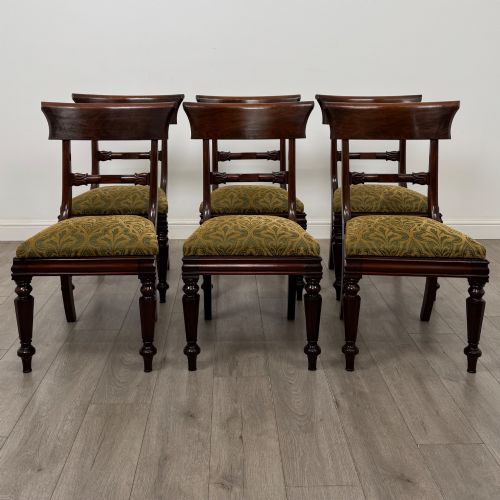
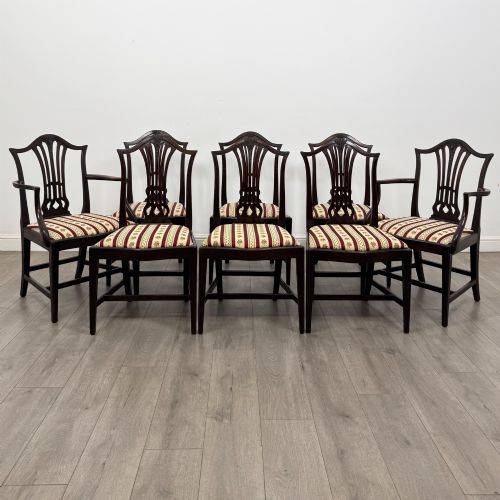
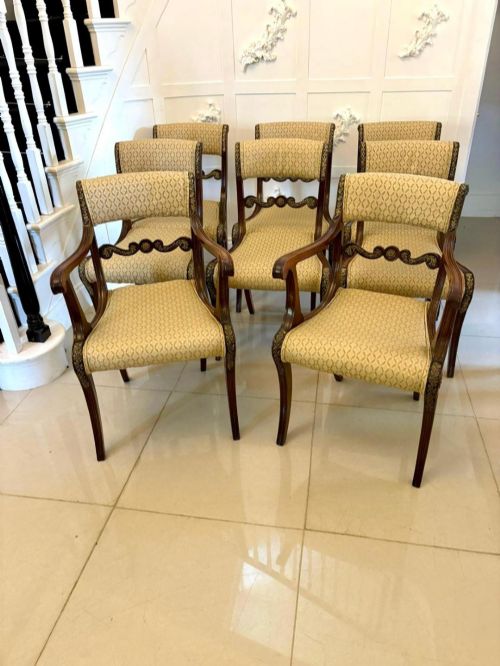
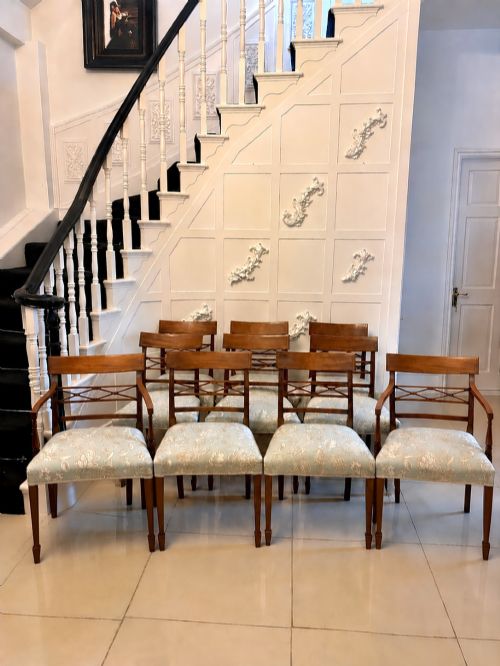
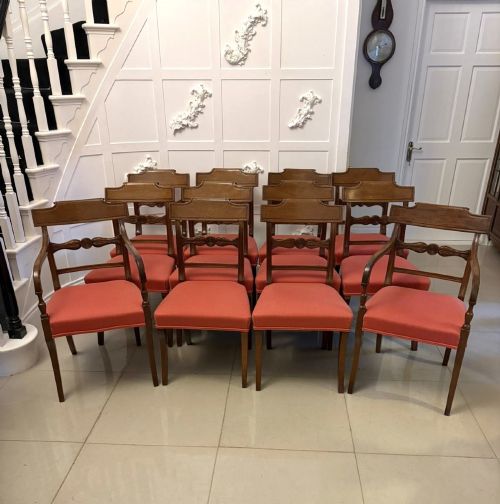
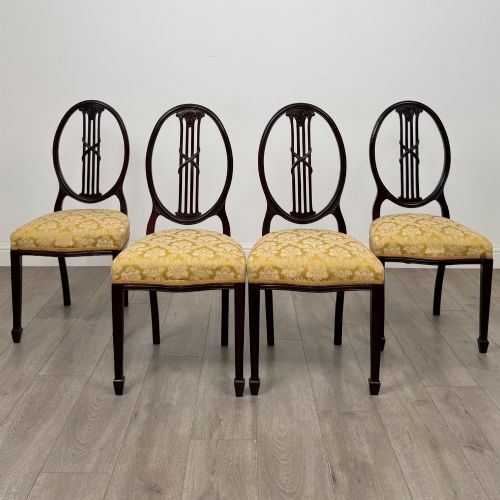
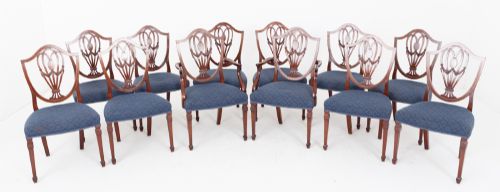
Traditional mahogany seats encompass dining chairs, armchairs, hall chairs, and window benches built primarily during the Georgian, Victorian, and Edwardian periods. Most items appearing here are matched sets of dining chairs, ranging from quartets to dozen-strong collections designed around large tables.
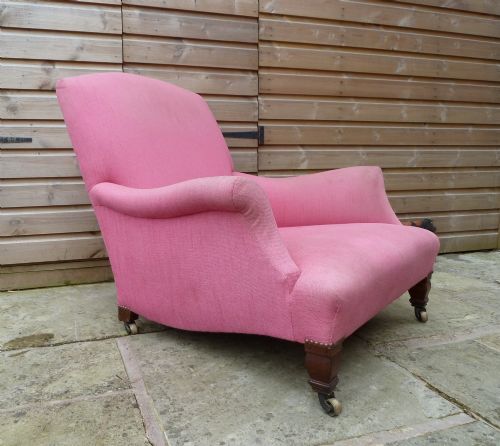
The form spans straightforward single chairs with shield backs or ladder backs to grand armchairs, library chairs, and deep-seated buttoned sofas. These timber seats served the principal reception rooms and dining halls of large houses.
Origins stretch from English workshops to Dutch studios, spanning styles from Hepplewhite and Regency to William IV and Victorian revivals. Buyers seeking these seats encounter a rich mix of formal dining suites and individual reception chairs.
How they were made
Cabinet makers utilised dense, durable mahogany timbers, frequently incorporating Cuban varieties for deep grain and rich colour. Frames were joined using traditional mortise and tenon construction to withstand daily weight and movement.
Upholstery techniques combined supportive webbing with hessian foundations, horsehair stuffing, and heavy textile coverings such as leather, velvet, and woven fabric. Brass fittings and decorative studding often reinforced the structural joints and edge trims.
Traditional Mahogany Seats Retail Price Guide 2026
Typical asking prices for traditional mahogany seats among the pieces listed under this phrase on Sellingantiques today, from the lower quarter to the upper quarter. They describe what is for sale here now, not the wider market.
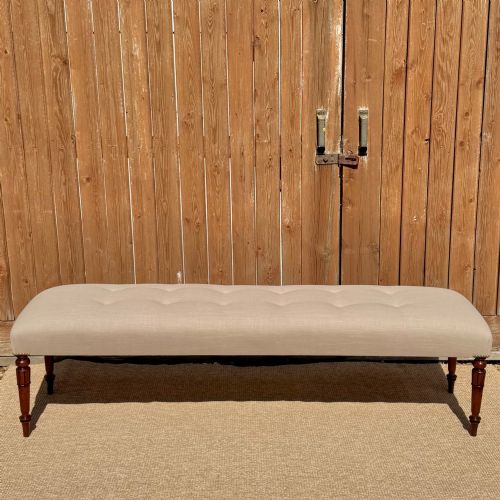
Long nineteenth-century window benches allowed households to lounge by tall glass panes while keeping out draughts.
What varies in quality
The level of carved detail distinguishes standard utilitarian furniture from exhibition pieces, with crisp mouldings, pierced splats, and well-defined scrollwork marking superior production. The choice of timber also dictates quality, as dense grain figures and uniform mahogany cuts provide better longevity.
Structural integrity depends on the original timber thickness and the precision of the joinery, which prevents loosening over centuries of use. Upholstery finish, from hand-stitched buttoning to the selection of durable leather or heavy fabric, dictates the refinement of the piece.
Maple and Co·Whytock and Reid·Warings
The Traditional Mahogany Seats Glossary
- Carver
- An armchair designed with elbow rests, traditionally placed at the head of a dining table. These match the smaller single chairs in a dining set.
- Bar back
- A horizontal curved wooden slat across the upper section of a chair back. This design appears frequently on nineteenth-century dining seats.
- Splath
- The vertical central strip of wood within a chair back connecting the seat to the top rail. Master craftsmen carved these into ribbons, urns, or geometric patterns.
- Balloon back
- A rounded, continuous chair back frame shaped like a stretched oval, common in mid-Victorian seating. This form offered ergonomic support through curved timber construction.
Traditional Mahogany Seats: Frequently Asked Questions
How do I care for mahogany dining chairs?
Keep timber seats away from direct heat sources and strong sunlight to prevent the mahogany surface from drying out or fading. Apply natural beeswax periodically to nourish the grain and maintain a soft sheen.
Inspect the joints and underframe occasionally to ensure the timber remains stable. Professional cleaning protects original fabric or leather upholstery from premature wear.
Can I mix single chairs and carvers?
Pairing single dining chairs with matching carver armchairs follows historical precedent for formal dining rooms. Place the armchairs at the head and foot of the table while running the single chairs along the sides.
Ensure the wood tone, period style, and upholstery match or complement each other to create a cohesive seating arrangement.
How do I identify a Regency dining chair?
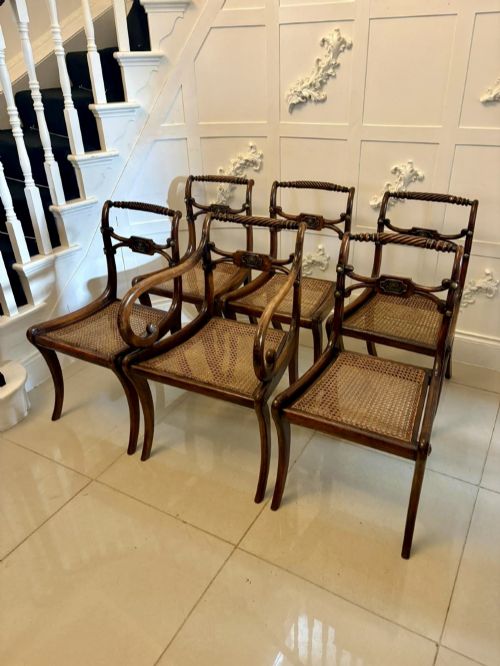
Regency seats display classical restraint, often incorporating saber legs, reeded frames, and brass inlay inspired by ancient Greek and Roman furniture. The proportions remain clean and architectural.
Look for dark mahogany surfaces combined with simpler back rails or scrolled arm supports characteristic of the early nineteenth century.
What is a hall chair used for?
Hall chairs served as functional entranceway seating where visitors waited briefly before entering the main reception rooms. They were constructed entirely from solid timber without upholstered pads to withstand heavy coats and frequent use.
These pieces typically feature carved family crests or plain wooden panels designed to make an architectural statement in a hallway.