
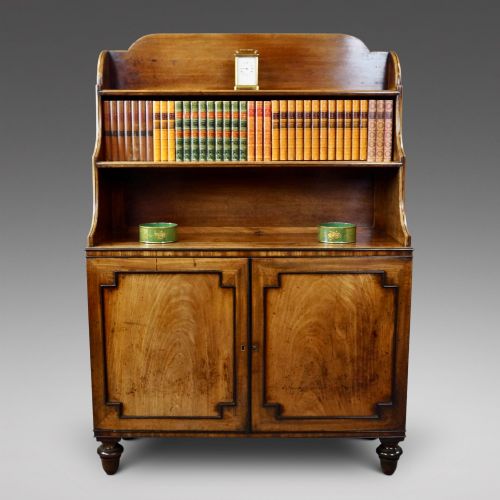


Regency Shelf Chiffonier
A regency shelf chiffonier brings low storage and tiered display together, anchoring a room with compact elegance.
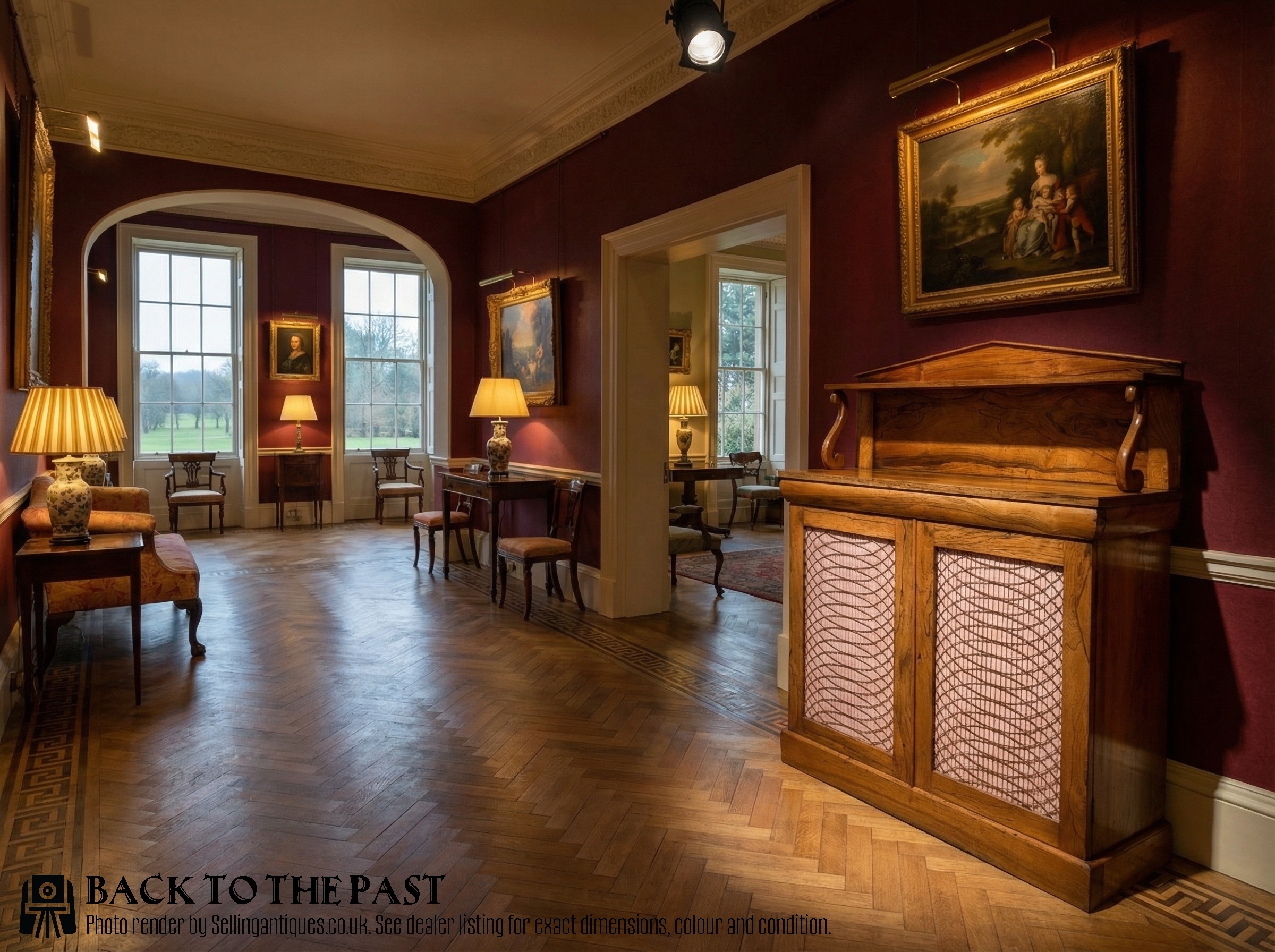
Regency Shelf Chiffonier
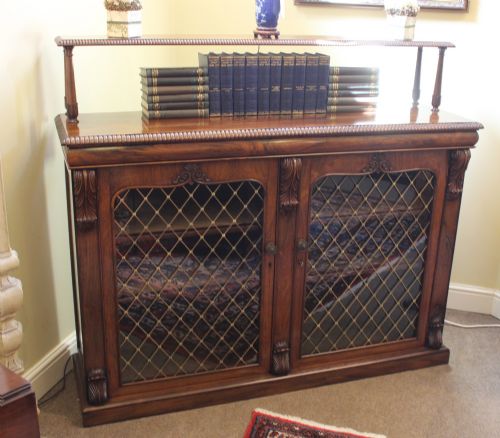
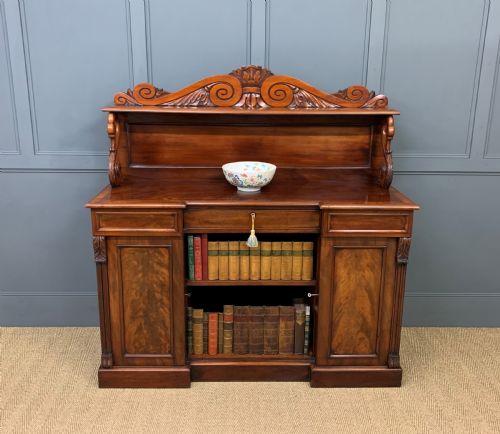
A regency shelf chiffonier combines a low enclosed cupboard base with an open shelved superstructure, serving as a functional sideboard or small cabinet. The form bridges the Georgian era and the later Victorian period, appearing frequently in Regency, George IV, and William IV styles. These pieces occupy modest footprints, making them practical for modern rooms that require surface area and vertical display without heavy proportions.
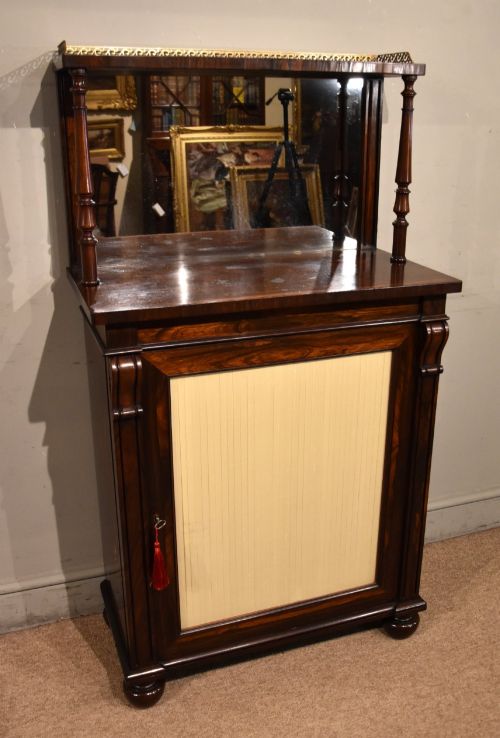
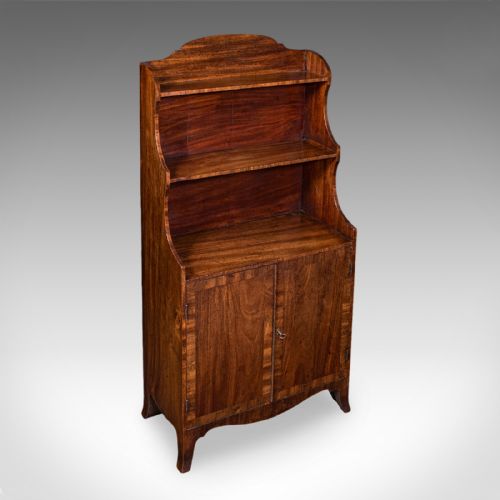
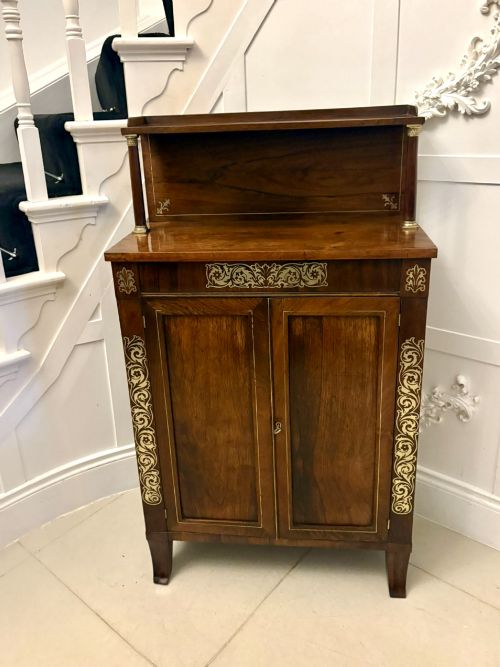
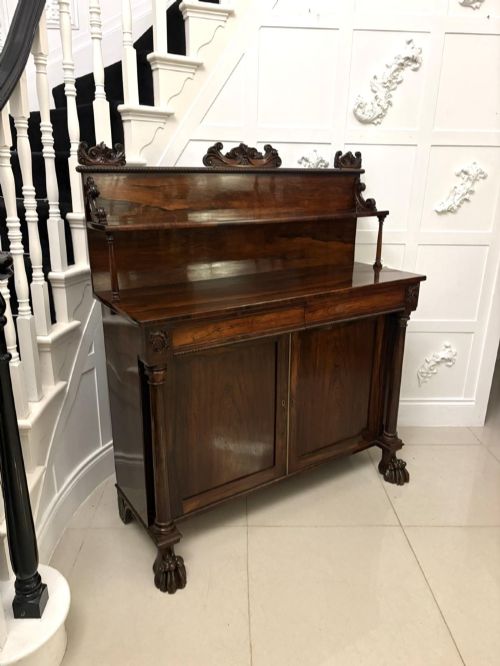
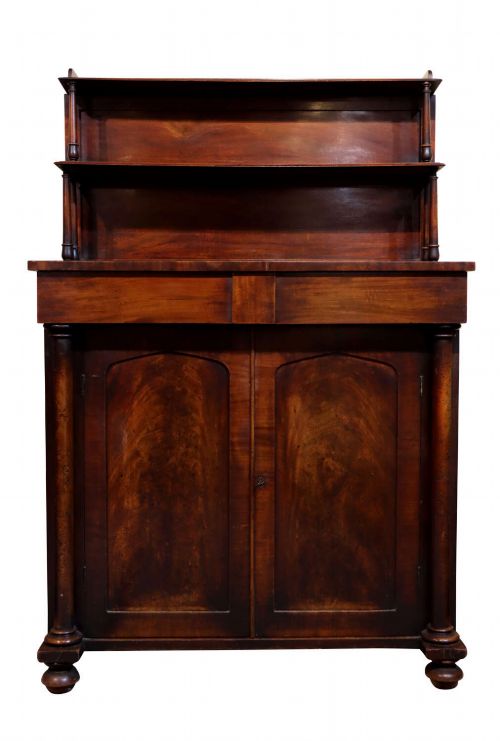
The version most commonly met on this page is constructed from mahogany or rosewood, often featuring a tiered shelf back supported by slender pillars. Makers of the period adapted the form into related side cabinets, bookcases, and sideboards, though the defining characteristic remains the combination of lower doors and upper shelving. Pieces emerge from the nineteenth century bearing the restrained lines associated with Grand Regency and French Empire influences.
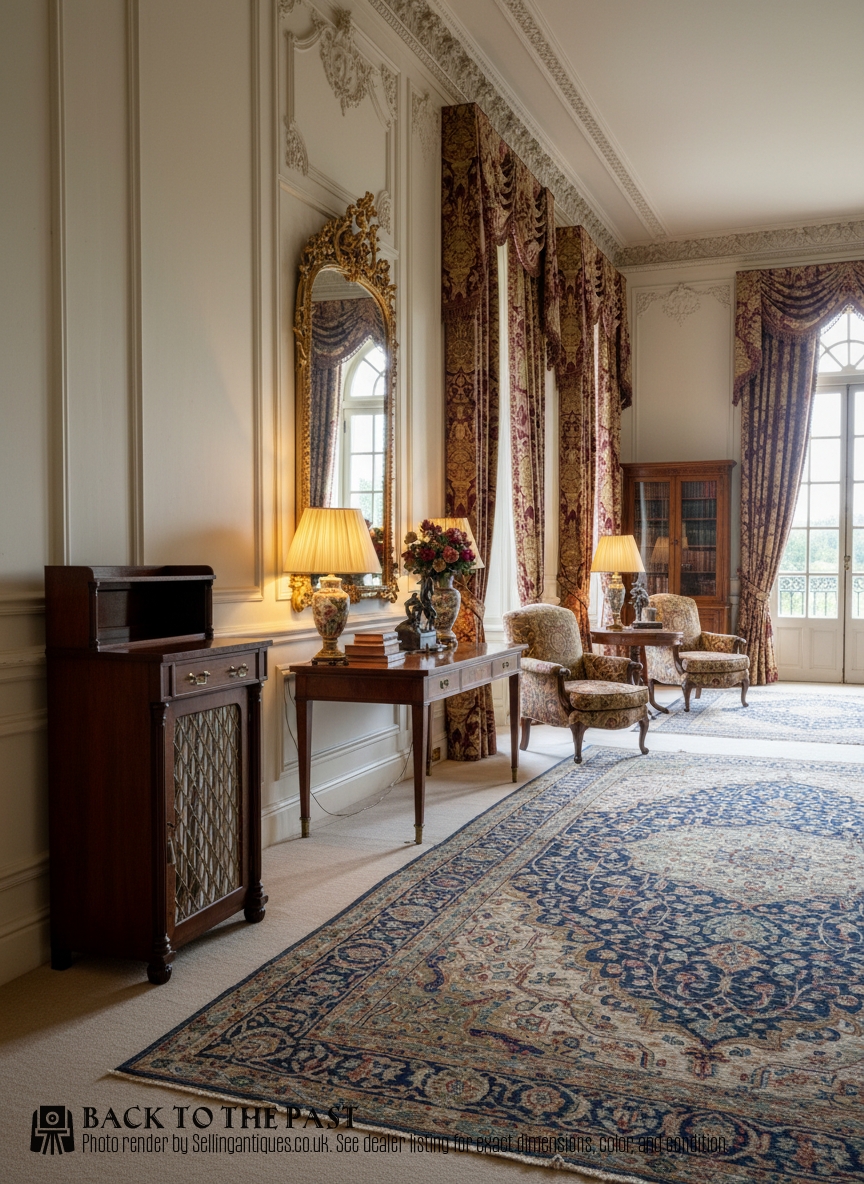
Materials and Construction
Cabinetmakers utilised dense timbers such as mahogany and rosewood, frequently employing flame mahogany veneer to create striking grain patterns across the doors and drawer fronts. Surfaces often display contrasting stringing or detailed brass inlay set directly into the wood. Structural integrity relied on solid secondary timbers, while select examples incorporate marble tops or glazed sections.
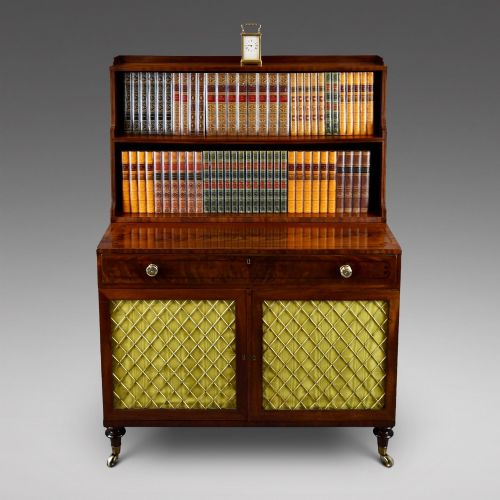
Joinery techniques combined traditional carcase construction with precise veneering methods suited to the early nineteenth century. Metal components such as brass grilles, fine stringing lines, and inlaid motifs were integrated meticulously into the primary surfaces. Workshops produced these cabinets to endure daily use while maintaining refined decorative standards.
Listings feature mahogany and rosewood timber surfaces, frequently enhanced by flame mahogany veneer and brass inlay.
Differentiating Quality in Period Cabinets
The standard of a regency shelf chiffonier rests upon the selection of timber figures, such as the depth of flame in a mahogany veneer or the rich contrast of rosewood. Superior examples exhibit refined proportions, particularly in smaller scale pieces, alongside precise execution of brass inlay and structural joinery. Finer workshops invested greater care in balancing wood grains across multiple panels.
Subtle architectural details separate standard production from exceptional cabinet work. The turning of support pillars for the upper shelves, the crispness of brass mounts, and the integration of marble tops indicate the level of craftsmanship involved. The visual harmony of the superstructure relative to the lower cupboard dictates the overall success of the piece.
Gillows
The Regency Shelf Chiffonier Glossary
- Chiffonier
- A low cabinet with a cupboard base, frequently topped with shelves for display.
- Flame Mahogany Veneer
- A thin slice of mahogany timber cut from the fork of the tree to produce a flickering, symmetrical grain pattern.
- Brass Inlaid
- Ornamental metalwork let flush into the timber surface to create geometric or floral patterns.
- Waterfall Bookcase
- A piece of furniture featuring open shelves that progressively step back from bottom to top.
- Side Cabinet
- A low storage piece designed to sit against a wall, often sharing forms with contemporary chiffoniers.
Regency Shelf Chiffonier: Frequently Asked Questions
What is a regency shelf chiffonier used for?
These cabinets serve as versatile storage units combining a closed lower cupboard with open upper shelving for display.
Historically placed in dining rooms or parlours, they held tableware, books, or decorative objects while occupying minimal floor space.
How do I date a regency chiffonier?
Dating relies on identifying characteristic timbers like rosewood and flame mahogany, alongside construction methods typical of the early nineteenth century.
Stylistic markers such as brass inlay, specific turned supports, and the transition from Georgian restraint to William IV proportions help narrow the decade.
Are these cabinets suitable for small rooms?
Their compact scale and shallow depth make them particularly well suited to modern interiors with limited wall space.
The vertical shelving provides display area without demanding the heavy footprint of a traditional bookcase or large sideboard.
What distinguishes a chiffonier from a sideboard?
A chiffonier typically incorporates a raised shelf back attached to the top of a low enclosed cabinet.
Sideboards generally remain flat-topped surfaces designed primarily for serving food and storing larger dining room items.