
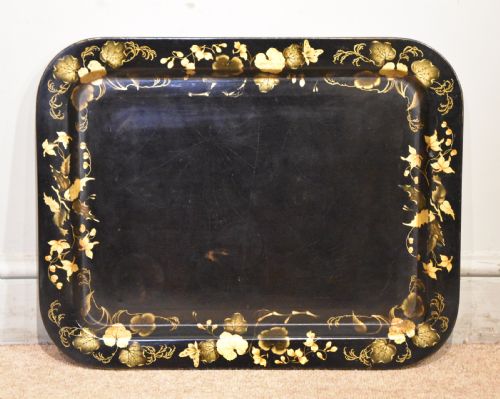
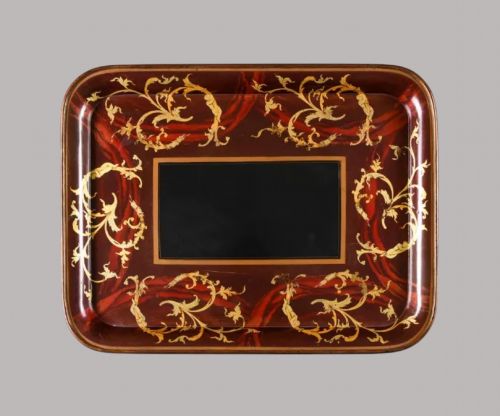
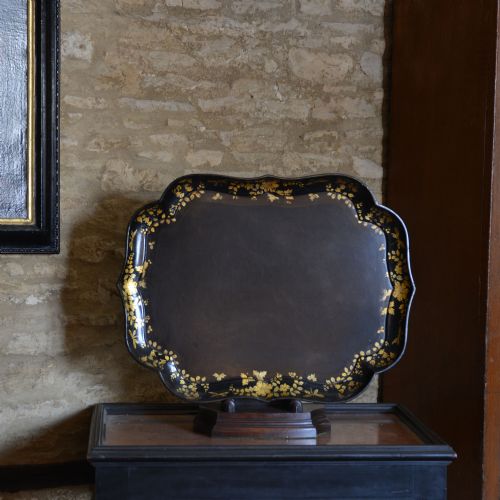
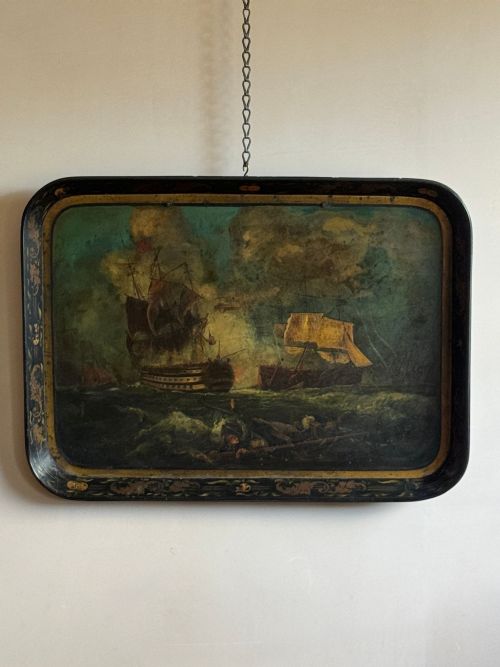




Regency Serving Tray
A regency serving tray brings utility and period craftsmanship together, offering a practical surface for service or display.
Regency Serving Tray
When you search for a regency serving tray, you encounter pieces designed for hospitality, dining and display from the late eighteenth and early nineteenth centuries. These items serve multiple domestic functions, functioning as portable servers or resting upon folding stands to form occasional tables.
The most common examples on this page date from the Regency and Georgian periods, alongside later nineteenth century interpretations. Materials range from timber and papier-mâché to porcelain and plated metal.
Forms include oval and octagonal platters, twin-handled dishes and galleried boards. Many survivors from the period integrate into modern interiors as coffee tables or decorative wall pieces.
How They Were Made
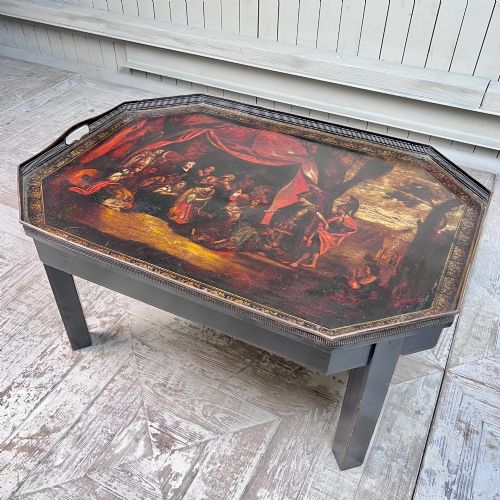
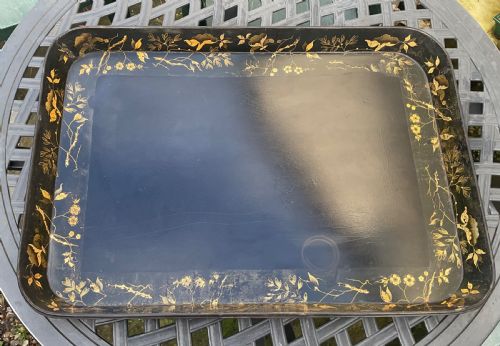
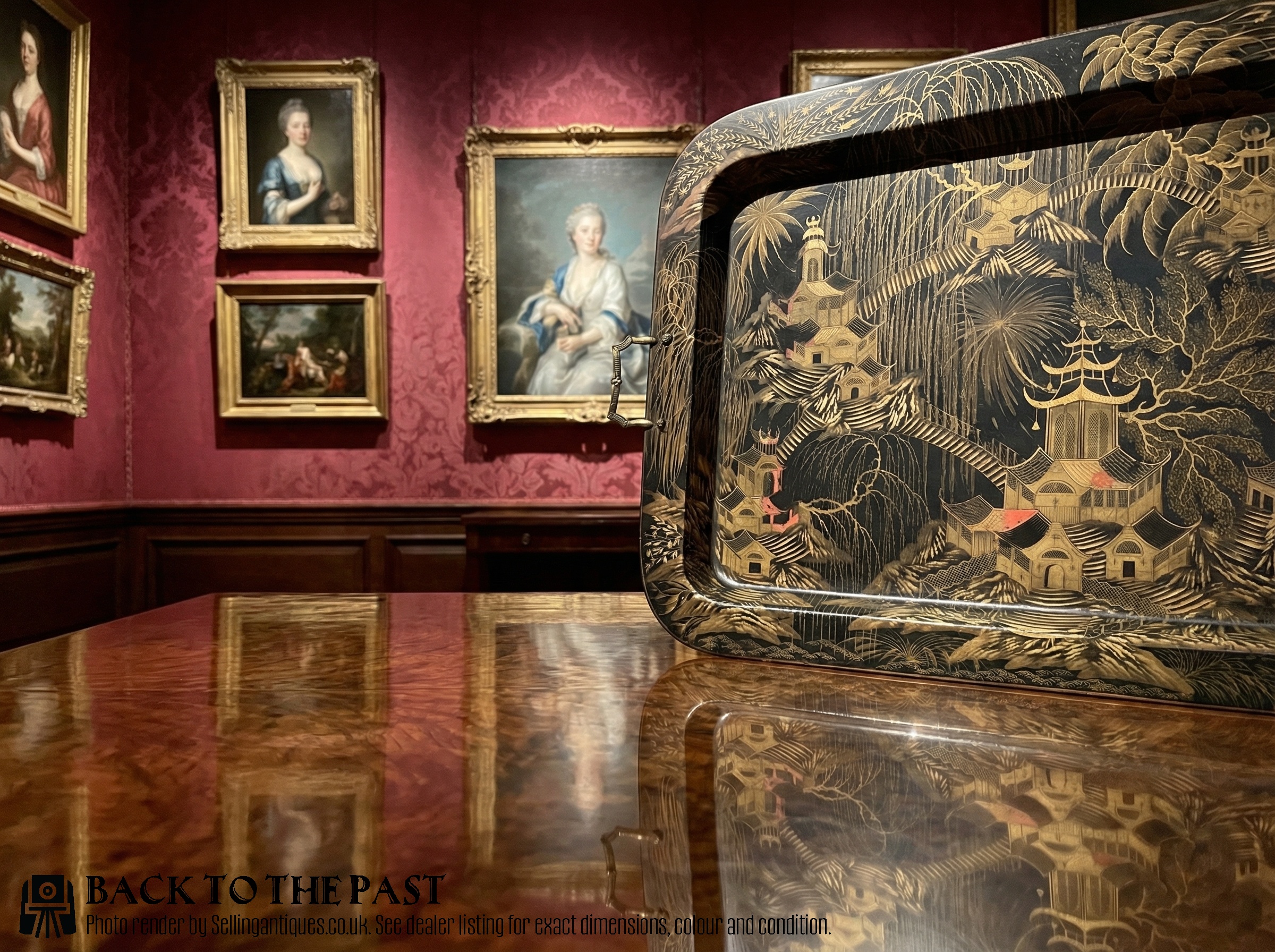
Papier-mâché trays utilise layers of paper pulp compressed and varnished with dark lacquer, frequently finished with gold leaf or painted Chinoiserie scenes. Makers shaped these substances to create robust yet lightweight serving surfaces.
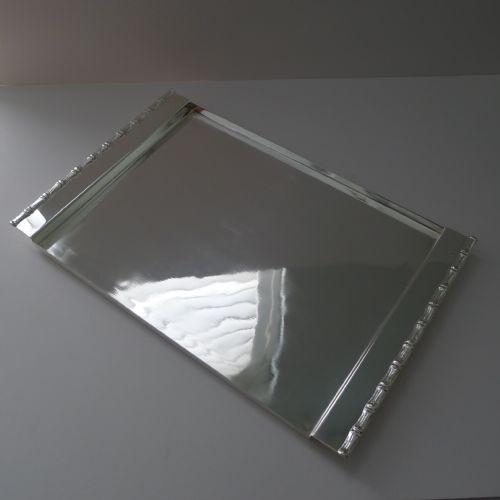
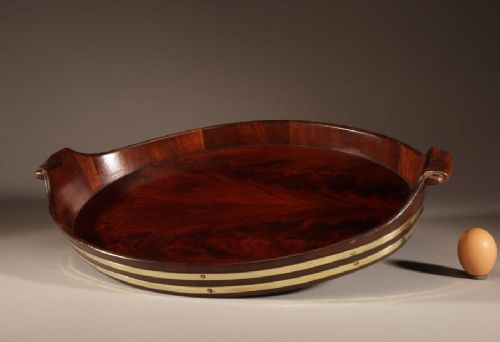
Timber versions employ figured woods such as mahogany and satinwood, occasionally featuring inlaid banding or coopered construction with brass hoops. Metal pieces rely on silver plating over copper or painted iron plate known as toleware.
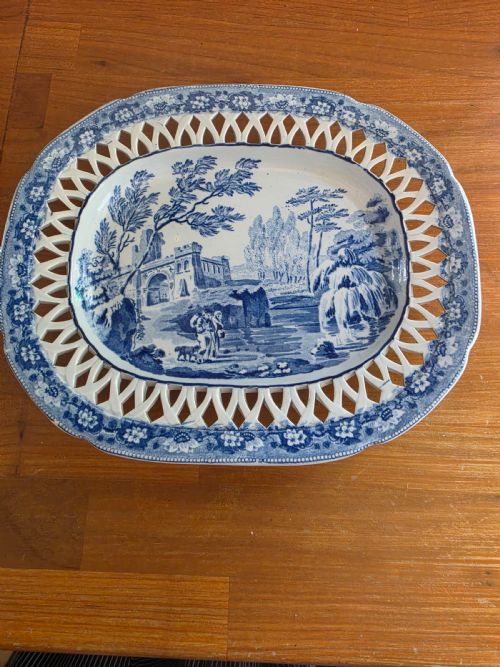
Ceramic platters and dishes involve porcelain or earthenware bodies decorated with transfer printing in blue and white, hand-painted motifs or moulded details.
The selection includes items produced across the Georgian, Regency, Victorian, and Mid-Century Modern periods.
What Varies in Quality
The distinction between standard domestic items and superior examples lies in the execution of the surface decoration and the selection of the primary material. Hand-painted or gilt embellishments executed by skilled hands display depth and precision that distinguish fine workshop output from mass production.
Structural integrity depends on the original construction methods, whether through the tightness of coopered brass bands on timber or the preservation of the lacquer base on papier-mâché. Pieces retaining their original stands, handles or surface finishes command greater interest from collectors.
Jennens & Bettridge·Paul Storr·Creswick·Matthew Linwood·Spode·Clay
The Regency Serving Tray Glossary
- Papier-mâché
- A composite material made from paper pulp mixed with glue and resin, pressed in moulds and dried to form a hard surface. This substance allowed makers to produce smooth trays that received dark lacquer and gilt decoration.
- Toleware
- Painted or lacquered sheet metal items produced in workshops during the eighteenth and nineteenth centuries. These pieces often feature dark backgrounds adorned with gilded motifs or historical scenes.
- Coopered
- Constructed from wooden staves joined side by side and bound with metal hoops, much like a barrel. This technique provided strength for deep timber serving vessels.
- Galleried
- Having a raised rim or pierced border around the edge of the tray. This feature kept items secure during transport.
- Old Sheffield Plate
- A composite material formed by fusing a thin sheet of silver to a thicker copper base. It was widely used for serving wares before the invention of electroplating.
Regency Serving Tray: Frequently Asked Questions
How were regency serving trays used?
These items functioned primarily in the dining room and parlour for carrying tea services, decanters and food platters between rooms. Servants utilised them to present drinks to guests during afternoon gatherings.
Many examples were placed upon folding wooden stands after service to act as temporary side tables. Today, owners frequently deploy them on low tables for display.
What is the difference between papier-mâché and wood trays?
Papier-mâché trays consist of compressed paper pulp treated with multiple coats of lacquer, producing a lightweight base suited for delicate painting and gilding. They offer smooth, dark surfaces often enriched with metallic leaf.
Wooden trays rely on figured timbers like mahogany or satinwood, sometimes featuring inlaid decoration or brass handles. They emphasise the natural grain of the wood rather than painted artistry.
Can I use an antique tray for daily serving?
Most antique serving pieces require careful handling due to age and fragile surface finishes. Papier-mâché and lacquer are sensitive to moisture and heat.
Gentle use for display or light service preserves the original decoration and finish. Heavier timber or metal examples handle regular placement of items more robustly.
How do I care for a lacquered tray?
Lacquered surfaces require protection from direct sunlight, excessive heat and standing water. Dusting with a soft, dry cloth maintains the finish without scratching the varnish.
Avoid chemical cleaners and abrasive cloths, which damage the delicate layers beneath. Wax polishes are generally unnecessary on lacquered papier-mâché.