
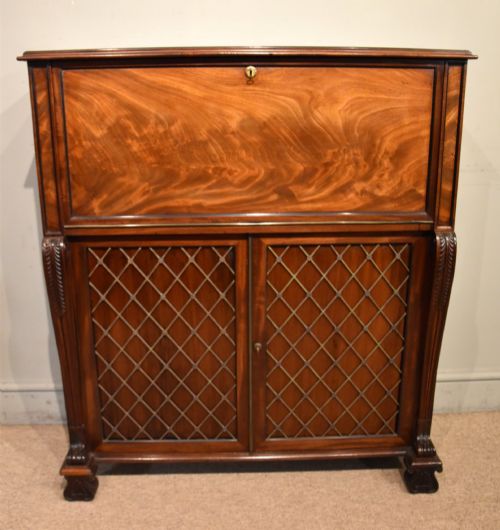
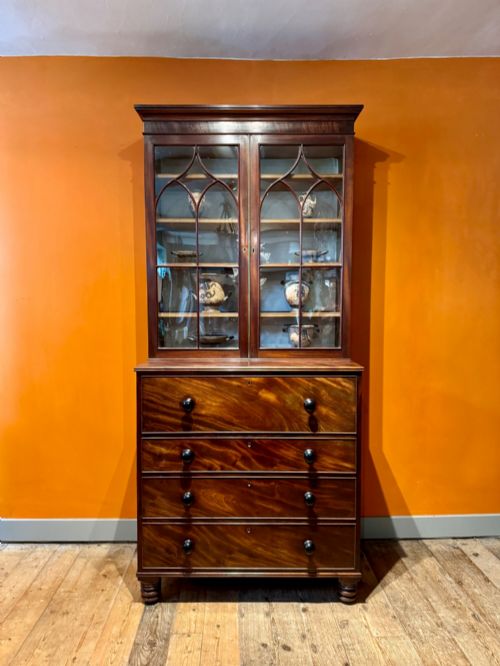


Regency Secretary Bookcase
A regency secretary bookcase combines a functional writing drawer with upper shelving, offering practical storage and classic architectural proportions for any room.
Regency Secretary Bookcase
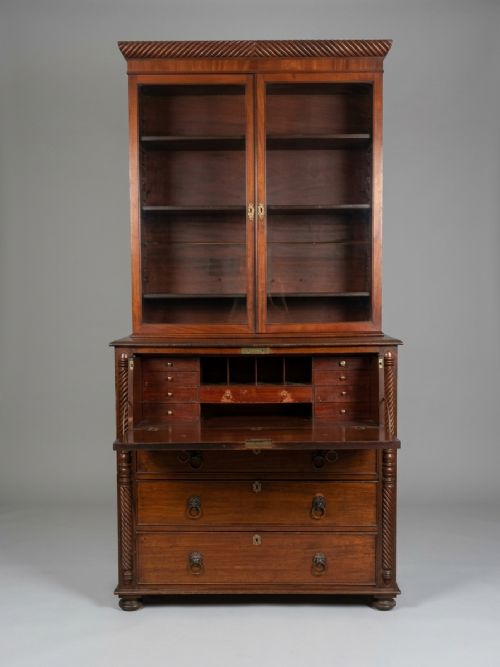
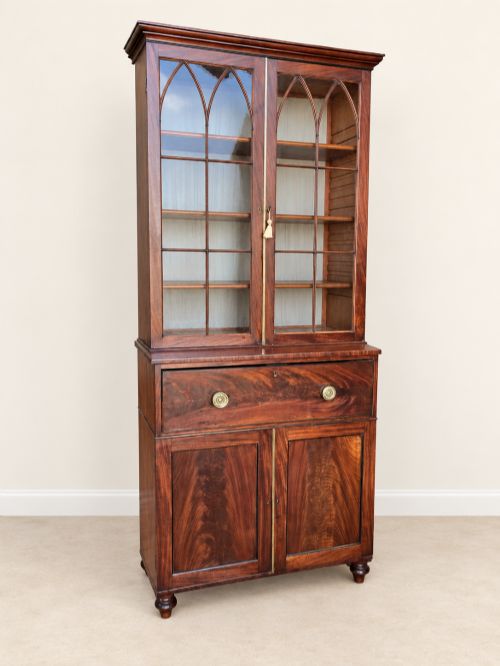
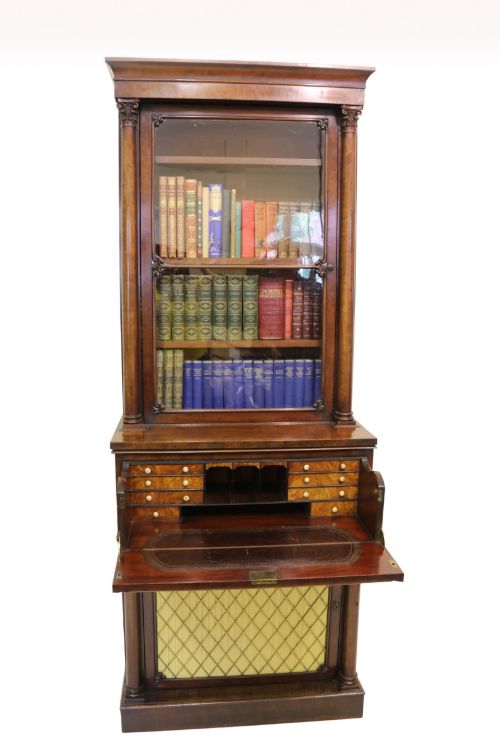
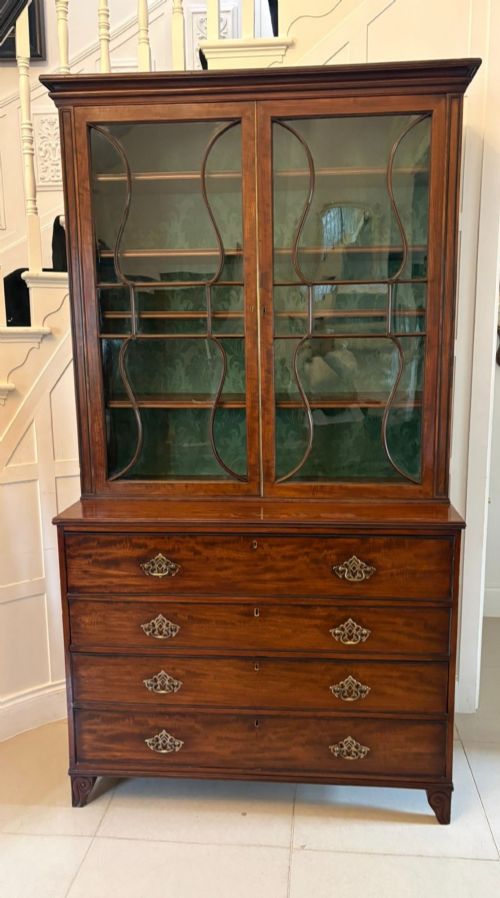
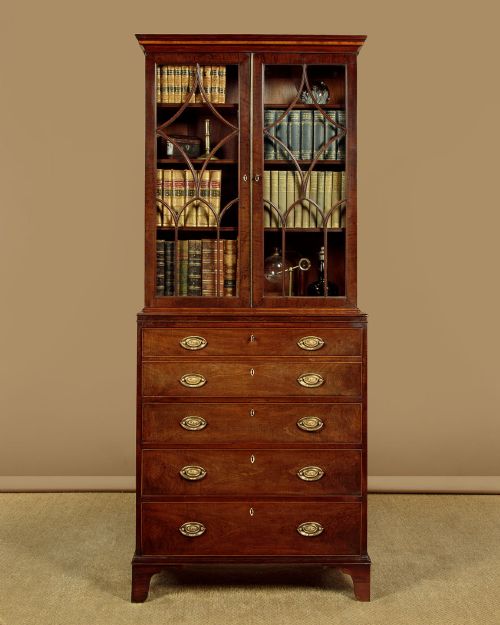
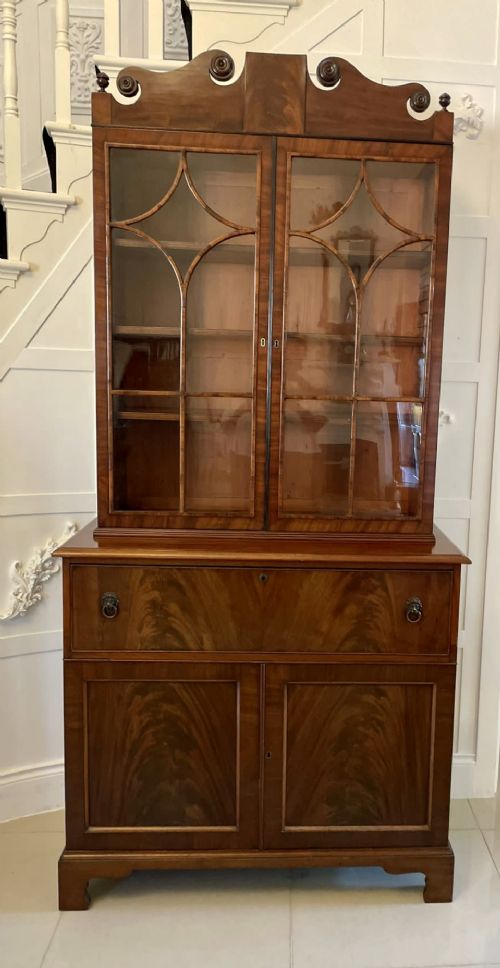
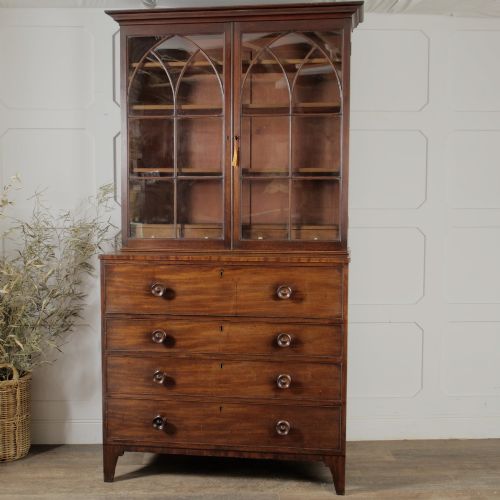
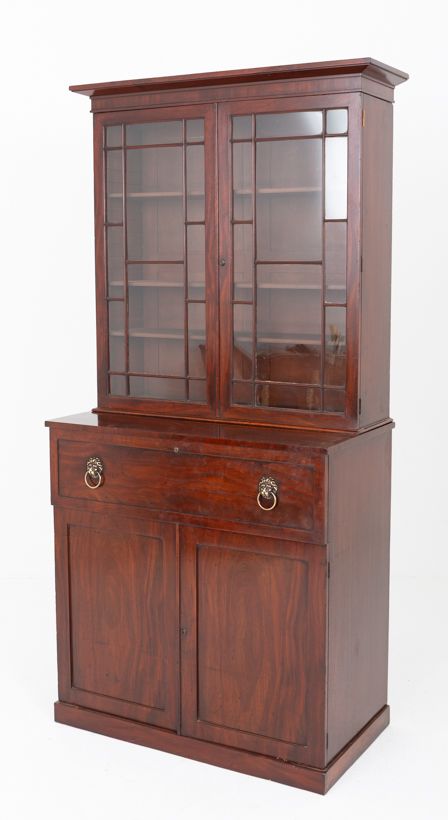
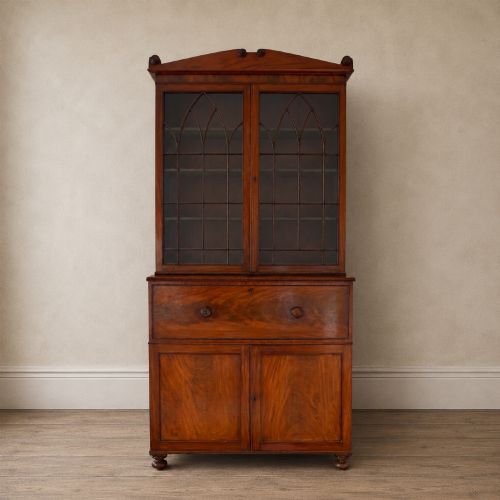
A regency secretary bookcase is a substantial hybrid furniture form that pairs an enclosed display section above with a pull-down writing drawer and lower cupboards or drawers. The pieces appearing here span the Regency, George III, George IV, and William IV eras, along with the broader 19th-century period.
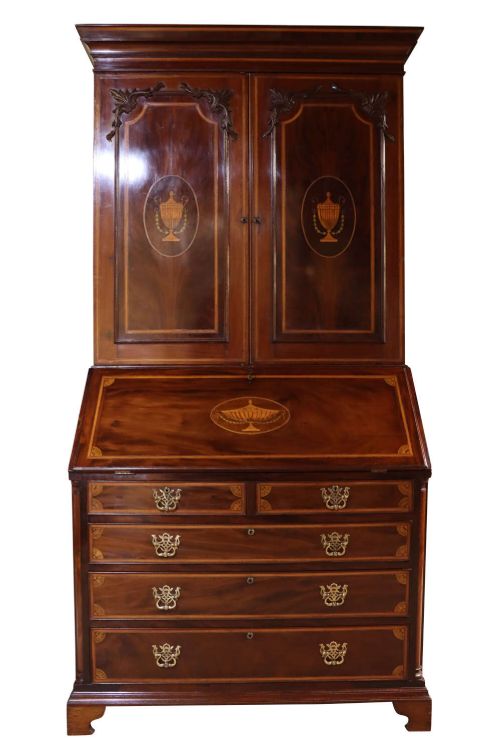
Most examples take the form of a secretaire bookcase or bureau bookcase constructed in mahogany, often featuring glazed doors to the upper cabinet. Variations include smaller proportions, tambour details, and occasional rosewood or inlaid treatments.
Makers and workshops of the period, such as Gillows of Lancaster and George Oakley, produced these dual-purpose cabinets to serve both library and correspondence needs in fashionable homes.
Materials and construction methods
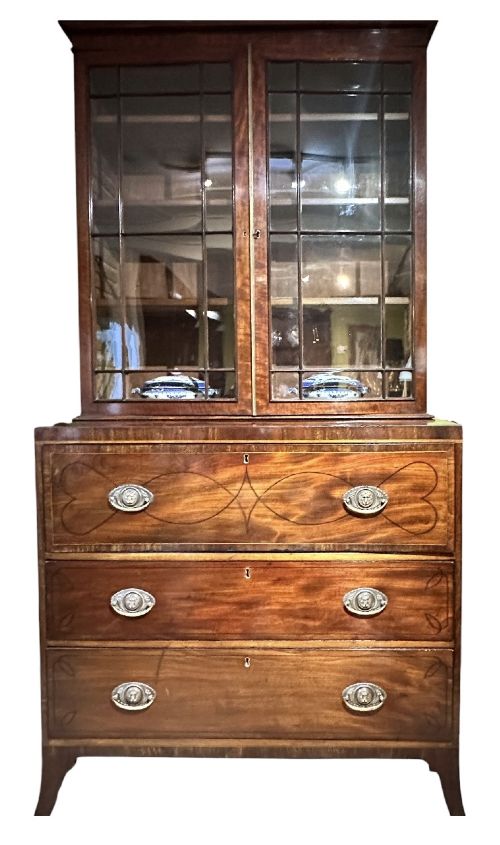
Makers relied heavily on solid mahogany and flame mahogany veneer, chosen for rich grain patterns and durability. Selected pieces incorporate brass mounts, wood inlay, or marquetry to accentuate the exterior.
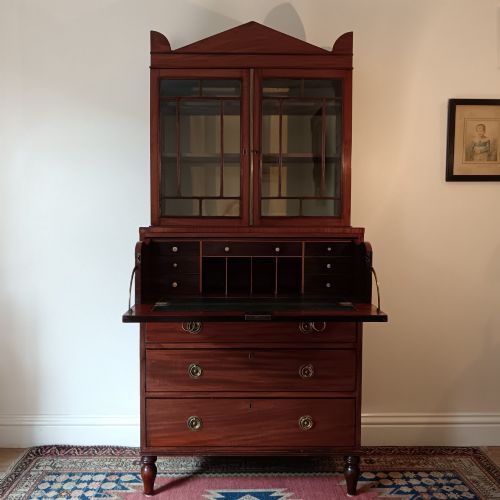
Glass panels are typically set into wooden framing for the upper bookcase doors, while interiors feature fitted compartments for writing equipment, sometimes including leather writing surfaces and concealed drawers.
Secret compartments hidden within the fitted interiors of writing drawers provided early owners a secure spot for private correspondence and small valuables.
Distinctions in construction and finish
The choice of timber creates a distinct visual hierarchy, where highly figured flame mahogany veneers and precise wood inlay distinguish finer workshop output from standard production. Cabinetmakers who matched grain patterns across drawer fronts achieved a more cohesive aesthetic.
Interior execution also separates standard pieces from exceptional ones, particularly the complexity of the fitted secretaire drawer with its pigeonholes, small drawers, and fine subsidiary woods. The quality of the original brass hardware and the crispness of the joinery complete the distinction.
Gillows of Lancaster·George Oakley
The Regency Secretary Bookcase Glossary
- Secretaire
- A writing drawer with a drop-front that conceals a fitted interior of small drawers and pigeonholes. It allows the cabinet to function as a desk without sacrificing vertical storage.
- Flame mahogany
- A veneer cut from the branch forks of the mahogany tree, displaying a characteristic swirling, flame-like pattern. Cabinetmakers used it on prominent exterior surfaces for decorative impact.
- Glazed doors
- Glass-panelled doors on the upper section of the bookcase designed for displaying books while protecting them from dust. The wooden framing often incorporates delicate astragal mouldings.
- Bureau bookcase
- An alternative term for a secretaire bookcase, combining a sloping or drop-front desk compartment with upper shelving. These forms were widespread throughout the Georgian and Regency eras.
- Fitted interior
- The arrangement of miniature drawers, pigeonholes, and central compartments housed within the writing section. Better versions often conceal secret compartments or use contrasting secondary timbers.
Regency Secretary Bookcase: Frequently Asked Questions
How do I use a secretaire drawer?
The front of the drawer hinges downwards to create a flat writing surface supported by internal arms or the drawer sides themselves. This reveals a collection of small compartments and pigeonholes for stationery.
When writing is finished, simply fold your papers away and lift the front back into place, securing it with a key to conceal the desk space entirely.
Are these bookcases all from the Regency period?
While the core of the selection dates from the Regency and George IV eras, the listings also include pieces from the late Georgian, William IV, and broader 19th-century periods. Stylistic overlap between these eras is common.
Cabinetmakers maintained similar architectural proportions across decades, though decorative details like brass inlay or wood veneer choices shifted with changing tastes.
Where should I place a large bookcase?
These tall cabinets require adequate wall space and sufficient ceiling height, typically suiting studies, libraries, or spacious living rooms. Ensure the floor is level so the doors and drop-front drawers align properly.
Keep them away from direct heat sources and strong sunlight to protect the mahogany veneer and prevent the wood from drying out over time.
How do I distinguish Regency from William IV pieces?
Regency furniture often displays refined classical restraint, featuring elegant proportions, brass inlay, and delicate reeding. William IV pieces generally appear heavier, with bolder architectural elements and denser mahogany timbers.
Examining the secondary woods, construction methods, and hardware styles helps clarify the transition between these overlapping design periods.