



Regency Mahogany Fall Front
Regency mahogany fall front pieces are substantial furniture designed for writing and display, offering fitted interiors and classical proportion.
Regency Mahogany Fall Front
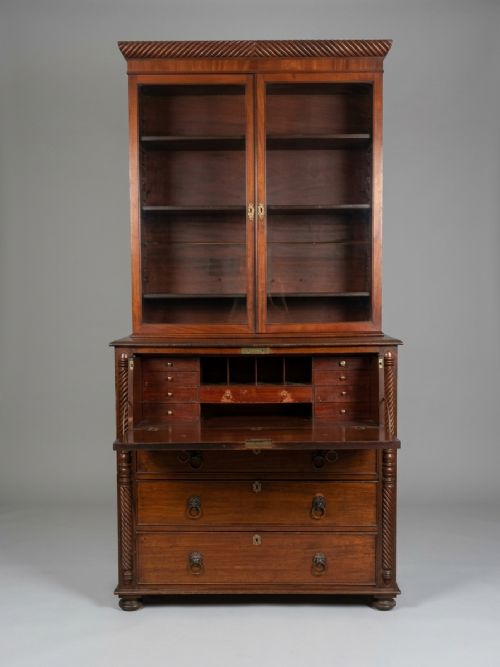
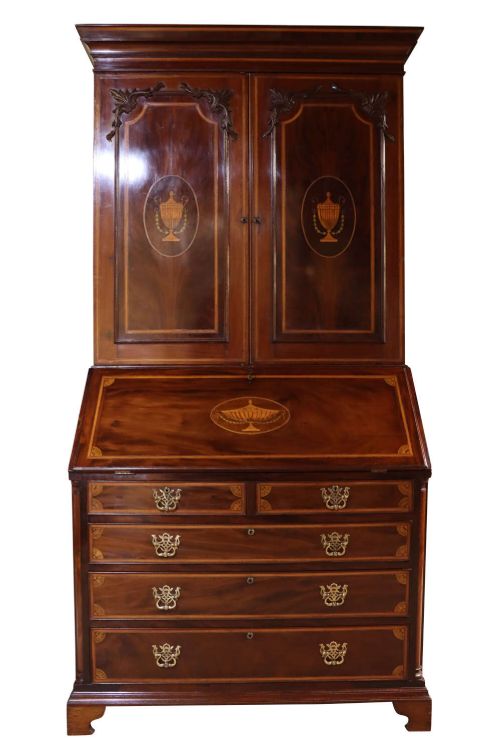
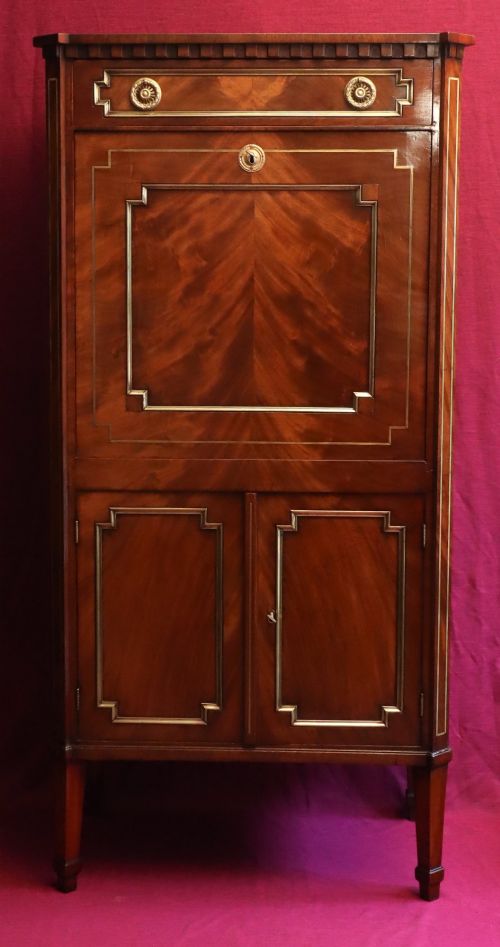
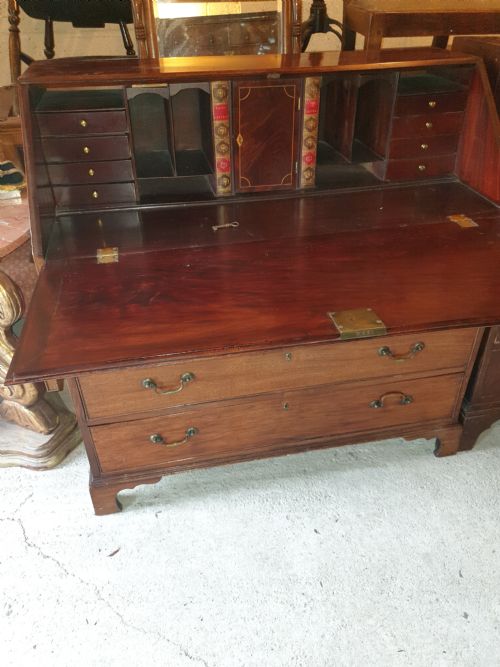
Regency mahogany fall front pieces encompass bureau bookcases, secretaire cabinets, and writing desks originating from the nineteenth century, including Georgian and William IV examples. These large items combine a writing surface with upper shelving or cabinetry, presenting glazed or panelled doors above a drop-down desk compartment. A buyer typically encounters bureau bookcases and secretaire variants that feature numerous internal drawers and pigeonholes designed for correspondence.
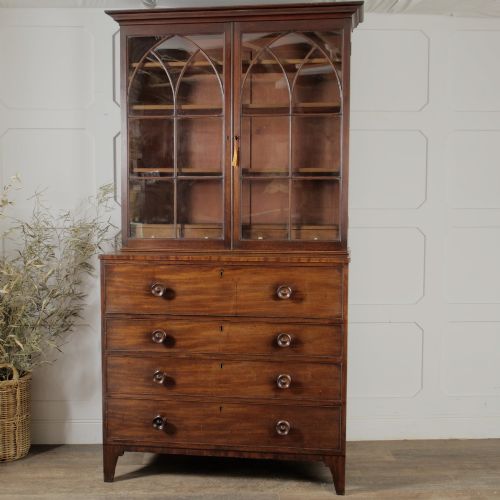
The materials and styles span English and Irish workshops, showing cabinet-making traditions from around eighteen hundred to eighteen forty. Pieces range from tall bureau bookcases with astral glazed doors to compact secretaire cabinets and cylinder desks. The primary form involves a fall-front writing flap that conceals a fitted interior, resting above drawers or cupboards.
How they were made
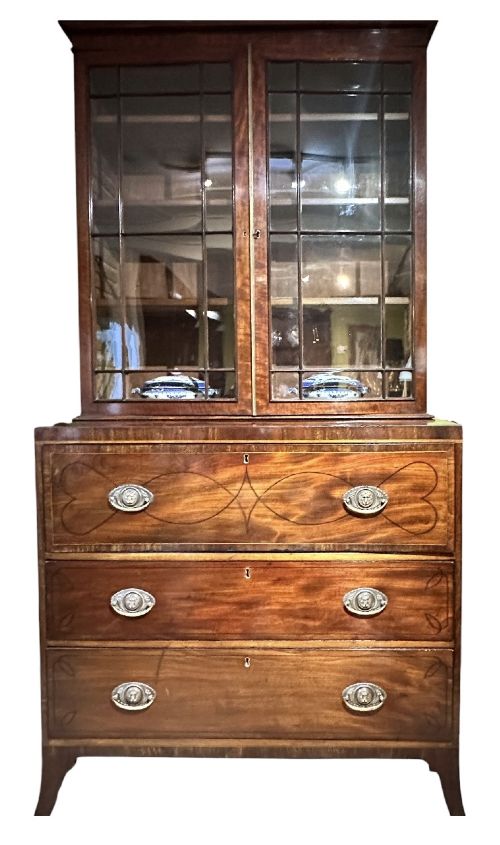
Makers utilised solid mahogany and flame mahogany veneer over secondary timbers, often embellishing surfaces with wood inlay and brass fittings. Glazing bars formed astral patterns on upper bookcase doors, while internal compartments incorporated small drawers and central cupboards.
Construction methods involved precision jointing for the heavy carcases and fall-front mechanisms, balancing the weight of writing flaps and upper shelving units. Secondary elements included baize lining for writing surfaces and hand-blown glass panes within the bookcase sections.
Listings feature nineteen-century pieces incorporating flame mahogany veneer, brass details, and astral glazed glass doors.
What varies in quality
Quality rests in the selection of timber, particularly the grain figuration in flame mahogany veneer and the crispness of any wood inlay. Superior examples display balanced proportions, fine cabinet-making in the fitted interior, and original brass hardware.
The integration of the fall-front mechanism and the delicacy of astral glazing bars separate standard utility pieces from finer cabinet-work. Scale also influences character, with smaller proportions commanding attention for domestic settings.
Gillows·Gillington of Dublin
The Regency Mahogany Fall Front Glossary
- Fall-front
- A writing flap that hinges downward to provide a horizontal surface for correspondence. This mechanism conceals small drawers and pigeonholes inside the desk section.
- Secretaire
- A cabinet or chest incorporating a pull-out or drop-down writing drawer with a fitted interior. It serves a dual purpose as storage furniture and a writing desk.
- Astral glazed
- Upper bookcase doors divided by narrow wooden bars into geometric panes. These frames hold individual glass segments in front of shelved storage.
- Flame mahogany
- A veneer cut from timber fork or bough junctions to create a distinctive flickering flame pattern. Cabinet-makers applied this figure to prominent drawer fronts and fall surfaces.
- Baize
- A woven woolen material used to line writing surfaces within desks. It provides a smooth, protective layer for paper and writing implements.
Regency Mahogany Fall Front: Frequently Asked Questions
How do I identify a Regency bureau bookcase?
Regency bureau bookcases date from the early nineteenth century, displaying classical proportions, mahogany timbers, and often astral glazed upper doors. They combine a bookcase top with a lower bureau or secretaire section.
Look for flame mahogany veneers, brass hardware, and fitted internal compartments behind the main fall-front flap.
Where were these pieces made?
These items originated in English and Irish workshops during the Georgian, Regency, and William IV periods. Regional variations appear in the choice of inlay and cabinet proportions.
Maker attributions sometimes point to established urban cabinet-makers working in Dublin or provincial centres.
How do I care for mahogany furniture?
Keep mahogany pieces away from direct sunlight and sudden temperature changes to protect the wood and veneer. Regular dusting with a soft cloth maintains the polished finish without buildup.
Avoid placing damp items directly on the mahogany or baize surfaces to preserve the original materials.