



Regency Sabre Leg Table
A regency sabre leg table offers the graceful, sweeping curves characteristic of early nineteenth-century dining and entertaining spaces.
Regency Sabre Leg Table
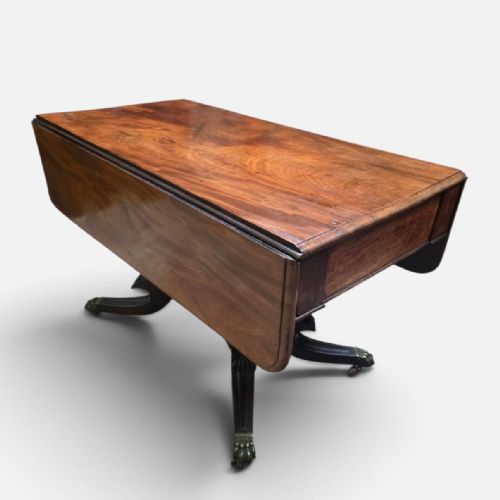
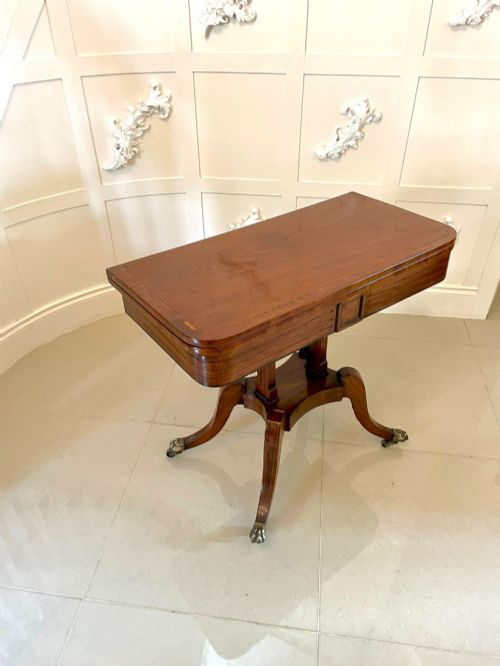
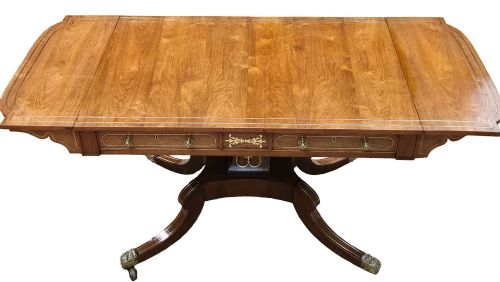
A regency sabre leg table brings together the refined forms of the early nineteenth century, encompassing sofa tables, card tables, tea tables, and breakfast tables. When exploring this selection, buyers frequently encounter mahogany and rosewood examples bearing the signature outward-curving supports.
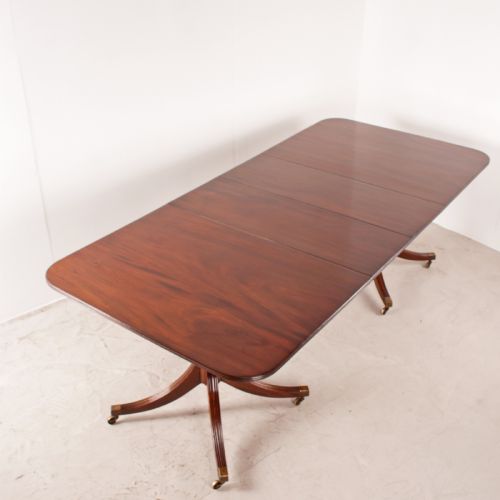
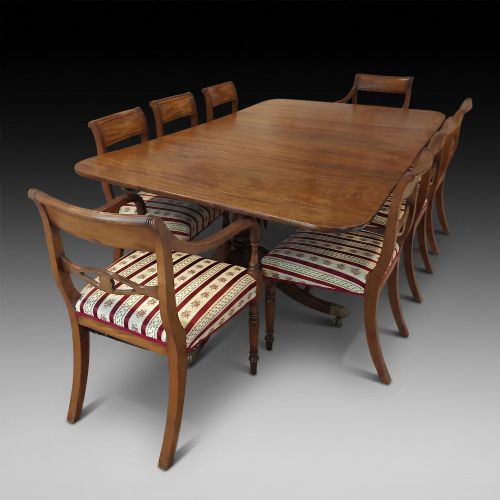
The evidence shows these pieces spanning the Regency, Georgian, and George IV periods alongside later revivals from the twentieth century. Forms range from Pembroke and console tables to large twin pedestal dining tables and compact occasional pieces.
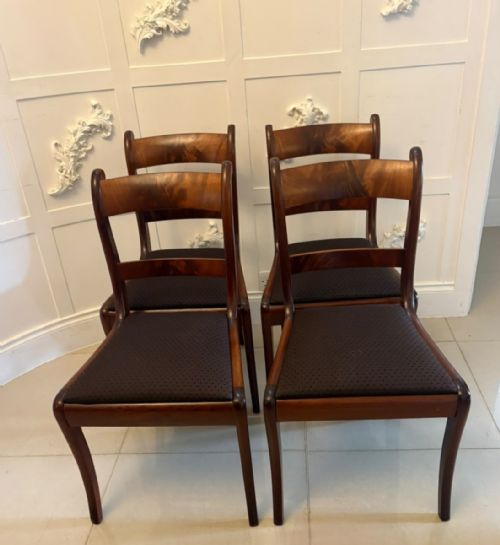
Makers and workshops of the era utilised these sweeping legs to lend a sense of lightness to heavy timber furniture. The resulting silhouette remains a defining marker of the style, whether configured for games, dining, or display.
Distinctions in Quality and Execution
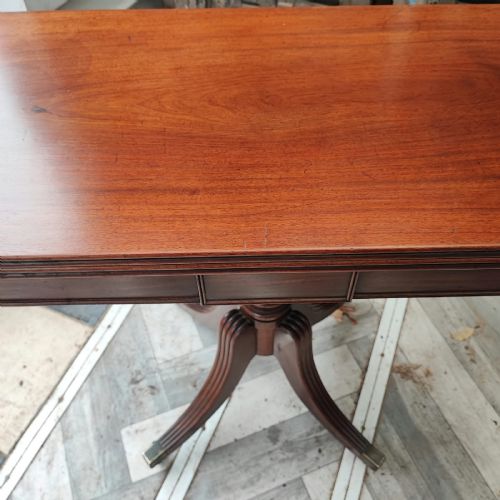
Quality rests upon the choice of timber figure, such as highly grained figured mahogany or richly patterned rosewood veneers. The crispness of brass inlay and the elegance of the leg's outward sweep separate standard production from superior cabinet work.
Superior examples display harmonious proportions where the curve of the sabre leg flows naturally from the frieze or pillar. Subtle details like finely cast brass terminals and precise crossbanding elevate the piece above utilitarian alternatives.
Regency Sabre Leg Table Retail Price Guide 2026
Typical asking prices for regency sabre leg table among the pieces listed under this phrase on Sellingantiques today, from the lower quarter to the upper quarter. They describe what is for sale here now, not the wider market.
Metamorphic capability meant a dining table could secretly double as a place to hide your board games.
William Trotter·George Oakley·Gillingtons Dublin
The Regency Sabre Leg Table Glossary
- Sabre leg
- An outward-curving support tapering toward the foot, typical of early nineteenth-century seating and tables. This profile draws inspiration from classical antiquity.
- Crossbanding
- A border of veneer laid with the grain running perpendicular to the main surface. It frames the top of a table to provide visual contrast.
- Pembroke table
- A small occasional table with hinged drop leaves on two opposing sides. These tables often feature a single drawer and slender legs.
- Tilt-top
- A tabletop hinged to tilt vertically when not in use, allowing the piece to stand flat against a wall. This mechanism proved common in breakfast and library tables.
- Gilded brass mount
- Applied decorative metalwork treated with gold leaf or a gold-coloured finish. Makers used these mounts to accent the corners and friezes of card tables.
Regency Sabre Leg Table: Frequently Asked Questions
What is a sabre leg?
A sabre leg is an outward-curving support that tapers smoothly toward the floor, evoking the shape of a cavalry sword.
Cabinet makers of the Regency period adopted this classical form to give tables and chairs a lighter, more dynamic profile than straight-legged designs.
How were card tables used?
Card tables featured fold-over tops lined with baize or felt, designed specifically for evening parlour games like whist.
During the day, the folded top allowed the piece to function as a side or console table against a drawing room wall.
What is a sofa table?
A sofa table is a rectangular occasional table with drop leaves on either end, traditionally positioned behind a sofa in the Regency interior.
These pieces typically incorporate two small drawers in the frieze and rest upon end supports or pillar pedestals.
How do I spot a reproduction?
Later revivals, such as those from the nineteen-thirties, often exhibit machine-cut timber and standardised fixings that differ from early nineteenth-century construction.
Examining the underside, secondary woods, and wear patterns helps distinguish original Regency execution from twentieth-century revival pieces.