
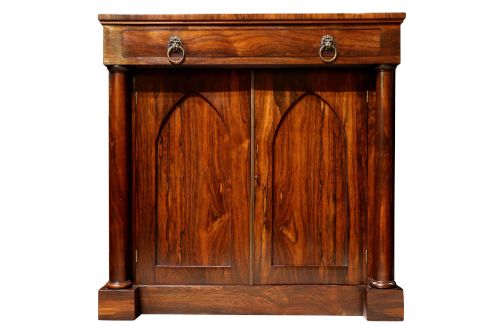
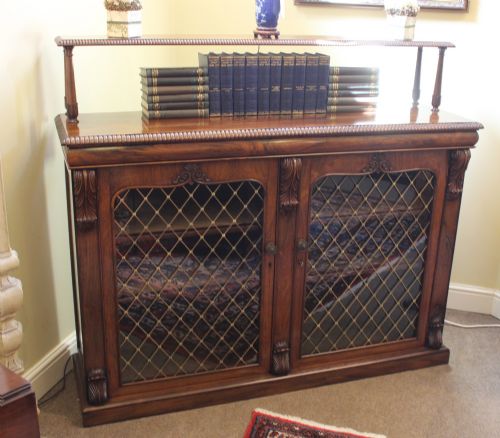
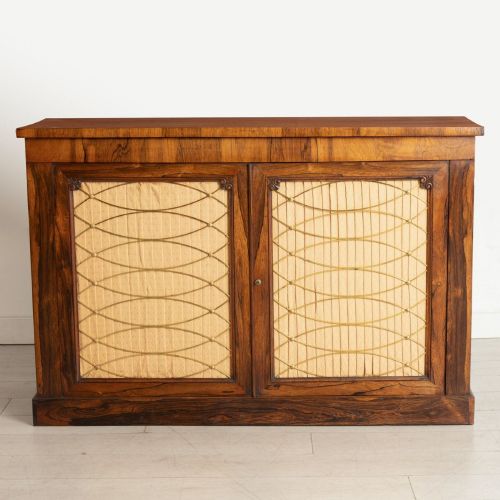
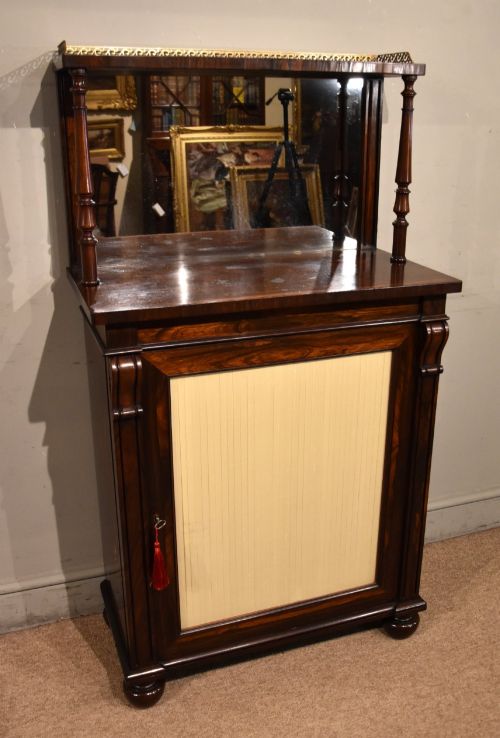

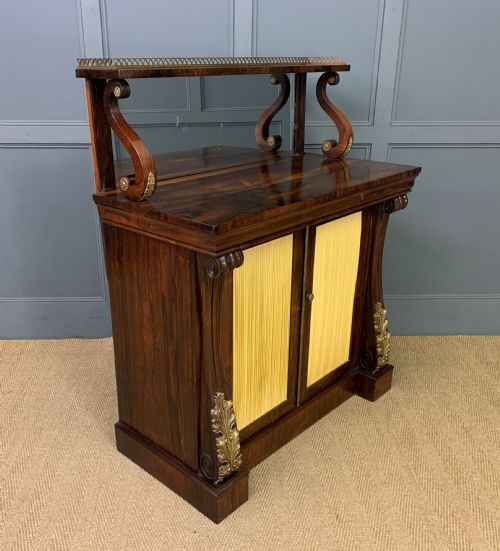
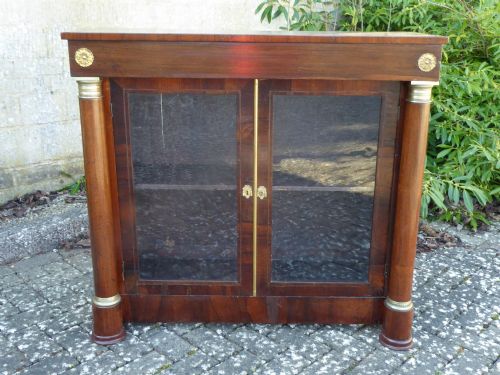

Regency Rosewood Side Cabinet
A regency rosewood side cabinet brings warmth and architectural presence to a room, offering enclosed display and storage through finely figured timbers.
Regency Rosewood Side Cabinet
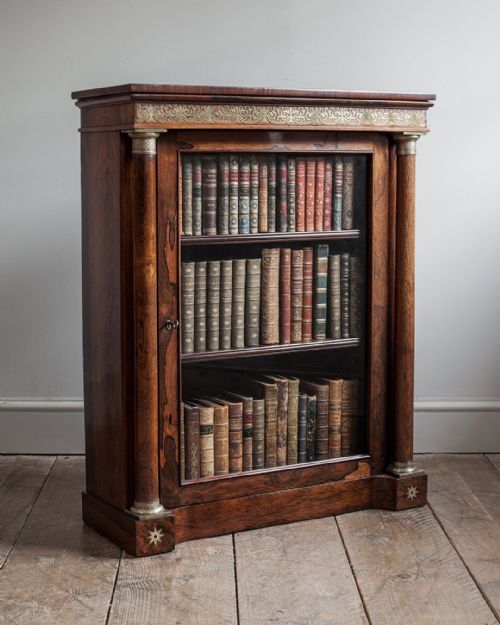
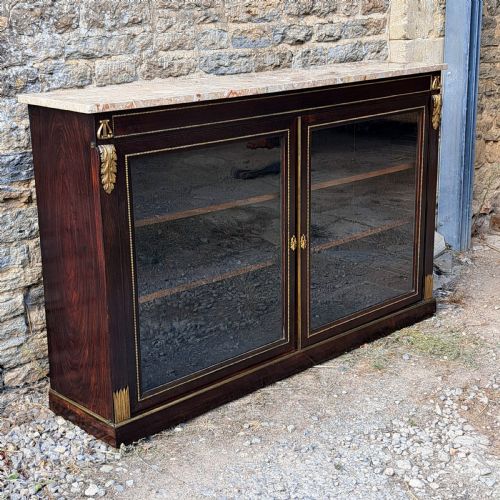
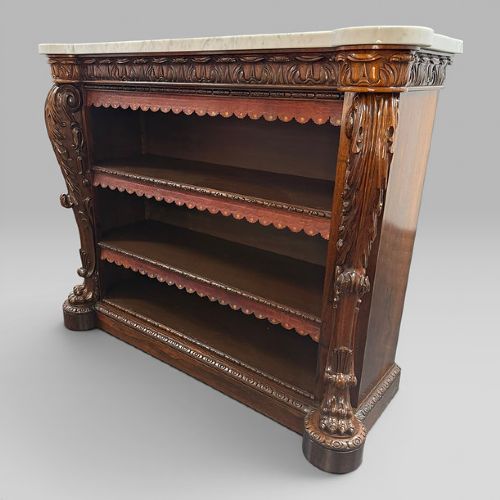
When you search for a regency rosewood side cabinet, you encounter low storage furniture designed for formal living spaces during the early nineteenth century. These items encompass freestanding open bookcases, pier cabinets, and low cupboards fitted with doors.
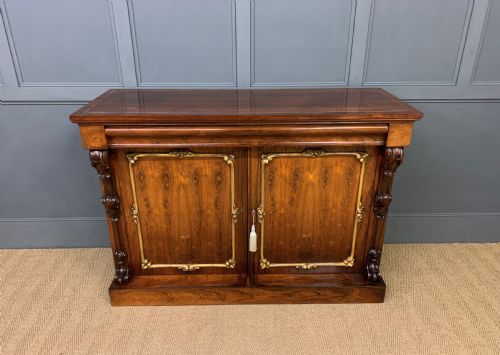
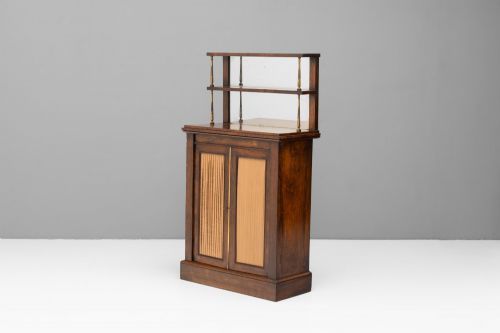
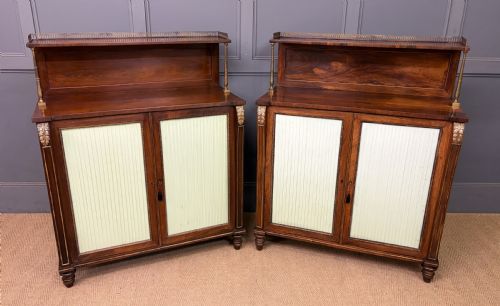
The version you are most likely to meet on this page is the chiffonier or low sideboard dating from the Regency, George IV, or William IV periods. Many examples feature glazed doors, brass grilles, or pleated silk panels behind delicate framework.
Makers of the era also produced breakfront configurations and simulated rosewood finishes on alternative woods such as pine. These variations reflect the diverse domestic requirements of nineteenth century households.
How they were made
Cabinet makers utilised dense tropical rosewood veneers applied over stable secondary timbers like mahogany or pine. This technique allowed workshops to display rich, dark grain patterns across wide surfaces while preventing warping.
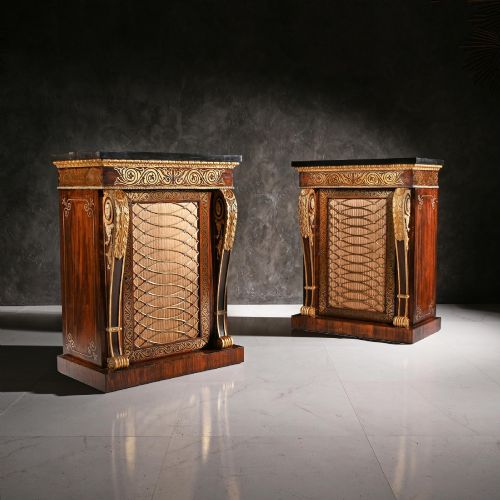
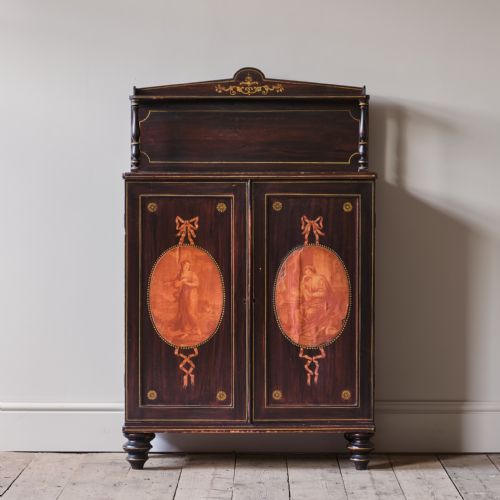
Metal enrichment formed a central part of the construction, incorporating cast or chased ormolu mounts and precise brass inlay set directly into the timber. Silk fabric, pleated panels, and glass inserts further completed the door designs.
Listings on this site span the Regency, Georgian, and Victorian eras, incorporating materials such as brass, marble, mirror glass, and ormolu.
What varies in quality
The standard of a regency rosewood side cabinet rests upon the intricacy of its brass detailing and the symmetry of its wood grain selection. Superior workshops matched veneers across large surfaces to create continuous, balanced patterns.
Proportion and structural restraint distinguish finer pieces from simpler commercial output. Subtle architectural elements, such as refined brass grilles and precise mouldings, elevate the construction.
Louis Constantin Le Gaigneur·Gillows
The Regency Rosewood Side Cabinet Glossary
- Chiffonier
- A low cabinet featuring shelves and doors, frequently topped with a raised tier or mirror. This form served as a functional sideboard in nineteenth century dining rooms.
- Ormolu
- Gilded bronze mounts applied to furniture for decorative accent. Workshops used this technique to highlight architectural breaks and corners.
- Pier cabinet
- A narrow low cupboard designed to stand against the wall space between windows. These pieces often incorporated glass doors for the display of ceramics.
- Breakfront
- A cabinet front where the central section projects forward from the flanking sides. This configuration creates visual depth and structure.
- Goncalo Alves
- A dense exotic hardwood with striking dark brown and pale contrasting streaks. Cabinet makers utilised this timber alongside rosewood during the Regency period.
Regency Rosewood Side Cabinet: Frequently Asked Questions
What is a regency rosewood side cabinet?
A regency rosewood side cabinet is a low nineteenth century storage piece built from dark exotic timber. These items typically feature enclosed cupboards, open shelves, or glazed doors.
Craftsmen designed them to stand against drawing room walls, providing surface space for lamps and decorative objects alongside interior storage.
How were these cabinets used originally?
Original owners utilised these low cabinets in parlours and dining rooms to store books, tableware, and writing materials. The surfaces held decorative porcelain or candelabra.
Enclosed lower sections kept household items out of sight while upper display areas showcased collected curiosities.
How do I live with one today?
Living with an antique cabinet involves placing it away from direct heat sources to protect the delicate rosewood veneer. Regular dusting with a soft cloth maintains the polished finish.
The low proportions make these pieces suitable for modern living rooms as media consoles or display surfaces.
How do I tell periods apart?
Regency pieces often display classical brass inlay and lighter proportions, reflecting early nineteenth century design. William IV examples tend to be heavier with bolder, sturdier carved details.
Examining the secondary timbers inside the cabinet helps confirm the production era alongside stylistic markers.