


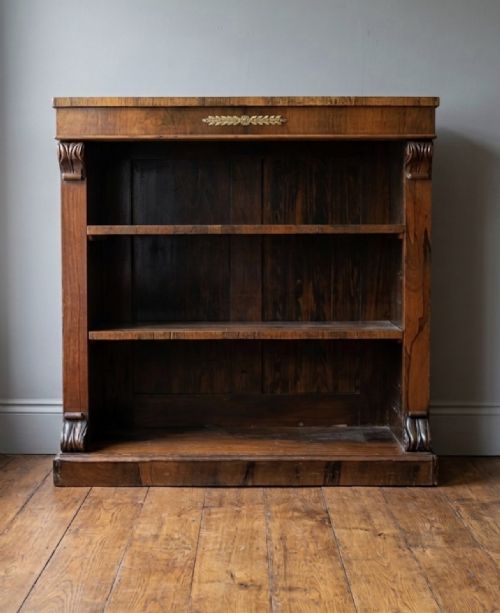


Regency Rosewood Shelf
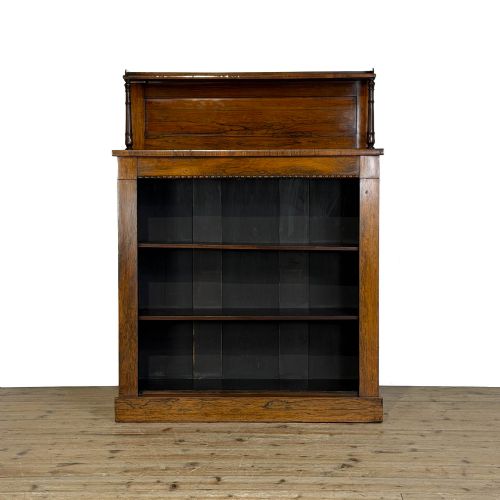
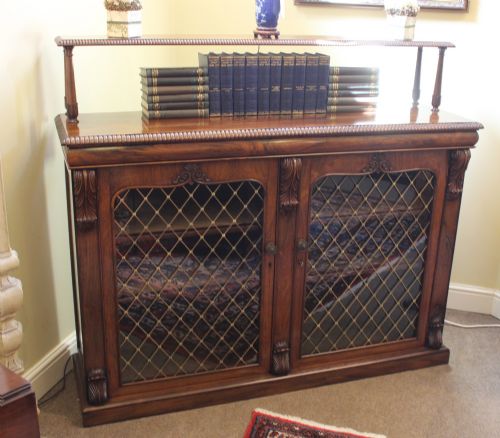
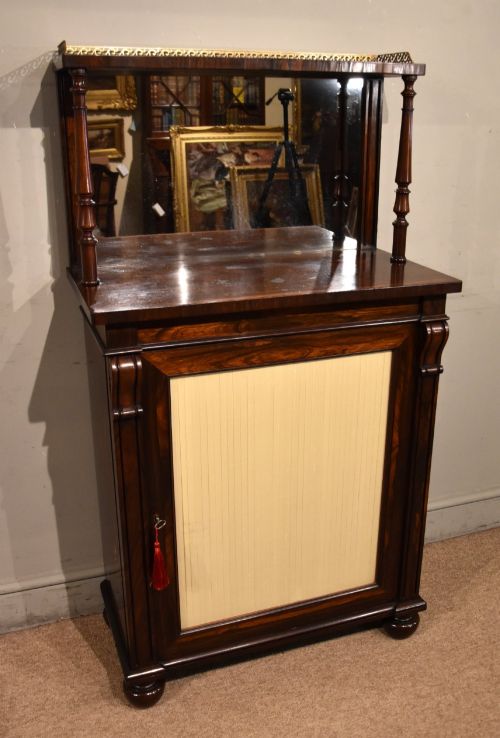
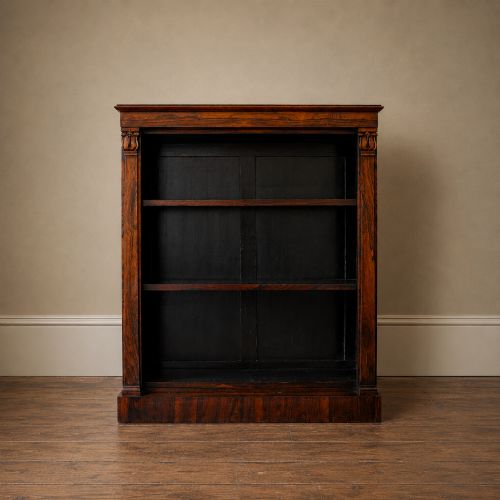
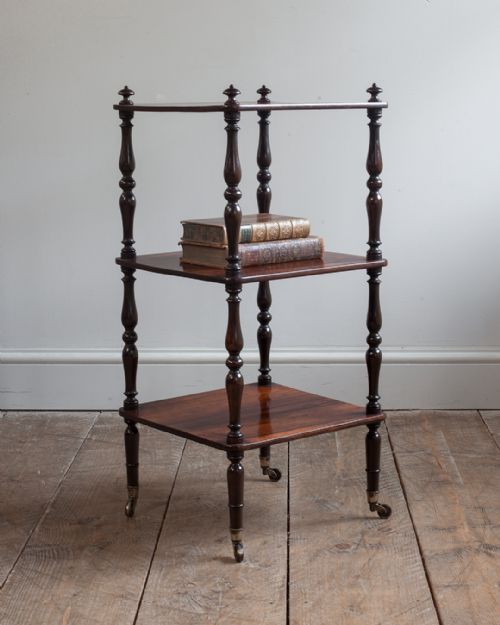
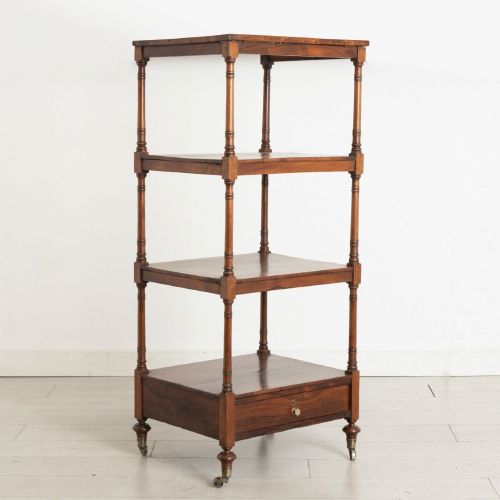
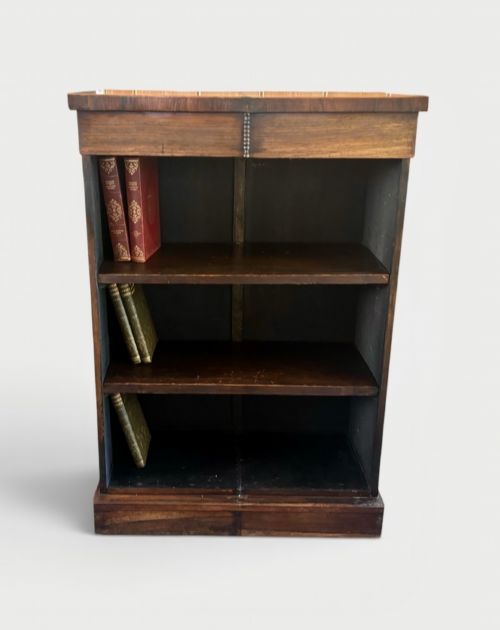
A regency rosewood shelf brings rich, dark grain and refined display space to a room, most often found here as open bookcases, chiffoniers, and multi-tiered whatnots.
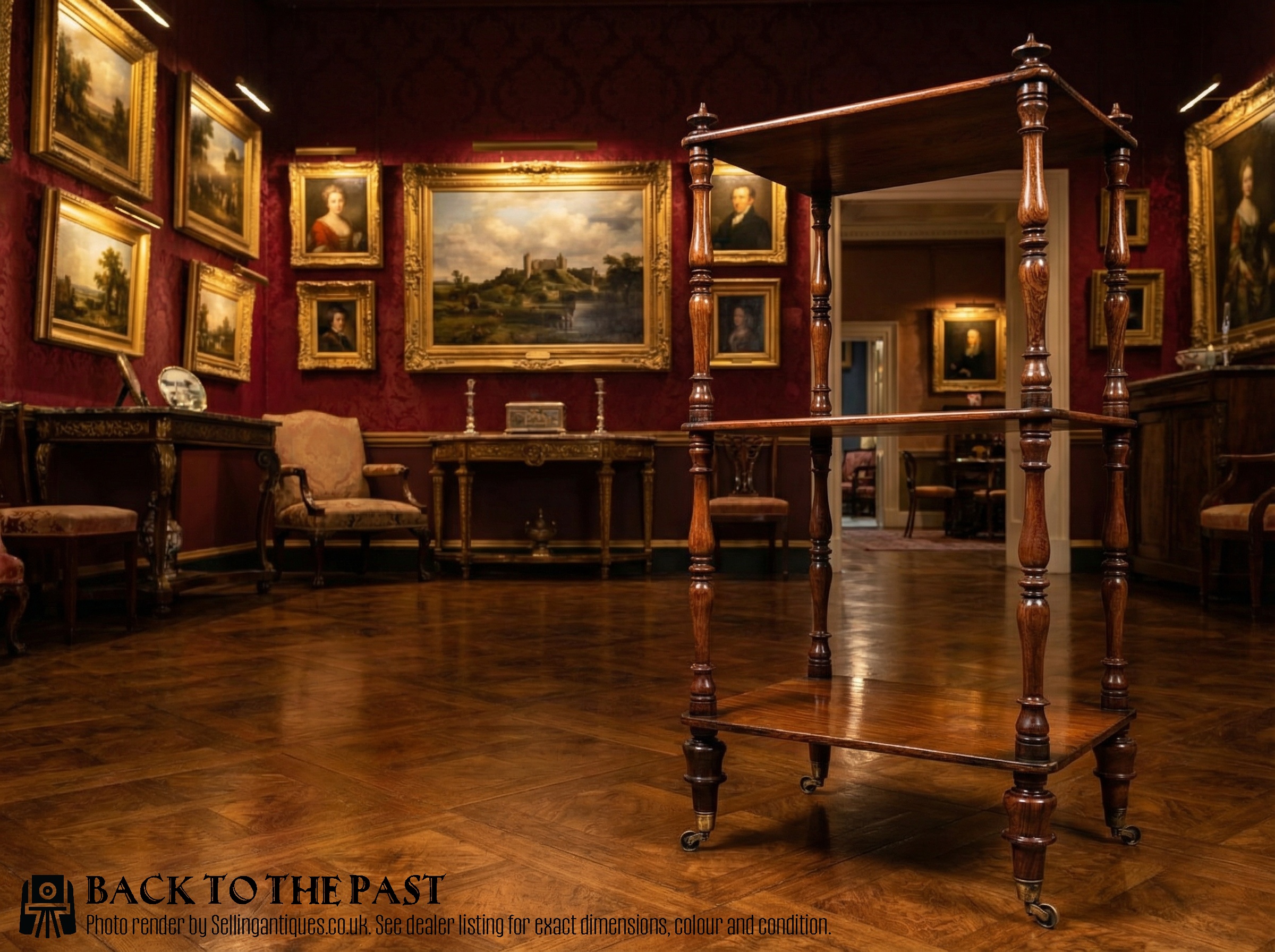
Regency Rosewood Shelf
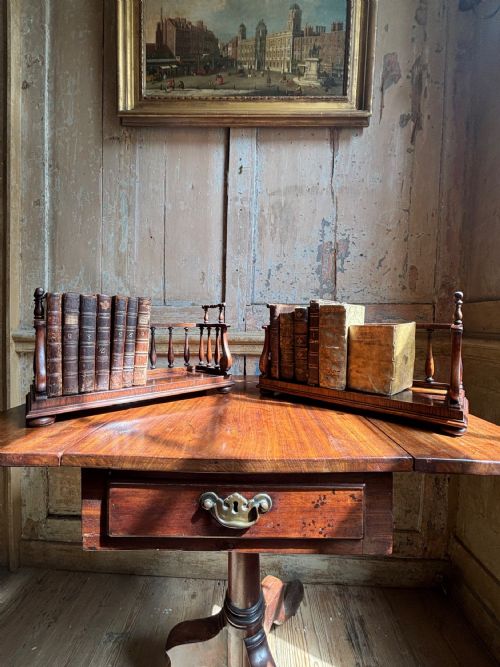
A regency rosewood shelf encompasses a variety of display furniture, from open bookcases and chiffoniers to tiered whatnots and hanging bookshelves. The pieces span the nineteenth century, including Georgian, Regency, William IV, and Victorian periods, alongside later revivals.
Open bookcases and chiffonier side cabinets dominate the selection, offering adjustable shelving and enclosed storage beneath display surfaces. Multi-tiered whatnots and wall shelves provide vertical display space for books and decorative objects in dense, figured timber.
What varies in quality
Quality reveals itself in the choice and matching of the rosewood veneer across large surfaces like breakfront bookcases and chiffonier doors. Finer examples display symmetrical grain patterns and precise brass inlay work rather than plain timber.
The architectural proportion of turned columns on whatnots and the refinement of brass mounts distinguish superior workshops from standard production. Structural integrity in tiered uprights and the smooth operation of adjustable shelves mark the better pieces.
Gillows·Seller of Reading
The Regency Rosewood Shelf Glossary
- Whatnot
- A tiered movable piece of furniture with open shelves designed for displaying ornaments, books, or small objects. These structures often feature three or four levels supported by turned uprights.
- Chiffonier
- A low cabinet featuring enclosed storage below and display shelves above, frequently topped with marble. This form evolved during the Regency period as a versatile dining room or parlour piece.
- Etagere
- A French term for a display stand with multiple open shelves. It functions similarly to a whatnot for holding decorative items.
- Veneer
- A thin layer of figured rosewood applied to a stable secondary wood carcass. This technique allowed cabinet makers to display striking grain patterns economically.
- Breakfront
- A piece of furniture where the central section projects forward from the flanking cabinets. This configuration adds architectural depth to bookcases and side cabinets.
Regency Rosewood Shelf: Frequently Asked Questions
How do I use a whatnot?
A whatnot provides multi-tiered open shelving designed specifically for the display of small decorative objects, porcelain, and books. Their compact footprints allow them to fit easily into corners or beside seating areas.
Historically placed in drawing rooms and parlours, they organise collections vertically without crowding a room. The graduated tiers of a four-tier whatnot accommodate objects of varying heights.
How do I tell periods apart?
Distinguishing periods involves looking at structural proportions, decorative motifs, and secondary materials like marble or brass. Regency and George IV pieces tend to feature crisp classical lines and precise brass stringing.
Later Victorian and revival pieces often display heavier proportions or alternative shelf arrangements. Comparing the construction methods and wood selection helps place a piece within the nineteenth century.
Where should I place a chiffonier?
A chiffonier works effectively in a dining room or living space where both surface display and concealed storage are useful. The lower cabinet doors hide clutter while the upper shelf or marble top holds decorative items.
Because many examples incorporate mirrors or brass-inlaid backsplashes, positioning them against a main wall allows the reflected light to brighten a room. Ensure the room's humidity remains stable to protect the rosewood veneer.