

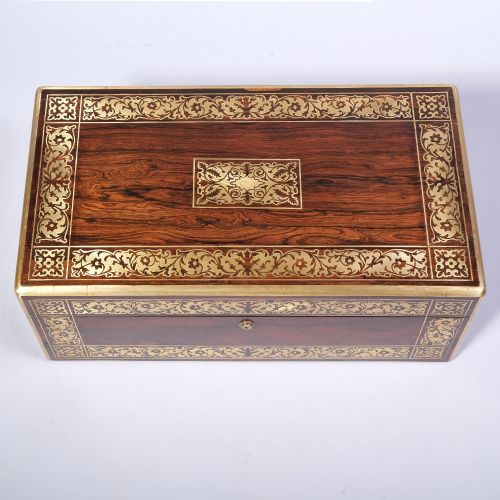
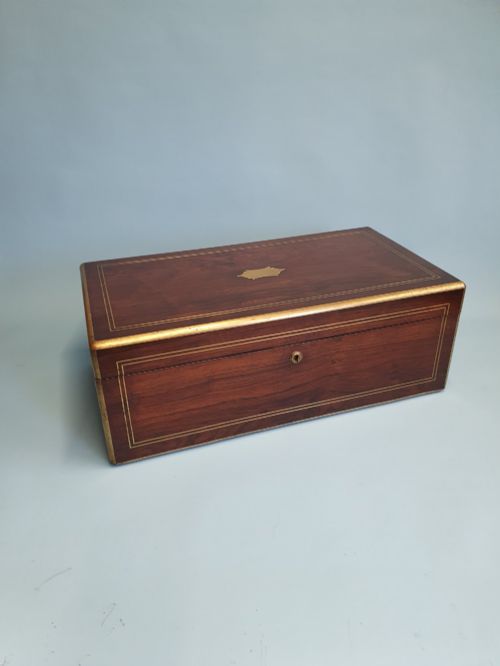


Regency Rosewood Lap Desk
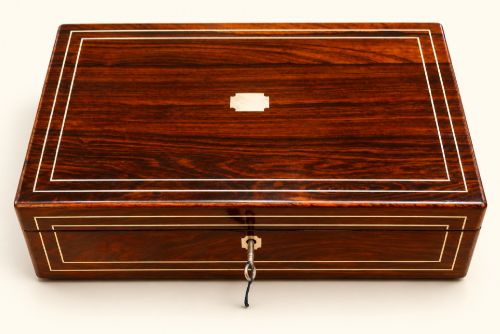
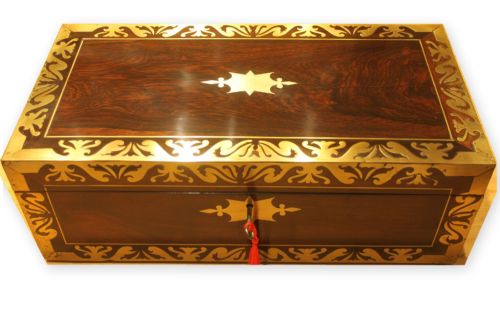
A regency rosewood lap desk offers a portable writing surface lined with rich timber and bright brass.
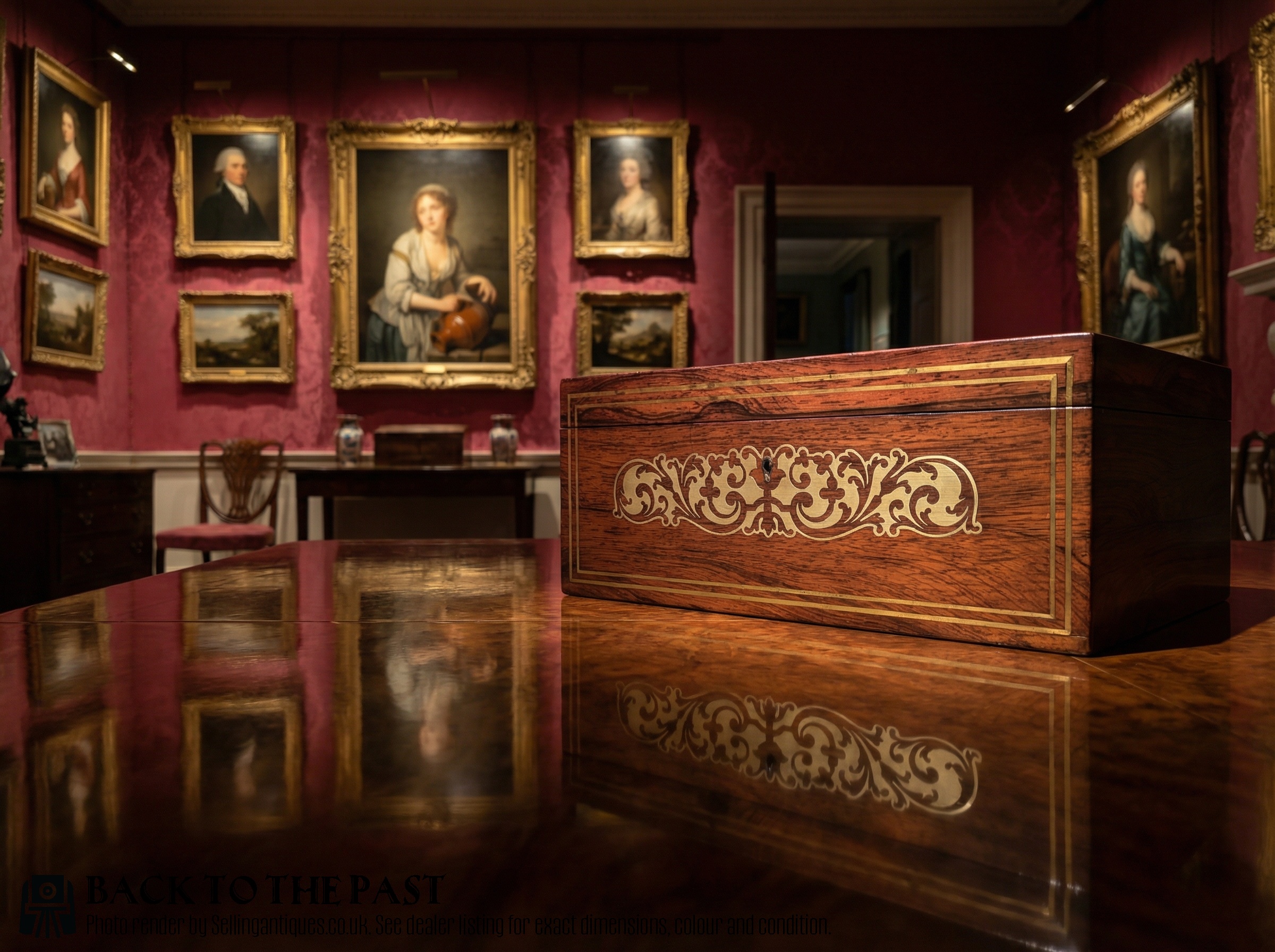
Regency Rosewood Lap Desk
A regency rosewood lap desk is a portable writing box designed for travel or domestic use, primarily appearing from the Georgian and Regency periods. These pieces serve as functional writing slopes, document boxes, and campaign cases.
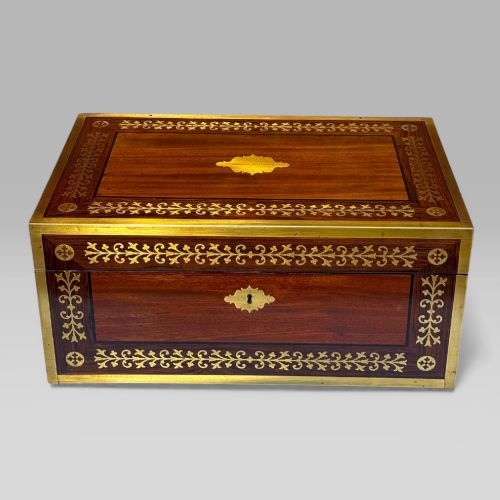
The most common examples on this page are rosewood writing slopes featuring brass inlay, brass binding, and secret drawers. They reflect the craftsmanship of the nineteenth century and the functional demands of officers and travellers.
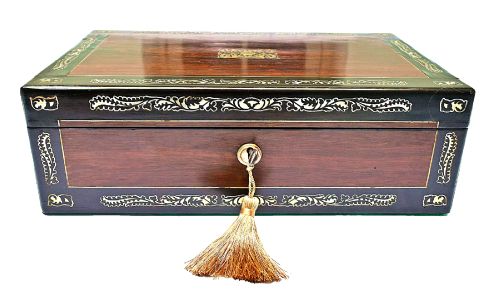
Makers and styles span from Grand Regency and William IV to early Victorian pieces, incorporating mahogany, metal, and mother of pearl alongside the dominant rosewood.
How they were made
Carpenters constructed these boxes using dense rosewood timbers, often pairing the dark grain with contrasting mahogany or secondary woods. Metal mounts and brass bindings provided structural reinforcement for travel.
Craftsmen inlaid the timber with foliate cut brass and mother of pearl, creating intricate decorative patterns across the lid and slant. Interior compartments required precise joinery to conceal secret drawers and storage wells.
Regency Rosewood Lap Desk Retail Price Guide 2026
Typical asking prices for regency rosewood lap desk among the pieces listed under this phrase on Sellingantiques today, from the lower quarter to the upper quarter. They describe what is for sale here now, not the wider market.
Secret drawers often require pressing a hidden wooden spring or sliding a false partition to reveal the compartment within.
What varies in quality
The sophistication of the brass inlay separates standard utility boxes from superior examples. Finely cut foliate designs require precise handwork, whereas simpler linear banding represents a more straightforward production.
Internal configuration and timber selection also distinguish the range. Substantial proportions, well-figured rosewood, and intact secret drawers indicate higher craftsmanship.
George Austin Dublin
The Regency Rosewood Lap Desk Glossary
- Lap desk
- A portable box with a sloping writing surface designed to sit on the knees or a table. These pieces fold open to reveal compartments for stationery and ink.
- Campaign slope
- A sturdy writing box reinforced with brass mounts and corners, built for military officers on active service. They often feature flush-fitting handles for packing.
- Secret drawers
- Concealed compartments hidden behind false panels or removable partitions within the interior. Craftsmen used them to secure valuables and private correspondence.
- Brass binding
- Protective metal strips fitted to the exterior edges and corners of a box. This technique absorbs the impacts of travel and secures the wooden joints.
- Foliate inlay
- Decorative metalwork cut into leaf and vine patterns and set flush into the wooden surface. It defines the ornamental style of Regency cabinetwork.
Regency Rosewood Lap Desk: Frequently Asked Questions
What is a regency rosewood lap desk?
A regency rosewood lap desk is a portable nineteenth-century writing box made from dark rosewood timber, often decorated with brass inlay and brass mounts. These pieces fold open to provide an angled writing surface and storage for paper and ink.
They were designed for travel, allowing writers to carry their correspondence essentials securely between locations.
How were lap desks used?
These boxes served as mobile writing desks for travellers, military officers, and households with limited space. When closed, they protected documents; when opened flat or on a slant, they provided a firm writing surface.
Internal compartments held inkwells, pens, sealing wax, and folded letters, while secret drawers stored valuables.
How do I date a rosewood writing box?
Dating relies on construction methods, brasswork styles, and materials. Pieces from the Georgian and Regency eras typically feature hand-cut brass inlay, specific brass corner mounts, and internal layouts with secret drawers.
Later Victorian examples may incorporate mother of pearl or different internal arrangements while retaining the rosewood exterior.
Where should I place a lap desk at home?
A lap desk sits comfortably on a study table, chest of drawers, or sideboard as a decorative storage piece. Many owners display them closed to showcase the brass inlay and rosewood grain.
Opening the box occasionally helps air the interior and prevents the leather or velvet writing surface from drying out.