


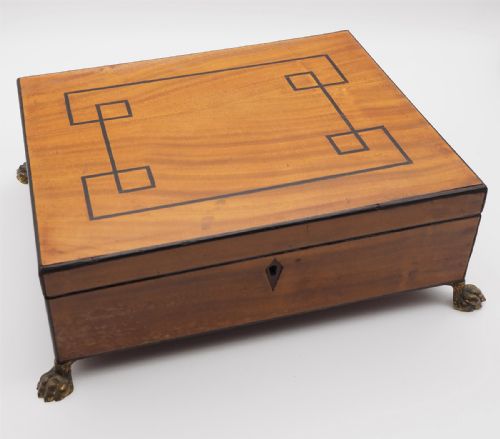


Regency Brass Inlaid Casket
A regency brass inlaid casket brings together rich timber and sharp metalwork to hold your most valued papers, tea, or trinkets.
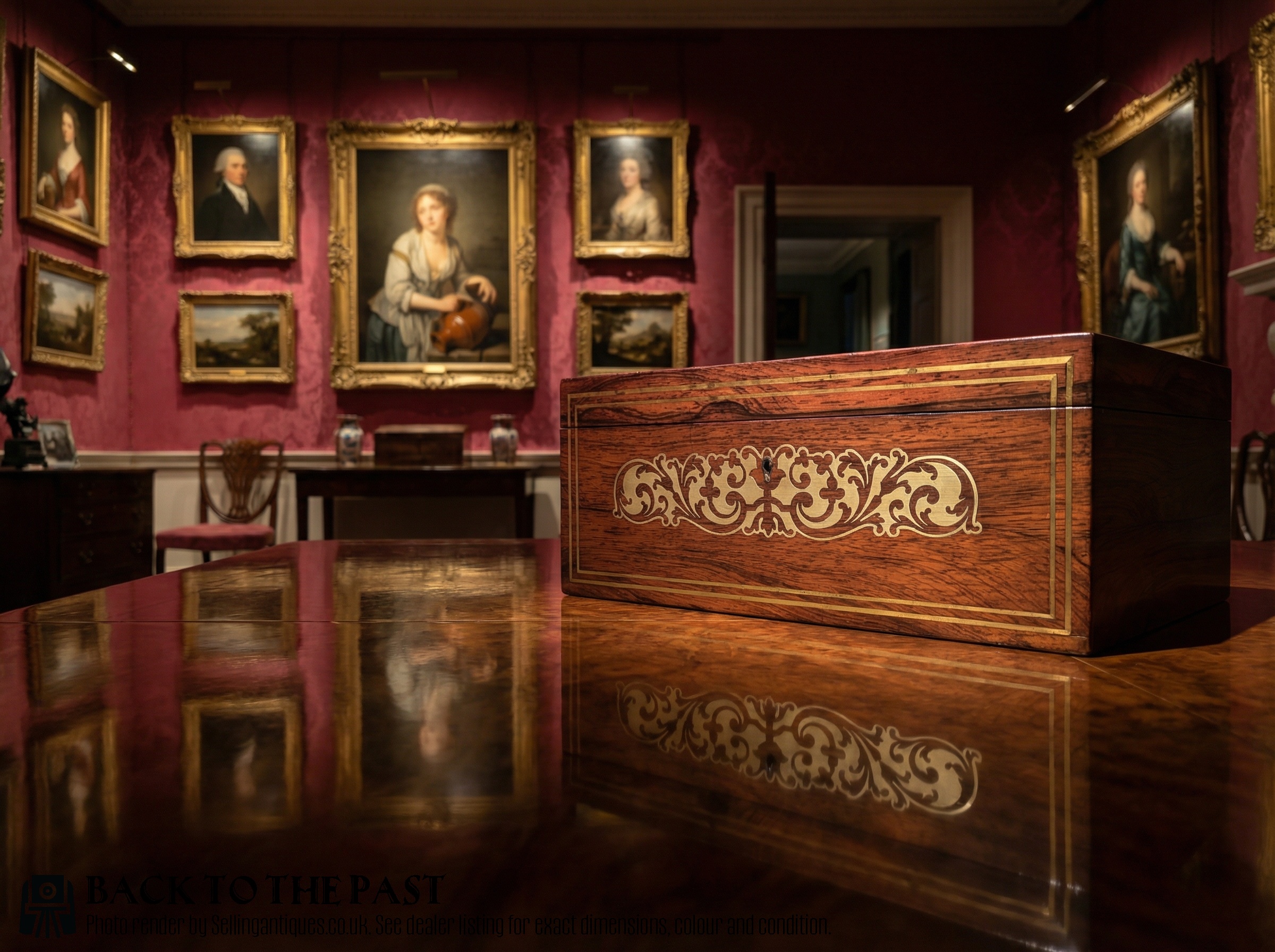
Regency Brass Inlaid Casket
A regency brass inlaid casket is a desk box, tea caddy, or table cabinet designed to sit upon a surface and keep small valuables secure. You will most frequently meet rosewood examples built during the Regency period, often featuring cut brass decoration across the lid and front.
The form spans straightforward document boxes to fitted work boxes and gentleman's table cabinets equipped for varied domestic uses. Makers also turned to satinwood and ebony, enriching the timber palette alongside mother of pearl details.
While many pieces date firmly to the Regency era, the evidence shows examples stretching from the Georgian period through the nineteenth century. These objects served utilitarian purposes in period rooms, evolving from tea storage to general desk and jewellery organisation.
How they were made
Cabinet makers constructed these caskets using dense tropical hardwoods such as rosewood and satinwood over sturdy secondary timbers. They then applied contrasting stringing and brass inlay, often cutting the metal into intricate geometric or floral motifs.
Details like mother of pearl and boxwood provide further contrast against the dark grain of the rosewood or ebony surfaces. Interiors frequently included fitted compartments for sewing, writing, or tea, lined to protect the contents.
Regency Brass Inlaid Casket Retail Price Guide 2026
Typical asking prices for regency brass inlaid casket among the pieces listed under this phrase on Sellingantiques today, from the lower quarter to the upper quarter. They describe what is for sale here now, not the wider market.
Listings show rosewood as the dominant timber, accompanied by satinwood and ebony across pieces spanning the Georgian era to the late nineteenth century.
What varies in quality
The crispness of the brass inlay separates ordinary work from superior pieces, particularly where the metal meets the wood grain without gaps. Precision in the cutting of cut brass work dictates how well the decorative panels hold their edges over time.
Timbers selected for the exterior veneer demonstrate differing grades of figure and depth, with richly grained rosewood marking the upper end of the range. The complexity of internal fittings and the retention of original components also influence the standing of an individual box.
The Regency Brass Inlaid Casket Glossary
- Regency
- The period in British design spanning the early nineteenth century, characterised by classical restraint and rich contrasting veneers. Pieces from this era often employ brass inlay and dark tropical timbers.
- Rosewood
- A dense, heavily figured timber prized for its dark purple-brown grain and oily lustre. It served as the primary exterior wood for the majority of these caskets.
- Caddy
- A small container originally designed for storing loose tea leaves, often featuring internal compartments or canisters. Many survive as general decorative boxes today.
- Satinwood
- A pale, lustrous yellowish timber used for contrasting stringing and inlay work. It brings a bright focal point to dark wood surfaces.
- Stringing
- Thin lines of contrasting wood or metal inlaid into the surface of a box to outline panels or edges. It defines the geometry of Regency decorative schemes.
Regency Brass Inlaid Casket: Frequently Asked Questions
What did they keep inside?
These caskets held high-value domestic items like loose tea leaves, letters, documents, and small jewellery pieces. The inclusion of fitted compartments allowed owners to organise sewing tools or writing implements securely.
Over time, changing household habits meant many tea caddies and document boxes transitioned into general trinket storage. Their sturdy construction kept precious contents safe from dust and prying eyes in the drawing room or study.
How do I spot a Regency box?
Look for characteristic design elements such as rosewood veneers paired with precision cut brass inlay and classical proportions. The presence of recessed campaign handles or sarcophagus shapes often points to the early nineteenth century.
While some pieces date slightly earlier into the Georgian period or later into the nineteenth century, the Regency aesthetic relies on sharp contrasts between dark timber and bright metalwork.
Are all of them made of rosewood?
Rosewood is the most common timber recorded in the evidence, providing the dark, heavily grained surface typical of the period. However, makers also utilised satinwood and ebony for distinct visual effects.
Inlay materials further expand the palette, incorporating boxwood stringing and mother of pearl details alongside the standard brass work.
How do I care for the wood?
Keep these boxes away from direct sunlight and sudden changes in temperature to prevent the timber veneer from drying and splitting. Gentle dusting with a dry cloth maintains the finish without harming the delicate brass inlay.
Avoid commercial polishes that build up a residue in the grooves around the metalwork. Natural wax applied sparingly preserves the lustre of the rosewood over time.