


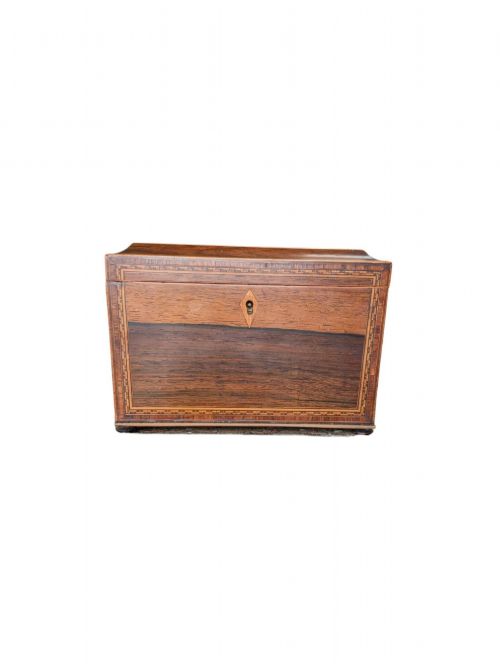


Georgian Rosewood Trinket Box
These Georgian rosewood trinket box pieces are compact wooden containers lined for storage, prized by collectors for their rich grain and brass or mother-of-pearl detail.
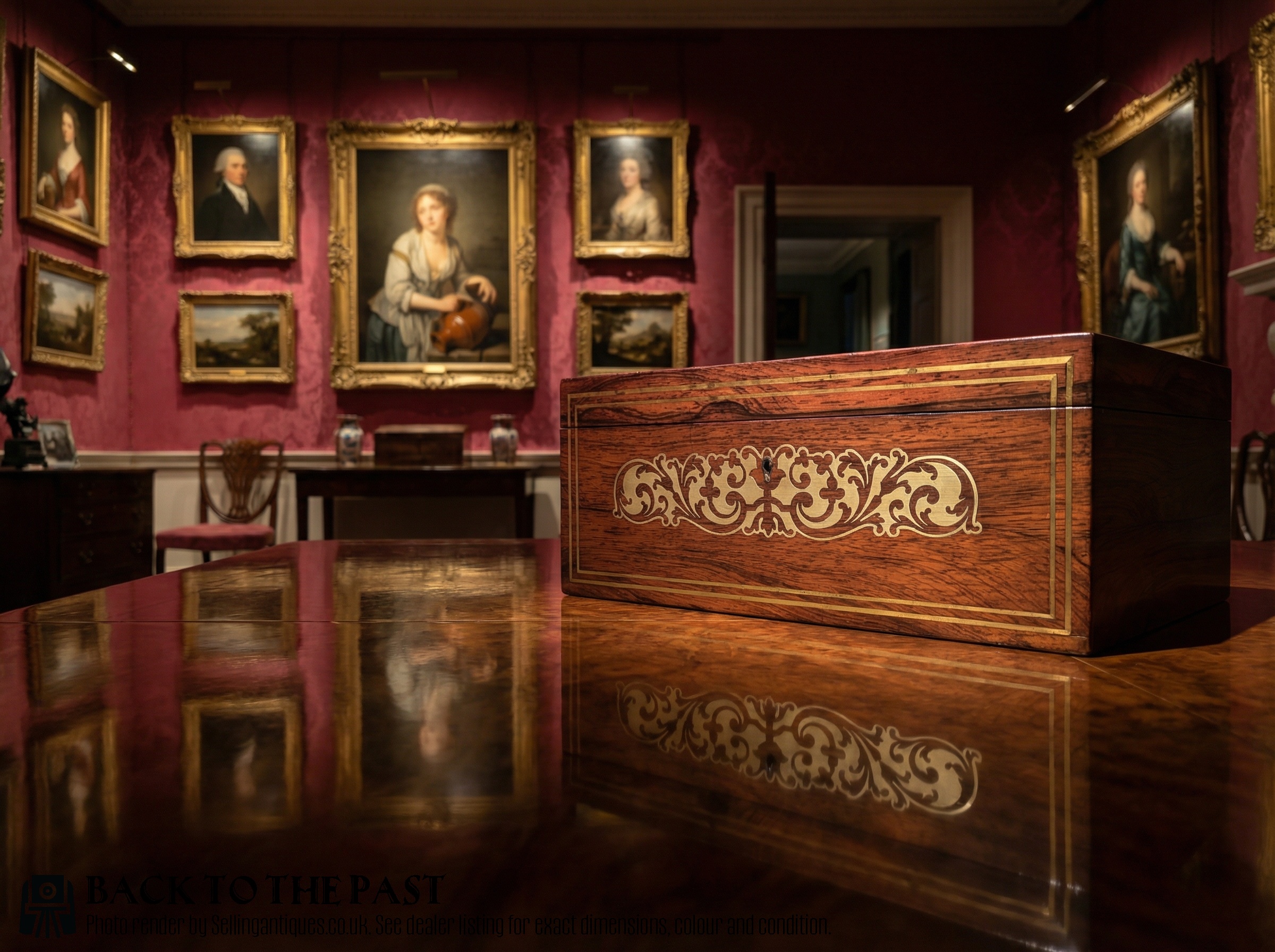
Georgian Rosewood Trinket Box
When you search for a georgian rosewood trinket box, you are looking at small personal containers that served various domestic purposes from holding tea leaves to storing sewing implements and jewellery. These pieces span the Regency, nineteenth century, and Victorian periods, often taking the form of tea caddies, work boxes, or decorative keepsakes.
How they were made
Maker's workshops built these items using a foundation of mixed wood veneers finished with a substantial outer layer of rosewood. Artisans prized rosewood for its deep colour and prominent dark grain patterns.
Decoration relied heavily on brass inlay, boxwood stringing, and mother-of-pearl highlights. Craftsmen also employed Tunbridge Ware wood inlay techniques to create geometric or pictorial mosaics across the surfaces.
Georgian Rosewood Trinket Box Retail Price Guide 2026
Typical asking prices for georgian rosewood trinket box among the pieces listed under this phrase on Sellingantiques today, from the lower quarter to the upper quarter. They describe what is for sale here now, not the wider market.
Materials recorded include rosewood, brass, mother-of-pearl, walnut, boxwood, and mixed wood veneers.
What varies in quality
The distinction between standard pieces and the finest items rests on the precision of the marquetry and the intricacy of the metal inlay. Superior examples display tightly fitted boxwood stringing and sharply defined brass work that remains flush with the timber.
Internal fittings also dictate standard, where original silk linings, fitted compartments, and working locks elevate an object. Poorer specimens show loss to the veneer or clumsy repairs to the delicate wood inlays.
The Georgian Rosewood Trinket Box Glossary
- Rosewood
- A dense, dark timber featuring pronounced figuring that became immensely popular for luxury cabinet work during the Regency era. Its natural oils give the polished surface a deep lustre.
- Tunbridge Ware
- A form of mosaic woodwork produced in Kent using thousands of tiny coloured wood blocks to create pictorial or geometric designs. It frequently decorates the lids of caddies and small boxes.
- Regency
- An architectural and decorative style spanning the early nineteenth century, characterised by classical restraint and a taste for exotic woods and brass ornamentation. Pieces from this period often feature bold geometric forms.
- Mother-of-Pearl
- The iridescent inner layer of certain mollusc shells, sliced thin and embedded into timber surfaces to catch the light. It provides a striking contrast against dark rosewood.
- Work Box
- A portable container fitted with compartments, trays, and pin cushions designed for holding sewing threads, needles, and small crafting tools.
Georgian Rosewood Trinket Box: Frequently Asked Questions
What were these boxes originally used for?
These containers held precious items ranging from dry tea leaves and sewing accessories to personal jewellery and documents. Wealthy households kept them in reception rooms or bedchambers for daily convenience.
Over time, owners adapted them to store whatever small keepsakes or trinkets suited their needs, leading to the varied internal layouts seen today.
How do I tell Regency from Victorian pieces?
Regency examples typically display restrained classical lines with precise brass stringing and geometric inlay. They favor architectural simplicity and rich, dark rosewood veneers.
Victorian items often introduce more exuberant marquetry, heavier floral motifs, and varied internal arrangements. The transition reflects shifting domestic tastes toward busier surface decoration.
Are the interiors usually original?
Many surviving pieces retain their compartmented wooden trays, velvet pads, or paper linings. Original silk or paper linings frequently show signs of age and wear from active use.
Replacement interiors appear in some examples where the fragile textiles degraded beyond repair over the centuries.
How should I care for rosewood boxes?
Keep the wood away from direct sunlight and dramatic temperature swings to prevent the rosewood veneer from drying and splitting. Gentle dusting with a dry cloth maintains the finish.
Avoid liquid polishes and wax buildups that can penetrate through micro-fissures in the aged veneer and lift the delicate brass or mother-of-pearl inlays.