



Regency Porcelain Tureen
A regency porcelain tureen brings refined Regency dining to the table, offering a graceful ceramic centrepiece for soup or sauce.
Regency Porcelain Tureen
A regency porcelain tureen is a covered vessel designed for serving soup, sauce, or entrees at the formal dining table. These pieces originate from the Georgian and Regency periods, dating primarily around the early nineteenth century.
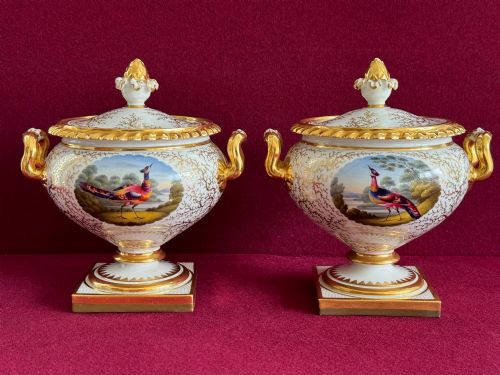
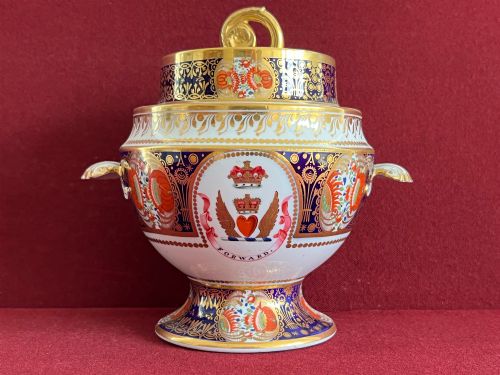
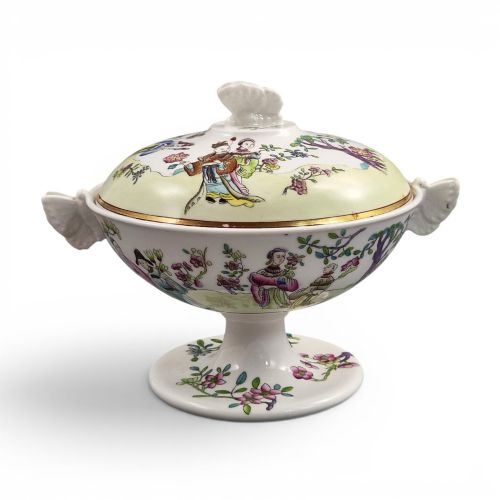
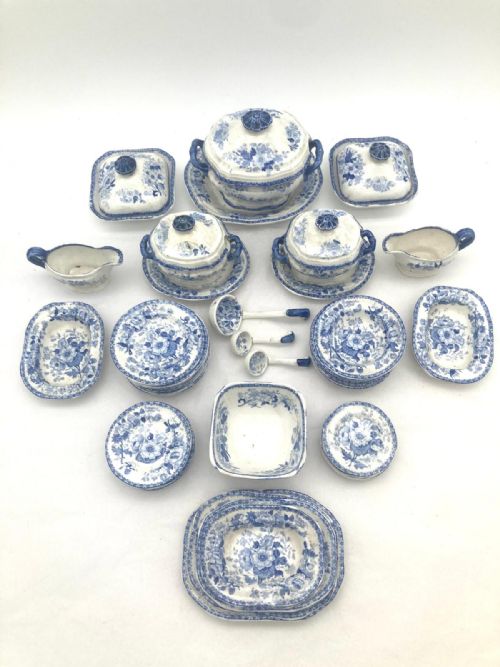
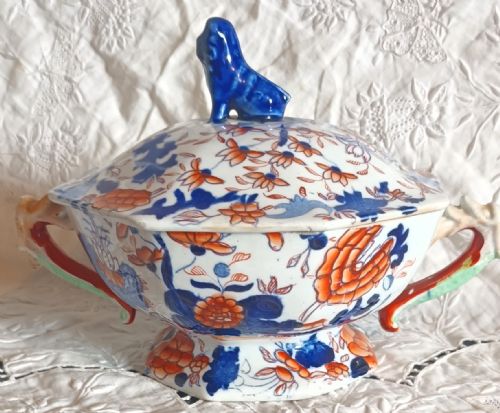
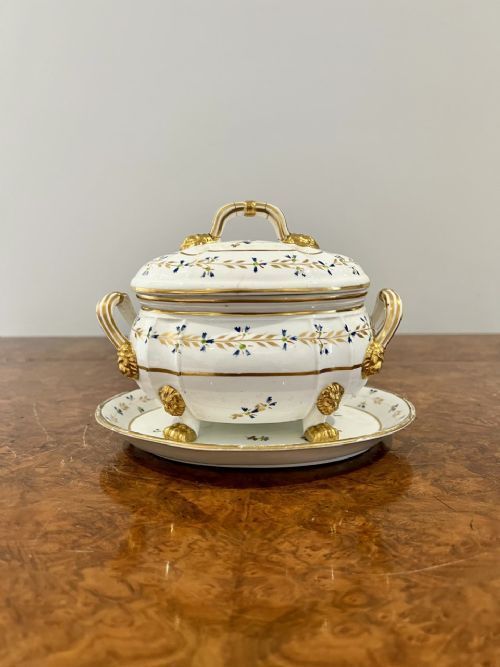
Buyers will encounter white glazed bodies alongside transfer-printed patterns in blue and white, floral designs, and Chinoiserie motifs. Many examples incorporate gilt handles, gold leaf accents, and intricate crests.
How They Were Made
Potteries shaped these tureens using ceramic materials such as porcelain, felspar porcelain, and ironstone, often applying a smooth glaze over the fired body. Craftsmen then decorated the surfaces using blue and white transfer printing or hand-painted patterns like Chinoiserie mandarin motifs.
Finishing touches involved the application of gold leaf and rich gilding to handles, rims, and finials. Kiln firing fixed the underglaze prints and enamel colours before final gilt detailing was added.
Listings feature porcelain, ironstone, and earthenware pieces decorated with gilding, gold leaf, and transfer-printed patterns.
What Varies in Quality
Quality in a regency porcelain tureen depends on the crispness of the transfer print and the precision of the hand-painted enamels. Finer examples show meticulous brushwork on floral or Chinoiserie patterns rather than blurred lines.
The presence of substantial gilding, gold leaf highlights, and well-modelled handles such as butterfly or gilt designs elevates a piece. Potteries known for superior paste composition and refined potting achieve a lighter, more translucent body.
Spode·Minton·Mason's·Coalport·Crown Derby·Ridgway·Flight Barr And Barr·Wedgwood·Chamberlain Worcester
The Regency Porcelain Tureen Glossary
- Porcelain
- A fine, hard white ceramic material made from clay and glass-forming minerals, fired at high temperatures. It provides a smooth, non-porous surface suitable for detailed painting.
- Ironstone
- A heavy, durable type of earthenware patented in the nineteenth century to imitate Chinese porcelain. It offers robust strength for practical dining vessels.
- Gilding
- The application of gold leaf or gold paint to ceramic surfaces for decoration. It is commonly found on handles, rims, and borders.
- Transfer printing
- A method of applying a printed design to ceramic ware from an engraved copper plate via tissue paper. This technique allowed consistent repeating patterns like blue and white florals.
Regency Porcelain Tureen: Frequently Asked Questions
What is a regency porcelain tureen used for?
These covered vessels served soup, sauces, or entrees at formal dining tables during the early nineteenth century. They kept contents warm and presented food with elegance.
Today, they function as decorative centrepieces or serving dishes for special occasions, adding period character to a dining room.
How do I care for antique porcelain?
Wash antique porcelain gently by hand using mild soap and lukewarm water. Avoid dishwashers, abrasive sponges, and soaking.
Keep pieces away from sudden temperature changes to protect the glaze, ceramic body, and delicate gilt decoration.
How can I tell the period?
Examine the ceramic paste, glaze characteristics, and decorative style for clues to the date. Pieces from this era often feature specific hand-painted or transfer-printed patterns typical of early nineteenth-century aesthetics.
Maker marks stamped or painted on the underside provide the most reliable indication of origin and date.
Are lids usually original?
Lids on these tureens were made and fired alongside the base vessel as matching pairs. A correct fit and matching glaze confirm authenticity.
Inspect the interior rim of the lid and the top edge of the tureen to ensure they correspond in wear and material.