



Regency Period Glass
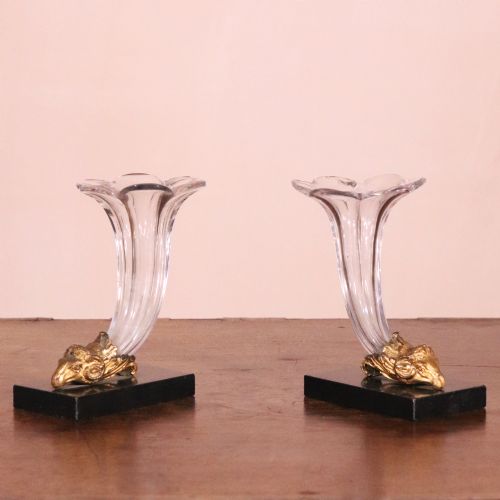
Regency period glass pieces are lead crystal tableware and vessels defined by sharp cutting and rich colour, sought after for their brilliant refraction on the dining table.
Regency Period Glass
When searching for regency period glass, a buyer encounters a distinct selection of tableware and serving vessels spanning the early nineteenth century and the wider Georgian era. The most frequent forms on this page include decanters, rummers, finger bowls, and table lustres alongside occasional butter dishes and celery vases.
These items originate primarily from English workshops of the Regency and late Georgian periods, often displaying deep historical connections to the dinner table of the era. The selection ranges from clear lead crystal to coloured glass in hues such as amber and peacock blue, reflecting the varied social rituals of nineteenth-century dining.
Materials and Techniques
The objects recorded here are predominantly formed from heavy lead crystal, a material prized during the period for its weight and clarity. Artisans shaped this glass through free-blowing or mould-blowing before finishing the pieces on the lapidary wheel.
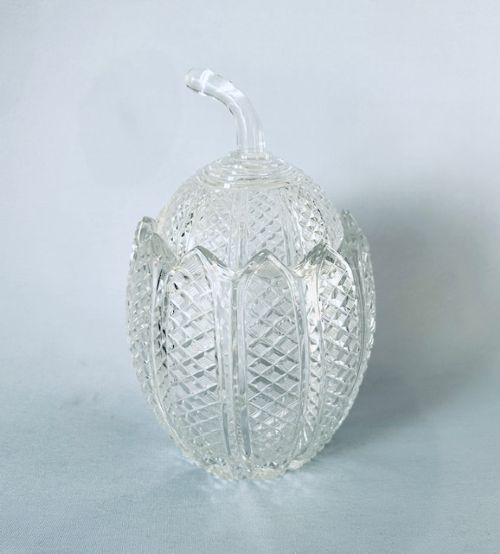
Surface decoration relies heavily on brilliant-cut techniques such as hobnail cutting and blaze cutting, which create sharp facets to catch the candlelight. Engraving also appears on specific rummers and decanters, sometimes accompanied by lemon squeezer bases formed in heavy square moulds.
Some Regency drinking glasses feature bases moulded to resemble citrus squeezers, proving that nineteenth-century hosts appreciated practical jokes in their stemware.
Distinctions in Quality
Quality in these items rests upon the crispness of the glass cutting and the purity of the metal itself. Superior examples exhibit deep, sharply defined facets that remain smooth to the touch yet catch the light with intense brilliance.
Weight and balance also dictate the standing of a piece, with finer decanters and rummers possessing a substantial heft and symmetrical proportions. Minor variations in colour density and hand-finished surfaces distinguish individual workshop output rather than detracting from the standard.
John Millikin
The Regency Period Glass Glossary
- Lead crystal
- Glass containing a high proportion of lead oxide, which increases weight, brilliance, and softness for easier cutting. This material forms the foundation of most fine tableware from the period.
- Hobnail cut
- A raised, diamond-shaped decorative pattern cut into the surface of the glass. It creates a tactile, highly reflective texture common on rummers and decanters.
- Lemon squeezer base
- A heavy, square-moulded foot with indented corners resembling a traditional citrus juicer. This sturdy base frequently supports heavy rummers and decanters from the early nineteenth century.
- Table lustre
- A decorative glass centrepiece hung with prismatic drops designed to catch and refract candlelight. These ornaments sat on dining tables and mantelpieces.
- Rummer
- A large, sturdy drinking glass used for ale, wine, or punch during the Georgian and Regency eras. They typically feature thick stems and deep cut decoration.
Regency Period Glass: Frequently Asked Questions
What is regency period glass?
Regency period glass encompasses table vessels, decanters, and decorative items produced during the early nineteenth century. These objects are typically fashioned from heavy lead crystal and decorated with deep geometric cutting.
They reflect the dining and social habits of the Georgian era, prized today for their clarity and the way they refract candle or daylight.
How do I identify regency glass?
Identification relies on observing the weight, metal composition, and cutting style characteristic of the early nineteenth century. Look for deep brilliant-cut facets, pontil marks on the base, and specific forms like ship's decanters or rummers with square feet.
Colour variations such as amber or peacock blue also help date certain tableware to the specific decades around eighteen hundred.
Were these pieces used daily?
Many items listed were working vessels intended for active dining rooms, drawing rooms, and sideboards. Decanters served wine at the table, while finger bowls and rinsers cleansed hands between courses.
Their robust lead crystal construction allowed them to withstand regular use in prosperous households during the Regency period.
How should I care for old glass?
Old glass requires gentle hand washing in lukewarm water with mild soap, avoiding sudden temperature changes that can stress the material. Soft cloths prevent scratching the hand-cut facets and polished rims.
Displaying pieces away from direct, intense sunlight preserves any original colour and prevents unnecessary thermal movement.