
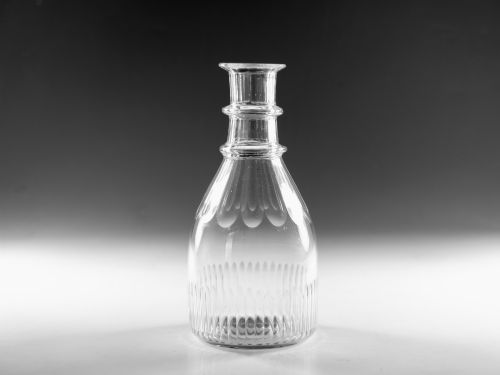
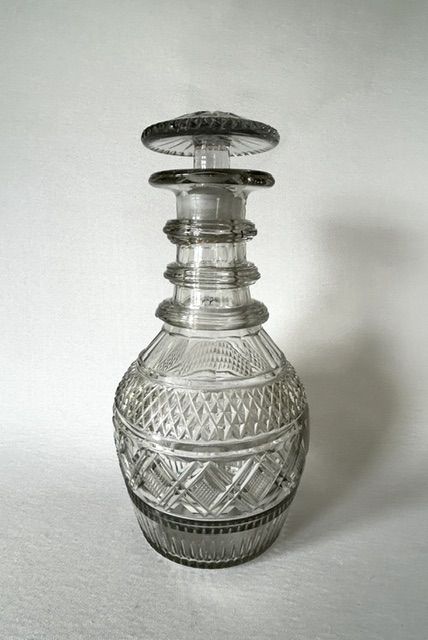


Regency Crystal Carafe
A regency crystal carafe brings the unmatched sparkle and heavy presence of early nineteenth-century glass to your table.
Regency Crystal Carafe
You will most frequently meet decanters and carafes alongside related forms like water jugs, spirit decanters, and half-bottle decanters. These items appear individually or in matched pairs and sets with glasses.
The forms range from traditional three-ring bodies and pillar cuts to the stable, wide-bottomed profile of the ship's decanter. Each piece reflects the functional elegance of domestic dining during the opening decades of the nineteenth century.
How they were made
Makers shaped these vessels from lead crystal, cut glass, and cut lead crystal using traditional blowing and heavy cutting techniques. The high lead content of the glass allowed artisans to grind deep, sharp facets that catch the light.
Decoration relied on hand-cutting wheel techniques, producing distinctive horizontal neck rings, pillar cuts, and elaborate geometric patterns across the body.
Early nineteenth-century dining tables required heavy bases so the port wouldn't end in your lap when the ship pitched.
What varies in quality
Quality in a regency crystal carafe lies in the depth and crispness of the glass cutting and the clarity of the metal itself. Heavier lead crystal yields a resonant ring and a substantial weight in the hand.
The refinement of the neck rings and the symmetry of the faceted panels distinguish finer workshop output from simpler utilitarian vessels.
The Regency Crystal Carafe Glossary
- Lead crystal
- Glass containing a significant proportion of lead oxide, which increases weight, brilliance, and softness for deep cutting. This material gives these vessels their characteristic heavy feel and bright refraction.
- Neck ring
- Raised horizontal bands encircling the neck of a decanter, typically numbering two or three. They provide a secure grip for pouring when the glass is cold and condensation forms.
- Pillar cut
- A decorative vertical fluting or facet applied to the body of a vessel. This technique creates strong architectural lines that reflect light across the room.
- Ship's decanter
- A form featuring a broad, low base and a sloping conical body designed to prevent tipping at sea. This practical shape remained popular for dining tables on land as well.
- Spirit decanter
- A smaller vessel intended for potent liquors rather than table wine. These often match the heavier cut crystal standards of larger table carafes.
Regency Crystal Carafe: Frequently Asked Questions
Can I use these carafes for serving wine?
These vessels were originally made for serving wine and spirits on formal dining tables. They function perfectly well for contemporary dining and entertaining.
Hand washing with warm water preserves the historic crystal without risking thermal shock or chemical damage from modern dishwashers.
What is the difference between a decanter and a carafe?
In historical usage, terms like decanter and carafe often overlap regarding table glass. Decanters more commonly feature fitted stoppers for holding and serving wines, while some lighter forms served water.
Both types share the heavy lead crystal construction and cut glass decoration characteristic of the period.
Why do some decanters have wide flat bases?
Wide flat bases provide stability on rolling ships or busy dining tables. The ship's decanter shape ensures the vessel remains upright during use.
This practical design element became a popular aesthetic choice throughout the Regency era.